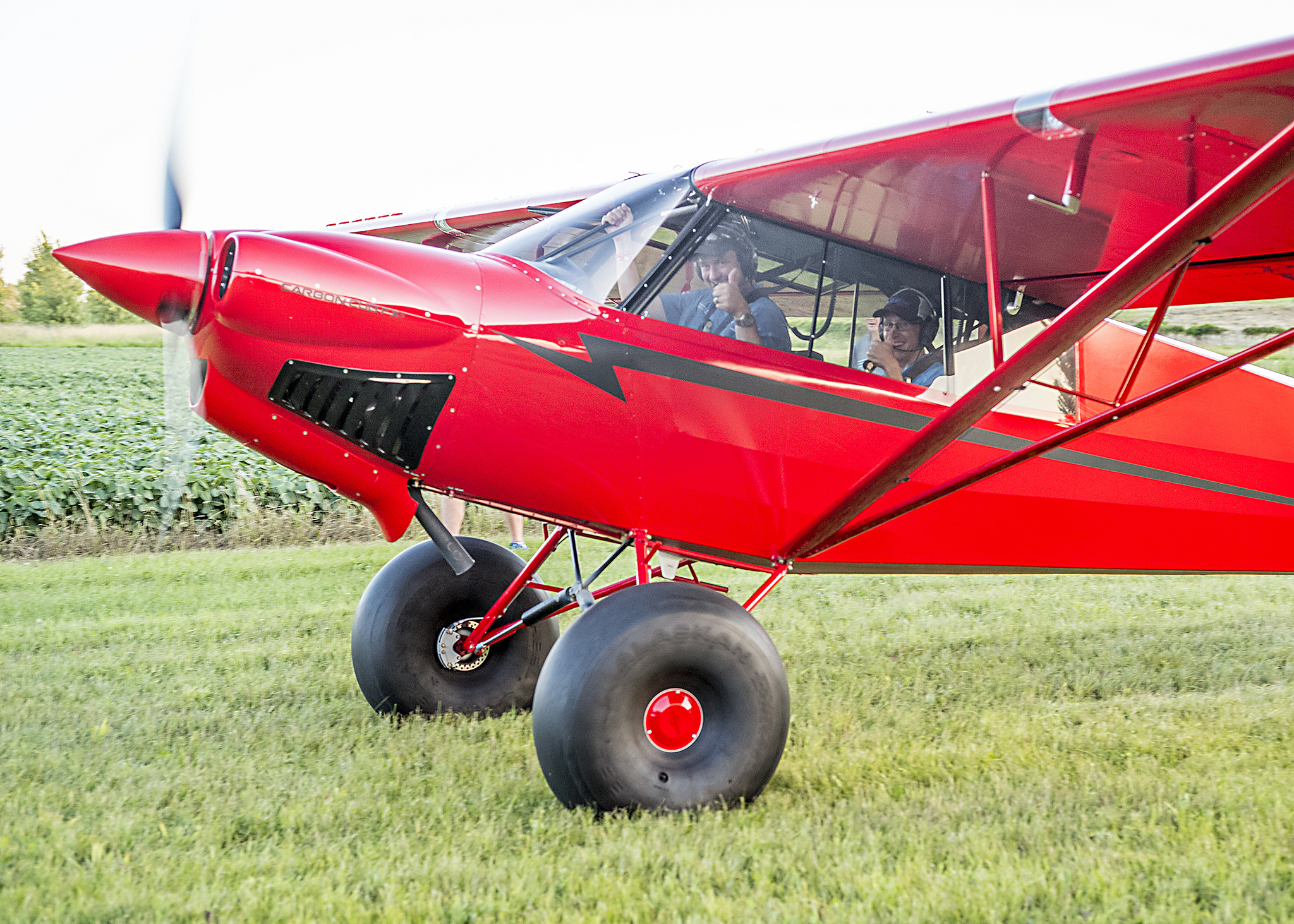
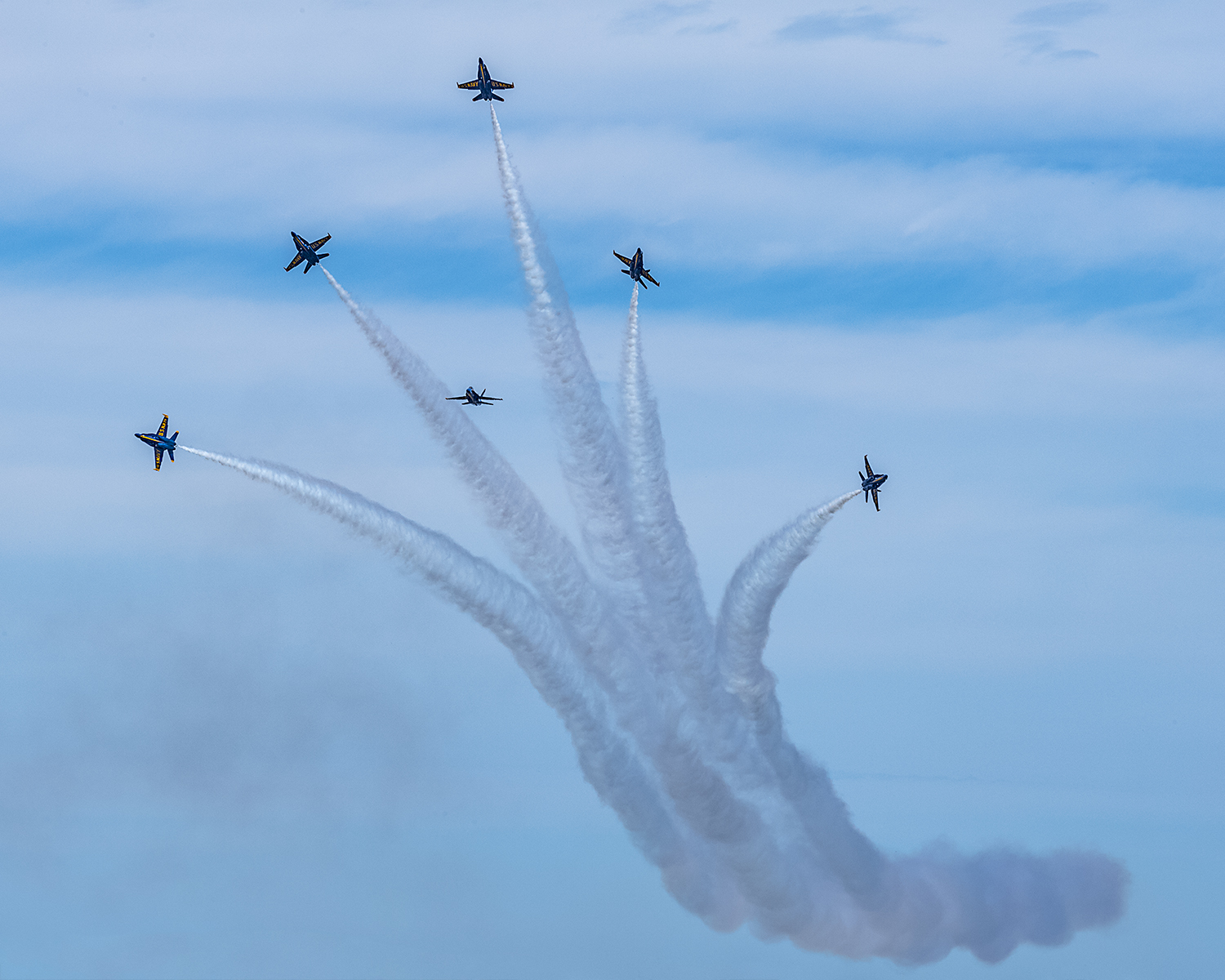
The Angelina County Airport in Lufkin, TX (KLFK) will be hosting the Angelina County Airfest on Saturday, October 10th. The airport will open up at 9am.
Prepare for a day of food, fun, and some great performances. There will be warbirds and many other classic airplanes on display, not too mention a number of aerobatic performances as the day goes on.
“AOPA Rusty Pilot presented by AOPA Ambassador Pat Brown at Tempus Training Solutions”
Topic: A Rusty Pilots Seminar
On Saturday, July 16, 2016 at 09:00 Central Daylight Time
Location:
Tempus Training Solutions
2080 Airport Dr.
San Marcos, TX 78666
Select Number:
EA2769634
Description:
Life may have gotten in the way, but the dream of flight can be yours again. Returning to the skies is not as difficult as most rusty pilot think. We’re inviting you back in the cockpit and will help you get there. Come and participate in a FREE Rusty Pilot program with fellow lapsed pilots. We will help you understand what’s changed in aviation since you’ve last took the controls and brush up on your aviation knowledge. The Rusty Pilot program is developed by AOPA in partnership with local flight training providers in order to create the best environment for getting you back in the air and a part of the general aviation community.
It is easier than most people think:
No FAA checkride or test
Medical may not be required
As a Bonus, by attending, you get two to three hours of free ground instruction towards your flight review!
To view further details and registration information for this seminar, click here.
“AOPA Rusty Pilot presented by AOPA Ambassador Pat Brown at Tempus Training Solutions” Topic: A Rusty Pilots Seminar On Saturday, July 16, 2016 at 09:00 Central Daylight Time Location: Tempus Training Solutions 2080 Airport Dr. San Marcos, TX 78666 Select Number: EA2769634 Description: Life may have gotten in the way, but the dream of flight can be yours…
There have been lots of changes in all parts of our lives with the coming of COVID-19. All of our lives have been affected in one way or another. We hope and pray that none of your families have been directly affected by the illness.
A lot of us have been living under Shelter in Place orders for several weeks now, only going out for groceries and making sure to keep our distance from people. We have to take a different mindset when we go out now. Even meeting new people is different since we can’t shake hands.
Flying has been an afterthought for a lot of pilots. There have been multiple ATC facilities where controllers have been afflicted with the virus and have had to shut down for hours or days. Airspace can change pretty quickly, going from what we all know as normal, to an ATC-ZERO scenario. This was the case for New York Center several times over the last two weeks.
There was some uncertainty regarding flight training under the shelter in place orders and Texas Top Aviation has been asked several questions about it over the last week. Yesterday, the Flight School Association of North America (FSANA) announced that flight instruction was indeed an essential business.
In an article on GeneralAviationNews.com, the website quoted a memorandum of understanding written by attorney George Winton on March 24th. Winton was a senior attorney for the FAA and U.S. Department of Justice, and now operates The Aviation Law Firm in Annapolis, Maryland.
“This memorandum affirms the statement that…flight training would be included as a critical infrastructure activity. Those engaged in the provision of and receipt of flight training who work to provide enhanced compliance with CDC recommendations for limiting potential COVID-19 exposure and spread would be considered exempt from travel limitations imposed by local authorities.”
Winton’s memo was sent to the Department of Homeland Security’s Cybersecurity and Infrastructure Security Agency (CISA). In the memo, Winton stated:
“CISA listed Other Community-Based Government Operations And Essential Functions as follows: Workers who support necessary credentialing, vetting and licensing operations for transportation workers.”
“The aviation sub-sector stakeholders involved with operation of recreational aircraft and flight schools, who employ Essential Critical Infrastructure Workers from the Transportation Sector, support necessary credentialing, vetting and licensing operations for transportation workers seeking pilot certification by the Federal Aviation Administration. Since CISA intended to be overly inclusive to reflect the diversity of industries, the aviation mode stakeholders understand that essential employees involved with the operation of recreational aircraft and flight schools continue to be identified as Essential Critical Infrastructure Workers from the Transportation Sector. Accordingly, the aviation sub-sector stakeholders who employ Essential Critical Infrastructure Workers from the Transportation Sector will continue to operate recreational aircraft and flight schools, appropriately modified to account for CDC workforce and customer protection guidance, based upon the CISA memorandum dated March 19, 2020.”
Based on the above guidance, Texas Top Aviation will continue to operate flight training in all of it’s normal capacities, while maintaining vigilance concerning sanitation, cleanliness, and health. Our company will keep it’s customer’s up to date on instructor health and wellness and won’t hesitate to cancel if there is any kind of health concern. We ask our customers to do the same.
If you are scheduled to train with Texas Top Aviation, please don’t hesitate to contact us with any questions or concerns you might have.
To read the entire memo from George Winton, you can find it here.
Concerning the 2020 Texas Top Aviation Santa Fe Golf Fly In scheduled for June 5th-7th, that event is currently being re-scheduled for September 2020. Dates will be announced by the end of April. We look forward to seeing you in Santa Fe in September!
There have been lots of changes in all parts of our lives with the coming of COVID-19. All of our lives have been affected in one way or another. We hope and pray that none of your families have been directly affected by the illness. A lot of us have been living under Shelter in…
Transition training deals mainly with piston engine aircraft, regardless of whether the airplane is a single or twin. The FAA doesn’t have any special requirements for changing from one piston engine airplane to another, as long as the pilot has the appropriate endorsements (high performance, complex, high altitude, etc.) and is rated in that category and class.
Transition training is promoted mostly by insurance companies. An insurance company looks at a pilots experience when deciding to insure him or her in a new airplane. If the pilot has only flown Cherokees and Comanches and is now upgrading to a Malibu, then the insurance company is going to require some transition training with a knowledgable instructor.
What is transition training? It is when an appropriate rated pilot needs to learn how to fly a different airplane. These are referred to commonly as checkouts, but with more complicated airplanes, the training is actually very in depth.
Using the example above, Pilot A just sold his Comanche 260 and bought a 1987 Malibu. Pilot A says, “A Malibu is a complex, high performance, single engine piston, which is what I had in my Comanche. I can fly that, no problem.” In reality, a Malibu has a lot of differences.
First, there are more systems in a Malibu. You have pressurization, air conditioning, emergency oxygen, turbo charging, and possibly radar. Not to mention you are dealing with a Continental engine instead of a Lycoming. And, is it a factory TSIO 520 or a converted 550? 2, 3, or 4 blade prop? Glass panel or steam gauges? What kind of autopilot? Plus, it’s a much heavier airplane so it’s going to fly different, have different rotation and landing speeds and handle differently in stalls. What’s the sight picture supposed to be on final approach? What are the emergency procedures?
Overwhelmed yet?
An experienced, insurance approved instructor and training program is a necessity when getting into new airplanes. It makes for safe pilots and safer skies.
In September, the FAASTeam at the San Antonio FSDO put a special emphasis on transition training (AOPA put out a free course last year covering general transition training topics). A lot of pilots don’t understand the need for transition training or what it even entails. Transition training deals mainly with piston engine aircraft, regardless of whether…
The FAA has decided to discontinue the dedicated En Route Flight Advisory (EFAS or Flight Watch) frequency 122.0. The effective date will be September 24th, but Flight Service will continue to monitor the frequency for an additional six months to direct pilots to Flight Service Station frequencies.
EFAS services will still be provided by Flight Service, though, on the published Flight Service Station frequencies (and 122.2).
To me, this makes some sense. In the past, if I accidentally contacted Flight Service on one of their frequencies to issue a pilot report or get a weather update, they would send me over to Flight Watch on 122.0. More than likely, the Flight Watch operator was sitting right next to the Flight Service operator, but I had to flip frequencies. This will help alleviate some confusion for pilots.
The deactivation of Flight Watch had been coming for years since the advent of Foreflight and other iPad and tablet apps giving pilots much easier access to weather, both in flight and on the ground. With Nexrad and Stratus, there isn’t much need for Flight Watch anymore (though you still can’t file a PIREP over the XM Weather!).
The FAA has decided to discontinue the dedicated En Route Flight Advisory (EFAS or Flight Watch) frequency 122.0. The effective date will be September 24th, but Flight Service will continue to monitor the frequency for an additional six months to direct pilots to Flight Service Station frequencies. EFAS services will still be provided by Flight…
Skyvector has changed it’s look. The aeronautical chart website is now offering flight plan filing capability. In order to gain the ability to file flight plans, the user has to form an account first.
Personally, I really liked how Skyvector had a simple interface before they changed. As an instructor, a lot of times, I go to multiple airports on one flight. It was really nice to just plug in airport IDs to check distances and heading information on Skyvector. The new format is a little clunky as the website has made it a little more difficult to do what it did best before.
Did the aviation community need another venue to file flight plans? Not with Foreflight, Garmin Pilot, and WingXPro leading the way in the app market. Skyvector was smart in not trying to develop another app to compete with the big boys.
Will the new Skyvector last? We’ll see. I’m hoping they’ll go back to the way they used to be, but we’ll see. I may use it enough to come around to liking it.
Skyvector has changed it’s look. The aeronautical chart website is now offering flight plan filing capability. In order to gain the ability to file flight plans, the user has to form an account first. Personally, I really liked how Skyvector had a simple interface before they changed. As an instructor, a lot of times, I go…
I got the privilege of going to the EAA AirVenture at Osh Kosh this year. It was my first Osh Kosh experience. I’ll be the first to tell you, walking in the gate on the first day is mildly overwhelming. There are people and stuff everywhere. Airplanes, tents selling everything from airplane parts to mattresses (I wasn’t really sure how mattresses tied to flying), vendors, colleges, and loads of people.
Photo Courtesy of William Day, copyright 2018, All Rights Reserved
After I gathered myself from my initial shock, I set out to explore all that I could. I spent most of the first morning walking around the different manufacturer’s tents, getting a gauge on all the new airplanes I could never afford and only hope to ever fly.
The short of it is, the Cessna/Textron Denali is going to be stellar once it gets completed. The Epic E1000 (if it ever gets certified) might take a large market share from TBM, though they will have an uphill climb. The Cirrus Vision Jet is very cool and should be a relatively simple step up for SR22T owners. The Pilatus Jet is huge. Finally, the Diamond DA62 would be my below 12,500 airplane and the Piper M350 would be my pressurized plane. Money being no factor, of course.
Photo Courtesy of William Day, copyright 2018, All Rights Reserved
I decided to take in the entire airshow on Day 1, all 4 hours of it. Upon realizing I would be very stiff necked if I did that each day for the three days I was there, I decided on Day 2 to check out some seminars and learn something. I took a seaplane ground school course on Day 2, then listened to a NASA presentation on electric airplanes and low boom sonic jet technology (how to make supersonic passenger flight quieter).
The end of Day 2 at Osh Kosh had to be the highlight. I got to hang out with Cub Crafters at the 51WI grass strip just north of the OSH Class D airspace. There was a free BBQ and I got to take a ride in a Carbon Cub. My landing from the back seat was a bit rusty, but still a very cool experience. Buzzing the BBQ area in tandem was pretty neat.
Photo Courtesy of William Day, copyright 2018, All Rights Reserved
Day 3 brought some cooler temps and some clouds. We walked out to the vintage airplanes, spending the morning gawking at Cessna 195s and Wacos. Then I took the plunge to explore all the vendor hangars. My idea was to walk around and see if I can find some interesting and innovative technology. Well, after 2 of the 4 hangars, my head was spinning, so I decided to watch the rest of the airshow to let my brain drain out a bit.
Photo Courtesy of William Day, copyright 2018, All Rights Reserved
3 Days was a good amount of time to spend. I don’t think I could have stayed all week, but only a day or two wouldn’t have been worth it. I flew up with a former student in his TBM 700, which was a very nice way to travel. We landed and stayed in Green Bay (KGRB), which was super easy and low stress. Had a great tailwind on the return and made it to Houston non-stop.
A few closing observations:
The Stratos 716X Personal Jet
If Stratos Aircraft is ever able to bring this to market, it sounds awesome. 400 knots, single engine, single pilot, with 6 seats. Being a single engine jet, similar to the Cirrus Vision Jet, it’s 100 knots faster, plus with the airflow and engine technology, it doesn’t have that big V Tail in the back, thereby reducing drag. I have a feeling it would find a good market, but the certification process is a bear to get through. Just ask Epic.
The Lancair Mako
This is a legit airplane. Lots of thought was put in to the design of the Mako by the new Lancair organization in Uvalde, TX (KUVA). The airplane was extremely comfortable, capable, and pretty cool. The stick is in the center, with throttles on the side (where the stick would be in a Cirrus or Columbia). AC, full Garmin integration, and the cool factor of the nose gear retracting, but not having a gear handle. Higher useful load than a Cirrus or Columbia, it would be a great alternative (and cheaper) to one of it’s certified competitors.
Avionics
There is a lot of new avionics technology hitting the market. Dynon, beloved by experimental enthusiasts, is finding a foothold in the certified world with some neat panels. It will be an uphill battle to take on Garmin, but there is some potential in the retrofit market to offer a cheaper alternative to the Garmin TXi.
Speaking of the TXi, I played around with the 10.7″ panel at the Garmin booth. It is extremely intuitive. Garmin did a great job of making it a simple touch screen interface, easy to use, and easy to learn.
Avidyne is pushing their iPad integration with the IFD 100 iPad app. It ties via Wifi or Bluetooth to an IFD 550 or 440 navigator, giving an additional screen in the cockpit to work with. You have the ability to modify flight plans and such on the iPad and it will show up on the GPS units.
Photo Courtesy of William Day, copyright 2018, All Rights Reserved
All in all, Osh Kosh was an experience I’m glad to have finally experienced. I don’t think I would go every year like some folks, but every few years, especially when my sons are older, seems like just enough for me, but not too much.
All Photos Courtesy of William Day, copyright 2018, All Rights Reserved
I got the privilege of going to the EAA AirVenture at Osh Kosh this year. It was my first Osh Kosh experience. I’ll be the first to tell you, walking in the gate on the first day is mildly overwhelming. There are people and stuff everywhere. Airplanes, tents selling everything from airplane parts to mattresses…