What’s Going On With the Airplane Market?

What’s Going On With the Airplane Market?

0 Comments

An Airplane Market Update, Q2 2026

I get asked some version of the same question almost every day right now: “Hank, what’s going on with the airplane market?” Owners are nervous. The market has definitely slowed down, and the second quarter has been especially quiet. So let me give you a straight read on what’s actually happening, why, and what it means for your airplane.

Here’s the short version: don’t panic. A slow market is not a market crash. It’s a market that rewards sellers who price realistically and buyers who are ready to pull the trigger. Patience is the name of the game right now.

Where values have actually been heading

Used airplane values shot up through the COVID years, peaked somewhere around 2022, and have been softening ever since — really since about 2023. That’s carried into 2026. But in most piston airplanes, it looks a whole lot more like a slow, steady give-back than a crash.

Now, here’s where I’d rather look than at asking prices. An asking price is just what a seller is hoping — or dreaming — to get; it isn’t what the airplane is worth. What an airplane is actually worth is what VREF tracks. And when I pull the VREF values on the single-engine pistons I’ve been appraising lately, a clear pattern shows up:

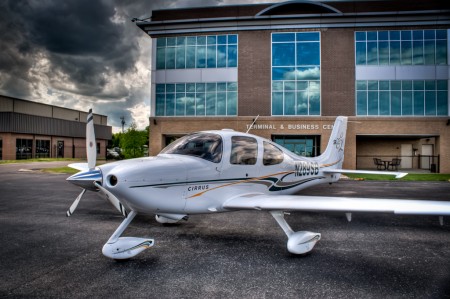
  • Older and less expensive airplanes are holding up the best. A clean normally-aspirated G1, G2, or G3 Cirrus SR20 or SR22 is down about 3% over the last twelve months. Older, more classic airplanes — Bonanzas, a Cherokee Six, a clean P210 — are flat to down just a few points. One outlier is the Cessna/Columbia 400 market — those are down about 13%.
  • The newer and more expensive, cabin-class singles have dropped more. A pressurized Malibu Mirage is down around 12% on VREF value, with other PA-46 pistons and turbines valued a little better, but still down between 8–12% over the last year.

Call it roughly 5% on average across the segment. That’s more than the under-1% you’d guess from asking prices alone — but it’s still less than 15% down over the last year, not a crash. The rule of thumb: the older and less expensive the aircraft, the better the values are holding; the newer and more expensive the aircraft, the more the value has dropped over the last year.

What a Crash Actually Looks Like

Worth being precise about what I mean. A real crash — like 2008–09 — is sudden and disorderly: values plunge almost overnight, financing dries up, buyers walk away from their deposits, and airplanes sit because there’s no one to buy them at any price. New business-jet deliveries fell nearly 34% in a single year, and it took years to climb back. What we have now is the opposite on every count — value drops of 15% or less, financing that’s tighter but still available, and airplanes that are still changing hands. That’s a soft, orderly market, not a crash.

Why Q2 got so quiet

A handful of things piled up at the same time. None of them is a disaster on its own, but together they explain why the phone has been ringing less.

Rates didn’t come down the way everybody expected. Oil shot past $110 a barrel after the conflict with Iran, inflation came roaring back, and the Fed stopped dropping rates — so financing an airplane still costs more, and that takes the urgency out of buyers. Financing also got tighter; the days of 100% loans with no money down are basically over, and lenders want bigger down payments.

The tax rush already happened, too: when the One Big Beautiful Bill brought back 100% bonus depreciation, it set off a mad dash to close before year-end, and a lot of the folks who’d have been shopping this spring already bought last winter. Plus, there are simply more airplanes to choose from now, which hands buyers options and pulls pricing power away from sellers.

So what should you do?

It depends on which side of the deal you’re on.

If you’re selling, price to today’s market — not the 2022 peak, and, unfortunately, not what you paid for the airplane. Realistically priced airplanes are still selling; the ones that sit are the ones chasing a number the market left behind. Keep your logs complete, stay current on inspections (don’t forget those 24-month IFR inspections!) and ADs, and present the airplane well. Have a thorough annual done before putting it on the market. Keep it clean and do whatever cosmetic or avionics fixes or upgrades you’ve been neglecting — you want it to show as well as possible, because there’s a lot of competition out there.

Re-dyeing the leather seats is a cost-effective way to spruce up the interior without replacing the seats. A good wash will certainly help the exterior. Glass in the panel always shows better than steam gauges, so even something simple like an Aspen upgrade, two Garmin GI 275s or G5s, or a 7-inch Garmin G3X will bring value to your airplane and make it show better — any of those are less than $10,000. If you do still have a Garmin 530W or 430W, consider changing them out for a newer Garmin or Avidyne IFD unit; Garmin won’t support the 530W/430W anymore. And Avidyne is quietly ending support for the Entegra system this fall — but the good news is the Avidyne Vantage panels are finally certified.

And if you can wait, give it some thought — the back half of the year is shaping up stronger. The fourth quarter is traditionally the best stretch for used sales, and now that bonus depreciation is permanent, that year-end push resets every fall.

If you’re buying, this is your window. Higher rates have thinned out the competition, there are more airplanes to pick from than there have been in years, and sellers are more willing to deal. If you’ve got cash ready or financing lined up, you’ve got leverage you didn’t have eighteen months ago. Be picky — buy the clean one with good records.

If you’re just holding, relax. There’s no reason to panic-sell. Most piston values are easing off slowly, not collapsing. Patience wins here.

The right move always comes down to your specific airplane, your timeline, and what you’re trying to accomplish. If you’d like a current valuation — or just an honest read on where your airplane sits in today’s market — give me a call. That’s what we’re here for.

Registration Now Open for the 2025 Texas Top Aviation Fly-In!

0 Comments

Are you ready to take part in one of the most exciting Texas aviation events of the year? Registration is now open for the 2025 Texas Top Aviation Fly-In, happening March 26th-28th, 2025, at the stunning Lajitas Golf Resort in Lajitas, Texas.

Whether you’re a pilot looking for a getaway, wanting to make new pilot buddies, or just seeking a one-of-a-kind adventure, the 2025 Texas Top Aviation Fly-In promises an unparalleled blend of community, aviation instruction, and scenic Big Bend recreation. Not to mention, great golf!

Why You Should Register

As one of the top 2025 Texas aviation events, this Fly-In features:

  • Two rounds of golf at the #1-ranked Black Jack’s Crossing Golf Course
  • Aviation seminars from industry leaders
  • Making new friends and seeing old ones at our group dinners
  • Non-golfing activities, like Jeep rentals, exploring Big Bend, or relaxing at the Resort spa

Spaces are limited, so secure your spot now for our 6th Annual Fly-In!

Event Highlights

Fly-In Golf Tournament

Enjoy two rounds of golf at Black Jack’s Crossing Golf Course:

  • Round 1: March 26th, 2025, 1:30 PM
  • Round 2: March 27th, 2025, 1:30 PM

Aviation Seminars

Learn from top experts on Thursday morning, March 27th, 2025:

  • Paul New: Cirrus and Cessna mechanic
  • Scott Williams: Aviation attorney
  • Travis Ulhorn: San Antonio Air Traffic Controller

Community and Connection

Relax and connect at evening group dinners starting at 7:30 PM.

Pricing

  • $1,475 per person (2 nights + golf) + tax
  • $1,100 per person (2 nights, no golf) + tax
  • $475 for non-golfing spouse + tax

Registration includes lodging and golf; food and beverages will be billed directly to the attendee.

Key Details

  • Golfers: Arrive by noon, March 26th, 2025
  • Non-Golfers: Arrive by dinner on March 26th
  • Complimentary shuttles provided from Lajitas International Airport (T89)

Register Today

Don’t miss out on one of the best Texas aviation events of the year. Register now and be part of the 2025 Texas Top Aviation Fly-In. Spaces are limited, so don’t wait!

Learning From Other’s Mistakes:  An Overview of the 2024 Piper PA-46 Accidents

0 Comments

The Piper PA-46 series, which includes models like the piston engine Piper Malibu and Piper Mirage, and the turboprops Piper Meridian, M500, and M600, is a popular choice for private pilots and business aviation. Known for its impressive speed, range, and pressurization, the PA-46 is a very capable single pilot aircraft. However, like all high-performance aircraft, it presents its own set of challenges and risks, especially when pilot error or adverse conditions come into play.

The 2024 PMOPA (Piper M-Class Owner’s and Pilot’s Association) Convention was the first weekend in November and one of the sessions every year is the PA-46 Safety Review.  Sadly, in 2024, the accidents involving various PA-46 models pointed out several areas related to decision making that all pilots need to put be aware of. These accidents highlight critical issues in weather awareness, pilot training, and decision-making, and they provide valuable lessons for other pilots in any type of aircraft.

Overview of the 2024 Piper PA-46 Accidents

The Piper PA-46 is generally regarded as a reliable and capable aircraft, but the safe outcome of a flight often times depends on the pilot’s decision making.  There always can be mechanical malfunctions, but those still require good pilot decision making to be able to walk away from the accident.

In 2024, multiple accidents occurred involving different variants of the PA-46, with many of the accidents occurring during critical phases of flight like takeoff or landing. Some of the key factors contributing to these accidents included:

  1. Weather Challenges: In several cases, adverse weather conditions, such as low visibility, thunderstorms, or high winds, contributed to accidents. Despite most PA-46’s being equipped with NexRad and weather radar, pilots sometimes underestimated or misjudged the weather risks.
  2. Pilot Decision-Making: A recurring theme in these accidents was pilot error—specifically, poor decision-making when faced with challenging conditions. In some cases, pilots continued flights despite deteriorating weather or failed to react appropriately to emergency situations.
  3. Mechanical Failures: As with every airplane, systems fail on a Piper PA-46.  Several accidents were due to engine power loss.  Proper training teaches pilots how to have the right mindset and skills to handle those engine power loss situations, taking a bad situation and having the best possible outcome due to good decision making and gliding skills.

Three Key Lessons for Pilots

The Piper PA-46 accidents of 2024 serve as valuable reminders about the importance of pilot preparation, decision-making, and risk management. Here are three critical lessons pilots can take away from these accidents:

1. Prioritize Pre-Flight Weather Planning

Poor weather conditions were a significant factor in some of the crashes in 2024. Pilots of high-performance aircraft must place a strong emphasis on weather pre-flight planning, especially when flying into regions prone to rapidly changing weather or severe conditions and across frontal systems. Pilots should:

  • Stay up-to-date with weather briefings before and during the flight, including calls to Flight Service Station if there is serious weather along the route.
  • Be proactive in altering flight plans or delaying departures when weather conditions become unfavorable.
  • Utilize onboard weather radar and other tools to monitor changing conditions in real time and avoid nasty looking weather systems.  ADS-B and XM Weather are delayed information.  They are not meant to be used to find holes through storm systems.
  • Finally, don’t try to shoot through holes!  They are called sucker holes for a reason.

2. Master Emergency Procedures

Pilots of all aircraft, not just PA-46 models, need to practice engine-out procedures multiple times a year with an instructor, not just at recurrent training.  The goal is to make emergency procedures second nature which creates the right mindset to handle the emergency, creating a much better outcome. Training should focus on:

  • Engine-out procedures immediately after takeoff, climbing out at low altitude, and at cruise.
  • Performance with the propeller feathered and unfeathered, recognizing how the feathered prop increases glide range.
  • Practicing forced landings and other emergency scenarios regularly to build confidence and competence.

3. Always Plan for an Emergency Landing

It is very important to know your options in the event of an emergency. When flying over mountainous or remote areas, pilots should always have a contingency plan for where to land if something goes wrong.  An emergency engine out brief should be a part of every pre-takeoff briefing to put the pilot in the right mindset. Pilots should:

  • Brief an engine failure on the runway, low altitude, and at an altitude that allows for a safe return to the airport in the event of an engine failure as part of every pre-takeoff briefing.
  • Study the flight route in detail and identify suitable emergency landing sites along the way, especially when flying in areas with limited options.
  • Consider the terrain, weather conditions, and available options in the event of an engine failure or other emergency.
  • Use terrain awareness and other onboard tools to help identify suitable landing areas in real-time, including the ForeFlight Glide Advisor.

Conclusion

The Piper PA-46 series, while a capable and reliable aircraft, demands a high level of skill and preparation from its pilots. The accidents in 2024 serve as a sobering reminder of the critical importance of weather awareness, emergency training, and proper flight planning. By learning from these accidents, pilots can make better decisions, have the right mindset, and reduce the risk of similar accidents in the future.

By prioritizing weather awareness, mastering emergency procedures, and always having a contingency plan for forced landings, pilots of the Piper PA-46 can improve their ability to handle the challenges posed by these high-performance aircraft. These lessons are not just for PA-46 pilots, but for all pilots striving to fly safely and confidently.

7 Reasons An Airplane Buyer Should Use An Airplane Broker

0 Comments

In the realm of buying airplanes, navigating through the complexities of the market can be as challenging as piloting through turbulent skies. Whether you’re a seasoned aircraft owner or a new pilot looking to acquire your first aircraft, enlisting the expertise of an airplane broker can significantly streamline the buying process. Here are some compelling reasons why engaging an airplane broker is a smart move for buyers:

  1. Expertise and Experience:
    Aircraft brokers are seasoned professionals with in-depth knowledge of the aviation industry. They understand what aircraft models fit different missions (you don’t want to have an expensive jet for 200 mile trips for 2 people), market trends, airplane values, and technical knowledge to help avoid “lemon” airplanes before even the inspection begins. Leveraging broker expertise can help buyers make informed decisions, avoid pitfalls, and secure the best deal possible.
  2. Access to a Vast Network:
    Airplane brokers have extensive networks comprising sellers, manufacturers, and maintenance facilities. This network gives buyers access to the experts on the aircraft they are wanting to buy. Whether you’re in the market for a brand-new aircraft or a pre-owned gem, brokers can tap into their connections to make sure the airplane selected is a well maintained aircraft.
  3. Time and Resource Efficiency:
    Searching for the right aircraft can be a time-consuming and labor-intensive process. From researching available options to arranging pre-buy inspections and negotiations, the tasks can quickly pile up. By entrusting these responsibilities to a broker, buyers can save valuable time and resources. Brokers handle the legwork, allowing buyers to focus on family, life and work while still staying informed and involved in the decision-making process.
  4. Objective Guidance and Advocacy:
    When emotions run high during the aircraft buying process, having an impartial advocate can be invaluable. Airplane brokers act as trusted advisors, offering objective guidance and a high level of knowledge about different airplanes. That knowledge comes in handy when evaluating aircraft specifications, assessing market value and negotiating terms. Brokers provide valuable insights and ensure that buyers make well-informed decisions aligned with their goals.
  5. Streamlined Transaction Process:
    Purchasing an aircraft involves navigating a complex web of legal, financial, and logistical considerations. Brokers are well-versed in handling these intricacies and can streamline the transaction process from start to finish. They coordinate with legal experts, financial institutions, escrow companies, maintenance shops and regulatory authorities to ensure a seamless and hassle-free experience for buyers, minimizing potential delays and complications along the way.
  6. Cost-Effective Solutions:
    While some buyers may be hesitant to engage a broker due to concerns about additional costs, the reality is that brokers often help buyers save money in the long run. By leveraging their industry knowledge and negotiation skills, brokers can steer buyers away from airplanes that are potential money pits and toward airplanes that have excellent maintenance pedigrees. Brokers are often able to secure favorable pricing and connect buyers to other experts in maintenance, insurance, and other essential services.
  7. Peace of Mind:
    Perhaps most importantly, working with an airplane broker provides buyers with peace of mind throughout the buying process. From the initial search to the final closing, buyers can rest assured knowing that they have a dedicated professional by their side, guiding them every step of the way and ensuring a successful outcome.

While purchasing an aircraft can be a daunting endeavor, enlisting the services of an airplane broker can turn the journey into a smooth and rewarding experience. With their expertise, industry connections, and commitment to client satisfaction, brokers empower buyers to make informed decisions, secure the best possible deal, and embark on their aviation adventures with confidence. So, whether you’re in the market for a single-engine propeller plane or a luxurious corporate jet, consider partnering with an airplane broker to navigate the skies of aircraft acquisition with ease.


Texas Top Aviation, LLC has 10 years of experience helping our customers purchase amazing airplanes. We specialize in TBM, Piper PA46, Cirrus and Columbia aircraft, but have extensive knowledge about a wide variety of piston and turbine aircraft. Contact us today to discuss our services for your next airplane.

2024 Texas Top Aviation Shangri-La Fly In

0 Comments

It’s that time of year again! Yes, it’s the New Year, but it’s also time to register for the 2024 Texas Top Aviation Fly In. The Aviator’s Academy’s sister company, Texas Top Aviation, is hosting it’s 4th annual fly in event on March 19th-22nd, 2024 at the Shangri-La Resort in Grand Lake, OK.

For those not familiar with the annual Texas Top Aviation Fly In, we’ve been hosting this event since 2019 and it is always well attended and fills up fast. Geared around aviation education, golf, community, and a whole lot of fun, the fly in is always very popular.

This year, we are adding a Par 3 Shootout for early arrivals on Tuesday, March 19th at the Shangri-La’s Battlefield Par 3 Course. The 4th Annual 2 Round Golf Tournament begins on the afternoon of Wednesday, March 20th and finishes up on the afternoon of Thursday, March 21st.

The biggest hit of the week is always the safety seminars on Thursday morning. This year, Texas Top Aviation has secured the talents of Paul New, expert Cirrus, Columbia, and Cessna mechanic, and owner of Tennessee Aircraft services. If you listen to Mike Busch’s podcast, Paul is a regular. Scott Williams, owner of The General Aviation Law Firm, will be presenting on LLC’s and Illegal Charters, while Hank Gibson, owner of Texas Top Aviation and The Aviator’s Academy, will present a study on several different accidents and what can be learned from other’s mistakes.

It’s guaranteed to be a fun week. The Grove Regional Airport in Grove, OK will be our host airport (KGMJ) this year. Sign up soon as space is limited. Registration is only open till February 23rd, 2024. For more information and to register, simply Click Here. We hope to see you there!