FBO Etiquette

If you’ve ever been to Nantucket Airport during the summer, you’ll understand when I say that it is a crazy place. During the summer months, especially on weekends, the airport is visited by an endless parade of airplanes ranging from the smallest GA airplanes to the biggest private jets.

One sunny Sunday afternoon I was standing in line at the front desk of the Nantucket FBO when the ramp door opened and a very grumpy and entitled man walked in. The man marched right up to the front desk and barked a fuel order at the girl working there, which she mistakenly read back wrong. After yelling at her for her wrongdoing, he announced that he had flown in to go to the restaurant and stormed off to drown his sorrows in fish and chips. Although he was a jerk, his attitude got me thinking about FBO’s and everything that the people who work at them do for us pilots.

For anyone who may not know, FBO stands for Fixed Base Operator. FBO’s can be found at airports everywhere and their business is to provide services such as fuel, hangar space, and tie downs. Bigger FBO’s can offer more services including rental cars, food, maintenance, flight instruction, etc. FBO workers have the ability to make life really good or really miserable for pilots, and, it seems to me, we pilots have the same power over them. Based on my personal experiences and the experiences of some friends who have worked at airports around the country, here are some things to think about next time you taxi onto an FBO ramp.
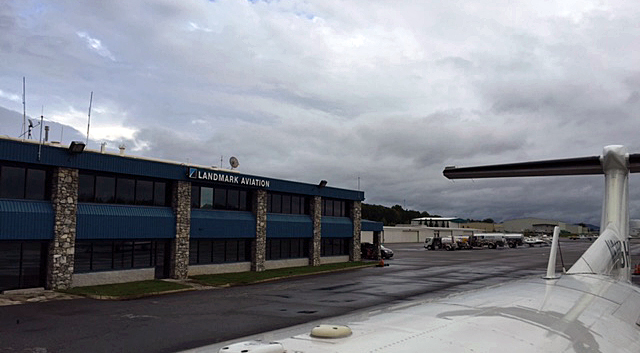
Landmark Aviation FBO
Landmark Aviation has the best pens

I’ve divided this article into two sections:

  • FBO Etiquette: What can we as pilots do to make life easier for the workers at the FBOs
  • FBO Pilot Perks: Ways that FBOs can help make a pilot’s life better (besides basic services like fueling)


FBO Etiquette

Be Polite

Everyone I talked to about their time working at an FBO said that simply by being friendly and polite is one of the biggest ways we can help. Most of the people that work at the FBOs love aviation and likely are working there to be around the industry in hopes of eventually being more involved. The girl working the desk at Nantucket didn’t deserve to be yelled at just for reading a tail number back wrong; don’t forget that “please” and “thank you” are still magic words.

Call Ahead

Whether you are flying to the airport, or you left your airplane at the FBO and you need them to pull it out or fuel it, calling ahead is greatly appreciated. Most FBO’s have a radio at the front desk and have their frequency listed online and in foreflight. Call ahead and tell them that you’re coming, when you’ll be arriving, and what you’ll need when you get there (gas, rental car, taxi..etc). That way they wont feel rushed and you may get what you’re looking for more expediently upon arrival.

Fuel orders

If your fuel order is difficult or confusing (example: 6.54 gallons in the right side and 4.32 in the left) you may be better off just to do it yourself at the self serve. One of the guys I talked to said that he would have pilots ask for extremely specific numbers and then stand there watching, ready to pounce when it wasn’t fueled exactly right. Its also worth noting that fuelers do make mistakes. Its highly recommended to watch and make sure that the correct truck (Jet A or 100LL) is the one pulling up to dispense your gas. Make sure you check that the fuel caps are properly installed before departing. 

Look outside
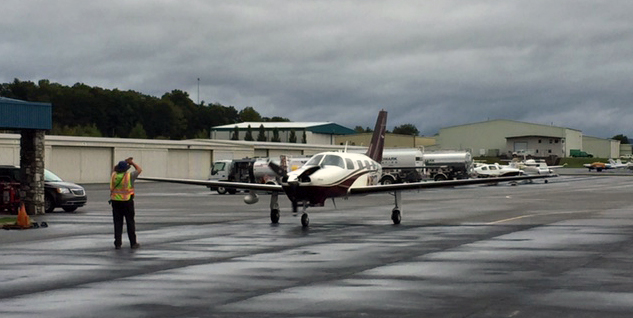
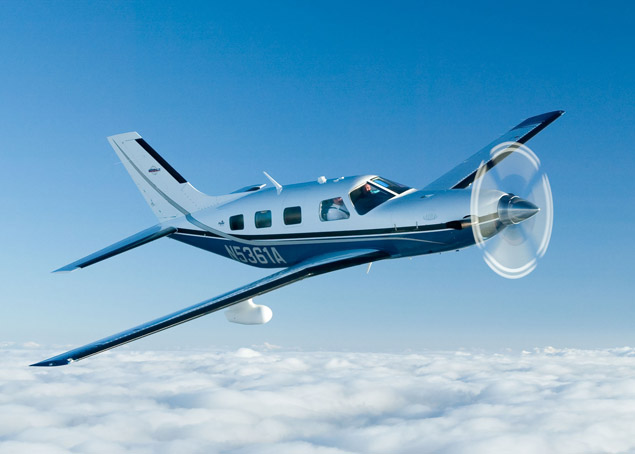
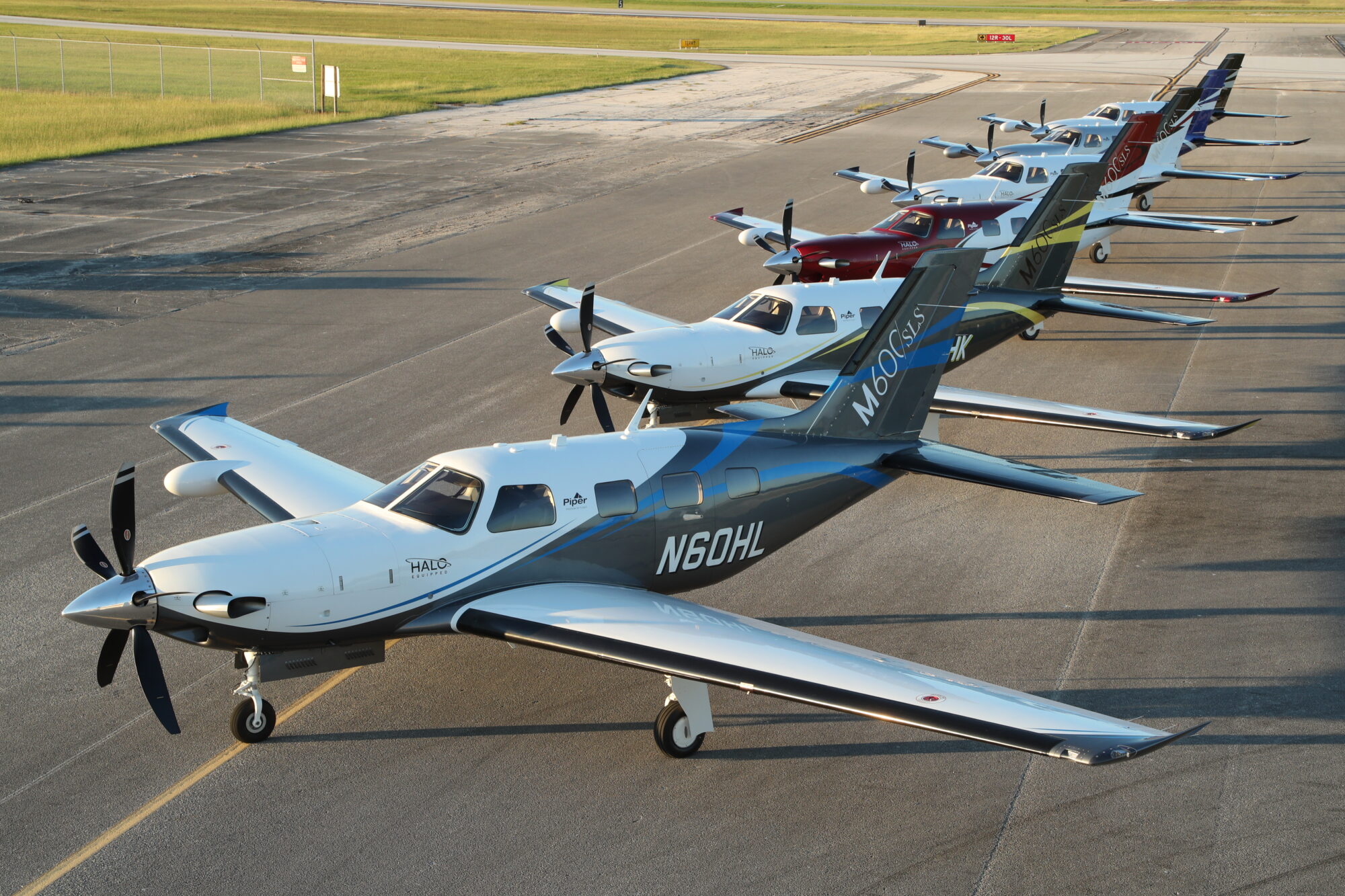
Piper Malibu FBO
A lineman motions for the pilot to stop.

Taxiing onto the ramp is not the right time to be doing your after landing and shutdown checklists. Wait until the airplane is stopped before taking your eyes off the person marshaling you to your parking spot. I’ve been told that it isn’t uncommon for a pilot to be looking inside while taxiing and it makes the linemen very nervous as they are motioning to the pilot to stop (For those unfamiliar, with lineman hand signals, here’s a helpful link).

Brakes

Unless you have talked to them and get the okay, don’t leave the parking brake on when leaving your airplane at an FBO. Often the lineman will direct you to park upfront to make loading and unloading easy, but if you’re going to stay for a long period, the airplane will need to be towed and parked out of the way. Leaving the parking brake on can make serious headaches for the people trying to organize the ramp after you leave.

Lights

Don’t blind the poor guy parking you by leaving all your landing, taxi, and recognition lights on as you’re pulling into your spot at night. Likewise, when you are ready to leave your parking space, its courteous to signal the person waiting in front of your airplane by flashing one of your lights at them so they know you are ready to be directed off of the ramp.

FBO Pilot Perks

Good parking

This one is pretty basic. I’ve heard through the grapevine that you may get parked in the boondocks as punishment for being rude to the FBO staff. However, if asked, much of the time they can pull your airplane right up front and may even let you pull a vehicle onto the ramp to load people and bags more easily.

Cheaper hotel rooms/ rental cars

Some FBO’s have special rates with hotel and rental car companies around in the area. Although it varies from place to place, you may be surprised with the amount you can save on these travel essentials. I had a flight last week where I called and was given a quote of 185 dollars for a rental car…after telling them that I was parking at the local FBO, I got the special price of 125. Check with the FBO you will be stopping at for any of their current offerings.

Fuel discounts

Sometimes the price of fuel or the minimum uptake to waive the fees can be negotiated.  Sometimes, the fees may be forgotten entirely. If you are unable to take the minimum amount of fuel to waive the landing or ramp charges, tell them what you can take and you may be pleasantly surprised with the response. Its not uncommon with our Bonanza that even though the “minimum” may be 20, I can waive the fees by up-taking 10 or 12 gallons instead.

Points/ Rewards cards
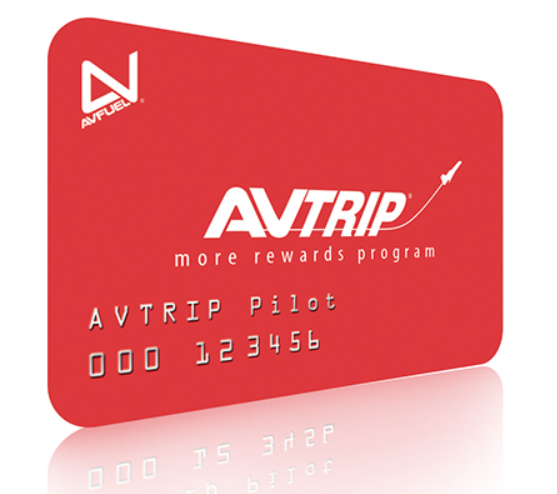
IMG_1912

Some FBO’s offer incentives to pilots for buying gas. Many of the rewards programs are free to sign up for and will pay the fuel purchaser cash based on how much fuel they buy over a specified time period.  I am a member of the Avtrip program which rewards fuel purchases at Avfuel airports with points that are redeemable for money. Avtrip is just one example of an FBO fuel rewards program; if you fly regularly, it may be worth looking into whether or not there is a fuel rewards program you can take advantage of.

Crew Cars

Most FBO’s have cars designated for use by the pilots. They are extremely nice for going to get lunch or taking care of whatever short errands you may need to run around town. Most crew cars are limited to about 1-2 hours of use, but they can often be loaned out longer based on the discretion of the people working the desk. On a few occasions, I’ve had the cars loaned to me for longer, even over night, by the nice people at the FBO (They always appreciate pilots splashing a few gallons of auto gas into the cars while they are out, too).

FBOs and the services that they provide are invaluable to pilots, both commercial and private. If we as pilots are willing to work with the linemen and service reps we can make both our lives and their lives easier. Remember to be polite and don’t be afraid to ask if you need something….that’s what they’re there for!

Andrew Robinson is a 135 Charter Pilot and flight instructor who lives with his wife and 2 daughters in Pennsylvania.  He flies Pilatus PC-12s and instructs in Beechcraft Bonanzas.

Similar Posts

  • VFR Flight Plans in the Modern Age

    Raise your hand if, after you have officially become a pilot by passing your private pilot check ride, you consistently file VFR flight plans with Flight Service.

    Anybody?

    Okay, let’s revise the question.  Raise your hand if you have filed VFR flight plans at least 5 times in the last year.

    Okay, one or two hands go up.

    That’s it?

    To be perfectly honest, I have filed VFR Flight Plans twice (I think) in the last year.  The only reason I did was because I was flying in an area that had poor radar/radio communications and I wanted someone to know where I was (I was ferrying an airplane through southern Oregon and northern Nevada which is mountainous and is hard to get coverage into at lower altitudes).  I was so unaccustomed to doing it that I nearly forgot to call and close my flight plan.

    FlightPlanForm

    This is a common complaint amongst pilots concerning VFR flight plans.  It’s extremely easy to get to your destination, hop in the car and completely forget to close your VFR flight plans.  Thankfully, now a days, the Flight Service Station will typically call the number you put in your VFR flight plans (your cell phone number most of the time) to make sure you are on the ground before initiating search and rescue services.

    Another complaint is that it is cumbersome to call the Flight Service Station after departing to open the VFR flight plans.  This is especially true in a busy airspace area or if the pilot is getting a VFR Flight Following and talking to ATC on a different frequency.

    I still think it is a great idea to file and utilize VFR flight plans.  If you don’t show up at your destination, someone will come looking for you which could mean the difference between getting stranded after an off airport landing and getting a warm cup of coffee at the end of the day.  Even if the you get flight following from ATC, it’s still good to file a flight plan.

    Lockheed Martin, who runs all the Flight Service Stations across the US, heard these complaints from pilots and decided to come into the modern age and make it easier to open and close flight plans.  They developed EasyActivate and EasyClose.

    These services are very simple.  Just go to Lockheed Martin’s Flight Service Station website, set up a new account, then file VFR flight plans to see the services in action.

    File your VFR flight plans first, through calling the FSS or on your favorite iPad app.  Then, for EasyActivate, you’ll receive an email 30 minutes prior to your ETD with a link in it.  Simply click/tap on the link and your flight plan is activated.  No having to call FSS in the air, no having to try to get them on the ground.  Just tap the link and you’re good to go.

    For EasyClose, you’ll receive an email 30 minutes prior to your ETA at your destination.  When you get on the ground, you’ll see the email in your phone or iPad and you just tap the link and your flight plan is closed.  Since we all have our phones and iPads with us constantly, there will be no more forgetting to close the flight plan and getting that angry call from the FSS.

    Sign up is quick and easy.  All Lockheed Martin needs is your email address, last name and phone number. They’ll send you the password to set up your account.  Log in (they will have you change your password immediately), then just click on EasyActivate/EasyClose up at the top.  You have to register the email address you want (you can also put in a phone number to receive a text message, and you can put multiple email addresses and phone numbers if you’d like), then you are all set to go.

  • MMOPA Spring Safety Standdown

    MMOPA will be hosting it’s second Safety Standdown event at many locations across the country for Piper PA46 owners and pilots. The first iteration of MMOPA Safety Standdown in the fall of 2019 was a big hit. Each event was very well attended by MMOPA members.

    What is Safety Standdown you ask? Safety Standdown was put together as a mid-year training event as part of the MMOPA Master Aviator program. It’s goal is to allow PA46 owners and pilots to fly in to a location at a reasonable time (the event starts at 10am local time), received some good quality ground training over relevant safety topics by highly experienced PA46 instructors, have a free lunch, then depart mid-afternoon to arrive back home before dark.

    The event is free to all attendees. Lunch will be provided at each location. This event is not exclusive to MMOPA members, either. Any PA46 owner or pilot, or just anyone interested in the PA46 world, are invited to attend.

    Texas Top Aviation is hosting the South Central Region Spring Safety Standdown at the Henrickson Jet Center at the Austin Executive Airport (KEDC). Hank Gibson and Pedro Vargas-Lebron will be presenting on the following topics:

    • MMOPA Operational Practices review and importance of stabilized approaches
    • Crosswind Takeoffs and Landings
    • High Density Altitude Operations
    • A discussion of thunderstorms, resources in the cockpit for weather avoidance, and accidents that have occurred involving thunderstorms

    The MMOPA Spring Safety Standdown will take place on Saturday, April 18th, 2020. Registration is required for the event. The link for registration can be found here.

    Come on out for some high quality training and free BBQ with 50 of your closest PA46 buddies!

  • Checking The Stall Warning Horn

    When a pilot first glances at the title of this article, the first thought that probably goes through that pilot’s head is, well that’s easy.

    And it is, if you are flying a high wing Cessna. On other airplanes, there are a few tricks to checking the stall warning horn. If you get them wrong, you’re liable to get a bill from your maintenance shop for an hour of labor for a problem they couldn’t duplicate.

    Cirrus SR22

    Let’s start with the Cirrus. On the pre-FIKI Cirrus aircraft, there was a small little hole in the wing that contained a diaphragm. That diaphragm sensed a change in airflow at a certain angle of attack just below the critical angle of attack and set off the stall warning horn. Unfortunately, the only way to check that is to suck on the hole during pre-flight.

    I don’t. I verify the hole is clear and that’s about it.

    On the FIKI Cirrus aircraft, there is actually a stall warning vane. It looks like a high wing Cessna vane, but if you turn the batteries on and try and get it to come on during your light and pitot heat check, nada.

    Here’s the trick, and the checklist doesn’t do a good job of describing this.

    • Turn on the Avionics Master
    • Turn on the speaker
    • Put the flaps to full
    • Then move the stall warning vane and you’ll hear the horn

    The speaker and the Avionics Master are so you can actually hear the horn (if you had the headset on while you were doing this, the speaker would be unnecessary). The flaps have to be full because the pitch attitude for the critical angle of attack is lower with the flaps down, so the horn goes off when at a different angle. You then don’t have to use as much force to push the vane.

    Piper PA46

    The early -310P Malibus are pretty simple and straight forward. Move the vane, get the horn.

    In the -350P, you can’t get the horn to come on by moving the vane. So, Piper put a stall test button that’s hidden underneath the upper left side of the instrument panel. Push that to test the horn. On the G1000 PA46, it is located directly above the PFD. On the Avidyne, it’s below and to the left of the pilot’s yoke.


    Testing the stall warning horn is a very important part of pre-flight. A pilot needs to know if the aircraft is close to a stall. The advent of Angle of Attack indicators in small, GA aircraft, have added a greater awareness to the angle of attack during all phases of flight to avoid those stall spins.

    If the stall warning horn goes off or the AOA shows yellow, lower that nose immediately.

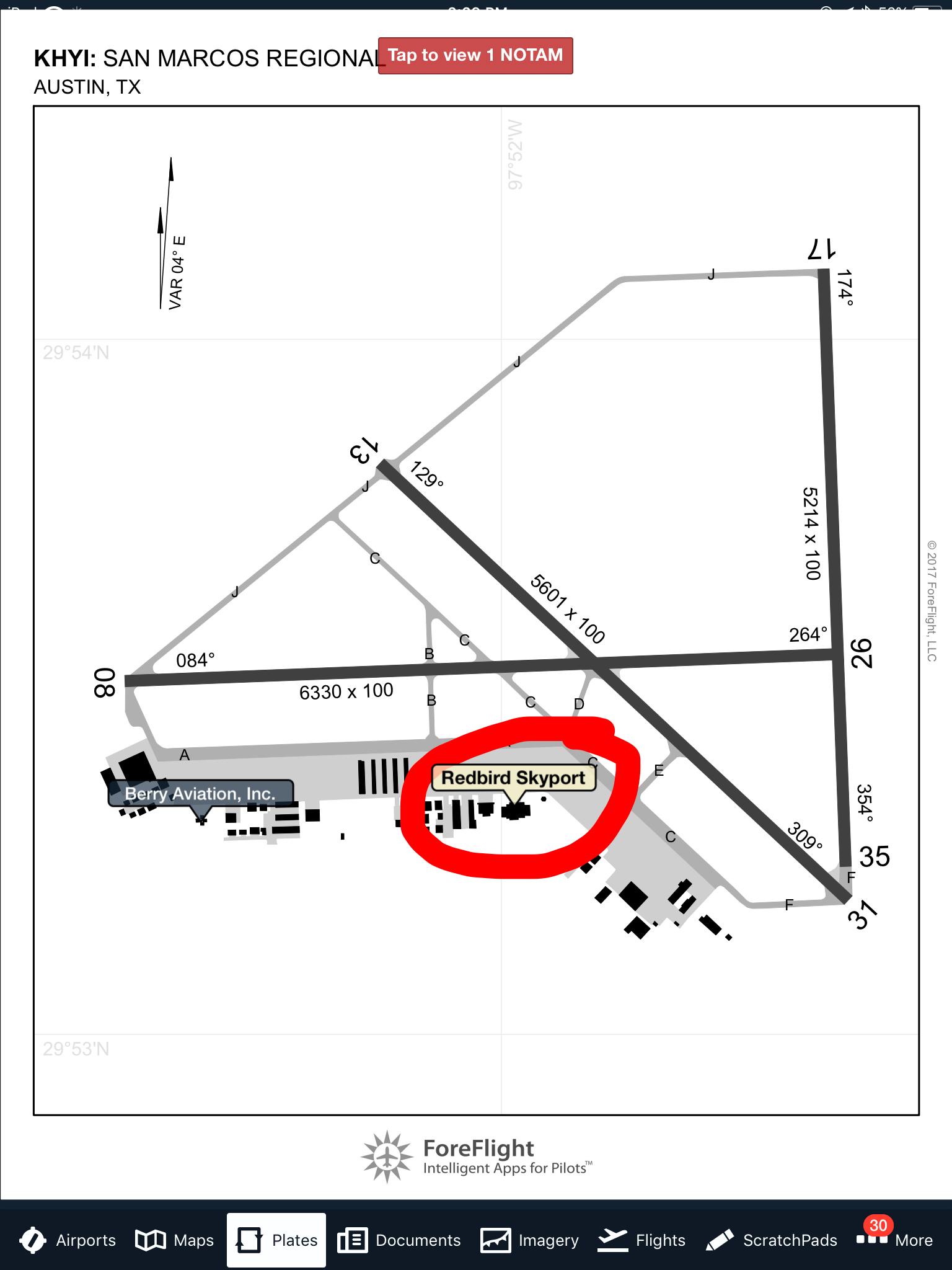
  • Cirrus SR20 Partnership Forming at KHYI

    Ever wanted to be a Cirrus owner, but the economics of being a single owner just don’t make sense for you? If you’re in the San Marcos/New Braunfels/Austin area, you now have a chance to join a Cirrus SR20 partnership at the San Marcos Municipal airport, KHYI.

    The Cirrus SR20 partnership group is looking for 2-4 more members to buy in to a 2006 or 2007 Cirrus SR20 GTS.  The plane will be kept at KHYI and the group already has a hangar for it.

    For more information, please contact Texas Top Aviation at info@txtopaviation.com.

    Cirrus SR20 Training


  • MODAERO NextGen Aviation Festival

    Looking for something different to do this Spring Break week?

    Modaero

    Consider checking out the First Annual MODAERO NextGen Aviation Festival in Conroe, TX.  It’s a fly in event, complete with camping opportunities, at the Lone Star Executive Airport, KCXO.  The festival itself is being held right next door to the airport at the Lone Star Convention Center.

    What’s the draw, do you ask?  Not only are there going to be representatives from all the major aircraft manufacturer’s (along with tons of airplanes), there will be a multitude of speakers and live music.  There are even drone races!  The live music sets the event apart from the well known national fly in events like Osh Kosh and Sun N Fun.  It’s a different type of Festival, geared toward the younger generation of pilots.

    For more information or to register, check out MODAERO’s website.  The festival runs from Wednesday through Saturday, March 16-19.

  • Texas STOL Roundup

    Looking for a fly in this fall?  Check out the Texas STOL Roundup at the end of September in Hondo, KHDO.  Interested in entering?  All are welcome!  There are several different categories including LSA, Experimental, and others.  Come in for a fun weekend and see how short an airplane can be landed!

    There will be bands, a STOL seminar, and even a hangar dance.

    Fly in or drive in.  Camping will be available on the airport.

    For more information, you can visit the event website.

Leave a Reply

Your email address will not be published. Required fields are marked *