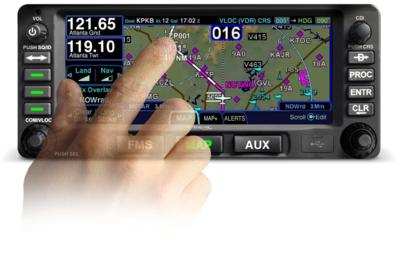
When is the last time you talked to the Flight Service Station?
Believe it or not, FSS is still in existence. Over the past 10 years, they went from FAA run, the being bought by Lockheed Martin, to now being privately run by a company called Leidos. 1-800-WX Brief will get you connected with a weather briefer, but you’ll hear “Leidos Flight Service Station” now when the briefer picks up.
Since the advent of Foreflight, most pilots these days get their weather briefings digitally on the iPad. Foreflight has come a long way since it’s inception. The briefing part of their Flights page is quite comprehensive, with lots of information, and counts as a legal weather briefing (which pilots are still required to get before a flight).
Why does a pilot even need to call Flight Service? Well, when’s the last time you tried to interpret everything the Briefing on Foreflight told you? As I said before, it’s a lot of information and a lot of it can be confusing. Pilots are not fully trained on interpreting Prog Charts and getting an overall weather picture for a flight. A weather briefer is.
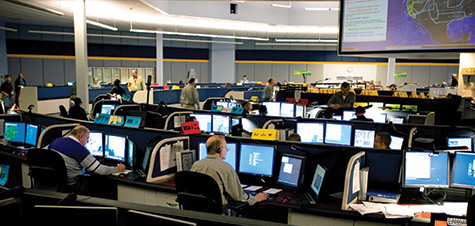
I have over 5,000 hours and I still call a weather briefer before almost every flight. On the way to the airport is a great opportunity to get a weather briefing. I get a great picture of what’s going on in my area or over my route, frontal movement, bad weather areas, and whether or not it’s a good idea to even take off. Calling in the car alleviates the main complaint I hear about calling the Flight Service Station, which is it’s inconvenient and causes a delay since you have to call them on the phone.
I don’t do much private pilot training anymore, but when I do, I always teach my students how to get a weather briefing from the Flight Service Station. I’ll show them how to get the briefing on Foreflight too, but usually their eyes bug out of their heads when they start trying to read everything. A breathe of relief is released when I tell them there is a trained professional just a phone call away who can clear everything up.
The other thing that the Flight Service Station provides that is important to a lot of folks are PIREPs. It’s vital in sketchy weather areas for the FSS to get a report of what’s actually going on in the air. This helps other pilots out greatly as they are getting information about icing, cloud bases and tops, turbulence and a myriad of other things from airplanes who are actually in the conditions.
Finally, the most used portion of the Flight Service Station is the Clearance Delivery line (888-766-8267). At airports without a tower or a clearance delivery frequency, with IFR conditions present, the only way to get your IFR clearance is to call Clearance Delivery. Yes, it can take a little time sometimes, but you will get a clearance every time, unlike taking off and trying to dodge the clouds without hitting anything, while trying to call Center on the radio (which isn’t safe or legal).
Been a while since you’ve talked to the Flight Service Station? Give them a call, either on the phone or on the radio. Odds are, they are bored and just wanting someone to talk to, just like you are on that long cross country flight!
Checkout 1800WXBrief.com to see all the cool stuff the Flight Service Station does.
There is truth in the old adage that 99% of flying is routine while the remaining 1% holds the potential for events that cause those who fly to hold themselves above mere ground-bound mortals. My 37 years of military flying might have distorted that ratio a fair bit given the complexity of high-energy fighter aircraft and the uncertainties of combat, but rest assured we all earn our right to be proud of our wings every time we fly.
The requirement that a single-seat fighter pilot be able to handle rapidly evolving emergency situations and complex systems diagnosis sets a high bar for any who join that group. However, the lessons we learned and techniques we developed for making fighter aviation significantly safer than in yesteryear have direct applicability to general aviation.
Prioritization and compartmentalization are two important skills that every pilot should have. These skills amount to the ability to look at a complex problem, quickly determine the most critical elements, and mentally set aside those things that can wait so as to deal with highest priorities first. While this does not sound like rocket science, the art is in the doing!
The technique for dealing with the immediate onslaught of information, such as when that caution tone or caution light presents and different gauges or displays go haywire, provided the title for this piece.
All flight training will, at some point, involve what is called situational emergency procedures training, know to military aviators as SEPT. We do this type of training in a simulated cockpit that has all the dials and switches for our particular aircraft. None of the switches and dials do anything, some are just decals on a wooden dashboard, but the presentation allows the SEPT victim to reach for the appropriate switch or lever, while telling the instructor what and why they are doing so.
One of the most common mistakes new trainees make is that of trying to act too fast, before they have fully and correctly analyzed the situation at hand. Herein lies the titled technique. After blurting out a quick and incorrect answer, the instructor would admonish with: “rather than try to react instantly, maintain aircraft control, analyze the situation, then take appropriate action. The best thing you can do is to reach up and wind the clock. This will give your nervous energy some place to channel itself, while your brain takes in the full situation.”
Winding the clock might seem like an archaic notion, but, amazingly enough, even our most modern aircraft have the same clock we flew with as far back as the 1960s. The Waltham A-13A aircraft clock and timer is a wind-up device that only uses power to light up at night. Unless your emergency involved some type of catastrophic impact to the instrument panel, you could count on at least your clock to be functioning normally. Thus, reaching out and winding it was unlikely to cause any worsening of your evolving emergency and would distract your brain from the need to take some poorly-thought-out action, too quickly.
Now, in most aircraft there are a few emergencies that will require immediate, reactive actions. In fighters, we call these Boldface Emergencies. For each type of fighter, we memorize, to the letter, the few key actions that have to be instinctive, to prevent disaster. For all other emergencies, there is time to reach out and wind the clock while assessing all instruments and lights to fully understand your situation.
For your aircraft, know those Boldface or Critical Action Procedures, but for all other emergencies, take the time to maintain aircraft control, “wind the clock” while you analyze the situation, then take appropriate action.
Mike Hostage is a retired USAF pilot with 37 years of experience, flying a wide variety of aircraft. An instructor pilot for more than half of his 4800 flight hours, Mike is currently qualified in a Cirrus SR-22T and regularly flys his two homebuilt sailplanes.
Are you one of those pilots who hates fuel stops simply for the fact that the engine doesn’t have time to cool off? You pump gas into the plane, hit the bathroom, get in the plane and the oil temperature is still up at 160-170 degrees, leading you to have to figure out how to get the plane going again with a hot engine. For those without proper training, this usually means a lot of jockeying around with the throttle, mixture, and fuel pump to try and get the thing started without flooding it. After coughing and wheezing several times, the engine finally comes to life, leaving you to only guess what worked and without the knowledge of how to duplicate it.
Let’s take a step back for a minute to see what is actually happening with a hot engine. Once the engine is shut off, the fuel in the lines leading from the tank to the engine is vaporized, meaning there is more air in the fuel lines than liquid fuel. In the engine block itself, there is still liquid fuel in the injectors, but only enough for the engine to cough then quit if started.
When a normal priming and starting procedure is performed, too much fuel is forced into the cylinders and the engine becomes flooded. A flooded engine just means that the stoichiometric ratio is way too rich, meaning there is too much fuel and not enough air. The prime does the trick of getting the fuel vapor out of the fuel lines, but it shoves too much fuel into the cylinders. Once the engine is flooded, it’s a waiting game to allow air into the engine to get the mixture right. All Lycoming powered high performance and turbo charged engines are notoriously easy to flood when hot.
So, what’s the solution? By taking a step back to see what is actually happening, you can attack the problem from the source, which is the fuel lines. You need to get the vapor out of the fuel lines and get some liquid fuel in there. The procedure for this varies based on the make and model of engine, but I’m going to use the example of the Continental IO-550-N that is in a Cirrus SR22. I found this procedure in the Continental Engine Manual and it works every time.
(Pilots of other airplanes, keep reading. I have sections below for PA46s, Columbias, and Bonanzas as well )
Mixture: Full Lean (this allows fuel in the fuel lines, but prevents it from going past the mixture control into the engine, sending all fuel back to the fuel tank; a small amount of fuel leaks past the mixture control providing prime for the engine)
Throttle: Idle
Low Boost Pump: Run for 30-60 seconds (see note below) (15 seconds in the Turbo Cirrus)
Mixture: Full Rich
Throttle: Open about 1/4 travel (not 1/4″, that won’t be enough)
Boost Pump: Off, but have your finger on Low Boost
Starter: Crank (engine will turn over a few more times before firing, this is normal)
At the first indication of start, turn the Low Boost on, increase the throttle to ensure the engine catches, then adjust the throttle for 1,000 RPM
The engine will fire right about the time you start thinking it isn’t going to work
A few notes regarding engine temperatures:
If the oil temperature is above 150 degrees, a hot start will be required. If oil temp is close to 200 degrees, run low boost for 60 seconds in a non-turbo. If oil temp is 175, run low boost for 45 seconds in a non-turbo. If oil temp is 150, run low boost for 30 seconds in a non-turbo. Use 15 seconds for all temps above 150 in a Cirrus Turbo.
If the oil temperature is between 125-150, skip the hot start procedure, don’t prime the engine, leave the boost pump off, and crank the engine, then boost pump on when it starts and slightly increase throttle to make sure the engine catches
If the oil temperature is between 100-125, skip the hot start, don’t prime the engine, and perform a normal start with the boost pump on
If the oil temperature is below 100, perform a normal prime and start
Piper Malibu (PA46-310P with Continental Engine)
Mixture: Full Lean (this allows fuel in the fuel lines, but prevents it from going past the mixture control into the engine, sending all fuel back to the fuel tank; a small amount of fuel leaks past the mixture control providing prime for the engine)
Throttle: Idle
Low Boost Pump: Run for 15-30 seconds depending on oil temperature…
Greater than 150 degrees: 30 seconds
Less than 125-150 degrees: 15 seconds
Less than 100-125 degrees, no need to run the Low Boost
Perform normal cold start below 100 degrees
Mixture: Full Rich
Throttle: Open about 1/4 travel (not 1/4″, that won’t be enough)
Boost Pump: Off, but have your finger on the Primer Button
Magnetos: On
Starter: Crank (engine will turn over a few more times before firing, this is normal)
Engine should fire with the Low Boost Pump off, but…
If the engine starts to die, simultaneously increase the throttle a little bit and hit the primer button.
Only tap the primer button, don’t hold it as you’ll flood the engine if you hold it At the first indication of start, turn the Low Boost on, increase the throttle to ensure the engine catches, then adjust the throttle for 1,000 RPM
Piper Mirage & Matrix (PA46-350P and PA46-350T with Lycoming Engine)
Leave throttle and mixture idle
Before you turn the battery on, ensure the mixture is idle cutoff
If the mixture is forward and the battery is on, the low boost pump in the fuel tank will start pumping fuel to the engine and quickly flood it
Ensure Magneto switches are on
Open throttle 1/4 travel (not 1/4″ as this won’t be enough)
Crank
As soon as the engine begins coughing and wheezing (and this is what it will sound like), push the mixture 3/4 of the way forward
Once the engine has a good solid fire, smoothly and swiftly push the mixture all the way forward
Reduce throttle
Note: The Emergency Boost Pump can be used as part of the hot start technique, but I usually leave it off.
Pro to the Emergency Boost Pump is it can help suck more fuel in and purge vapor during the start
Con is that if the engine doesn’t start on the first try, you are flooding your motor
Columbia 400
Throttle and Mixture Idle Cutoff
Vapor Suppression: Run for 30-60 seconds. Reference above temperatures on the non-turbo Cirrus for run times
Mixture full forward
Throttle 1″ in
Prime for 3 seconds, then off
Crank
Once engine fires, primer might need to be pushed momentarily to purge excess vapor
On Columbia 350s, the throttle should be twisted (or pushed depending on if it’s an Avidyne or Garmin Columbia) in while cranking
Be prepared to reduce power once engine fires
Beechcraft 36 Bonanza
Throttle and Mixture Idle Cutoff
Low Boost: Run for 30-60 seconds. Reference above temperatures on the non-turbo Cirrus for run times
Mixture full forward
Throttle open 1″
High Boost until fuel flow peaks, then off
Crank
Once engine fires, Low Boost might need to be engaged momentarily to purge excess vapor
There are other “procedures” for hot starting out there, but most of them involve starting with full throttle, which can lead to the airplane shooting ahead on a ramp or taxi way if the brakes aren’t properly set. This can lead to high repair costs, so always be cautious. Figuring out what is happening when the engine is hot will give you a better chance of getting it started right away.
In the fall of 2021, Garmin announced the long awaited confirmation that the Garmin GFC 600 autopilot is now certified for the Piper Meridian. The Garmin GFC 600 autopilot has been certified for all other types of the Piper PA46 line of aircraft, but the Meridian was last in line. The airplane has to have been manufactured prior to 2009 and have Avidyne avionics, Meggitt, or have been retrofitted with a Garmin G500 (no G1000 aircraft since those already have the GFC 700 autopilot).
The Garmin GFC 600 autopilot is the ultimate digital autopilot. The integration with the Garmin G500, GTN 750 and GTN 650 units is a beautiful thing. The autopilot communicates with all the heading and altitude bugs, flies approaches smoothly, and even has a level button.
In the latest technological marvel from Garmin, Garmin Safe Glide, the GFC 600 autopilot is critical in reducing pilot workload in an engine failure situation. It flies the airplane for you and takes you to the nearest airport, reducing the stress and allowing the pilot to troubleshoot the situation.
Texas Top Aviation recommends Abilene Aero in Abilene, Texas for any and all avionics installs. They have worked with several of our customers in the last year, are extremely knowledgable and do excellent work. Call them for a quote on a new Garmin GFC 600 autopilot in your Piper Meridian.
Only now did I begin to realize the severity of the situation. The deer had completely broken the left main gear off of the airplane. Obviously, landing in this condition would not be ideal. Landing without a nose wheel is one thing, but landing without one of the mains would be a very dangerous and undesirable proposition.
The company’s maintenance guys arrived on the scene while I executed a few more low passes so that they could take a look. We all came to the same conclusion that the best situation for landing would be to retract the other two wheels so I could land on the belly. Unfortunately, the landing gear wouldn’t retract. Cranking the emergency gear handle didn’t work either as it is not designed to bring the wheels up, only to put them down.
I flew circles around the airport for a while as different options were all discussed. I owe a lot to the guys on the ground who were digging through the manuals coming up with solutions. Eventually, it was decided that I would try cranking the gear up by hand, even though the checklist in the airplane said that it could only be used to lower the gear. Even if we damaged the hand cranking mechanism, it would be worthwhile…plus, I’d already torn off the left main entirely, surely a little damage to the retraction mechanism wouldn’t be the end of the world!
Following the checklist, I pulled the CB for the gear motor and started cranking. To my great relief, the “in transit” light illuminated and the three green indication went away. It was difficult work to crank the gear up manually. The handle is in a very poor location in Barons and Bonanzas, plus I was working against gravity. It is also possible that there was some debris from the missing wheel causing friction or binding. While I was cranking, the rescue crews were being coordinated while extra vehicles and people had been called in from the city for support.
After some time had passed, enough to get a slightly sore arm from cranking, the lights indicated that the gear was up and locked. I lined up for one more pass hoping to verify that the landing gear was up and the landing gear doors were closed. After the final go ahead from everyone on the ground, all that was left was the landing.
I had been doing my best to keep the passengers informed of what was happening throughout the whole flight, but I felt bad for them as the news changed from the beginning of the flight: “precautionary landing” was quite different than the briefing I ended up giving them before we landed. I informed them that I was going to be “… killing the engines and landing with the gear up….” They did an impressive job of staying calm and being responsive. Before we landed, I made sure that they were all briefed on what to expect, how to unbuckle, and how to evacuate from the airplane. It is difficult to convince someone that everything is going to be fine when there are hordes of emergency vehicles (including ambulances) waiting next to the runway in anticipation of your landing.
Shortly before landing, I went through my flows and callouts, then verified by use of the checklist to ensure I hadn’t missed anything. I distinctly remember sitting in the airplane preparing for the landing, all the while being in complete disbelief that this was a real situation. I never imagined that I could be flying an airplane that was missing a wheel strut. Previously, my assumption had been that if there was an event serious enough to shear off one of my mains, the airplane wouldn’t continue flying. It all seemed like a bad dream.
I elected to use runway 26 since it was the longest. I wanted to be able to carry extra speed in order to give myself extra time between pulling the mixtures and landing so that I could feather the props and turn the fuel shut off valves to the off position (never thought I’d have to do that!) without being rushed. As I made my final approach with the engines shut off, I went through my final memory items and couldn’t help but laugh about just how backwards everything was from normal arrival procedure. GUMPS: Gas- Off (normally on the fullest tank), Under carriage- Up (Definitely not normal), Mixtures- Idle cut off (I normally save this for when I’m parked on the ramp), Props- Feathered (Again, never thought I’d have to do that in real life), Seatbelts- On (the only one that stayed the same!).
On final approach for runway 26 with the gear up and the props feathered. Photo Credit: www.lancasteronline.com
I’ve had several remarks about how quiet the airplane must have been during the final un-powered glide to the runway, and while that is absolutely true, I must confess that I never noticed. I was so focused on the task at hand that the silence in the airplane simply wasn’t something that stuck out to me. What did make an impression on me, however, was the acceleration the airplane experienced when the props were feathered. I’ve heard it preached many times the importance of feathering the propeller on a dead engine, but never truly appreciated the importance of it until I did it myself. I remember the airplane accelerating noticeably as though I had hit a boost button which was hidden somewhere in the cockpit for just such an occasion.
Although I didn’t notice the lack of noise upon killing the engines, the sickening, deafening noise which was produced during the touchdown and deceleration is something which I will never forget. Another thing that surprised me was the smoke which filled the cockpit and cabin as we slowed down. This was produced by the friction between the belly and the runway, although nothing was burning.
I don’t know how long the airplane actually slid for after touching down, but it felt like an eternity. However, when the noise subsided and the motion stopped everything returned to real time. I unfastened my seat belt, opened the door and climbed out onto the wing. I helped the passengers evacuate and we retreated to a safe distance on the side of the runway while the firefighters rushed in to do their job.
Tow Truck Unloading the Baron in the Maintenance Hangar
The step took the brunt of the runway damage and actually saved the right hand flap from contacting the runway at all
It was 8:35 am. So, from the time we took off to the time we landed was almost exactly an hour and a half. Not surprisingly, the passengers elected not to continue on to Pittsburgh and instead accepted a ride home in a car. The rest of my day was a blur of paperwork, reports, and phone calls.
Andrew Robinson is an airline pilot for Piedmont Airlines. He is a former 135 Charter Pilot and flight instructor who lives with his wife and 2 daughters in Pennsylvania. He instructs in Beechcraft Bonanzas.
The 2020 Texas Top Aviation Santa Fe Golf Fly In has been re-scheduled due to the COVID-19 pandemic and quarantine. The new date is September 3rd-5th at the Santa Fe Buffalo Thunder Resort and Towa Golf Club.
For more information on the event and to register, please click here.
A Piper PA46 partnership is being formed in the San Antonio area. Two to three partners are being sought to purchase either a Piper PA46-310P Malibu or a ’90s model Piper PA46-350P Mirage.
The Piper PA46 Malibu is the original Piper PA46 airframe. It is equipped with a Continental TSIO 520, 310HP engine (though many have been upgraded to the Continental TSIO 550C engine, which is a great upgrade), is complex, and pressurized (the best feature about the airplane!). The six seat airframe travels around 185-190 KTAS at FL200 on 16-17 GPH, giving an incredible range with 120 gallons of fuel.
The Piper Mirage is what Piper designated the PA46 when it switch to the Lycoming TIO 540 350HP engine in 1989. The airframe remained the same, but the engine eeks out a few more KTAS at 22-25 GPH depending on how high the cruise altitude is.
Both the Piper Malibu and the ’90s model Mirage are equipped with the KFC 150 autopilot. A lot of the Piper PA46 airframes still have a Garmin 530W/430W or dual 430Ws, but a large number have been upgraded to the Garmin GTN 750/650, while a few have opted for the Avidyne IFD 540/440 GPS units. There are a fair number still with steam gauges, while some have upgraded to Aspen units or the Garmin G500 or G500TXi.
If you are located in the San Antonio area and interested in a 3-4 way partnership on a Piper PA46, please Contact Us. The purchase price will be between $300,000-$450,000, so only interested parties that can afford a budget of $100,000-$150,000 please.
The plane will be based at Stinson Field (KSSF) or New Braunfels (KBAZ).