Whenever I get in an airplane with a pilot for recurrent training, I can assure myself that I will mention rudder usage more than once during the flight. If it is in a tailwheel (or if the pilot is doing tailwheel training), I’m going to mention the rudder a lot. How do I know this? Because basic rudder skills are actually one of the most difficult things to master in flying.
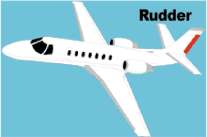
Let’s start simple. What does the rudder do? The dictionary definition is it controls the movement about the vertical axis of the airplane. If you stick a pole down through the CG of the airplane and rotate the airplane around that pole, this is the vertical axis. Looking at it another way, the rudder moves the airplane’s nose left and right. Keep this in mind as we move on.
Every pilot thinks about the rudder during the takeoff roll. Because of the torque effect, the pilot must add right rudder during the takeoff roll to stay on the runway centerline. Depending on the airplane’s horsepower, more rudder pressure is needed in higher powered airplanes. The problem usually shows up once the airplane gets in the air.
In the worst situation, after takeoff, the pilot will set both feet on the floor and completely disregard the rudder. Torque effect and now P-factor are continuing to cause the airplane to yaw left, causing the need for right rudder. With his feet on the floor, though, the pilot is allowing the airplane to yaw. It’s not terribly noticeable for him in the front seat, but the back seat passengers (especially in a six seat or larger airplane) are certainly feeling it.
One particular problem spot on the climb is the climbing left turn. In a climbing left turn, training says to add left rudder since it is a left turn (see below for the reasoning). But, since the airplane is climbing and therefore experiencing left yawing tendencies due to the aforementioned effects, the pilot needs to continue pressing the right rudder, though the pressure won’t be as much as in a straight climb. Watch the ball the next time you make a climbing left hand turn and it’ll make a believer out of you.
I find only a handful of pilots are this egregious. Most pilots have rudder problems in turns and in turbulence. We’ll tackle turns first. As we all learned when we first started flying, due to adverse yaw, a pilot must add rudder in the turn’s direction. Again, this isn’t usually where the problem shows up. During the rollout is the problem area.
Let’s take a turn to the left. The pilot rolls in, adding left rudder, arrives at his heading, then begins to roll out with the ailerons. Left adverse yaw is now being experienced and right rudder is needed to smoothly transition back to level flight. Need some visual assistance? Watch the nose the next time you make a turn. If you are working the rudder properly, the nose will pivot on one point in the horizon. If you aren’t using the rudder properly, the nose will draw a U shape on the horizon. Try making some turns without rudder, see what it looks like, then use the rudder properly. You’ll notice a big difference.
Finally, let’s talk turbulence. As we all know, turbulence in the hot summer afternoon is quite pronounced. When the airplane experiences a bump, it usually doesn’t bounce straight up in the air. There is usually some kind of rolling motion involved. As the pilot corrects this rolling motion by moving the ailerons, adverse yaw is experienced (just like rolling into and out of a turn that we talked about above), so rudder is needed. There isn’t a need to stomp on the rudder or you’ll cause the airplane to severely yaw in the other direction, but rudder pressure is needed.
Final approach is where this gets most pilots. By controlling the nose and not allowing it to move around on final by using the rudder, this will make your approaches a little more stabilized leading to a more successful landing.
Feeling lost when it comes to the rudder? Ask your instructor the next time you go fly to do some rudder exercises. Most instructors don’t emphasize these basic stick and rudder skills which leaves pilots lacking as they move on in their aviation lives. So make it a point to do some basic rudder work the next time you fly with your instructor.
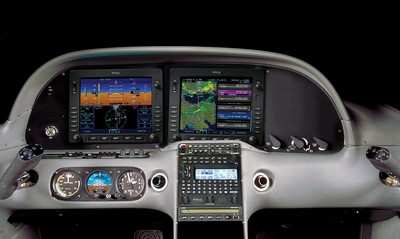
11 years ago, in April of 2009, the Avidyne Corporation unveiled the much bally-hooed Release 9, or R9 as it is commonly known, as a hardware replacement for the Avidyne EX5000 Entegra system in Cirrus Aircraft. The Entegra system was way outdated by that point. Even though Avidyne was the first company to put together a glass PFD in a single engine piston airplane, the company had quickly fallen behind Garmin in keeping up with the ever changing technology landscape.
Rewind to 2008. Cirrus had been going strong with the Avidyne Entegra since the SR20 and SR22 went to full glass in 2003 (a PFD and an MFD; prior to that, Cirrus aircraft only had an MFD with steam gauges and a Sandel Electronic HSI). Cessna, on the other hand, vaulted past the Avidyne Entegra and went straight to the Garmin G1000 in it’s aircraft, starting in 2004 with the 182 G1000 and 2005 with the 172 G1000. Beechcraft and Columbia went to the G1000 (Columbia started with the Avidyne as well) in 2005.
Garmin’s technology in 2007 was so much better than Avidyne’s technology that Cirrus decided to switch. I’m sure there were many promises made by Avidyne to Cirrus about what Avidyne was working on (the R9), but the G1000 was out there, available, and being used in a lot of different airplanes with very good results.
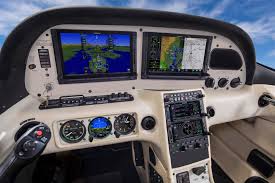
So, in 2008, Cirrus made the switch from the Avidyne Entegra to the Garmin G1000, dubbing it the Cirrus Perspective by Garmin avionics package. Avidyne finally got the R9 to market in 2009, but by that time, Piper was the only airplane manufacturer left putting factory Avidyne panels in their airplanes, and they switched to G1000 later that year.
The R9 is a fabulous product. It’s fully integrated, has great graphics, has fully redundant displays, a QWERTY keypad (which, by the way, Garmin didn’t do for another 8 years), and a lot of other neat features. There’s a bit of a learning curve, but it’s a really good product for what it is.
Avidyne, though, was late to the game with their technology. By the time it debuted in 2009, all the GA aircraft manufacturers had long since switched to the Garmin G1000 and weren’t looking back. That left Avidyne with the retrofit market for the many different Avidyne Entegra Cirrus aircraft out there. The only problem was, the retrofit was $80,000 ($95,000 if you wanted to throw in the DFC 100 Autopilot, which is a must have) and not many owners were up for paying that much money, then or now.
To sum up our brief history lesson, Avidyne knew the Entegra needed to go, but couldn’t get the R9 out quickly enough to convince anyone to stick with Avidyne products. The retrofit market didn’t amount to many sales, so Avidyne doesn’t even make the R9 anymore.
As a side note, I really, really like the Avidyne R9 and am sad that it didn’t make it into more airplanes.
So, when the Avidyne Entegra starts to have issues, what’s an owner to do? Keep reading!
There is Hope
There are thousands of Cirrus aircraft out there flying with the Avidyne Entegra instrumentation, which is basically 20 year old technology (I’ve had a computer engineer tell me the programming in an Entegra is Windows 98 tech). These things are going to start having problems at some point (many already have), but what solution do owners have that is cost effective and get’s them new technology?
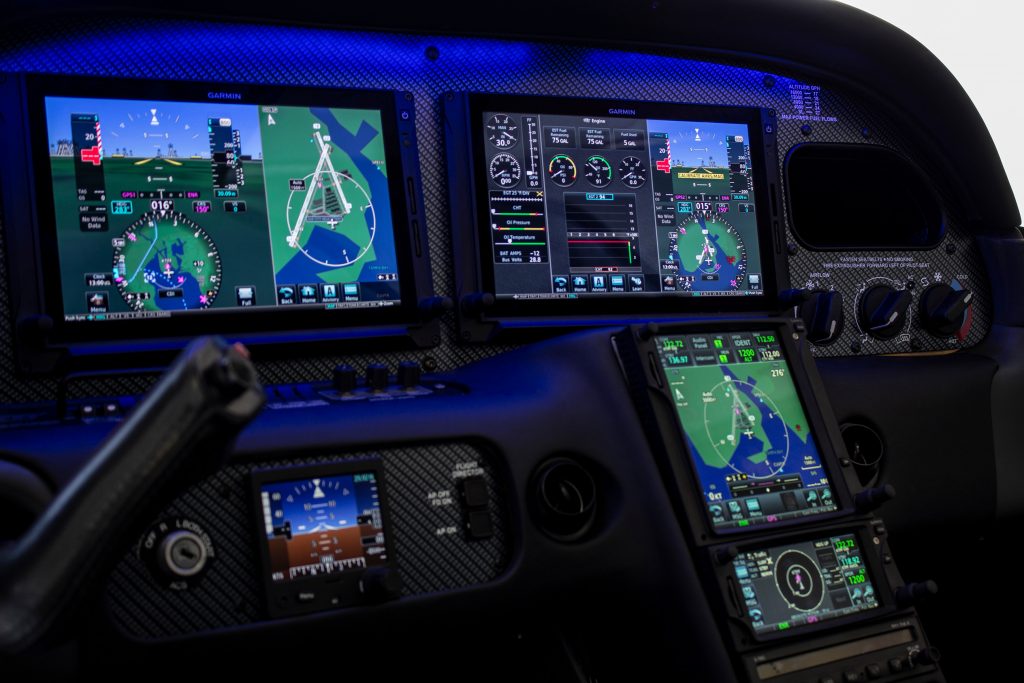
Remember that little company named Garmin? Well, they have come through again. Announced this summer, the Garmin G500 TXi is now certified as a replacement in the Cirrus Avidyne Entegra equipped aircraft. This means pulling out both the PFD and MFD and replacing them with the G500 TXi on both sides. Engine data is also displayed on the G500TXi MFD, including the percent power and TIT indications, if equipped.
Cirrus SR22 Equipped with Dual G500 TXi Screens and Dual Garmin GTN 650Xi GPS Units
The cost for the panel? Two 10.6″ G500 TXi’s run about $16,000 apiece for the units, not including labor. $32,000 for a brand new panel isn’t terrible. Plus, the G500 TXi’s work with the DFC90 autopilot if the Cirrus is already equipped with it. If not, the Garmin GFC 500 autopilot is now approved for the Cirrus at a relatively low price of $7,000, including the servos.
Still have the original Garmin 430s in your Cirrus? Upgraded to the Avidyne IFD 540/440 stack? Put in dual GTN 650Xi’s? Put in a GTN 750Xi? All are compatible with the G500 TXi panel.
Want to upgrade everything? It does get kind of pricey at that point, but for just equipment, the cost for a complete panel conversion is somewhere in the area of $65,000 plus labor, still below what the R9 cost, but not cheap either. That would include 2 G500 TXi’s, 2 GTN 650Xi’s, a GFC 500 Autopilot, and all the engine monitoring equipment that the G500 TXi would need.
Cirrus SR22 Equipped with Dual G500 TXi Screens, a GTN 750Xi, and a GTN 650Xi
Thankfully, some new technology has finally come to the Generation 1-3 Cirrus. Oh, and by the way, your steam gauge Cirrus is fully upgradable as well.
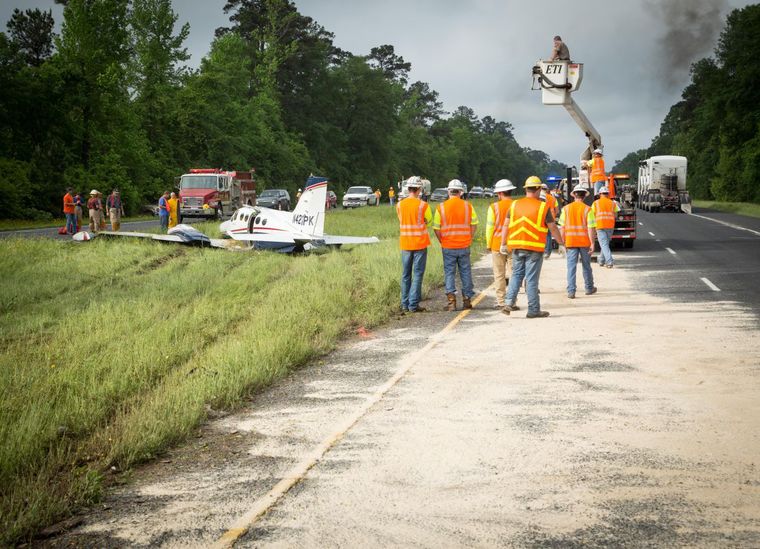
I’m sure at this point, most pilots in Texas have heard about the Cessna 421 that went down two weeks ago in Lufkin. The Golden Eagle suffered a dual engine failure (the pilot lost the first at 2300 feet, then the second at 1700 feet) in IMC on climb out. He broke out at 1,000 AGL miraculously lined up with US 59, south of the Lufkin airport. The pilot had to dodge a car as he was attempting his landing, stalled the airplane, sheared off the landing gear, then slid into the median. No one died, but lots of bumps and bruises. All were airlifted to Houston.
The cause was a lineman at LFK put Jet A in the 421, which is a piston airplane and takes 100LL Avgas. The story that I saw said the pilot and two passengers were returning to Houston from Kansas City and diverted to LFK due to weather. They landed in driving rain and spent the night. I have not seen any reports saying whether the pilot sumped the tanks or not the following morning.
There were several factors that led to this accident. If you take one factor out, the accident probably wouldn’t have happened. Let’s take a look at the sequence of events.
The 421 arrived in a driving rain storm, so the pilot and passengers probably disembarked quickly to get out of the weather. Factor number 1 presents itself here. We don’t know whether or not the pilot told the lineman to put Avgas in it or not (he may have just said fill it up), so we’ll leave that aside.
Understandably, the pilot dashed inside to get out of the rain, but they neglected to monitor the fueling. Whether or not the fueling took place that night or the next morning, we can’t say. I have started to greatly encourage my customers to monitor the fueling of their airplanes, especially when it’s a fuselage that can either have Avgas piston engines or Jet A turboprops, as is the case with the Cessna 421.
Factor number 2, we already know about. The lineman messed up and put the wrong fuel in. If their was uncertainty about what type of fuel, he would have been prudent to await the return of the pilot to ask, even if that meant delaying the pilot’s departure.
Factor number 3 is the matter of sumping the fuel. We don’t know if the pilot sumped the fuel or not. The tricky thing about sumping is Jet A doesn’t settle out of Avgas like water does unless it sits for a long, long time. The two ways to determine if you have Jet A in your Avgas airplane are to smell it, as Jet A has a very strong diesel smell, or do the paper towel test. The paper towel test consists of dumping a fuel sample onto a paper towel, then let the Avgas evaporate. If you are left with a nasty, oily residue, you’ve got Jet A in your tanks (not to mention it will smell like diesel).
To prevent misfueling of your airplane, take the following steps:
Be specific in telling the lineman what type of fuel you want, not just “fill ‘er up”
Monitor the fueling and watch which truck pulls up to your airplane
This is especially important with fuselages that can have either Pistons or Turbo-Prop engines, like the PA-46 line or the Twin Cessna line
Always sump your fuel, definitely smell it, and if there are any doubts, try a paper towel test
I was speaking with a pilot a few months back who was not instrument rated. He was telling me of his flying experience while continually speaking fondly of scud running. He told me several stories, most of the time with a smile on his face, about scud running to his destination while staying clear of clouds. While he was talking, my mind was cycling through the numerous accident reports I’ve seen where a scud running VFR pilot has crashed into terrain or an obstacle. Needless to say, scud running is not a very good idea.
This pilot’s stories got me to thinking, how common is the practice of scud running amongst VFR only pilots? As an instructor, I always teach my private students about personal minimums and making that no-go decision when clouds are below those personal minimums. The act of scud running falls under several of those dangerous pilot mindsets, get-there-itis, invincibility, and macho-ism, to name a few.
To bring everyone on the same page, let’s define scud running. Wikipedia has a very good definition:
Scud running is a practice in which pilots lower their altitude to avoid clouds or instrument meteorological conditions (IMC). The goal of scud running is to stay clear of weather to continue flying with visual, rather than instrument, references. This practice is widely accepted to be dangerous, and has led to death in many cases from pilots flying into radio towers and high tension wires; however, even instrument-rated pilots sometimes elect to take the risk to avoid icing or embedded thunderstorms in cloud, or in situations where the minimum instrument altitudes are too high for their aircraft.
To put some numbers with that definition, a scud running VFR pilot would takeoff with a 1200-1500 foot ceiling and stay 700-1000 feet above the ground, right in the area where towers, hills, and rapidly rising terrain reside.
How do we change this mindset? Well, if someone has been scud running for years without incident, the practice becomes normal, like the pilot I mentioned above. The mindset of invincibility sets in and the practice continues. This particular pilot can also lead other pilots to adopt the same practice, encouraging them that nothing will happen to them, since we all know that our pilot peers know better than our flight instructors (insert heavy sarcasm here).
In order to change this mindset, instructors need to emphasize personal minimums from day one. This includes ceilings, visibility, and winds. For a seasoned pilot, a review of accident statistics might help the process.
Scud running is not a safe practice. If you’re a scud runner, you need to rethink your attitude. Is getting there really worth it?
Are you ready to take part in one of the most exciting Texas aviation events of the year? Registration is now open for the 2025 Texas Top Aviation Fly-In, happening March 26th-28th, 2025, at the stunning Lajitas Golf Resort in Lajitas, Texas.
Whether you’re a pilot looking for a getaway, wanting to make new pilot buddies, or just seeking a one-of-a-kind adventure, the 2025 Texas Top Aviation Fly-In promises an unparalleled blend of community, aviation instruction, and scenic Big Bend recreation. Not to mention, great golf!
Why You Should Register
As one of the top 2025 Texas aviation events, this Fly-In features:
Two rounds of golf at the #1-ranked Black Jack’s Crossing Golf Course
Aviation seminars from industry leaders
Making new friends and seeing old ones at our group dinners
Non-golfing activities, like Jeep rentals, exploring Big Bend, or relaxing at the Resort spa
Spaces are limited, so secure your spot now for our 6th Annual Fly-In!
Event Highlights
Fly-In Golf Tournament
Enjoy two rounds of golf at Black Jack’s Crossing Golf Course:
Round 1: March 26th, 2025, 1:30 PM
Round 2: March 27th, 2025, 1:30 PM
Aviation Seminars
Learn from top experts on Thursday morning, March 27th, 2025:
Paul New: Cirrus and Cessna mechanic
Scott Williams: Aviation attorney
Travis Ulhorn: San Antonio Air Traffic Controller
Community and Connection
Relax and connect at evening group dinners starting at 7:30 PM.
Pricing
$1,475 per person (2 nights + golf) + tax
$1,100 per person (2 nights, no golf) + tax
$475 for non-golfing spouse + tax
Registration includes lodging and golf; food and beverages will be billed directly to the attendee.
Key Details
Golfers: Arrive by noon, March 26th, 2025
Non-Golfers: Arrive by dinner on March 26th
Complimentary shuttles provided from Lajitas International Airport (T89)
Register Today
Don’t miss out on one of the best Texas aviation events of the year. Register now and be part of the 2025 Texas Top Aviation Fly-In. Spaces are limited, so don’t wait!
I love Lightspeed headsets. They are very comfortable, durable, and reasonably priced. Plus, when you call Customer Service, you are actually talking to someone who works for the company and knows what they are talking about.
One thing to watch out for with Lightspeed headsets is the Mono vs. Stereo option. On the Zulu 3, there is a very small control panel underneath the battery compartment to change from Mono to Stereo. If you have any kind of modern audio panel, you will definitely want to do this. Here’s why.
I was flying in a Cirrus SR22 G5 last fall with a Garmin 350 Audio Panel. Everything worked fine talking to the ground and tower controllers. Once I took off and was switched to approach, everything went quiet. I could hear the approach controller, but couldn’t transmit. I thought my headset had bit the dust. There was another set in the plane that I switched to, but I thought the transmit function of mine was out.
I sent the headset back to Lightspeed for repair. The headset was still under their 5 year warranty, which is really nice! I got it back a few days later, plugged it in to another Cirrus, and still had nothing. I was getting frustrated, but then a light went on. One of my colleagues had mentioned something about mono and stereo in the Lightspeed. I popped the batteries out, flipped the switch over to stereo, and wa-la! Everything was fully operational.
If you get Lightspeed headsets, you’ll want to make sure it is set on Stereo, as they all come from the factory on Mono. If you get a PFX, there is an easy access button on the side of the battery unit to switch from Mono to Stereo.
If you have been searching “Cirrus SR22T for sale” or reading up on the Cirrus Vision Jet, you are looking at genuinely excellent airplanes. Both have earned their reputations. This is not an article about why you should not buy one. It is about a third airplane that almost never shows up in a Cirrus search — and what the numbers look like when you set it next to the two you are already considering.
190 ktDA62 Cruise
762 lbFull-Fuel Payload
648 nmRange, 4 Adults + Bags
1 WeekTraining, No Travel
What the Cirrus SR22T Gets Right
Let us start where we should. The SR22T is one of the most successful piston singles ever built, and for good reason. Turbo-normalized power that holds performance up high. A Perspective+ flight deck that is about as good as glass gets in a single. Side-yoke handling most pilots fall for inside ten minutes. And CAPS — the whole-airframe parachute that changed how our whole industry talks about safety.
Add strong resale, a deep service network, and one of the best owner communities in aviation, and you have an airplane that is very hard to argue with. If you fly two people and light bags on 300 to 500 nautical mile legs, we would tell you to go buy one — and we would help you find the right one. We also teach Cirrus SR20, SR22 and SR22T training here in Texas, so this is not an outsider’s opinion of the airplane.
The conversation changes when the mission grows.
Cirrus SR22T vs. Diamond DA62: The Numbers Side by Side
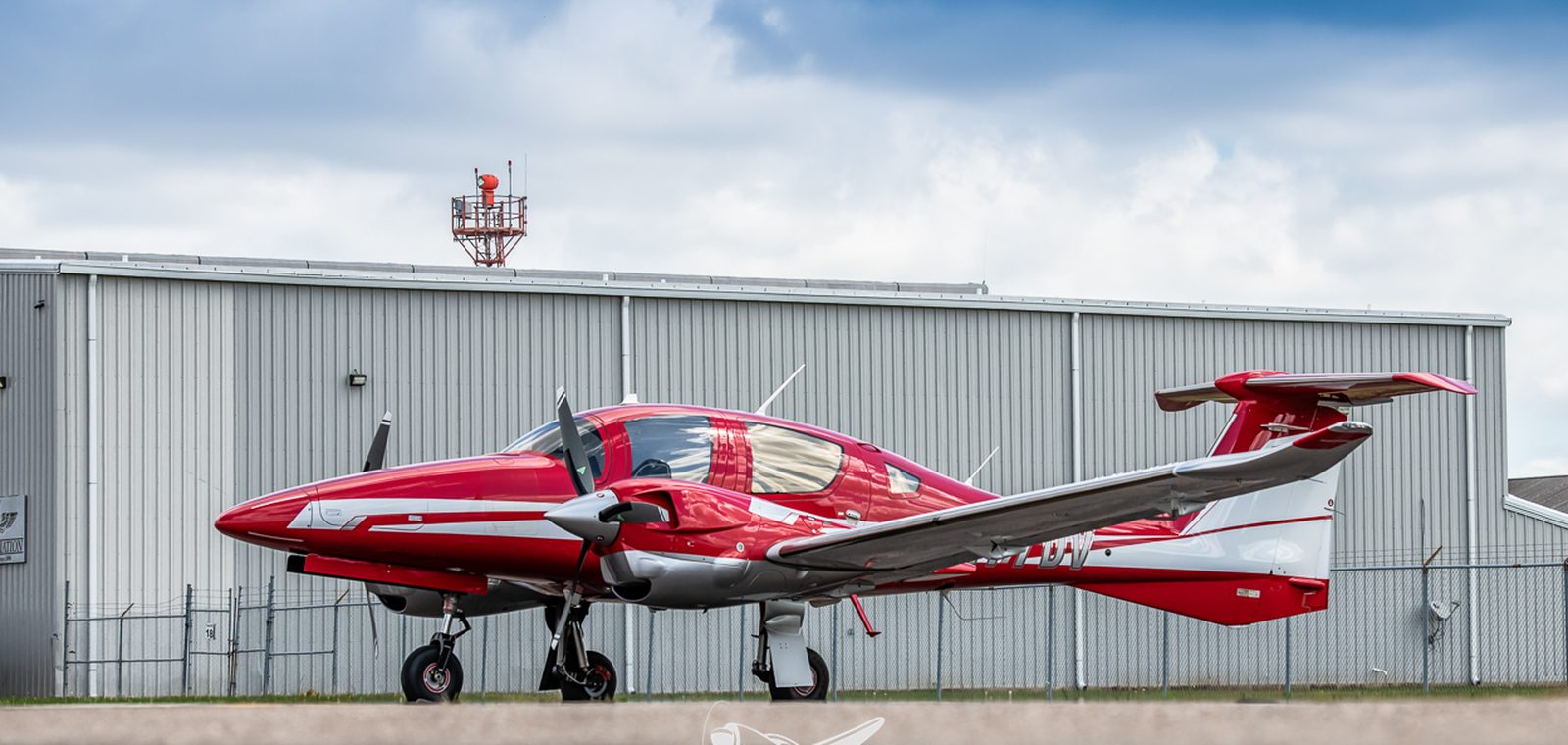
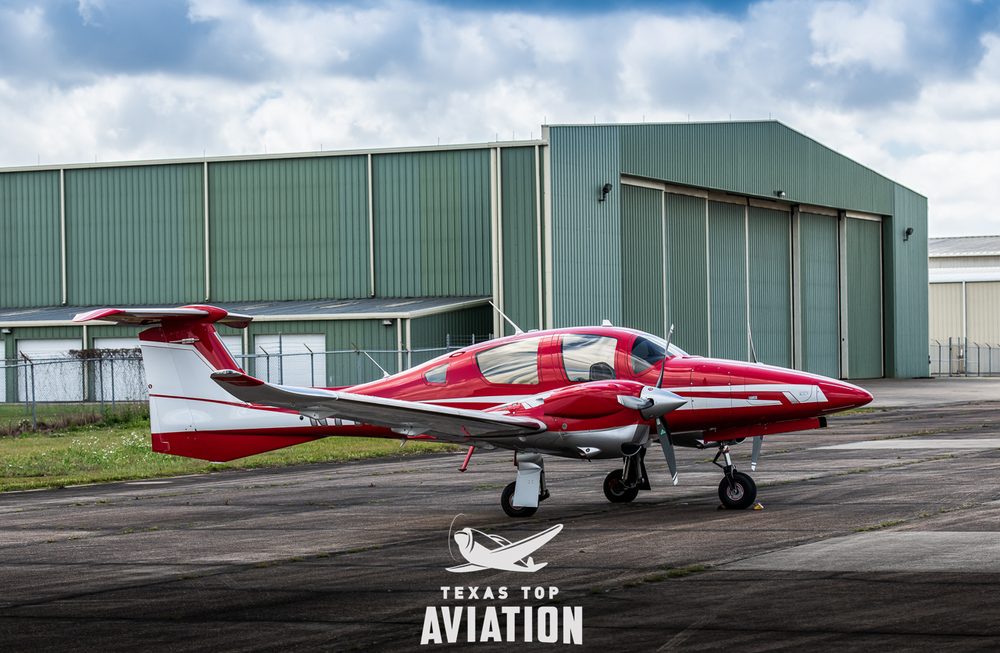
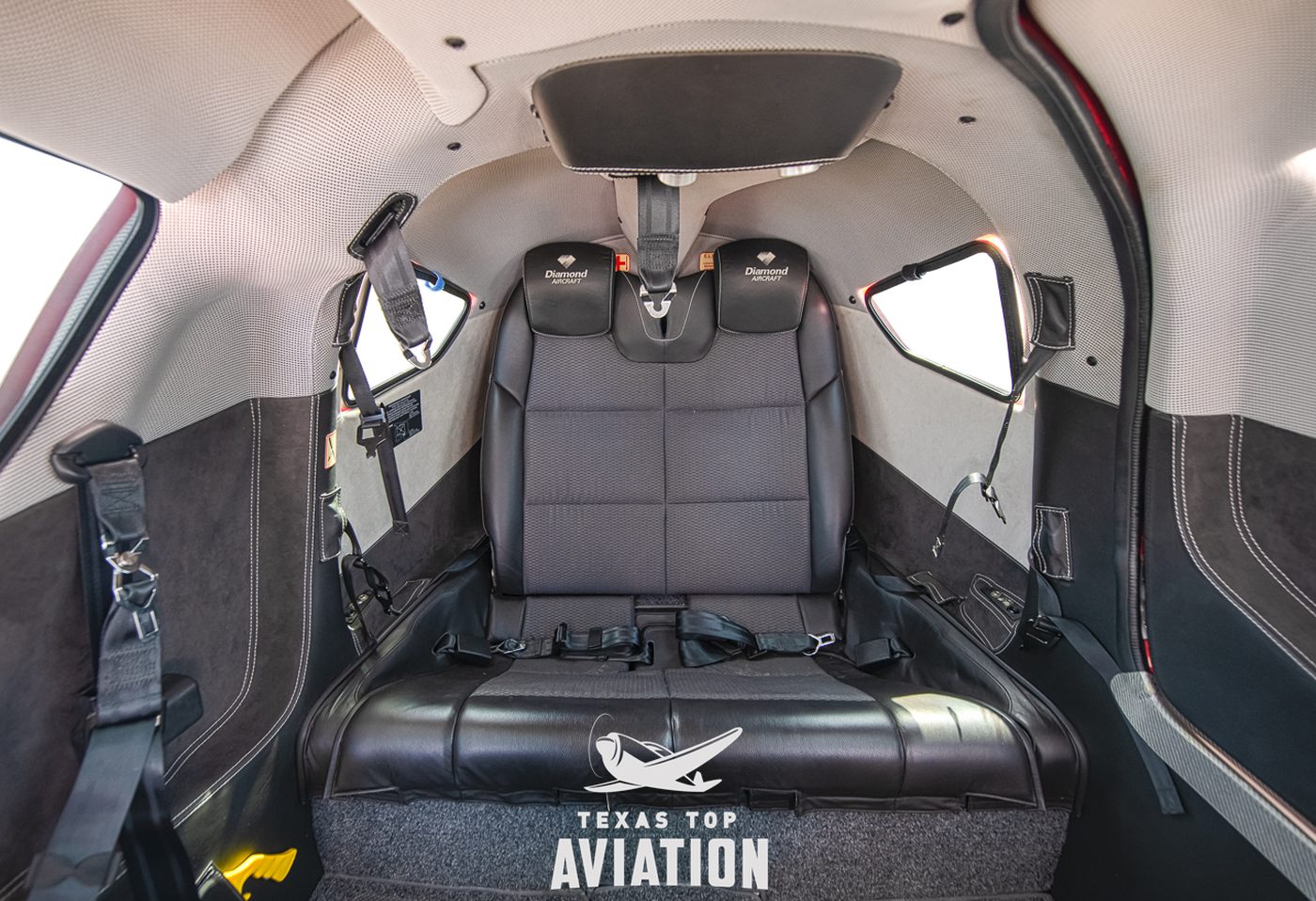
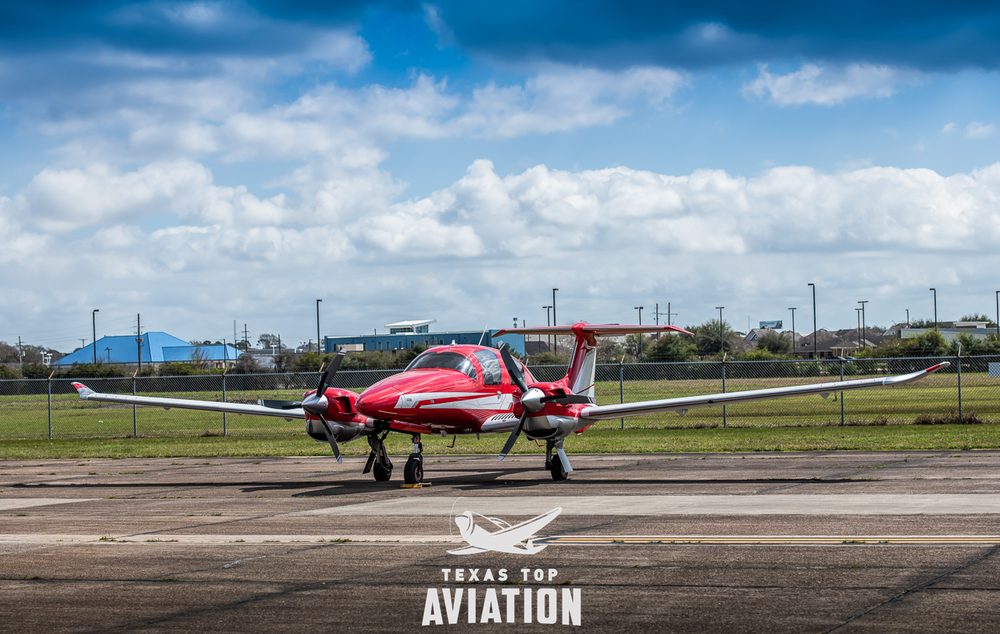
The Diamond DA62 is a seven-seat, twin-engine, Jet-A-burning composite airplane that most Cirrus shoppers have never sat in — usually because it simply never came up in the search. Here is how the two line up on the numbers that matter.
Specification
Cirrus SR22T
Diamond DA62
Cruise speed
184 KTAS @ 85% power / 10,000 ft
190 KTAS @ 90% power / 10,000 ft
Fuel burn
18.3 GPH @ 85% (16.4 GPH @ 75%)
19 GPH total (9.5 GPH per engine)
Fuel type
100LL AvGas
Jet-A (~$1.75/gal cheaper)
Seats / rows
5 seats, 2 rows
7 seats, 3 rows
Useful load
~1,125 lb (3,600 lb MTOW)
1,341 lb (5,071 lb MTOW)
Full-fuel payload
~575 lb
762 lb
Range, 4 adults + 75 lb bags (835 lb)
~320–350 nm
~648 nm (45-min reserve)
Takeoff over 50-ft obstacle
2,080 ft
1,575 ft
Landing over 50-ft obstacle
2,535 ft
1,447 ft
Single-engine service ceiling
—
11,000 ft
Engine-out redundancy
CAPS parachute
Second engine
Recurring safety-system cost
~$20,000 CAPS repack / 10 yr
None
Rating required
High-performance endorsement
Multi-engine (~1 week, at home)
Cirrus SR22T figures are taken from the Cirrus SR22T G6 Pilot’s Operating Handbook (P/N 13772-007, Reissue A): cruise at ISA and 3,400 lb, takeoff and landing over a 50-ft obstacle at sea level, ISA and 3,600 lb max gross.
Read that speed line carefully, because it is closer than the marketing on either side suggests. At 10,000 feet the DA62 has about six knots on the SR22T — real, but hardly decisive. Climb higher and the advantage flips outright: the SR22T is turbo-normalized, so at 18,000 feet the POH shows 198 KTAS on the same 18.3 gallons an hour, comfortably faster than the DA62. If raw speed is what you are buying, the Cirrus has a genuine answer.
Where the DA62 separates itself is everything around the speed. It burns Jet-A, which runs roughly $1.75 a gallon under 100LL at most FBOs and is available at airports where AvGas gets harder to find every year. And the full-fuel payload gap is 187 pounds. Payload is where light-airplane trip plans quietly fall apart.
Four Adults, Bags, and the Range That Actually Matters
Spec sheets get written for two people. Real trips are not flown that way.
Load four adults and 75 pounds of luggage — call it 835 pounds — and the SR22T has to leave fuel on the ramp. On a typical G6 empty weight that leaves room for roughly 48 of its 92 usable gallons, and realistic range lands around 320 to 350 nautical miles with IFR reserves. Put that same 835 pounds into a DA62 and you are looking at roughly 648 nautical miles with a 45-minute reserve.
To be fair to the airplane: with full fuel and two people aboard, the SR22T is genuinely long-legged. The POH shows 763 nm at 10,000 feet and 791 nm at 18,000 feet on a 45-minute reserve. The range only collapses when you fill the seats — which is precisely the mission this comparison is about.
That is not a rounding error. That is one fuel stop versus none on a Texas-to-Colorado weekend. And the DA62 does it across three rows, with two seats still open behind you.
About the Cirrus Vision Jet G1
If your search has moved from the SR22T up to the Vision Jet, that airplane deserves real credit too. Cirrus did something nobody else managed: a single-pilot personal jet, with CAPS, delivered in volume, flown successfully by owner-operators. That is a genuine achievement in this industry, and we teach Cirrus Vision Jet training ourselves.
The G1 specifically, though, asks for a level of commitment that surprises a lot of first-time jet buyers.
Cirrus Vision Jet G1: What Ownership Actually Asks Of You
Acquisition: approximately $1.8 million.
Fuel burn: 60–70 GPH of Jet-A.
Full-fuel payload: only 300–400 lb — roughly two adults and a soft bag.
Range: about 800 nm on paper, but heavily payload-limited in practice.
Type rating: a full FAA type rating is required — roughly two weeks of initial training in Knoxville, Tennessee.
Insurance dual: 25+ hours of additional dual instruction beyond the type rating.
Recurrent: annual simulator recurrent training back in Knoxville, at $15,000–$25,000 per year, every year.
Runway: 3,192 ft takeoff / 3,011 ft landing over a 50-ft obstacle.
Climb: drops to 1,100–1,200 fpm at heavier weights, and loses thrust at high density altitude airports — exactly where you want margin.
Worth saying plainly: the G2 and G2+ are meaningfully more capable airplanes — better payload, better hot-and-high performance, updated flight deck. That is a different and more interesting conversation, and one we are glad to have. Everything above is specific to the G1, because the G1 is the airplane most often cross-shopped at DA62 money.
Compare that training path to the DA62. A multi-engine rating is all that is required — roughly one week, typically at your home airport, with no hotel and no travel. There is no annual sim requirement in another state, and no recurring five-figure training line item on the budget.
Runway Numbers Open Up the Map
Performance over a 50-foot obstacle is where your airport list gets long or short. The DA62 clears it in about 1,575 feet on takeoff and 1,447 feet on landing. The SR22T needs 2,080 and 2,535 feet. The Vision Jet G1 needs 3,192 and 3,011 feet.
That is roughly 500 feet less than the SR22T on departure and nearly 1,100 feet less on arrival — and against the G1 the gap is wider still. Practically, that difference is what gets you into the shorter ranch, lake and mountain-adjacent strips that a lot of the best flying runs on. That is not a spec. That is a different set of weekends.
The Parachute and the Second Engine
CAPS is a real safety system and we will not say otherwise. It has saved lives, and it deserves the respect it gets. It also carries a cost most buyers do not budget for: the rocket and canopy repack runs about $20,000 every ten years, and it is not optional.
The DA62 answers the same question a different way. Lose an engine and you still have one making power, turning counter-rotating props, managed by a FADEC that keeps it to a single lever per side. One number to know either way: the DA62 single-engine service ceiling is 11,000 feet, so on one engine it will hold altitude over most terrain but not over the high country. Neither answer is wrong — they are two philosophies about the same risk. The DA62 version just does not come with a recurring five-figure bill.
Frequently Asked Questions
Is the Diamond DA62 faster than a Cirrus SR22T?
Only down low, and only slightly. At 10,000 feet the Diamond DA62 cruises at 190 KTAS at 90% power on 19 GPH of Jet-A total, while the Cirrus SR22T G6 POH shows 184 KTAS at 85% power on 18.3 GPH of 100LL. Higher up the SR22T is the faster airplane — its turbo-normalized engine holds 198 KTAS at 18,000 feet on the same fuel flow. The DA62 advantage is fuel cost, payload and runway, not raw speed.
How much can a Diamond DA62 carry compared to a Cirrus SR22T?
The DA62 carries a 762 lb full-fuel payload across seven seats in three rows. The Cirrus SR22T has a useful load of about 1,125 lb and a full-fuel payload of roughly 575 lb. Loaded with four adults and 75 lb of bags — 835 lb total — the DA62 flies about 648 nm with a 45-minute reserve, while the SR22T is closer to 350 nm.
What training does a Cirrus Vision Jet G1 require compared to a Diamond DA62?
The Vision Jet G1 requires a full FAA type rating: about two weeks of initial training in Knoxville, Tennessee, plus 25+ hours of additional dual for insurance, plus annual simulator recurrent back in Knoxville that runs $15,000–$25,000 per year on an ongoing basis. The Diamond DA62 requires only a multi-engine rating — about one week, usually at your home airport, with no travel.
Can a Diamond DA62 use shorter runways than a Cirrus SR22T or Vision Jet?
Yes. Over a 50-foot obstacle the DA62 takes off in about 1,575 ft and lands in about 1,447 ft. The Cirrus SR22T needs about 2,080 ft and 2,535 ft, and the Cirrus Vision Jet G1 needs about 3,192 ft and 3,011 ft. The Vision Jet G1 also sees climb rate fall to 1,100–1,200 fpm at heavier weights and loses thrust at higher density altitude airports.
Does the Diamond DA62 have a whole-airframe parachute like Cirrus CAPS?
No. The DA62 redundancy is a second engine rather than a parachute. One practical difference in ownership cost: the Cirrus CAPS repack runs about $20,000 every ten years and is mandatory, while the DA62 has no equivalent recurring safety-system expense.