Thanks For Flying With Us!
From our family to yours, thank you for flying with Texas Top Aviation in 2014. We wish everyone a Happy New Year and a great 2015!


From our family to yours, thank you for flying with Texas Top Aviation in 2014. We wish everyone a Happy New Year and a great 2015!
Picking up an IFR clearance at first can seem very simple. But, when taking off from an untowered field, especially if a pilot is based at a towered airport, it can be a little more complex. Based at an untowered field? The towered procedures are a little more streamlined, but still different.
At Class B or Class C airports, there is a dedicated frequency to get an IFR clearance and VFR departure instructions called Clearance Delivery. It is published in the airport facilities directory as well as most approach plates. Before you call Clearance Delivery, get the ATIS and tell the controller you have it as well as where you are located on the airport.
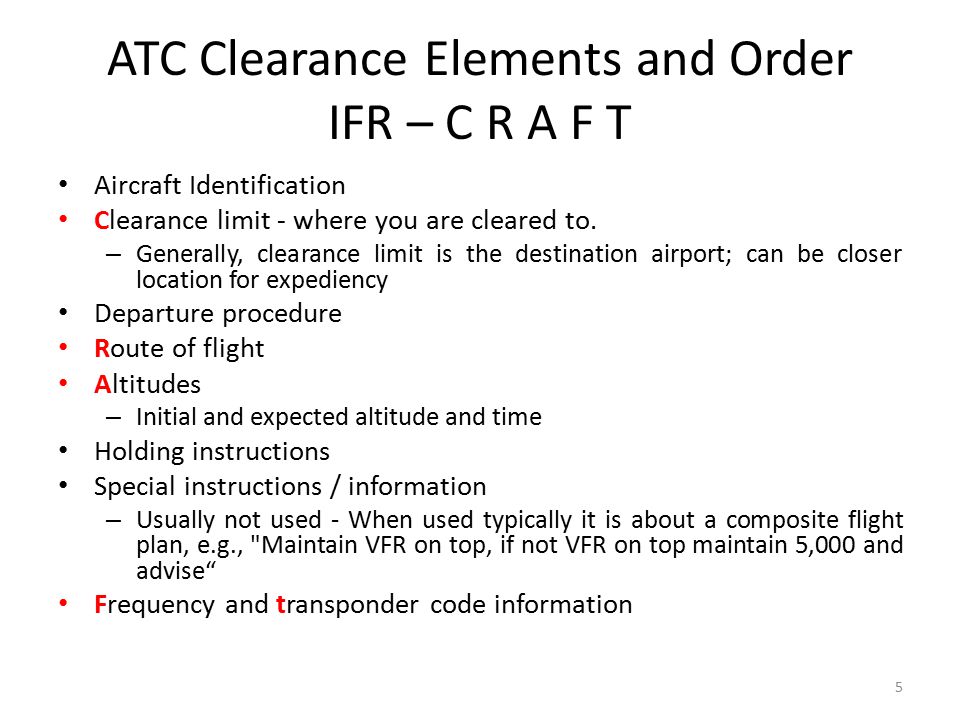
Some Class D airports have a Clearance Delivery frequency (see KADS, Addison, TX), but for the most part, you’ll get your IFR clearance on the Ground frequency. If there is a dedicated Clearance Delivery frequency, the ATIS will specify whether or not to get your clearance on it or on ground control.
Class D towers are only part time towers, usually closing between 7pm and 10pm local time, depending on how busy the airspace is. These airports usually have published Clearance Delivery frequencies to contact either the local approach control or center to pick up an IFR clearance on the ground. They will be published on approach plates and in the A/FD.
There are a number of Class E airports that are Class E all the way down to the surface (see KLFK, Angelina County). At these airports, there will either be a Clearance Delivery frequency or you call on the Center or Approach frequency to get your clearance (at KLFK, you call Center as there is no Clearance Delivery frequency. At Temple, KTPL, there is a published Clearance Delivery frequency which you would be talking to Grey Approach).
There are two ways to pick up an IFR clearance at a Class G airport, one typically a little safer than the other.
The first option is to take off and maintain VFR while calling Center or Approach control. They will give you your clearance making you IFR and allowing you to enter the clouds. This option can be unsafe depending on the terrain surrounding the airport and how low the ceiling is. If the ceiling is overcast at 1,000, you can legally remain VFR in Class G airspace at 500 AGL, but that isn’t the safest option and you might not be able to raise ATC at that altitude.
The second, and safer option, is to call on the phone. Flight Service has a nationwide Clearance Delivery phone number that every pilot should have saved in their contacts (888-766-8267). Typically, you want to wait to call them until after you are done with your runup because they only give you a five or ten minute window to get off the ground. With bluetooth equipped headsets, this usually isn’t a problem.
Be prepared when calling Clearance Delivery on the phone to wait a few minutes. Us pilots aren’t good at being patient sometimes, but the FSS has to call Center on the phone to get your clearance and release and this can take a few minutes. Be prepared for that going in and just be patient. Remember, this is the safer option!
There are a handful of Class G airports around the US that have a GCO, a Ground Communications Outlet. With a GCO, you tune up the frequency, then click the mic 4 times to talk to ATC or 6 times to talk to FSS. Each mic click must be at least one second, so if you click the mic too quickly, it won’t work.
At certain airports that are underlying an approach control’s airspace, you can actually call the TRACON directly and get your clearance from them (5C1, the Boerne Stage Airport, for example. San Antonio approach is the controlling agency and you can call them directly to pick up your clearance). It’s a good practice to get the TRACON phone number and save that in your contacts as well.
Picking up an IFR clearance at first can seem very simple. But, when taking off from an untowered field, especially if a pilot is based at a towered airport, it can be a little more complex. Based at an untowered field? The towered procedures are a little more streamlined, but still different. Towered Airports Class…
In the Pre-Takeoff Checklist for any Cirrus aircraft, it calls for pilots to perform a Cirrus Autopilot Check. It is prudent to check the autopilot before your flight to ensure that all aspects of the autopilot are working properly. The only problem is, the checklist doesn’t spell out how to perform the Cirrus Autopilot Check. You would have to go to the POH for the airplane, which is usually in the back seat or a bag somewhere and therefore hard to get to, in order to find the procedure.
The procedure for checking the autopilot is slightly different depending on what autopilot is in your airplane. The procedures for all three are below.
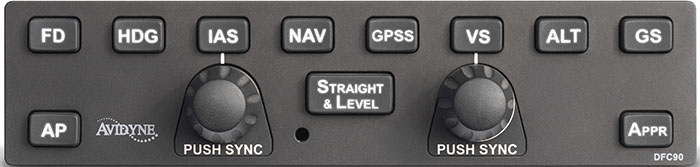
In the Pre-Takeoff Checklist for any Cirrus aircraft, it calls for pilots to perform a Cirrus Autopilot Check. It is prudent to check the autopilot before your flight to ensure that all aspects of the autopilot are working properly. The only problem is, the checklist doesn’t spell out how to perform the Cirrus Autopilot Check….
A new app came out last year that fits a need for many owners. Coflyt, available on the Apple App Store for $14/month for up to two airplanes, helps immensely with staying organized. Those questions of, “When is my oil change due?” or “Has the plane had it’s IFR inspections?” are easily answered by checking the app instead of having to dig through maintenance logs.

Not only does Coflyt help keep track of maintenance, but it also houses squawk lists that owner’s can send to maintenance shops as well as keeping track of Airworthiness Directives. If the pilot remembers at the end of flights to put the amount in, it even shows how much fuel is remaining in the airplane.
For flying clubs and partnerships, it provides easy scheduling without having to share calendars. Payments can also be taken and flights tracked. No more paper flight sheets after flights to track down.
As a pilot, it helps immensely to be organized. For $14 a month ($36/month for partnerships or flying clubs), that’s a small price to pay.
A new app came out last year that fits a need for many owners. Coflyt, available on the Apple App Store for $14/month for up to two airplanes, helps immensely with staying organized. Those questions of, “When is my oil change due?” or “Has the plane had it’s IFR inspections?” are easily answered by checking…
Texas Top Aviation is proud to announce that we now offer Piper PA46 Training in the Malibu and Mirage. Our Piper PA46 training is provided with the same excellent & professional approach that has become our hallmark.
The four-day format of this course allows time to answer all of your questions about your new airplane. The Texas Top Aviation Piper PA46 training course leaves you with a confidence and understanding that will help you enjoy your Malibu or Mirage even more.
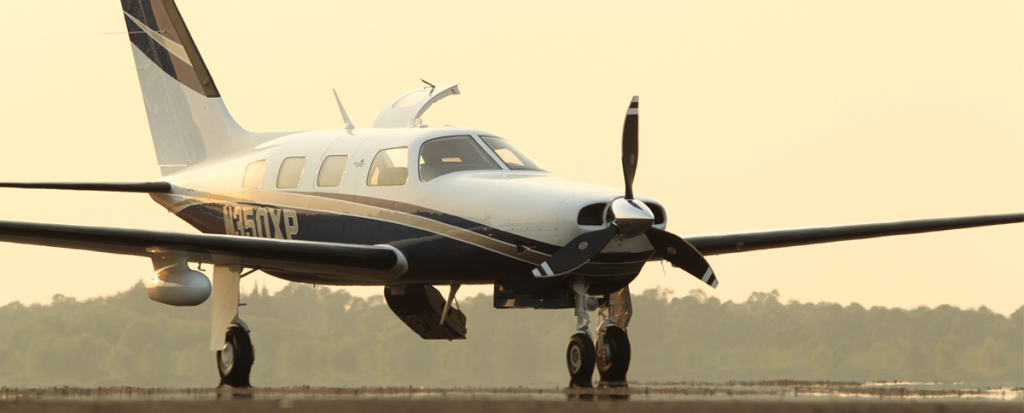
New avionics have you scratching your head in confusion? No problem. Texas Top Aviation is well versed in the latest Garmin and glass panel instrumentation.
If you are in need of recurrent training in your PA-46, Texas Top Aviation would be proud to help with that as well. Consider us your one stop shop for Piper PA-46 training.
For more information, check out our Piper Malibu/Mirage Training page.
Contact us today to schedule your Piper PA46 Training!
Texas Top Aviation is proud to announce that we now offer Piper PA46 Training in the Malibu and Mirage. Our Piper PA46 training is provided with the same excellent & professional approach that has become our hallmark. The four-day format of this course allows time to answer all of your questions about your new airplane. The…
“AOPA Rusty Pilot presented by AOPA Ambassador Pat Brown at Tempus Training Solutions”
Topic: A Rusty Pilots Seminar
On Saturday, July 16, 2016 at 09:00 Central Daylight Time
Location:
Tempus Training Solutions
2080 Airport Dr.
San Marcos, TX 78666
Select Number:
EA2769634
Description:
Life may have gotten in the way, but the dream of flight can be yours again. Returning to the skies is not as difficult as most rusty pilot think. We’re inviting you back in the cockpit and will help you get there. Come and participate in a FREE Rusty Pilot program with fellow lapsed pilots. We will help you understand what’s changed in aviation since you’ve last took the controls and brush up on your aviation knowledge. The Rusty Pilot program is developed by AOPA in partnership with local flight training providers in order to create the best environment for getting you back in the air and a part of the general aviation community.
It is easier than most people think:
As a Bonus, by attending, you get two to three hours of free ground instruction towards your flight review!
Register Now!
https://ww2.eventrebels.com/er/Registration/StepRegInfo.jsp?ActivityID=16910&StepNumber=1
To view further details and registration information for this seminar, click here.
“AOPA Rusty Pilot presented by AOPA Ambassador Pat Brown at Tempus Training Solutions” Topic: A Rusty Pilots Seminar On Saturday, July 16, 2016 at 09:00 Central Daylight Time Location: Tempus Training Solutions 2080 Airport Dr. San Marcos, TX 78666 Select Number: EA2769634 Description: Life may have gotten in the way, but the dream of flight can be yours…
Has it come time to buy your first airplane? Have the skies been calling your name? Or are you just tired of standing in the airport security line then getting shoved in a long metal tube with no leg room? Or, maybe you are a businessman who does business in remote areas that have local airports but are hard to get to commercially.
Wherever your need is, you have decided it’s time to make a purchase. If you are familiar with aviation, you may have an airplane in mind that you would like to have, but is that the right airplane for your mission? If you are new to aviation, you may have no idea what airplane to go for. Here are some helpful hints in narrowing down the different airplane options out there to fit your specific mission.
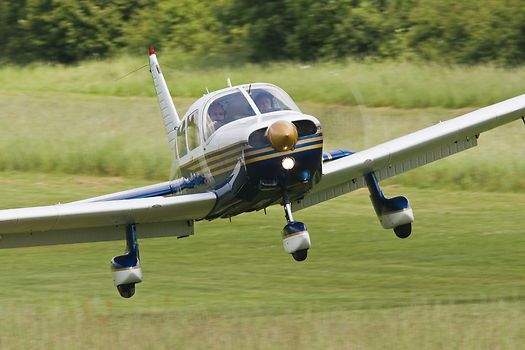
If you’re just a weekend flyer who is tired of dealing with flight school rentals, but you don’t need to carry a lot of people or go very far, your options are pretty numerous. Anything from a Cessna 152 to a Piper Cherokee, maybe a Beech Sundowner, or a Bellanca Viking, or anything in between. If you are content with taking a weekend hop for a hamburger at 100-110 knots, you have limitless options for airplanes. Tailwheels (Cubs, Citabrias, Huskies) are excellent birds for you well.
Need to go 200-300 miles fast and not worried about weight? A Cirrus SR22T, a Columbia 400, or Cessna Corvalis might be just what you need. Cruise speeds on those are all around 180-190 knots at 10,000 feet. All are oxygen equipped if you want more speed higher up, as the service ceilings are 25,000 feet. Payloads run in the range of 400-500 pounds with full fuel. All these have air conditioning options, too.
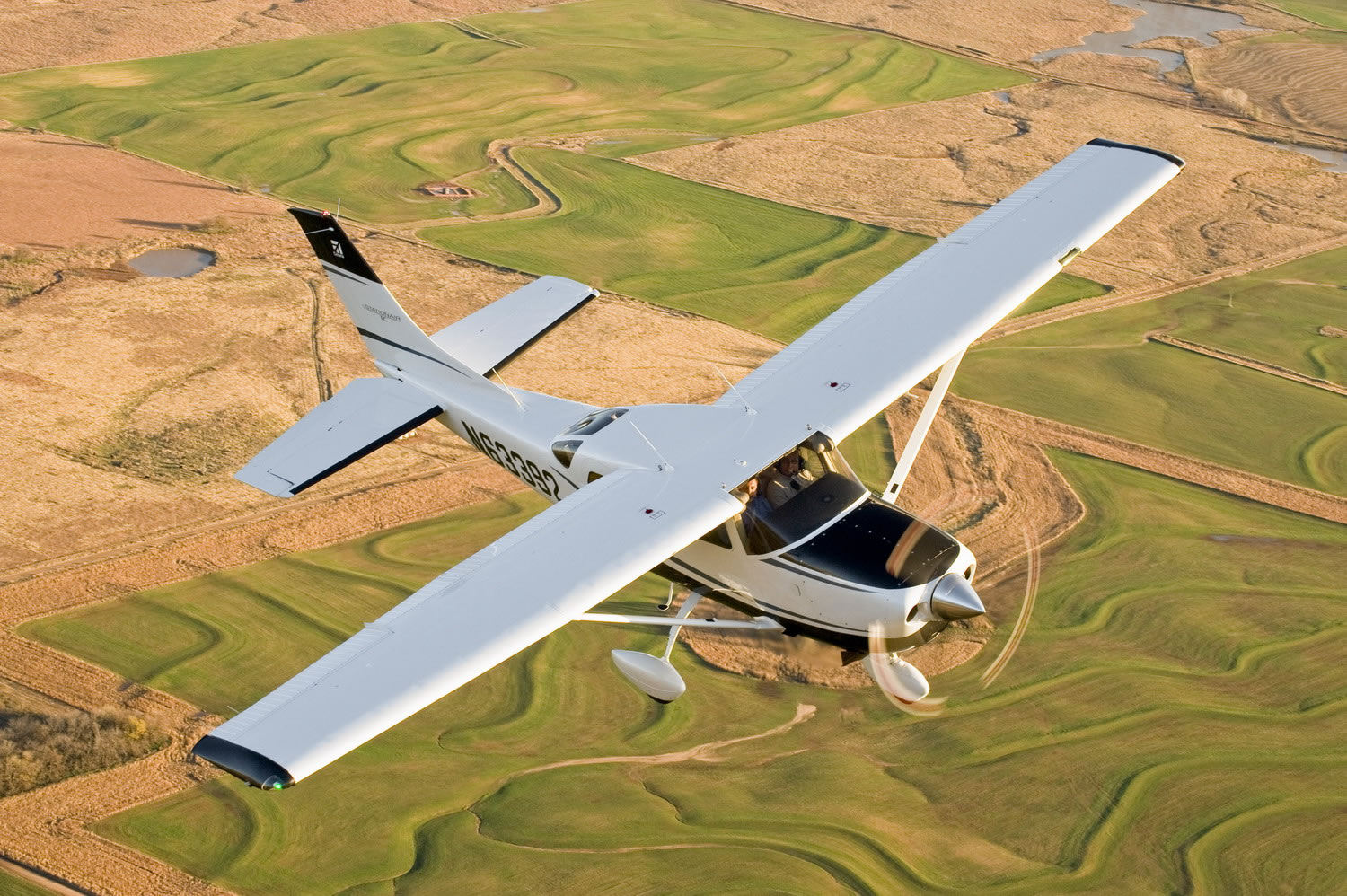
A little slower (150-170 knots) but a little bit more payload options are A36 & B36 Bonanzas, Piper Saratogas, Cessna 206s, or Cessna 210s might suit your fancy. All come in turbo models if you are a high elevation dweller. The Cessna 206 has been used for many years as cargo and people haulers in remote regions like Alaska, South America, and Africa. I’ve even seen pictures of snowmobiles being carried in a 206.
The next step up from a Cirrus, Corvalis, or Saratoga is the Piper Malibu. A bigger brother to the Saratoga, the different PA-46 models offer one of the best options for a single engine piston out there. All except the Matrix (PA-46-350T) are pressurized, all the pistons cruise about 200 knots, and all are configured with club seating with plenty of leg room. Useful loads range around 1200-1400 pounds (they hold 120 gallons of fuel, so payloads range from 480-680 pounds). The original Malibu (PA-46-310P) only burns 16.5 GPH so that allows partial fuel to be carried to allow more people and bags. All have 6 seats.
It’s time to get into the piston twin market, then. A Cessna 414, a Cessna 421, a Cessna 340, a Beech Duke or a Beech Baron are all pretty good options here. The 421 and the 414 have the largest cabins, while the Duke has the highest useful load. Cruise speeds range from 200-220 knots, but the cabin is roomier and you get a few more pounds useful load than a piston single. If you do get into a 421, get good training as they are equipped with Continental geared engines, which can be tricky to operate if you don’t know what you are doing.
Turboprops are the way to go for you. King Airs have the most utility while the Pilatus PC-12 is the cream of the single engine turboprop crop as you can put almost anything you want in it. If you have 4-5 passengers, stay away from a Piper Meridian as you can’t carry a lot of weight. Those are better for 2-3 passengers at the most (plus a pilot). The TBM 900 is pricey, but fast (300-325 knots). The original TBM 700 can be had for under a million bucks, you get 280 knots, and a very usable useful load. You still can’t fill all 6 seats with full fuel, but you can do more with it then a Meridian.
A jet might be for you then. Fuel, insurance, maintenance, and hangar costs are high, but jets will get you places real fast with room for all your friends and family.

Has it come time to buy your first airplane? Have the skies been calling your name? Or are you just tired of standing in the airport security line then getting shoved in a long metal tube with no leg room? Or, maybe you are a businessman who does business in remote areas that have local…
