Texas Top Aviation Now Offers Piper PA46 Training

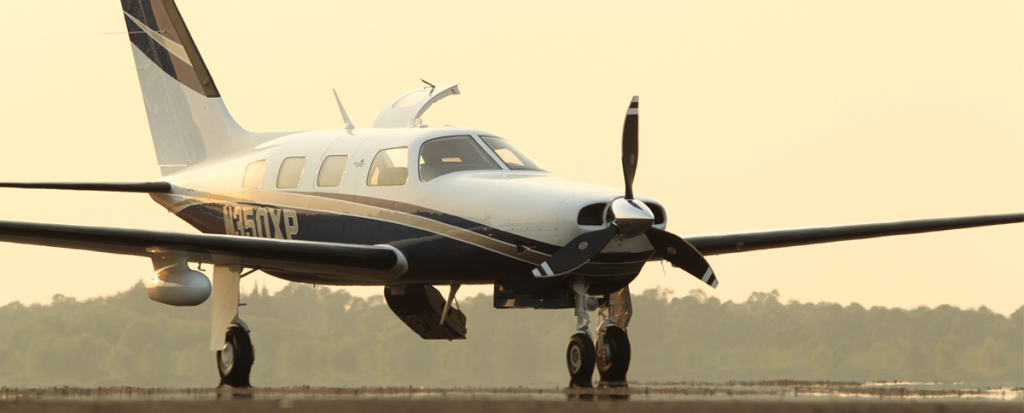
Texas Top Aviation is proud to announce that we now offer Piper PA46 Training in the Malibu and Mirage.  Our Piper PA46 training is provided with the same excellent & professional approach that has become our hallmark.

The four-day format of this course allows time to answer all of your questions about your new airplane.  The Texas Top Aviation Piper PA46 training course leaves you with a confidence and understanding that will help you enjoy your Malibu or Mirage even more.

New avionics have you scratching your head in confusion? No problem. Texas Top Aviation is well versed in the latest Garmin and glass panel instrumentation.

If you are in need of recurrent training in your PA-46, Texas Top Aviation would be proud to help with that as well. Consider us your one stop shop for Piper PA-46 training.

For more information, check out our Piper Malibu/Mirage Training page.

Contact us today to schedule your Piper PA46 Training!

Similar Posts

  • Avidyne Vantage

    For years, Cirrus owners who have the Avidyne Entegra PFD and MFD have been clamoring for Avidyne to come up with some sort of upgrade. The Entegra, or EX 5000 system, is late ’90s technology and, though it still works, there will be a certain point in the future when it gives up the ghost. Avidyne still supports the Entegra system, but it’s hard for a Cirrus owner to see all this new technology coming on the market while not being able to upgrade the original Avidyne screens.

    Avidyne gave it a go in the late 2000s with a panel upgrade known as the R9. The R9 was a good system, but Avidyne was very slow on the release (rumors were the company wanted it to be absolutely perfect before releasing it, which frustrated Cirrus, who then switched to the Garmin Perspective panel, leaving Avidyne behind) which led to the R9 only being available as a very expensive retrofit to the Entegra system ($80,000-$90,000 for the system and install). Needless to say, there weren’t that many takers.

    Late in 2020, Garmin announced it had received certification to retrofit Avidyne Entegra equipped Cirrus Aircraft with the company’s G500 TXi displays, which gave new hope to G1, G2, and G3 Cirrus owners. The price tag wasn’t outrageous, coming in at $16,000 apiece for each display. The G500 TXi works with any possible GPS that can be installed in a Cirrus (GNS 430Ws, GTN 650s, GTN750, or the Avidyne IFD 540/440) and with the DFC 90 Autopilot (if the Cirrus is still equipped with an STEC 55x, the Autopilot would need to be changed to either a DFC 90 or a Garmin GFC 500).

    Fast forward to June of 2021 and Avidyne re-enters the game with the Avidyne Vantage. After the R9 debacle, Avidyne has opted this time to go for a more simple approach. The Avidyne Vantage system changes out the Entegra PFD and MFD with bigger screens (12″; Garmin’s TXi units are only 10.6″) with high quality pixelation, synthetic vision, engine gauges, checklists, charts, a hybrid touch interface, and all the other information that was offered on the Entegra system, just all more modern and updated. The best news is that the system provides redundant reversionary mode, which was one of the biggest complaints about the Entegra system.

    The price tag comes in lower than Garmin, with each screen being priced at $12,500. The units will work seamlessly with the Avidyne IFD Series GPS units, though, as of this writing, it isn’t clear if the Avidyne Vantage will work with Garmin GTN 430Ws or the GTN 750/650. I would assume that the integration would be there, but I haven’t found any documentation stating that yet. DFC 90 Autopilot integration would be seamless, but not sure the integration with the STEC 55x or Garmin GFC 500.

    Avidyne says the Vantage will be fully certified in early 2022, but the company is taking orders now. Visit the Avidyne Website for more information.

  • As Fast as a Cirrus — Better Tech, and Less?

    2008 Cessna 400 Corvalis TT N422TJ on the ramp — a faster, better-value alternative to a Cirrus SR22T
    2008 Cessna 400 Corvalis TT (N422TJ) — 235 KTAS and Garmin G1000 glass, priced under a comparable Cirrus.

    If you’re weighing a Cessna 400 vs Cirrus, start here. The 2008 Cessna 400 Corvalis TT cruises at 235 knots true — the fastest fixed-gear piston single ever certified. It’s faster than a turbocharged Cirrus on the same fuel and the same class of engine, and it costs less than a comparable SR22T. If you’re shopping a high-performance single for speed and value, N422TJ deserves a hard look.

    The Airplane Cirrus Shoppers Overlook

    The Cessna 400 is a Lancair design — a clean-sheet, all-composite airframe built to go fast. Cessna certified and refined it, and built N422TJ in 2008. It seats four, carries a real load, and handles weather. Most buyers shopping a high-performance single default to Cirrus, so airplanes like this one get overlooked. That’s where the value is.

    Faster on the Same Fuel

    The 400’s 235 KTAS is a true max cruise at 25,000 feet on oxygen. A 2011–2012 Cirrus SR22T (Gen 3) trues about 211 KTAS. Both burn 100LL and run turbocharged Continental engines in the same ~310-horsepower class.

    That’s about 24 knots up high — roughly 45 minutes off a 1,000-nautical-mile leg — with no bigger engine and no more fuel. And it isn’t only a flight-levels number: at 10,000 feet the 400 still trues about 180 KTAS, roughly 10 knots faster than an SR22T at the same altitude.

    Side profile of the all-composite, fixed-gear airframe
    Lancair-designed, all-composite, fixed-gear — the airframe that makes 235 knots possible.

    The Value Gap

    N422TJ is priced at $350,000. A comparable Gen 3 SR22T typically trades between $450,000 and $550,000 used. (A new SR22T is a $1M-plus airplane — not the comparison.) Against the newer turbo Cirrus, that’s roughly $100,000 to $175,000 less for a faster airplane.

    Cessna 400 Corvalis TT N422TJ on the ramp, front three-quarter view
    N422TJ — no damage history, complete logs since new, Van Bortel-maintained.

    Cross-Shopping a Turbonormalized Cirrus SR22

    A lot of buyers looking at N422TJ also weigh a Cirrus SR22 with the Tornado Alley turbonormalized engine. It’s a fair comparison — the same ~310-horsepower-class Continental, the same all-composite fixed-gear layout, the same 100LL — so here’s the honest math.

    Speed and engine: the turbonormalized SR22 trues around 211 KTAS; the 400 does 235. The 400 also runs a true twin-turbocharged TSIO-550-C, not a turbonormalized system — a true turbo makes boosted power up high, which is a big part of that speed edge.

    Avionics and price — 2006–2008: those Cirrus came with the Avidyne Entegra panel. N422TJ’s Garmin G1000 with WAAS and Synthetic Vision is a clear step up — better glass for comparable or less money.

    Avionics and price — 2009 and later: Cirrus moved to Garmin Perspective (G1000-class) glass, but the price moved with it. A 2009 SR22 turbonormalized with Perspective typically runs around $400,000 or more — one representative listing is $429,900. N422TJ is $350,000: less money, comparable glass, and 24 knots faster.

    The SR22 still brings the CAPS parachute and the Cirrus owner community. But on speed, engine, and price, the Cessna 400 stays ahead.

    MetricCessna 400 Corvalis TT (N422TJ)Cirrus SR22T — Gen 3 (2011–2012)Cirrus SR22 Turbonormalized (2006–2009)
    Max cruise (25,000 ft)235 KTAS~211 KTAS~211 KTAS
    Cruise at 10,000 ft~180 KTAS~170 KTAS~170 KTAS
    EngineTwin-turbocharged Continental TSIO-550-C (true turbo, ~310 hp class)Turbocharged Continental (~310 hp class)Turbonormalized Continental IO-550-N (~310 hp class)
    Glass panelGarmin G1000 — WAAS + Synthetic VisionCirrus Perspective (Garmin)Avidyne Entegra (2006–08) / Garmin Perspective (2009+)
    Fuel100LL100LL100LL
    Airframe / gearAll-composite, fixed gearAll-composite, fixed gearAll-composite, fixed gear
    Useful loadComparable (often equal or a touch better)ComparableComparable
    Whole-airframe parachuteNoYes (CAPS)Yes (CAPS)
    Typical used price$350,000~$450,000–$550,000~$300,000–$450,000 (est.; 2009 Perspective ~$400K+)
    Cessna 400 Corvalis TT vs. Cirrus SR22T (Gen 3) and the turbonormalized SR22. Speeds and prices are typical estimates; verify against the aircraft records and current market.

    The fastest fixed-gear piston single ever certified — and it out-runs a turbo Cirrus on the same fuel.

    The Avionics You Can’t Buy Anymore

    Garmin G1000 glass panel with WAAS and Synthetic Vision (SVT)
    Garmin G1000 with WAAS and Synthetic Vision (SVT) and the GFC-700 autopilot.

    N422TJ has a Garmin G1000 with WAAS and Synthetic Vision (SVT) and the GFC-700 autopilot. WAAS gives you LPV approaches — near-ILS precision at runways nationwide.

    This matters because the WAAS upgrade path for the G1000 in these airframes is closed. A Cessna 400 that left the factory without WAAS can’t be upgraded — it will never fly an LPV approach. So a WAAS-plus-SVT 400 like this one is a scarce find. You either buy one that has it, or you don’t get it.

    Glass cockpit with dual Garmin G1000 displays and leather interior
    Both G1000 displays with synthetic vision — a modern, integrated flight deck.

    Built to Actually Go

    This airplane is equipped to be flown hard and often:

    • Thermawing electric de-ice with a backup alternator — a de-ice system (not certified known-ice)
    • Factory air conditioning
    • Speed brakes
    • Hot prop, built-in oxygen, and ADS-B Out
    Cabin door open showing cabin access and seating
    A comfortable four-seat cabin built for real trips.

    The engine is a twin-turbocharged Continental TSIO-550-C with about 1,503 hours total time — the original engine, 1,503 since new. No damage history, complete logs since new, maintained by Van Bortel.

    Leather interior seating
    Leather interior, comfortable for four.

    An Honest Word: What the Cirrus Does Better

    One thing every Cirrus has that the 400 doesn’t: the CAPS whole-airframe parachute. Pull the handle and the airplane comes down under canopy. For a lot of buyers that’s the deciding factor, and it’s a fair reason to choose a Cirrus. Cirrus also has a large owner community and a strong support network.

    Useful load is comparable across all three airplanes — the 400 is often equal or a little better. If the parachute and the community are your priorities, a Cirrus may be the right airplane, and we can help you find one. If your priorities are speed, avionics, and value, the 400 is hard to beat at this price.

    Cessna 400 vs Cirrus: Quick Answers for Shoppers

    Is the Cessna 400 faster than a Cirrus SR22T?

    Yes. The Cessna 400 Corvalis TT trues up to 235 KTAS at 25,000 feet versus about 211 KTAS for a Gen 3 Cirrus SR22T — about 24 knots faster on the same 100LL and the same ~310-horsepower class of turbocharged Continental engine, or roughly 45 minutes saved on a 1,000-nautical-mile leg. At 10,000 feet the 400 still trues about 180 KTAS, roughly 10 knots faster than an SR22T at that altitude.

    How does the Cessna 400 compare to a turbonormalized Cirrus SR22?

    The Cessna 400 trues 235 KTAS versus about 211 KTAS for a turbonormalized SR22, and it uses a true twin-turbocharged Continental TSIO-550-C rather than a turbonormalized system. A 2006-2008 SR22 turbo has the older Avidyne Entegra panel, while the 400 has a Garmin G1000 with WAAS and Synthetic Vision. A 2009-and-later SR22 turbo with Garmin Perspective glass typically costs around $400,000 or more, versus $350,000 for N422TJ. The SR22 still offers its CAPS whole-airframe parachute.

    Does the 2006-2008 Cirrus SR22 have a Garmin G1000?

    No. Cirrus SR22s from 2006-2008 typically came with the Avidyne Entegra glass panel; Garmin-based Perspective glass arrived in 2009. The 2008 Cessna 400 came with the Garmin G1000, and N422TJ has the WAAS and Synthetic Vision version.

    How much less is a Cessna 400 than a comparable Cirrus SR22T?

    N422TJ is priced at $350,000, while a comparable 2011-2012 Cirrus SR22T (Gen 3) typically sells for about $450,000 to $550,000 used — roughly $100,000 to $175,000 less for a faster airplane.

    What is the fastest fixed-gear single-engine airplane?

    The Cessna 400 Corvalis TT, at 235 KTAS maximum cruise, is the fastest fixed-gear piston single-engine airplane ever certified.

    Does the Cessna 400 have a parachute like the Cirrus?

    No. A whole-airframe CAPS parachute is the one meaningful capability the Cirrus offers that the Cessna 400 does not. On speed, avionics, and useful load, the 400 matches or beats a comparable SR22 or SR22T.

    Can the Cessna 400’s Garmin G1000 be upgraded to WAAS?

    No. The WAAS upgrade path for the G1000 in these airframes is closed, so a non-WAAS Cessna 400 can never gain LPV approach capability. N422TJ already has WAAS plus Synthetic Vision, which makes it a scarce find.

    Does the Cessna 400 carry less than a Cirrus SR22?

    No. Useful load is comparable — the Cessna 400 is often equal to or a little better than a comparable SR22 or SR22T.

    Contact Texas Top Aviation

    ✈️ See the full N422TJ listing, specs & photos →

    Call to see N422TJ or to talk through the Cessna 400 vs Cirrus decision: (512) 270-1298 · txtopaviation.com. Austin & San Antonio, TX.

  • Guardian Seven Trauma

    First Aid Kit on Steroids

    We have all seen the little first aid kits that a pilot can get to carry in an airplane. It usually has some bandaids, maybe some gauze, and some antibiotic ointment. Very helpful in the even that your paper VFR chart cuts your finger when you are unrolling it.

    What happens if you crash in a harsh environment and you have some actual injuries to take care of?

    Enter the Guardian Seven Trauma G7-Alpha Trauma and Egress Kit. It literally is a First Aid Kit on steroids.

    Guardian Seven Trauma has put together a kit that contains just about anything you need to take care of an injury from an airplane crash. Plus, the kit only weighs less than 2 pounds. It easily mounts in an aircraft and can be opened with only one hand.

    The kit contains:

    • CAT Tourniquet
    • Quick Clot Z Hold Hemostatic Gauze
    • 4″ Emergency Trauma Dressing
    • Nasal Airway
    • ARS Needle
    • HyFin Chest Seal Twin Pack
    • (4) 3″ Gauze Rolls
    • Triangle Bandage
    • Mylar Blanket
    • Leatherman Z Rex Tool (for emergency egress)
    • Trauma Shears
    • Roll of Medical Tape
    • Bear Claw Glove Kit
    • Permanent Marker
    • Multi Purpose Paracord Handle
    • Nylon Straps with Buckles (2)
    • Medical Patch

    Want to upgrade your first aid kit? Visit Guardian Seven’s website to order the G7-Alpha kit.

  • Cirrus Autopilot Check

    In the Pre-Takeoff Checklist for any Cirrus aircraft, it calls for pilots to perform a Cirrus Autopilot Check.  It is prudent to check the autopilot before your flight to ensure that all aspects of the autopilot are working properly.  The only problem is, the checklist doesn’t spell out how to perform the Cirrus Autopilot Check.  You would have to go to the POH for the airplane, which is usually in the back seat or a bag somewhere and therefore hard to get to, in order to find the procedure.

    The procedure for checking the autopilot is slightly different depending on what autopilot is in your airplane.  The procedures for all three are below.

    S-TEC 55x

    • Sync the heading bug to your current heading
    • Activate heading mode on the autopilot
    • Twist the heading bug left and right to ensure the ailerons move left and right
    • Sync the heading bug to your current heading
    • Activate vertical speed mode on the autopilot
    • Move the vertical speed bug (or the vertical speed on the altitude pre-selector if you have a steam gauge Cirrus) up and down to ensure the elevator moves accordingly
    • Ensure you can overpower the autopilot
    • Press the autopilot disconnect switch to ensure the autopilot shuts off


    Avidyne DFC 90

    • Press the AP button to activate the autopilot
    • Ensure AP, ROLL, and PITCH Annunciations are depicted in green on the top of the PFD
    • Set the heading bug 90 degrees from the current heading
    • Press the HDG button on the autopilot
    • Ensure the ailerons are moving in the proper direction and HDG is annunciated on the top of the PFD
    • Ensure you can overpower the autopilot
    • Press the autopilot disconnect switch on the stick and ensure the autopilot has disconnected


    DFC90

    Garmin GFC 700

    • Press the AP button to activate the autopilot
    • Ensure you can overpower the autopilot
    • Press the autopilot disconnect switch on the stick to ensure the autopilot has disconnected
  • FBO Etiquette

    If you’ve ever been to Nantucket Airport during the summer, you’ll understand when I say that it is a crazy place. During the summer months, especially on weekends, the airport is visited by an endless parade of airplanes ranging from the smallest GA airplanes to the biggest private jets.

    One sunny Sunday afternoon I was standing in line at the front desk of the Nantucket FBO when the ramp door opened and a very grumpy and entitled man walked in. The man marched right up to the front desk and barked a fuel order at the girl working there, which she mistakenly read back wrong. After yelling at her for her wrongdoing, he announced that he had flown in to go to the restaurant and stormed off to drown his sorrows in fish and chips. Although he was a jerk, his attitude got me thinking about FBO’s and everything that the people who work at them do for us pilots.

    For anyone who may not know, FBO stands for Fixed Base Operator. FBO’s can be found at airports everywhere and their business is to provide services such as fuel, hangar space, and tie downs. Bigger FBO’s can offer more services including rental cars, food, maintenance, flight instruction, etc. FBO workers have the ability to make life really good or really miserable for pilots, and, it seems to me, we pilots have the same power over them. Based on my personal experiences and the experiences of some friends who have worked at airports around the country, here are some things to think about next time you taxi onto an FBO ramp.

    Landmark Aviation FBO
    Landmark Aviation has the best pens

    I’ve divided this article into two sections:

    • FBO Etiquette: What can we as pilots do to make life easier for the workers at the FBOs
    • FBO Pilot Perks: Ways that FBOs can help make a pilot’s life better (besides basic services like fueling)


    FBO Etiquette

    Be Polite

    Everyone I talked to about their time working at an FBO said that simply by being friendly and polite is one of the biggest ways we can help. Most of the people that work at the FBOs love aviation and likely are working there to be around the industry in hopes of eventually being more involved. The girl working the desk at Nantucket didn’t deserve to be yelled at just for reading a tail number back wrong; don’t forget that “please” and “thank you” are still magic words.

    Call Ahead

    Whether you are flying to the airport, or you left your airplane at the FBO and you need them to pull it out or fuel it, calling ahead is greatly appreciated. Most FBO’s have a radio at the front desk and have their frequency listed online and in foreflight. Call ahead and tell them that you’re coming, when you’ll be arriving, and what you’ll need when you get there (gas, rental car, taxi..etc). That way they wont feel rushed and you may get what you’re looking for more expediently upon arrival.

    Fuel orders

    If your fuel order is difficult or confusing (example: 6.54 gallons in the right side and 4.32 in the left) you may be better off just to do it yourself at the self serve. One of the guys I talked to said that he would have pilots ask for extremely specific numbers and then stand there watching, ready to pounce when it wasn’t fueled exactly right. Its also worth noting that fuelers do make mistakes. Its highly recommended to watch and make sure that the correct truck (Jet A or 100LL) is the one pulling up to dispense your gas. Make sure you check that the fuel caps are properly installed before departing. 

    Look outside

    Piper Malibu FBO
    A lineman motions for the pilot to stop.

    Taxiing onto the ramp is not the right time to be doing your after landing and shutdown checklists. Wait until the airplane is stopped before taking your eyes off the person marshaling you to your parking spot. I’ve been told that it isn’t uncommon for a pilot to be looking inside while taxiing and it makes the linemen very nervous as they are motioning to the pilot to stop (For those unfamiliar, with lineman hand signals, here’s a helpful link).

    Brakes

    Unless you have talked to them and get the okay, don’t leave the parking brake on when leaving your airplane at an FBO. Often the lineman will direct you to park upfront to make loading and unloading easy, but if you’re going to stay for a long period, the airplane will need to be towed and parked out of the way. Leaving the parking brake on can make serious headaches for the people trying to organize the ramp after you leave.

    Lights

    Don’t blind the poor guy parking you by leaving all your landing, taxi, and recognition lights on as you’re pulling into your spot at night. Likewise, when you are ready to leave your parking space, its courteous to signal the person waiting in front of your airplane by flashing one of your lights at them so they know you are ready to be directed off of the ramp.

    FBO Pilot Perks

    Good parking

    This one is pretty basic. I’ve heard through the grapevine that you may get parked in the boondocks as punishment for being rude to the FBO staff. However, if asked, much of the time they can pull your airplane right up front and may even let you pull a vehicle onto the ramp to load people and bags more easily.

    Cheaper hotel rooms/ rental cars

    Some FBO’s have special rates with hotel and rental car companies around in the area. Although it varies from place to place, you may be surprised with the amount you can save on these travel essentials. I had a flight last week where I called and was given a quote of 185 dollars for a rental car…after telling them that I was parking at the local FBO, I got the special price of 125. Check with the FBO you will be stopping at for any of their current offerings.

    Fuel discounts

    Sometimes the price of fuel or the minimum uptake to waive the fees can be negotiated.  Sometimes, the fees may be forgotten entirely. If you are unable to take the minimum amount of fuel to waive the landing or ramp charges, tell them what you can take and you may be pleasantly surprised with the response. Its not uncommon with our Bonanza that even though the “minimum” may be 20, I can waive the fees by up-taking 10 or 12 gallons instead.

    Points/ Rewards cards

    IMG_1912

    Some FBO’s offer incentives to pilots for buying gas. Many of the rewards programs are free to sign up for and will pay the fuel purchaser cash based on how much fuel they buy over a specified time period.  I am a member of the Avtrip program which rewards fuel purchases at Avfuel airports with points that are redeemable for money. Avtrip is just one example of an FBO fuel rewards program; if you fly regularly, it may be worth looking into whether or not there is a fuel rewards program you can take advantage of.

    Crew Cars

    Most FBO’s have cars designated for use by the pilots. They are extremely nice for going to get lunch or taking care of whatever short errands you may need to run around town. Most crew cars are limited to about 1-2 hours of use, but they can often be loaned out longer based on the discretion of the people working the desk. On a few occasions, I’ve had the cars loaned to me for longer, even over night, by the nice people at the FBO (They always appreciate pilots splashing a few gallons of auto gas into the cars while they are out, too).

    FBOs and the services that they provide are invaluable to pilots, both commercial and private. If we as pilots are willing to work with the linemen and service reps we can make both our lives and their lives easier. Remember to be polite and don’t be afraid to ask if you need something….that’s what they’re there for!

    Andrew Robinson is a 135 Charter Pilot and flight instructor who lives with his wife and 2 daughters in Pennsylvania.  He flies Pilatus PC-12s and instructs in Beechcraft Bonanzas.

  • Flying to the Bahamas

    A couple weeks ago, my employer informed me that he wanted to take a group to Nassau, The Bahamas. I thought, no big deal, this should be an easy trip. The more I started to read, though, the more I realized it wasn’t going to be just a “normal” trip.

    If you aren’t a member of AOPA, I would highly recommend joining. AOPA’s website was where I started researching. They actually have a checklist to help you along the way.

    The first step is getting the paperwork started. All souls on board are going to need a valid passport. In our case, a couple of passengers need to get theirs. Since it was a little shorter notice, we had to go through the expedited process. It’s fairly simple. A quick internet search gave me a couple of people that helped the process along.

    Next was making sure the aircraft had all it’s paperwork. The airworthiness certificate was easy as it’s always in the plane (or should be).

    The registration certificate was next to check. We recently upgraded to the King Air 350 so we had to make sure we had the original issuance registration certificate. The Bahamas supposedly doesn’t allow Temporary Certificates and I really didn’t want to test that policy.  Thankfully after a couple of calls between owner and the FAA we got the original.

    The aircraft and pilot are both also required to have an FCC Radio License. This is only for international flying, but not an everyday thing pilots think about.

    After that was flight planning. I use FltPlan.com. The actual filing of the flight plan was very easy. I use the prescribed routes from the website. In the remarks section of the flight plan put ADCUS (Advise Customs). This advices ATC to let customs know of your arrival. It’s basically an added safety net in case you forget to call ahead or your flight times end up being way off.

    The other item when dealing with flight planning is dealing with eApis. There are numerous companies who will provide this service for you. I elected not to use one of those. If you go to the CBP website, you can set up an account and do all of it yourself. Take your time and really plan the flight out well to make sure your arrival times are as close to real time as possible. If you’re way off, this will make any customs agent very frustrated and that is not something you want to be dealing with.

    Approach charts and en route charts are another hurdle. Thankfully Foreflight has you covered. With my subscription, I already had en route charts. The approach charts were the real issue. In the Bahamas, the only places that have approved instrument approaches is Nassau and Freeport. Fortunately, we were going to Nassau. Foreflight does charge almost $400 for the Caribbean and Bahamas charts.  Emailing the FBO is a good option as they can usually supply approach plates for international flights.

    You’ll also need a CBP sticker. This goes on the outside of the aircraft showing customs you’re in the system. This can be found on the CBP website as well. It takes a little bit to get the
    sticker in the mail. However, once you pay for the sticker, the receipt can be used in place of the sticker.

    The final thing I focused on was picking an FBO. I chose Jet Aviation. They had CAA which gave us a Jet fuel discount. Their facility was excellent and staff was very friendly. The thing that put it over the top for me was how they handled customs. I emailed Jet Aviation all the information for myself and passengers and they pre-filled all the customs forms for me. When we arrived, customs took all of five minutes and then my passengers were out the door.

    While in Nassau, I stayed at Breezes Resort. It’s all inclusive so that helps keep the costs down for your owners if you’re a corporate pilot. It’s next to some of the other bigger resorts so there were shuttles available to get to other amenities. The only complaint I might have was the power kept cycling on and off and the internet wasn’t reliable. This proved challenging when trying to plan for the return trip.

    The return trip required a lot of the same preparation. Again it was nice to have a good FBO to help prepare the paperwork required to clear customs. Jet Aviation handled the General Declarations for me and my passengers. All I was required to do was file the flight plan and file eApis, which was actually challenging while my internet at the resort was on the fritz.

    Don’t forget to call US Customs at your Port of Entry! As this was Ft. Lauderdale for us, I called them twenty four hours in advance as prescribed. The customs agent was friendly and helpful with any questions I had. I think the best advice I can give throughout this whole experience is call ahead and ask lots of questions! Did I say that already?

    The morning of the return trip went off with no hitches. Again, Jet Aviation had set up a driver to pick me up and he was on time. Jet Aviation had all the General Declarations paperwork pre-filled out for myself and passengers. Again, I use FltPlan.com to file my flight plans. Their service performed flawlessly even though I had heard rumors of flight plans not going through. To curb my bet, I talked with the staff at Jet Aviation and they made a call to tower for me to verify that the flight plan had gone through; of course, it had.

    The actual flight out of Nassau was pretty uneventful. The last real hurdle I had was dealing with customs in Ft. Lauderdale, and hurdle it was. When we landed at FLL, ground instructed me over to customs ramp. There was no one to tell us where to park on the ramp. This was extremely frustrating.

    A Learjet taxied in prior to us and had taken up most of the ramp but, we found a spot and shutdown. Once we shut down, no one came out to our aircraft. I walked in to talk to someone and was greeted by a Boarder agent who was less than helpful. Since the Learjet had parked first, they got to go through first. Evidently, we were not allowed in the building until they were done. This didn’t make my owner too happy!

    Be prepared, though, if another airplane is on the Customs ramp before you arrive.  You are not supposed to get out of the airplane until a Customs agent comes and meets you, even to go to the bathroom.  This can result in large fines.

    Once we were allowed in, the process went smoothly. We had to put all of our bags through the x-ray machine. Beyond the x-ray machine, CPB didn’t require any other security measures. On other crossings I’ve done, CPB had opened up bags and sifted through clothes, so just doing the conveyor belt was a surprise. The rest of the trip was fairly commonplace. We stopped in Destin FL for dinner before making our final leg into Dallas. All in all, it was an excellent trip and I’m excited to do another one.

    Ryne Bergren works for a Part 91 operation in Dallas flying a King Air 350. Being a Part 91 outfit, he doesn’t get to rely on a “dispatch” or “company” to help with any international flight planning. This was a learning experience for him. Hopefully this will be a help to anyone for future trips.

Leave a Reply

Your email address will not be published. Required fields are marked *