Lightspeed Tango Headset

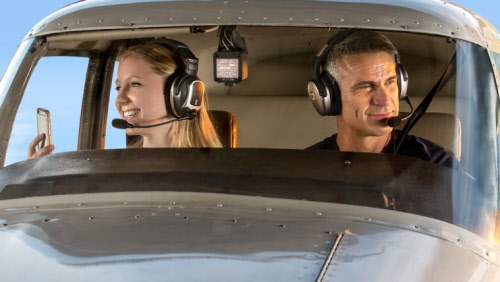
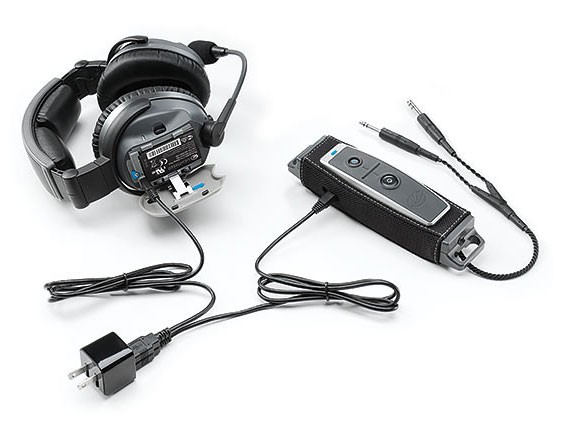
I recently purchased the new, wireless, Lightspeed Tango headset.  I’m a little OCD, so when a headset wire is banging against my shoulder while I’m trying to tune a radio or point something out, it’s a little annoying. A headset without the wires caught my eye.

As I’ve stated before in a previous article, I really like Lightspeed headsets.  They are more comfortable than Bose, and a little bit more affordable too.  The noise canceling quality is very high in the different Lightspeed models.  I personally believe it got even better with the Lightspeed Tango.
Lightspeed Tango

Let’s talk about the obvious first.  Not having a wire connecting you to the headset jacks is really nice.  You’re not tethered to anything, so your head is free to move anywhere without getting yanked back in place. Lightspeed developed a new technology, called Lightspeed Link, which bypasses Bluetooth or Wifi and connects the Panel Interface to the headset wirelessly.

The Link technology works pretty well.  The only problem I have noticed is in certain airplanes, I occasionally lose one ear, but after I wiggle the input wires around, the deaf ear comes back up.  It may be a loose connector in the plane itself.

The really nice thing about the Lightspeed Tango is the fact that it doesn’t need AA batteries anymore. Lightspeed put rechargeable lithium ion batteries in both the Panel Interface and the headset.  You get 12 hours of battery life out of both, far surpassing any length of time you would want to be in an airplane.  If the battery dies, there is a handy aux cable that can connect the Panel Interface directly to the headset (the ion batteries recharge with the included wall charger and USB cables in 2 hours).

Though the Lightspeed Tango is slightly heavier than the Zulu 2 due to the Link hardware and the lithium ion battery, it is still extremely comfortable.  The ear cups actually fit better over my ears and give me a better seal with glasses on then the Zulu 2 did.  As with all Lightspeed products, there is no squeezing of my head and the cushions on top of the headset sit very comfortably on top of my head.

The Bluetooth is much simpler to use than the Zulu 2 and definitely simpler than the Bose A20.  Sound quality is very good for phone calls and music.  The volume control on the headset itself is set to make smaller adjustments so you don’t have to deal with wide swings in volume.

Overall, I’m a big fan of the Lightspeed Tango.  I am recommending them to all the pilots I talk to.  Rolling in at $400 cheaper than the Bose, you can’t go wrong.
Lightspeed Tango 3

Similar Posts

  • I Love the Piper PA46

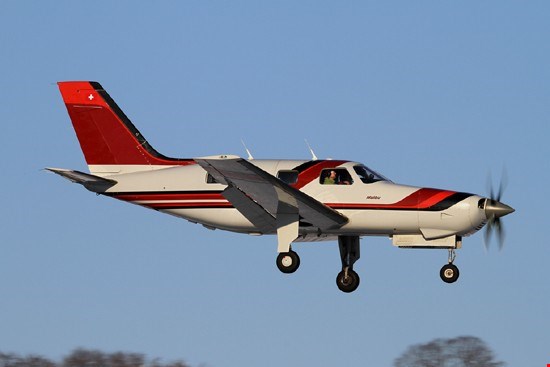
    A lot of my customers ask me which airplane that I train in is my favorite.  The Cirrus and the Columbia both are very good airplanes, but if I had my pick, I’d go with a Piper PA46, specifically an ’86-’88 Malibu.

    I love the Piper PA46.  6 seat, cabin class, pressurization, air conditioning, great ramp appeal, 17 GPH (in the Continental TSIO 520 or 550; Piper changed to the Lycoming TIO 540 in ’89, which you run rich of peak and burn 22 GPH, decreasing a little bit of the awesomeness).  What more can you ask for?  The interior is roomy, there is plenty of baggage space in the nose and in the rear of the cabin.  They are downright fabulous airplanes.  Plus, you can get into a nice one that has had some panel upgrades and a mid time engine for around $300,000.  That’s not bad.

    Cessna tried to make a pressurized single with the P210, but it just doesn’t match up with the Piper PA46. The Piper has more room, more baggage space, a higher max differential pressure and service ceiling, and better air conditioning to boot!

    Don’t know much about the Piper PA46?  It’s been called several things.  Originally, it was the Malibu, with a Continental engine.  Now the TSIO 520 was not one of Continental’s better motors.  However, most of the original Malibus have been upgraded to the much better TSIO 550C engine, which is a great product. Cruise around at almost 200 knots at FL200 and burn only 17 GPH.  It’s beautiful.

    Piper changed to the Lycoming engine in 1989 and changed the name to the Malibu Mirage, later shortened to just Mirage.

    Then, in 2016, Piper upgraded a lot of the avionics, cleaned up the panel, and dubbed it the M350.

    Piper made the ill fated decision in the mid 2000s to quit making the Saratoga and instead make an unpressurized version of the PA46 called the Matrix.  It didn’t last long, only about 10 years or so, and hasn’t been very popular (see:  don’t buy one).  Piper took the best part about the PA46, the pressurization, and took it away, leaving an airplane that you still have to wear oxygen in to get the advertised high speeds in the upper teens and flight levels.  Who wants to be cruising around in a cabin class airplane with oxygen on?  Piper needs to bring the Saratoga back to give folks a low level, high performance option.

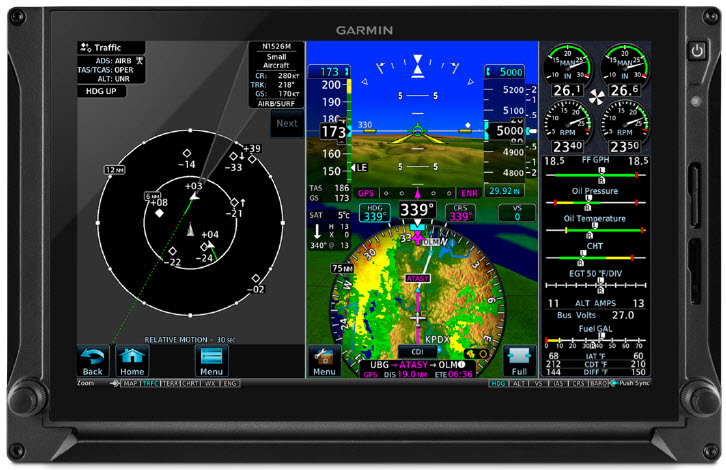
    What would be my dream Piper PA46?  As stated above, an ’86-’88 model Malibu (Piper started off with hydraulic flaps in the ’84-’85 models and it wasn’t a very good system.  They changed to electric flaps in ’86) with a Continental TSIO 550C upgrade.  The Garmin autopilot isn’t out yet, so I’d go with the STEC 3100 Autopilot w/ a Yaw Damper (the airplane originally came with a King KFC 150, which is a really good autopilot, but most of them are getting old and are getting difficult to fix.  King’s replacement KFC 325 is still slogging through certification.  Garmin’s GFC 600 would be ideal, but that isn’t expected to be certified for the PA46 fleet till late this year).  A single Garmin 10.6″ G500 TXi with EIS tied to a Garmin GTN 750 GPS with a Garmin GTR 225 Nav/Comm as the number 2 radio.

    Then I just put gas in it and go.  That would be my kind of airplane.

  • Learning From Other’s Mistakes:  An Overview of the 2024 Piper PA-46 Accidents

    The Piper PA-46 series, which includes models like the piston engine Piper Malibu and Piper Mirage, and the turboprops Piper Meridian, M500, and M600, is a popular choice for private pilots and business aviation. Known for its impressive speed, range, and pressurization, the PA-46 is a very capable single pilot aircraft. However, like all high-performance aircraft, it presents its own set of challenges and risks, especially when pilot error or adverse conditions come into play.

    The 2024 PMOPA (Piper M-Class Owner’s and Pilot’s Association) Convention was the first weekend in November and one of the sessions every year is the PA-46 Safety Review.  Sadly, in 2024, the accidents involving various PA-46 models pointed out several areas related to decision making that all pilots need to put be aware of. These accidents highlight critical issues in weather awareness, pilot training, and decision-making, and they provide valuable lessons for other pilots in any type of aircraft.

    Overview of the 2024 Piper PA-46 Accidents

    The Piper PA-46 is generally regarded as a reliable and capable aircraft, but the safe outcome of a flight often times depends on the pilot’s decision making.  There always can be mechanical malfunctions, but those still require good pilot decision making to be able to walk away from the accident.

    In 2024, multiple accidents occurred involving different variants of the PA-46, with many of the accidents occurring during critical phases of flight like takeoff or landing. Some of the key factors contributing to these accidents included:

    1. Weather Challenges: In several cases, adverse weather conditions, such as low visibility, thunderstorms, or high winds, contributed to accidents. Despite most PA-46’s being equipped with NexRad and weather radar, pilots sometimes underestimated or misjudged the weather risks.
    2. Pilot Decision-Making: A recurring theme in these accidents was pilot error—specifically, poor decision-making when faced with challenging conditions. In some cases, pilots continued flights despite deteriorating weather or failed to react appropriately to emergency situations.
    3. Mechanical Failures: As with every airplane, systems fail on a Piper PA-46.  Several accidents were due to engine power loss.  Proper training teaches pilots how to have the right mindset and skills to handle those engine power loss situations, taking a bad situation and having the best possible outcome due to good decision making and gliding skills.

    Three Key Lessons for Pilots

    The Piper PA-46 accidents of 2024 serve as valuable reminders about the importance of pilot preparation, decision-making, and risk management. Here are three critical lessons pilots can take away from these accidents:

    1. Prioritize Pre-Flight Weather Planning

    Poor weather conditions were a significant factor in some of the crashes in 2024. Pilots of high-performance aircraft must place a strong emphasis on weather pre-flight planning, especially when flying into regions prone to rapidly changing weather or severe conditions and across frontal systems. Pilots should:

    • Stay up-to-date with weather briefings before and during the flight, including calls to Flight Service Station if there is serious weather along the route.
    • Be proactive in altering flight plans or delaying departures when weather conditions become unfavorable.
    • Utilize onboard weather radar and other tools to monitor changing conditions in real time and avoid nasty looking weather systems.  ADS-B and XM Weather are delayed information.  They are not meant to be used to find holes through storm systems.
    • Finally, don’t try to shoot through holes!  They are called sucker holes for a reason.

    2. Master Emergency Procedures

    Pilots of all aircraft, not just PA-46 models, need to practice engine-out procedures multiple times a year with an instructor, not just at recurrent training.  The goal is to make emergency procedures second nature which creates the right mindset to handle the emergency, creating a much better outcome. Training should focus on:

    • Engine-out procedures immediately after takeoff, climbing out at low altitude, and at cruise.
    • Performance with the propeller feathered and unfeathered, recognizing how the feathered prop increases glide range.
    • Practicing forced landings and other emergency scenarios regularly to build confidence and competence.

    3. Always Plan for an Emergency Landing

    It is very important to know your options in the event of an emergency. When flying over mountainous or remote areas, pilots should always have a contingency plan for where to land if something goes wrong.  An emergency engine out brief should be a part of every pre-takeoff briefing to put the pilot in the right mindset. Pilots should:

    • Brief an engine failure on the runway, low altitude, and at an altitude that allows for a safe return to the airport in the event of an engine failure as part of every pre-takeoff briefing.
    • Study the flight route in detail and identify suitable emergency landing sites along the way, especially when flying in areas with limited options.
    • Consider the terrain, weather conditions, and available options in the event of an engine failure or other emergency.
    • Use terrain awareness and other onboard tools to help identify suitable landing areas in real-time, including the ForeFlight Glide Advisor.

    Conclusion

    The Piper PA-46 series, while a capable and reliable aircraft, demands a high level of skill and preparation from its pilots. The accidents in 2024 serve as a sobering reminder of the critical importance of weather awareness, emergency training, and proper flight planning. By learning from these accidents, pilots can make better decisions, have the right mindset, and reduce the risk of similar accidents in the future.

    By prioritizing weather awareness, mastering emergency procedures, and always having a contingency plan for forced landings, pilots of the Piper PA-46 can improve their ability to handle the challenges posed by these high-performance aircraft. These lessons are not just for PA-46 pilots, but for all pilots striving to fly safely and confidently.

  • The Diamond DA62: The Ultimate Twin

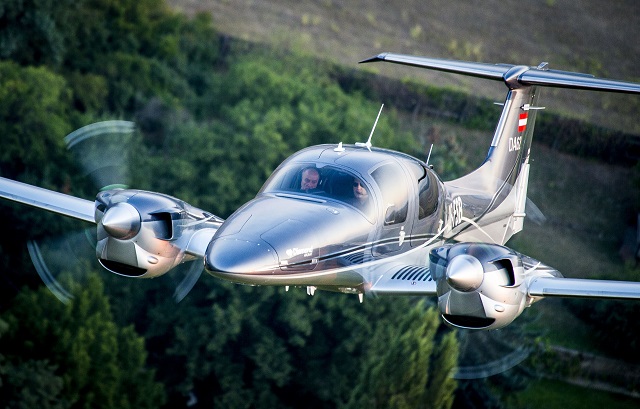
    Late last year, the Diamond Aircraft Corporation announced a brand new twin engine, the Diamond DA62. At first glance, this is a pretty cool airplane.  It seats 7 passengers, spread out amongst 3 rows, with 2 massive doors, leading to an “SUV” type feel, according to Flying Magazine.  That is only one of the “neato” features of the Diamond DA62.

    The thing that will make pilots believers is the fuel burn.  According to Flying Magazine, which did a test flight of the airplane, at 14,000 feet and 60% power, the airplane was only burning 12 GPH, but still doing 170 KTAS.  Remember, this is a twin.  That’s about the same as a normally aspirated Cirrus SR22 at the same altitude.

    Diamond DA62

    How does Diamond do it?  Jet A.  The company put two Austro AE330, 170 Horsepower, Jet A burning piston engines on the Diamond DA62.  You may say, well, yeah, at 60% power, that’s great, but I want to go places. How much fuel does it burn then?  Even at max continuous power of 95%, it’s still only burning 18.5 GPH total and cruising at 195 knots.  Paying Jet A prices, that’s pretty sweet.

    The range on the airplane is quite nice too.  Again, according to Flying Magazine, the range with full fuel (86.4 gallons with aux tanks) is about 1,300 miles.  You can carry the whole family too, as the full fuel payload is 1,000 pounds.  Golf clubs?  No problem.  Just stick them in the nose.

    The Diamond DA62 is probably one of the easiest twins to manage, engine-wise, too.  The Fully Automated Digital Engine Control (FADEC) system that Diamond installed leaves the pilot with only 2 power levers, instead of 6 on the typical piston twin.  All that needs to be done at cruise is set a percent power and the FADEC computer does the rest.

    Need air conditioning, built in oxygen, and TKS?  Diamond can set you up.  The G1000 system complete with digital backup instruments is standard in the airplane.  What more can you really ask for?

    If you haven’t figured it out, I really like this airplane and would be aching to fly it.  I enjoy the DA40 and have a good amount of DA42 experience, but I’d really like to hop in a Diamond DA62.

    Read the whole Flying Magazine article here.

    Sources:  Flyingmag.com

  • Introducing…The Aviator’s Academy

    Imagine this …

    You have plans to fly to an airport 218 miles north for a business meeting. Your window is tight; you have an early morning meeting at your office you can’t miss prior to leaving for the airport. The colleagues you are flying to meet must catch another flight within two hours of your target arrival time. 

    You’re comfortable flying in the current weather conditions, but a small southward-moving storm north of your destination might threaten your approach. Additionally, given the time of day, you can expect ATC delays due to vectors and know you’ll have to adjust on the fly.

    Are you confident you can make the meeting in time?

    If the answer isn’t immediately clear, you’re not alone. Good aeronautical decision making is of utmost importance in the air. External pressures, unexpected challenges, and your level of instrument proficiency are among the many factors to consider when considering an IFR flight. 

    While we can’t remove the external pressures or control the weather, we CAN help with instrument proficiency!

    Introducing … The Aviator’s Academy – advanced online pilot training. 

    During my time training hundreds of capable and competent pilots at Texas Top Aviation, my most common observation with seasoned and rookie pilots alike is that the pilot is often aware of knowledge gaps with the airplane’s avionics after initial flight training or after upgrading to a more advanced airplane, but aren’t sure where to get answers.  Simply put – expert glass panel flight training is hard to find.

    They know enough to have earned their license, but still feel uneasy anticipating unexpected challenges. This leaves them feeling at best, uncomfortable, or worse, on edge and unsafe. When you’re not as proficient as you could be, an easy flight can become stressful quickly in unexpected scenarios, and things spiral from there. It doesn’t have to be this way.

    That’s why The Aviator’s Academy offers online courses with real-life scenarios using glass panel avionics. You’ll gain more confidence in the air and be equipped with better aeronautical decision-making skills after learning from the best in the business.

    We understand the pressures you face in the air. We get it because we have been providing expert, personalized, owner/pilot instruction since 2014 at Texas Top Aviation. With over 8000 hours of instruction given in Technically Advanced Aircraft and over 13,000 hours in total flight time, The Aviator’s Academy instructors are qualified to fly and instruct most single-engine aircraft to a level that far exceeds what a flight school can provide. Nowhere else can you get expert glass panel online instruction for Technically Advanced Aircraft.

    If you’re in need of an instrument proficiency check and fly a technically advanced aircraft with glass panel instruments, this is the place to get your ground school training. Conveniently online. Expertly taught. 

    Mastering your glass panel avionics isn’t impossible. You just need a guide. Enroll in the course you need to take your skill to the next level. You’ll receive expert, specialized online training. Then you’ll fly with confidence.

    LAUNCHING AT OSHKOSH! Visit www.aviatorsacademy.com and leave us your email to be notified when our first course drops. Come visit us at booth 3004 at Osh Kosh, July 25th-July 31st, 2022.

  • The Avidyne Equipped Cirrus Upgrade

    A History Lesson

    11 years ago, in April of 2009, the Avidyne Corporation unveiled the much bally-hooed Release 9, or R9 as it is commonly known, as a hardware replacement for the Avidyne EX5000 Entegra system in Cirrus Aircraft. The Entegra system was way outdated by that point. Even though Avidyne was the first company to put together a glass PFD in a single engine piston airplane, the company had quickly fallen behind Garmin in keeping up with the ever changing technology landscape.

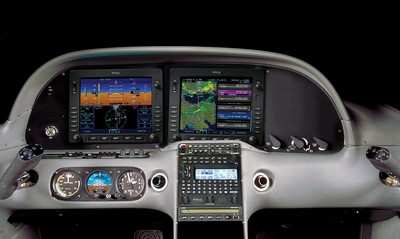
    Rewind to 2008. Cirrus had been going strong with the Avidyne Entegra since the SR20 and SR22 went to full glass in 2003 (a PFD and an MFD; prior to that, Cirrus aircraft only had an MFD with steam gauges and a Sandel Electronic HSI). Cessna, on the other hand, vaulted past the Avidyne Entegra and went straight to the Garmin G1000 in it’s aircraft, starting in 2004 with the 182 G1000 and 2005 with the 172 G1000. Beechcraft and Columbia went to the G1000 (Columbia started with the Avidyne as well) in 2005.

    Garmin’s technology in 2007 was so much better than Avidyne’s technology that Cirrus decided to switch. I’m sure there were many promises made by Avidyne to Cirrus about what Avidyne was working on (the R9), but the G1000 was out there, available, and being used in a lot of different airplanes with very good results.

    So, in 2008, Cirrus made the switch from the Avidyne Entegra to the Garmin G1000, dubbing it the Cirrus Perspective by Garmin avionics package. Avidyne finally got the R9 to market in 2009, but by that time, Piper was the only airplane manufacturer left putting factory Avidyne panels in their airplanes, and they switched to G1000 later that year.

    The R9 is a fabulous product. It’s fully integrated, has great graphics, has fully redundant displays, a QWERTY keypad (which, by the way, Garmin didn’t do for another 8 years), and a lot of other neat features. There’s a bit of a learning curve, but it’s a really good product for what it is.

    Avidyne, though, was late to the game with their technology. By the time it debuted in 2009, all the GA aircraft manufacturers had long since switched to the Garmin G1000 and weren’t looking back. That left Avidyne with the retrofit market for the many different Avidyne Entegra Cirrus aircraft out there. The only problem was, the retrofit was $80,000 ($95,000 if you wanted to throw in the DFC 100 Autopilot, which is a must have) and not many owners were up for paying that much money, then or now.

    To sum up our brief history lesson, Avidyne knew the Entegra needed to go, but couldn’t get the R9 out quickly enough to convince anyone to stick with Avidyne products. The retrofit market didn’t amount to many sales, so Avidyne doesn’t even make the R9 anymore.

    As a side note, I really, really like the Avidyne R9 and am sad that it didn’t make it into more airplanes.

    So, when the Avidyne Entegra starts to have issues, what’s an owner to do? Keep reading!

    There is Hope

    There are thousands of Cirrus aircraft out there flying with the Avidyne Entegra instrumentation, which is basically 20 year old technology (I’ve had a computer engineer tell me the programming in an Entegra is Windows 98 tech). These things are going to start having problems at some point (many already have), but what solution do owners have that is cost effective and get’s them new technology?

    Remember that little company named Garmin? Well, they have come through again. Announced this summer, the Garmin G500 TXi is now certified as a replacement in the Cirrus Avidyne Entegra equipped aircraft. This means pulling out both the PFD and MFD and replacing them with the G500 TXi on both sides. Engine data is also displayed on the G500TXi MFD, including the percent power and TIT indications, if equipped.

    Cirrus SR22 Equipped with Dual G500 TXi Screens and Dual Garmin GTN 650Xi GPS Units

    The cost for the panel? Two 10.6″ G500 TXi’s run about $16,000 apiece for the units, not including labor. $32,000 for a brand new panel isn’t terrible. Plus, the G500 TXi’s work with the DFC90 autopilot if the Cirrus is already equipped with it. If not, the Garmin GFC 500 autopilot is now approved for the Cirrus at a relatively low price of $7,000, including the servos.

    Still have the original Garmin 430s in your Cirrus? Upgraded to the Avidyne IFD 540/440 stack? Put in dual GTN 650Xi’s? Put in a GTN 750Xi? All are compatible with the G500 TXi panel.

    Want to upgrade everything? It does get kind of pricey at that point, but for just equipment, the cost for a complete panel conversion is somewhere in the area of $65,000 plus labor, still below what the R9 cost, but not cheap either. That would include 2 G500 TXi’s, 2 GTN 650Xi’s, a GFC 500 Autopilot, and all the engine monitoring equipment that the G500 TXi would need.

    Cirrus SR22 Equipped with Dual G500 TXi Screens, a GTN 750Xi, and a GTN 650Xi

    Thankfully, some new technology has finally come to the Generation 1-3 Cirrus. Oh, and by the way, your steam gauge Cirrus is fully upgradable as well.

    Want to read more? Check out Garmin’s website.

  • Building An Airplane

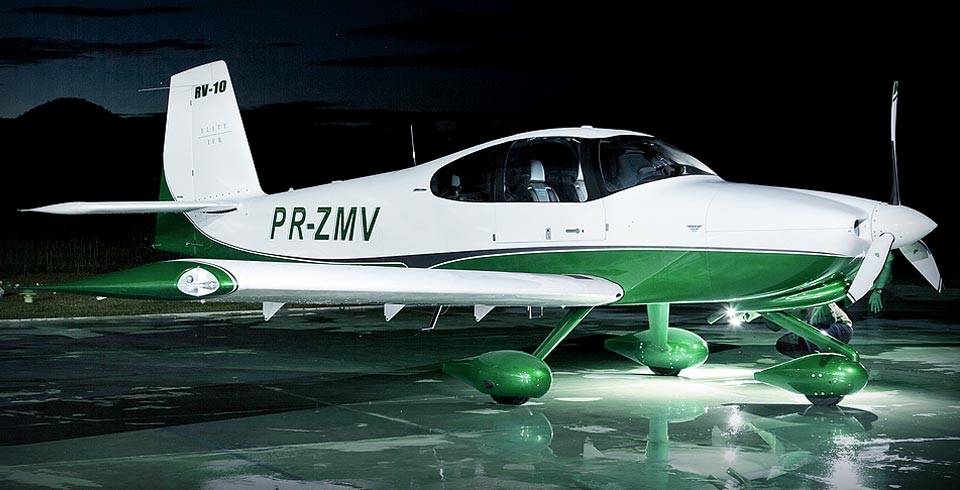
    Randy Vanstory, a long-time customer of Texas Top Aviation, decided in early 2017 to build his own airplane. Randy currently owns a Mooney M20J and has been active in aviation for a number of years.  He took on the Vans RV 10, starting in February 2017.  He’s about halfway through right now, with an estimated completion of mid-2020.

    A completed Vans RV 10

    I asked Randy what gave him the desire to build his own plane.  “I love building things, learning new things, and working on things” he said.  “This satisfies those desires all in one project.”  Randy had a desire to work with his hands, to create something of his own, and building an airplane put several of his passions together in one project.

    Lots of pilots out there dream of building their own airplane in their garage.  There is a certain cool factor to putting together an RV or a Lancair in a garage, then trucking it out to an airport, attaching the wings, then flying a personal creation for the first time.  An airplane unique to you, since there isn’t one quite like it any where else.

    That’s the beauty of a homebuilt.

    Here is a link to Randy’s build video done by Kobalt Tools.

Leave a Reply

Your email address will not be published. Required fields are marked *