When a pilot thinks of an engine runup in a single engine piston airplane, typically it is let’s find out if the engine is running rough or not, meaning a spark plug is fouled. Believe it or not, there is a little more to learn from a runup than just checking the spark plugs.
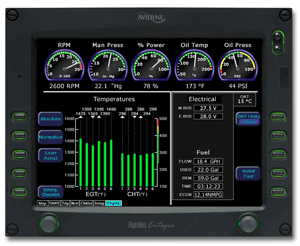
A distinct advantage to having an engine monitor that monitors all EGTs and CHTs is you get a better idea of engine health. When switching to one magneto or the other during the runup, all the EGTs should rise, showing that the temperature of the exhaust gas is going up from each cylinder. This occurs because when running on only one magneto and one set of spark plugs in each cylinder, the mixture takes longer to burn, so, when the exhaust valve in the cylinder opens, the burn is still on going and this hits the EGT probe, causing a temperature rise. An indication of a magneto failure in flight would be a rise in all the cylinders EGT without a change in mixture setting.
Now that we know what to look for when checking each magneto, what would one look for to show that there is a problem? The basic that each student pilot is taught still applies. The engine manufacturer puts a limit on RPM drop during the runup. When checking one magneto or the other, watch for an excessive RPM drop. If the RPM drops past the limit, this usually will be accompanied by engine roughness.
Why is that? Let’s look at the cause for the excessive RPM drop. For this, we need to go back to our EGT indicators. Let’s say we have a 6 cylinder engine. When the key is turned to the right magneto, the RPM drops 250 RPM and the engine gets very rough. Look at the EGT gauge. The cylinders where the spark plugs are firing normally will all show a temperature. The cylinder (or cylinders) where there is no combustion, meaning a bad plug, will show no temperature. This is because the mixture is just sitting in the cylinder and not igniting, therefore, no exhaust gases will be pushed out so there will be no EGT indication for that cylinder. This is also how you tell a mechanic which cylinder to check for the bad plug.
It could also be a bad magneto. If multiple cylinders EGT all drop, or the engine wants to quit entirely, you have a bad magneto or bad ignition harness.
What else can you learn during the runup? Electrical system health is key, especially in all electric airplanes (meaning no vacuum system). It’s a very good idea to turn on all the lights and pitot heat to ensure that a rise is indicated on the ammeter. This means the alternator is carrying the load and working properly.
The next time you do your runup, keep an eye on your EGT to see the rise during a magneto check.
An 8 seat, cabin class, single engine turboprop is set to come to market in 2018 from the new aviation conglomerate Textron Aviation (Textron owns Cessna, Hawker, and Beechcraft). Details were announced last week at the European Business Aviation Conference and Exhibition. The as yet unnamed aircraft will be equipped with Garmin’s G3000 avionics and will be outfitted with a GE 1,240 Shaft Horsepower engine.
The GE engine will be equipped with a FADEC (Fully Automated Digital Engine Control) computer that will allow the pilot to make all necessary power adjustments using just one lever.
Range will be about 1,600 miles at 285 knots, giving the airplane the same legs as a PC12 at slightly faster speeds, but a smaller cabin. The cabin will be equipped with a belted lav if desired.
Drones; these technological wonders have, seemingly, come out of nowhere over the course of a few years. Although they bring with them the promise of convenience and fun, they have also brought problems and uncertainty for the government, general public, and, specifically, the aviation community. But, where did drones come from and are they really something to be worried about? Let’s take a look at Unmanned Aerial Systems (UAS) and hopefully put to bed some of the concerns which seem to be following them around.
It shouldn’t come as a surprise to anyone when I say that drones have recently become overwhelmingly popular. The military, businesses, and hobbyists are increasingly utilizing them for all kinds of purposes, which range from enemy surveillance to package delivery. Drone pilots are in high demand and several aviation universities are even offering majors designed to produce graduates which specialize in UAVs (Unmanned Aerial Vehicles).
Drones are relatively new to the landscape of unmanned flying machines. Although model airplanes have been popular since the dawn of aviation, the first “drones” didn’t start becoming commercially available until a few years ago. As electronic technology advanced, so did model aviation. Models became more and more sophisticated and could be flown remotely as long as they remained within sight of the person flying it.
It wasn’t until about 3 or 4 years ago that the technology became available to develop drones. This is due to the need for very small and light electric motors, batteries, and stabilization systems. Once these started to become popular, it didn’t take long for drones to become bigger, cheaper, and completely automated.
It is important to note that there is a difference between drones and conventional model airplanes and helicopters. Drones are defined most simply as an unmanned vehicle which can be operated without user input from the ground. Conventional model aircraft can take all shapes and sizes, but must be operated within line of sight from the operator; as they have no ability to fly, takeoff, land, or navigate without input via a radio transmitter. So, if you happen to see a model aircraft flying, don’t assume automatically that it is a drone. Most of the time, model airplanes, helicopters and even drones are being flown safely and legally.
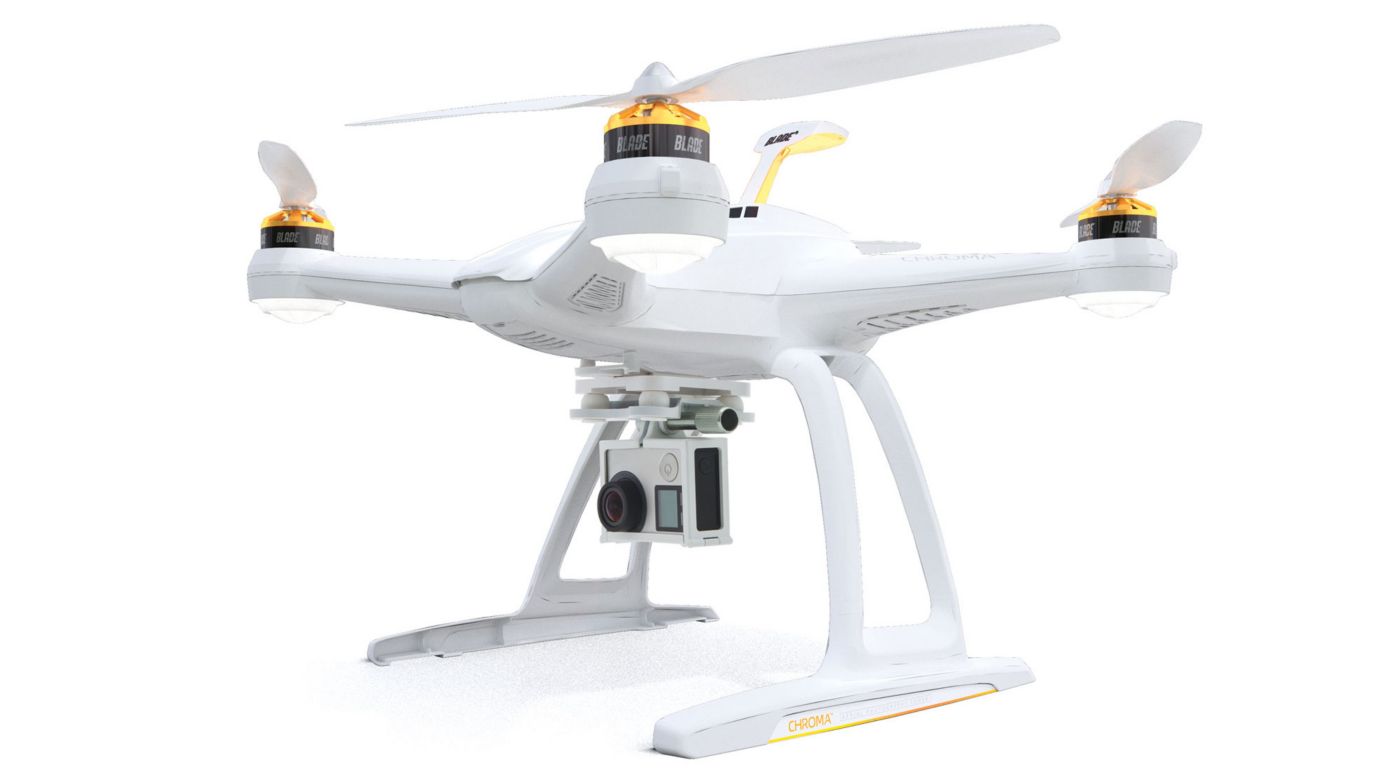
Generally, a drone is designed with several arms which come off of a central body. Each of the “arms” typically has a motor with a rotor mounted on it to provide lift while the main body is home to the radio equipment, landing skids and camera gear. If you see a model flying that looks like a conventional airplane or helicopter, odds are it isn’t a drone. Most likely it is being flown recreationally by someone nearby.
Historically, model airplanes and helicopters have been difficult to learn to fly. Before the times of pre-built foam airplanes and ready to fly drones, a modeler had to build their flying machine and find someone to teach them how to fly it. (Otherwise, they would likely only get one short flight). New modelers would be directed toward the local model flying club and would get plugged in with a group of established fliers who could outline the rules for model aircraft as well as get them up in the air safely.
This is a classic example of a Drone. You can see the long arms which house the motor units and rotors as well as the camera and skids mounted in the center. I got this picture (this model is called a Chroma) off of HorizonHobby.com
This is one of my models, a Revolver 70. It wouldn’t be considered a drone as it cannot fly without a pilot on the ground (within eye sight) controlling it. You can see the structure of the revolver and the helicopter pictured below varies greatly from that of the Chroma drone.
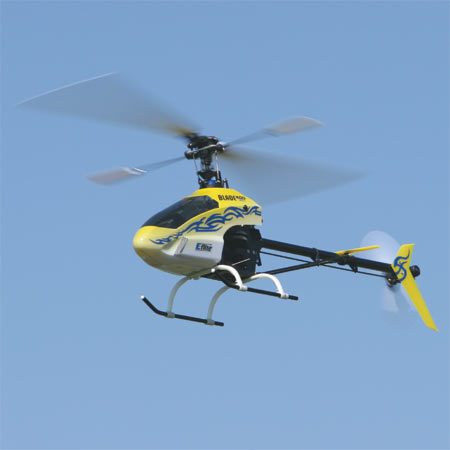
This is a Blade 400 helicopter. Just like the Revolver, it requires a pilot to be present nearby and would not be considered a drone. Worth mentioning is that neither the Blade nor the Revolver have any cameras mounted anywhere on them, as their sole purpose is to be flown for fun. Picture from BladeHelis.com
However, because most everything is purchased online in today’s market, drones are bought and flown by enthusiasts who have not been taught the rules, safety protocols, and procedures necessary to safely operate their new kits. In addition, the drones incredible stability and ability to be flown without any skill means that anyone with great enough funds and an equally great lack of common sense can buy a model and program it to fly over any location they choose. Unfortunately, sometimes that includes places which cause problems.
Andrew Robinson is a 135 Charter Pilot and flight instructor who lives with his wife and 2 daughters in Pennsylvania. He flies Pilatus PC-12s and instructs in Beechcraft Bonanzas.
I got a call today from a friend asking me about oxygen requirements. That got my brain pondering about the different items the FAA would like all pilots to know. I did a little refreshing and found several other tidbits directly from the FAA that I thought worth sharing. No matter what you’re flying, I think these apply to all of us.
First off, what are our general oxygen requirements? If you jump on over to the FAR’s and take a look at 91.211 you’ll see:
1. At cabin pressure altitudes above 12,500ft MSL to 14,000ft MSL, pilots
required to use oxygen unless the segment is less than 30 minutes of flight.
2. At cabin pressure altitudes above 14,000ft MSL, the crew is required to use
oxygen.
3. At cabin pressure altitudes above 15,000ft MSL, each occupant must be provided the use of oxygen. This doesn’t necessarily mean they have to use it.
Things get a little more in depth when you get to pressurized aircraft.
These requirements are also listed in 91.211:
1. If you’re flying above Flight Level 250, a 10 minute supply of oxygen is
required for each person onboard.
2. If you’re flying above Flight Level 350-410, and one pilot leaves their seat, the other pilot will be required to wear an oxygen mask, unless both seats are equipped with quick-donning oxygen masks.
There are three basic components to any oxygen system in an aircraft: the storage system, the delivery system, and the mask or cannula. First, there are several types of storage systems.
Gaseous aviators breathing oxygen is the first. This is the standard green tank that everyone is familiar with. There are two types of tanks. Either the high- pressure with 1800-2200 psi or the low pressure tank with 400-450 psi. The major issue with these and General Aviation aircraft is weight. Some of these tanks can get bulky and heavy and therefore don’t work for everyone.
Liquid aviators breathing oxygen or LOX is another form of storage. The major advantage of LOX is that it has a 900 to 1 expansion ratio, meaning that 1 liter of liquid oxygen can be expanded into 900 gaseous liters of Aviators Breathing Oxygen. The disadvantages of LOX are they are extremely volatile and have to be stored at -197F. If it comes in contact with exposed skin, severe frost bite can occur.
Sodium chlorate candles or oxygen generators have a weight advantage like LOX. They’re essentially a canister that when activated mix sodium chloride and iron powder and produce oxygen. They general have a 600 to 1 expansion ratio, which goes back to the weight savings. However, once these are started they are very hard to stop. Another disadvantage is these devices produce a fair amount of heat, so proper precautions need to be taken.
Next are the delivery systems. The main systems are Continuous Flow, Diluter Demand, and Pressure Demand. Continuous Flow, is exactly as it sounds. The oxygen is allowed to flow continuously from the tank to the user. The benefits of continuous flow are you don’t need a complicated mask or regulator. The downside to this system is since it continuously pumps oxygen, you’re wasting oxygen when you exhale. Most of continuous flow systems are used on aircraft that generally fly below 28,000 feet.
Diluter Demand was designed to fix the negative of the Continuous Flow systems. Diluter Demand only sends oxygen to the user when the user inhales. The system also allows cabin air to be introduced in, sending the perfect mixture of oxygen to the user when needed. These systems are very efficient and generally tend to be used up to 40,000 feet.
Pressure Demand is designed to essentially “over inflate” the users lungs. This will basically pressurize the the users lugs and allow the user to fly above 40,000 feet. This is needed at flights above FL400 because 100% oxygen without positive pressure will not suffice.
The final portion of the oxygen system is the mask or cannula. Nasal cannulas generally are more comfortable and are regulated to 18,000 feet service altitude. Masks come in a couple different variants. From re-breathers to quick-donning, most masks accomplish the same task with a few small differences. Quick-donning must be able to be put on within five seconds and are rated up to FL400.
Since that was a lot of information, what does all of it mean to you? Most fair weather flyers will never run into any of this. However, the high performance owner/operator will run into oxygen use situations a fair amount. Taking the family up to Colorado on a ski trip, jumping up to 12,500 feet to get above some weather, or flying above 5,000 feet at night on a long xc are all situations where you may want to have oxygen on board.
If you are planning on doing any of this type of flying or are currently doing these types of flights, training is a must. If you’ve never been in an altitude chamber, I would highly recommend it. In college, I went with a group to Oklahoma City to the FAA’s headquarters where they hold a class on Hypoxia and High Altitude flying. It’s very informative to be in the chamber as it simulates being oxygen deprived. You get to see how you’ll react and what kind of symptoms you’ll have when in a loss of oxygen situation. Each person has different symptoms, so it’s important to see how you will react.
It’s also good to fly with an experienced instructor. Finding an instructor who will allow you to learn in a safe environment is worth its weight in gold.
Ryne Bergren is currently a First Officer with Mesa Airlines in the CRJ 900. Ryne has experience in many different areas of aviation, from corporate to airlines to teaching to ferrying across the Atlantic Ocean. His passion is for all things that travel across the big blue sky.
On July 15th, the medical reforms that AOPA and many other aviation advocacy organizations had pushed so hard for were passed into law. President Obama signed the medical reforms law on the 15th, but, before practical application of the law takes place, the FAA has to translate the law into regulations.
What do the new medical reforms mean for medical certificates and flying? First, you still have to get a medical examination at some point in your flying career. Student pilots will still need an initial medical examination. Initially, for pilots who have held a medical certificate at some point over the previous 10 years, a new medical examination may not be needed (this still has to be regulated by the FAA so exact details aren’t known yet).
So, if you’re medical certificate has expired but you have had one in the past 10 years, you qualify. But, if you have had your medical certificate revoked, suspended, withdrawn or denied, you don’t qualify.
Once that student pilot receives the initial medical certificate (or the experienced pilot decides to start flying again), all that needs be accomplished is to take a free, online course on aeromedical factors every two years and meet with a physician at least once every four years.
There are some operating limitations that will be put into place for folks operating without a third class medical. Pilot’s can operate aircraft with no more than 6 seats that weigh less than 6,000 pounds, can carry 5 passengers, and are able to operate in day or night VFR or IFR conditions. Pilot’s may not operate for hire, nor climb above 18,000 feet or fly faster than 250 knots.
It will take some time for the FAA to put the regulations in place, but the process has begun.
Your about to make your dream aircraft purchase. The plane has low time on the engine, is reasonably priced, and, according to the seller, has no damage history. You are overjoyed! Your dream of making an aircraft purchase is finally coming true. You prepare your offer for the seller, set up the escrow account, and start all the paperwork.
Two weeks later, the airplane is yours! You start flying it, though, and the engine starts to have some strange vibrations. After several flights, it starts to get worse. You take it to your mechanic to get it looked at and you find out the airplane needs three new cylinders along with some other engine work that is going to total a lot of money. Plus, your airplane is now going to be in the shop for several weeks.
All that excitement you just had? It just went out the window.
Could this have been prevented? Probably so, with a logbook inspection and a pre-purchase inspection.
Aircraft Purchase: Logbook Inspection
Inspecting a logbook can be very daunting when making an aircraft purchase, especially for older airplanes. This is, however, one of the most vital steps in making a new aircraft purchase. You can find out many things from looking at the maintenance logs of an airplane. First, you can check the compression levels of the engine. Typically, you want compression levels in the 70’s, with it still being okay in the high 60’s. Anything below 65 and there could be potential problems.
Second, you can find out if there has been any odd maintenance done pointing to possible unreported damage history. This is rare, as most aircraft owners are honest and up front when talking about damage history. But, if there is an entry detailing a prop overhaul after only 50 hours on that prop, you may start to ask some questions.
Third, you can find out how well the airplane has been maintained. If a lot of maintenance was completed at each annual, even if it was a lot of small things, then the airplane has been maintained by a good mechanic who is very thorough. This also involves a check of the ADs, Mandatory SBs, SBs, and SLs that have been issued for the airplane. If all that has been kept up with, it’s a well maintained airplane.
Finally, it gives you a good idea of how much the airplane has been flown. Sure, the ad online will have the total time and time since overhaul, but you can look at the year by year breakdown of how much the airplane has been flown. It may have been flown a lot earlier in it’s life, but not quite as much recently. That’s not necessarily a bad thing, but airplanes like to be flown.
Aircraft Purchase: Pre-Purchase Inspection
Before making an aircraft purchase, it is extremely vital that whenever you are buying an airplane that you get a pre-purchase inspection done on the airplane. Even better is getting one done by a mechanic who specializes in that type of airplane (eg. Piper Service Center for Pipers, Cirrus Service Centers for Cirrus, Kevin Mead for PA-46s). A pre-purchase inspection can save you a lot of money in the end.
There is always going to be some kind of maintenance issue with an airplane being purchased, whether it is big or small. Once a pre-purchase inspection is completed, you can take the findings to the seller and negotiate for a lower price based on those findings, or just have the seller fix the items before the sale is completed.
I would recommend having the seller fix the problems before the sale is completed. Even though it may take a little longer for the sale to be completed this way, you’ll get to enjoy your airplane right away instead of it being in the shop the next several weeks after you complete the purchase.
There is the circumstance where the pre-purchase inspection reveals some serious airworthiness issues which would cause the deal to be voided. Always put this clause in a purchase agreement, giving you, the buyer, an out if there are serious airworthiness issues.
When it comes to making an aircraft purchase, it is not a process to be rushed. Slow and steady usually gets the best airplane for the money, giving you years of enjoyment in the future.
Looking to make an aircraft purchase? Daunted by all the work that’s involved to find a good, quality airplane? Let Texas Top Aviation do your aircraft search for you! To learn more, visit Texas Top Aviation’s Aircraft Purchase Consultations page.

 Now that we know what to look for when checking each magneto, what would one look for to show that there is a problem? The basic that each student pilot is taught still applies. The engine manufacturer puts a limit on RPM drop during the runup. When checking one magneto or the other, watch for an excessive RPM drop. If the RPM drops past the limit, this usually will be accompanied by engine roughness.