My 2018 Osh Kosh Experience

I got the privilege of going to the EAA AirVenture at Osh Kosh this year.  It was my first Osh Kosh experience.  I’ll be the first to tell you, walking in the gate on the first day is mildly overwhelming.  There are people and stuff everywhere.  Airplanes, tents selling everything from airplane parts to mattresses (I wasn’t really sure how mattresses tied to flying), vendors, colleges, and loads of people.

Photo Courtesy of William Day, copyright 2018, All Rights Reserved

After I gathered myself from my initial shock, I set out to explore all that I could.  I spent most of the first morning walking around the different manufacturer’s tents, getting a gauge on all the new airplanes I could never afford and only hope to ever fly.

The short of it is, the Cessna/Textron Denali is going to be stellar once it gets completed.  The Epic E1000 (if it ever gets certified) might take a large market share from TBM, though they will have an uphill climb. The Cirrus Vision Jet is very cool and should be a relatively simple step up for SR22T owners.  The Pilatus Jet is huge.  Finally, the Diamond DA62 would be my below 12,500 airplane and the Piper M350 would be my pressurized plane.  Money being no factor, of course.

Photo Courtesy of William Day, copyright 2018, All Rights Reserved

I decided to take in the entire airshow on Day 1, all 4 hours of it.  Upon realizing I would be very stiff necked if I did that each day for the three days I was there, I decided on Day 2 to check out some seminars and learn something.  I took a seaplane ground school course on Day 2, then listened to a NASA presentation on electric airplanes and low boom sonic jet technology (how to make supersonic passenger flight quieter).

The end of Day 2 at Osh Kosh had to be the highlight.  I got to hang out with Cub Crafters at the 51WI grass strip just north of the OSH Class D airspace.  There was a free BBQ and I got to take a ride in a Carbon Cub.  My landing from the back seat was a bit rusty, but still a very cool experience.  Buzzing the BBQ area in tandem was pretty neat.
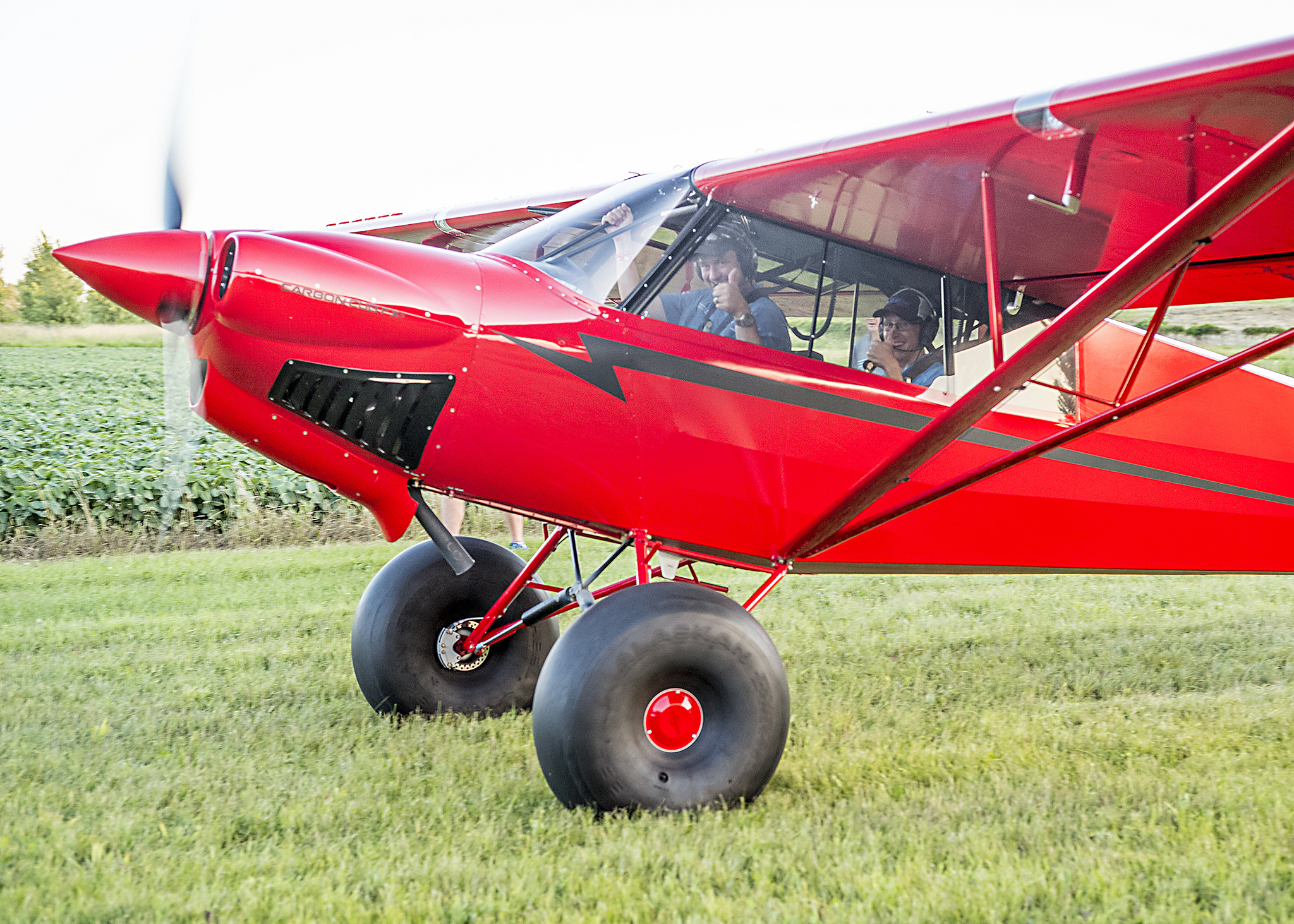
Photo Courtesy of William Day, copyright 2018, All Rights Reserved

Day 3 brought some cooler temps and some clouds.  We walked out to the vintage airplanes, spending the morning gawking at Cessna 195s and Wacos.  Then I took the plunge to explore all the vendor hangars.  My idea was to walk around and see if I can find some interesting and innovative technology.  Well, after 2 of the 4 hangars, my head was spinning, so I decided to watch the rest of the airshow to let my brain drain out a bit.
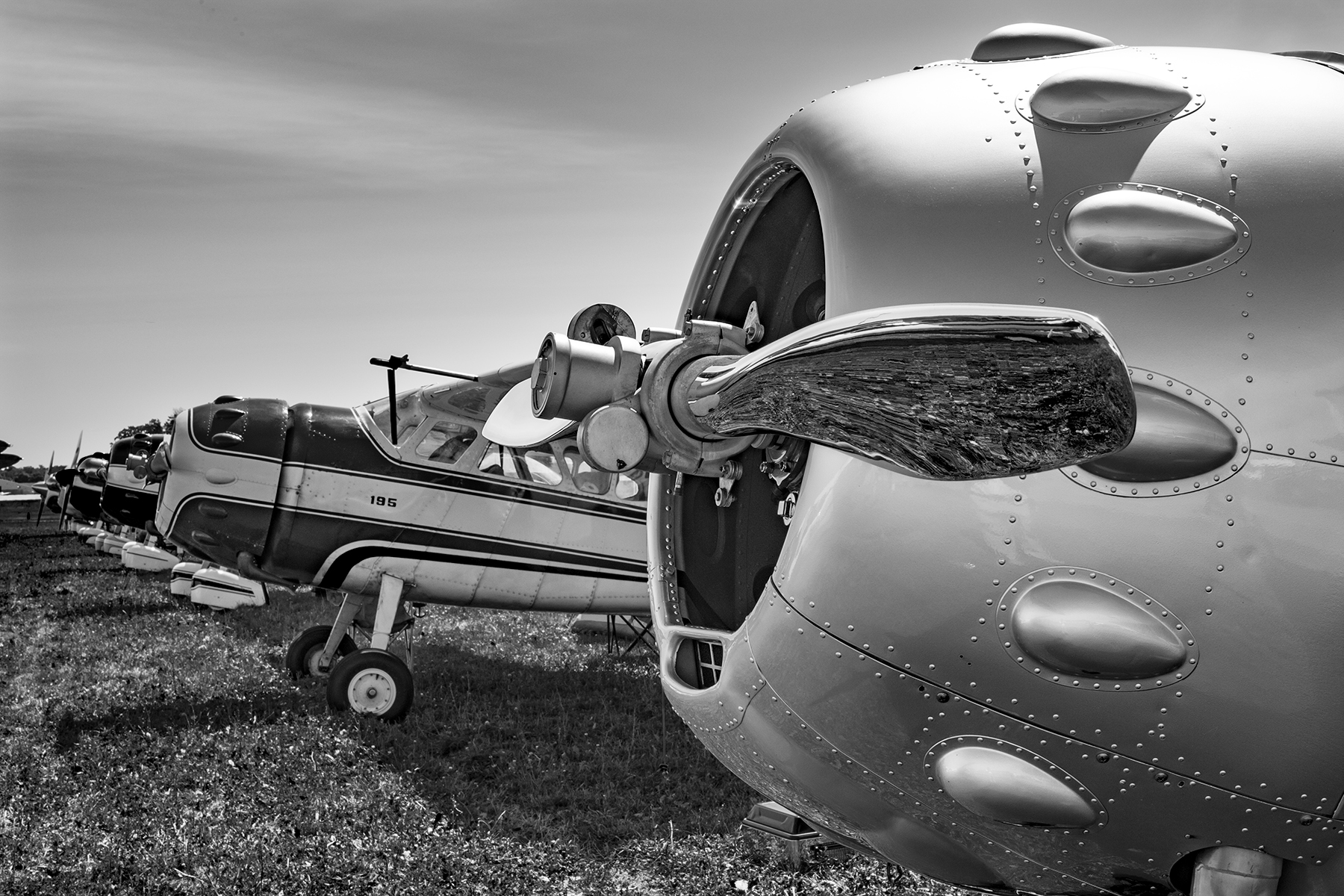
Photo Courtesy of William Day, copyright 2018, All Rights Reserved

3 Days was a good amount of time to spend.  I don’t think I could have stayed all week, but only a day or two wouldn’t have been worth it.  I flew up with a former student in his TBM 700, which was a very nice way to travel.  We landed and stayed in Green Bay (KGRB), which was super easy and low stress.  Had a great tailwind on the return and made it to Houston non-stop.

A few closing observations:

The Stratos 716X Personal Jet

If Stratos Aircraft is ever able to bring this to market, it sounds awesome.  400 knots, single engine, single pilot, with 6 seats.  Being a single engine jet, similar to the Cirrus Vision Jet, it’s 100 knots faster, plus with the airflow and engine technology, it doesn’t have that big V Tail in the back, thereby reducing drag.  I have a feeling it would find a good market, but the certification process is a bear to get through.  Just ask Epic.

The Lancair Mako

This is a legit airplane.  Lots of thought was put in to the design of the Mako by the new Lancair organization in Uvalde, TX (KUVA).  The airplane was extremely comfortable, capable, and pretty cool.  The stick is in the center, with throttles on the side (where the stick would be in a Cirrus or Columbia).  AC, full Garmin integration, and the cool factor of the nose gear retracting, but not having a gear handle. Higher useful load than a Cirrus or Columbia, it would be a great alternative (and cheaper) to one of it’s certified competitors.

Avionics

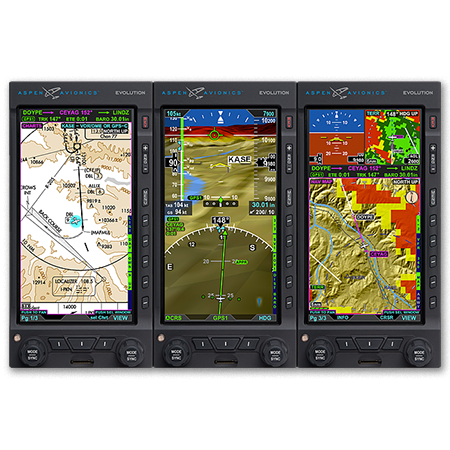
There is a lot of new avionics technology hitting the market.  Dynon, beloved by experimental enthusiasts, is finding a foothold in the certified world with some neat panels.  It will be an uphill battle to take on Garmin, but there is some potential in the retrofit market to offer a cheaper alternative to the Garmin TXi.

Speaking of the TXi, I played around with the 10.7″ panel at the Garmin booth.  It is extremely intuitive. Garmin did a great job of making it a simple touch screen interface, easy to use, and easy to learn.

Avidyne is pushing their iPad integration with the IFD 100 iPad app.  It ties via Wifi or Bluetooth to an IFD 550 or 440 navigator, giving an additional screen in the cockpit to work with.  You have the ability to modify flight plans and such on the iPad and it will show up on the GPS units.
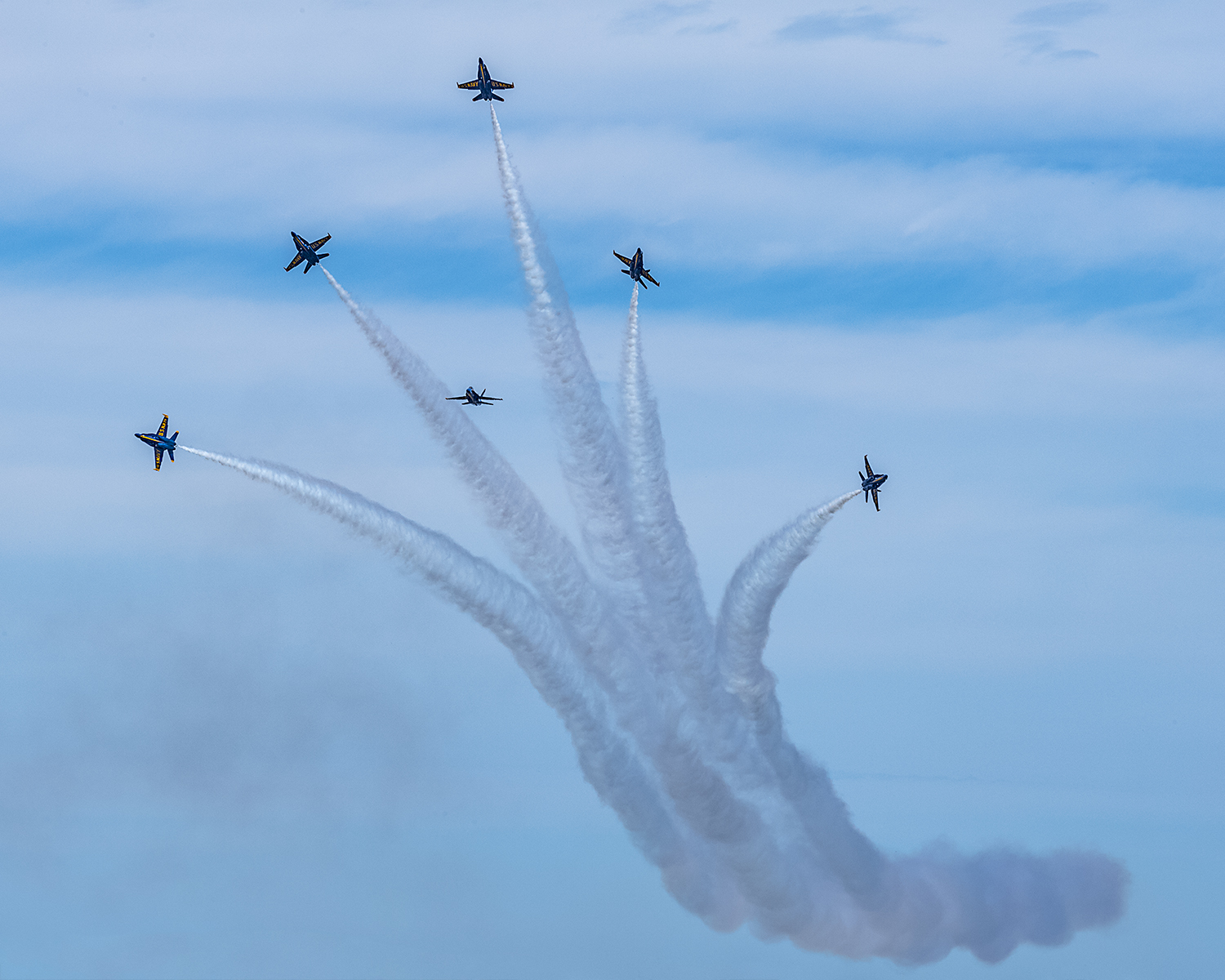
Photo Courtesy of William Day, copyright 2018, All Rights Reserved

All in all, Osh Kosh was an experience I’m glad to have finally experienced.  I don’t think I would go every year like some folks, but every few years, especially when my sons are older, seems like just enough for me, but not too much.

All Photos Courtesy of William Day, copyright 2018, All Rights Reserved


Similar Posts

  • PIREP: Austin Executive Opens a Control Tower

    Austin Executive Airport opened a control tower on Friday, February 23rd 2018.  The airport is now officially Class D airspace.  The charts and A/FD are not updated yet to reflect the tower, but there is a NOTAM with the tower and ground frequency information.  The tower hours are from 6am to 10pm.  The weather frequency remains the same.

    Make sure you check those NOTAMs if you are headed to KEDC anytime soon!

    KEDC Tower Frequency:  120.3

    KEDC Ground:  119.45

  • Building An Airplane

    Randy Vanstory, a long-time customer of Texas Top Aviation, decided in early 2017 to build his own airplane. Randy currently owns a Mooney M20J and has been active in aviation for a number of years.  He took on the Vans RV 10, starting in February 2017.  He’s about halfway through right now, with an estimated completion of mid-2020.

    A completed Vans RV 10

    I asked Randy what gave him the desire to build his own plane.  “I love building things, learning new things, and working on things” he said.  “This satisfies those desires all in one project.”  Randy had a desire to work with his hands, to create something of his own, and building an airplane put several of his passions together in one project.

    Lots of pilots out there dream of building their own airplane in their garage.  There is a certain cool factor to putting together an RV or a Lancair in a garage, then trucking it out to an airport, attaching the wings, then flying a personal creation for the first time.  An airplane unique to you, since there isn’t one quite like it any where else.

    That’s the beauty of a homebuilt.

    Here is a link to Randy’s build video done by Kobalt Tools.

  • Thanks For Flying With Us!

    From our family to yours, thank you for flying with Texas Top Aviation in 2014.  We wish everyone a Happy New Year and a great 2015!

    Texas Top Aviation Family

  • Setting Standards

    Type Clubs Lead By Example with Standard Operating Practices

    This article appeared in the May 2019 edition of EAA’s Sport Aviation Magazine. It is used with permission. For other articles by Charlie Precourt, please visit EAA.org and join for a full subscription.

    Imagine a year when there are no fatal accidents in general aviation. Does that seem impossible? The airlines achieved that many years ago, and so can we if we focus on the right things in our safety pro- grams. In fact, the overall trend in GA accident rates over the last few years is very encouraging. AOPA’s Air Safety Institute published its annual GA Accident Scorecard recently (see www.EAA.org/ extras), revealing fatal accidents from 2008 to 2017 are down more than 30 percent. Nevertheless, there were 185 fatal accidents in 2017, so we still have a long way to go. But, there are many developments in safety programs across GA that can keep the trend going.

    One such development that I’ve advocated through a couple of type clubs is establishing standard operating practices (SOP). When I flew for both the U.S. Air Force and NASA, we had what we called standard operating procedures. They were the law for our flying. That is, we had to follow them procedurally because the folks that paid our salaries said so. The objective was to ensure we all used the same playbook, minimizing the risk that one of us might develop a bad in-flight habit that increased risk to the organization.

    One way to think about SOPs is to recognize the difference between procedure and technique. For example, you have to follow the manufacturer’s pilot’s operating handbook (procedure)where it says to lower the landing gear before landing. If you don’t, you are in for a bad day. However, it does not tell you exactly when to lower the gear; that’s left to technique.

    In the middle, between procedure and technique, is a best practice. In this example, lowering the gear just before the final approach fix is a “standard practice.” It is the generally accepted “best” place to lower the gear. In GA, however, aircraft owners don’t generally answer to a boss, so I prefer the term practices instead of procedures.

    However, whether or not someone is paying us to fly, following best practices just makes sense. If you have a good set of practices, they enable you to do things the same way every time, leaving lots of brain cells to manage the unusual, the things that might go wrong. The safest approach to accomplishing a flight task is one that leverages consistency. On the other hand, if you are inconsistent, doing flight tasks differently each time, you’ll always be struggling to keep up. So, in my involvement with the safety committees for both the Malibu Mirage Owners and Pilots Association and the Citation Jet Pilots Association, there has been broad acceptance of recently developed standard operating practices.

    The good news in this development is that a culture of safety is growing broadly across most sectors of GA through these type club initiatives. Perhaps more importantly, there is much to learn from each other about the effectiveness of these various initiatives. EAA has seen a four-year drop of 47 percent in fatal accidents among homebuilts! So, there must be something right going on there — a major focus on appropriate transition training before flying a new homebuilt (as a standard operating practice) is paying off.

    So, what is covered in the SOPs these type clubs have developed? The following outlines the kinds of standard practices other type clubs have set up and represent SOPs you could establish for yourself regardless of the type of aircraft you fly. You just have to fill in the blanks for your particular type and commit to sticking to them in your flying. These are notional and are practices (not mandatory procedures). They don’t tell you how to fly your aircraft; they give you things to think about when you do. If you take a bit of time to set your own SOPs and then stick with them, you’ll be a far safer pilot. Here are some ideas:

    Duty Day

    Set the maximum number of hours of flight time during a calendar day and rest hours off between flying days. One example is a maximum of eight hours in the air and a minimum of 10 hours off until flying again.

    Cargo

    Establish best practices for what you will carry as cargo. One example is no lithium batteries in the baggage compartment.

    Flight Planning and Preparation

    What are your limitations for the types of flight you’ll take on? Consider SOPs such as designating a suitable alternate airport for all flights. Another might be for first flights after significant maintenance, such as no flight at night or in IMC until a day-VMC functional check flight has been done.

    Runway Field Length Guidelines

    Establish an appropriate minimum field length for your aircraft and commit to not going into shorter fields. Consider sea level operations and high-altitude airports as well.

    Surface Operations

    What should be your maximum wind conditions for taxi, takeoff, or landing? Maximum acceptable crosswinds on landing? Set them in your SOP and stick to them.

    En Route

    Consider establishing practices like no non-operationally necessary conversation below 10,000 feet MSL, during any segment of an approach procedure, or during the last 1,000 feet before leveloff during climb or descent. Also consider declaring “minimum fuel” when the fuel state becomes less than fuel to destination plus 45 minutes at current burn, even if flying day VFR.

    Approach and Landing

    Consider establishing personal minimums in your SOPs for things like visual approaches. Perhaps use a 1,500-foot ceiling and 3 miles’ visibility for day and 5 miles for night, even though these exceed the FAA’s requirements.

    Pilot Limitations, Training, & Currency

    FAR Part 91 rules allow us to fly with pretty marginal levels of currency. Consider setting your own SOP to something more appropriate for the kind of aircraft you fly and the kind of flying you do in it. For example, consider these ideas as SOPs:

    • If you have less than 100 hours of time-in-type or have not flown at least 15 hours as pilot in command in the last 90 days, use a minimum planned fuel reserve of one hour.
    • Also, if flying IFR in this situation, use a minimum visibility for takeoff of 1 mile.
    • On instrument approaches, increase the published minimums by one- half mile visibility and add 200 feet to the decision altitude or minimum descent altitude.
    • Perform landings at a weight that allows a full stop in 60 percent of available runway length.
    • Consider an SOP that establishes you will fly with a CFI on a refresher flight before flying as pilot in command if you have not logged at least an hour of flight time and one takeoff and landing in an aircraft of the same type within the preceding 45 days.

    Maneuver Standards

    Wherever there are “techniques” associated with things like takeoffs and climbs, cruise, use of autopilot, power settings, and approaches and landings, you can write down your preferred technique as your own SOP. Describe each maneuver in enough detail (speeds, altitudes, power settings, configurations, etc.) to define a routine you will use each time. This ensures you fly consistently each flight and leverage the power of the standard operating practice, that is, to give you the bandwidth you need should you encounter an unexpected event or an emergency.

    SOPs are among the exciting concepts underway to make safety programs work for us. Hats off to type clubs like MMOPA and CJP and many others that are taking the initiative. But even if you’re not in this kind of group, you can still set up your own SOPs. Let’s all look forward to our first year in GA without a fatal accident — and let’s make it soon!
    Fly safe!


    Charlie Precourt is a former NASA chief astronaut, space shuttle commander, and Air Force test pilot. He built a VariEze, owns a Piper JetPROP, and is a member of the EAA board of directors.

  • AOPA’s Emergency In Person Seminar

    Courtesy AOPA.org

    We spend time training for them, but real-world emergencies are rare enough that it’s easy to get complacent. They don’t always happen to “other pilots,” though, and preparation can make a big difference when things don’t go as planned:
    • What if you lose 500 rpm during takeoff, but the engine is running smoothly?
    • What if the ammeter drops to zero during a flight in IMC?
    • What if your left aileron develops a strong vibration in flight?
    Our new seminar is full of expert tips on handling those “up here, but wishing you were down there” scenarios. We focus on how to keep abnormal situations from becoming full-blown emergencies, offer advice on keeping critical problems under control, and give our best advice on off-airport landings.

    Find an AOPA Emergency Seminar near you!

    • Monday January 11, 2016-The Woodlands Waterway, 7pm-9pm
      • 1601 Lake Robbins Drive, The Woodlands, TX 77380
    • Tuesday January 12, 2016-Wyndham Houston West, 7pm-9pm
      • 14703 Park Row Blvd., Houston, TX 77079
    • Wednesday January 13, 2016, Holiday Inn San Antonio Airport, 7pm-9pm
      • 77 NE Loop 410, San Antonio, TX 78216
    • Thursday January 14, 2016, Omni Austin Hotel at Southwark, 7pm-9pm
      • 4140 Governor’s Row, Austin, TX 78744
  • Aviation News: The Formation of ONE Aviation

    Earlier this month, Eclipse Aerospace and Kestrel Aircraft merged to form ONE Aviation.  Most pilots are familiar with Eclipse, who makes the Eclipse 550 jet, but not many have heard of Kestrel Aircraft.

    Kestrel K350

    Kestrel Aircraft is run by Alan Klapmeier, co-founder of Cirrus Aircraft and brother to Dale Klapmeier, who still runs Cirrus.  Klapmeier joined Kestrel in 2010 and brought innovation to the K350 Turboprop design that Kestrel was developing.  Kestrel has been lacking in investors to further their project, but the merger will help a lot in getting more funding.  Klapmeier assumed the CEO role for ONE Aviation.

    Eclipse 550

    The merger will also help bring more innovations to the Eclipse 550.  The original Eclipse Jet was a miserable failure and the company went into bankruptcy in 2009. The Eclipse Jet came back to market in 2013 as the Eclipse 550 with many much needed improvements, including making GPS a standard amenity.

    Klapmeier and his genius will lead ONE Aviation in good directions.  The K350 will come to market a lot sooner as more investors will be drawn to the company, while the Eclipse 550 will continue to see new and innovative developments.

Leave a Reply

Your email address will not be published. Required fields are marked *