
My 2018 Osh Kosh Experience

I got the privilege of going to the EAA AirVenture at Osh Kosh this year.  It was my first Osh Kosh experience.  I’ll be the first to tell you, walking in the gate on the first day is mildly overwhelming.  There are people and stuff everywhere.  Airplanes, tents selling everything from airplane parts to mattresses (I wasn’t really sure how mattresses tied to flying), vendors, colleges, and loads of people.

Photo Courtesy of William Day, copyright 2018, All Rights Reserved

After I gathered myself from my initial shock, I set out to explore all that I could.  I spent most of the first morning walking around the different manufacturer’s tents, getting a gauge on all the new airplanes I could never afford and only hope to ever fly.

The short of it is, the Cessna/Textron Denali is going to be stellar once it gets completed.  The Epic E1000 (if it ever gets certified) might take a large market share from TBM, though they will have an uphill climb. The Cirrus Vision Jet is very cool and should be a relatively simple step up for SR22T owners.  The Pilatus Jet is huge.  Finally, the Diamond DA62 would be my below 12,500 airplane and the Piper M350 would be my pressurized plane.  Money being no factor, of course.

Photo Courtesy of William Day, copyright 2018, All Rights Reserved

I decided to take in the entire airshow on Day 1, all 4 hours of it.  Upon realizing I would be very stiff necked if I did that each day for the three days I was there, I decided on Day 2 to check out some seminars and learn something.  I took a seaplane ground school course on Day 2, then listened to a NASA presentation on electric airplanes and low boom sonic jet technology (how to make supersonic passenger flight quieter).

The end of Day 2 at Osh Kosh had to be the highlight.  I got to hang out with Cub Crafters at the 51WI grass strip just north of the OSH Class D airspace.  There was a free BBQ and I got to take a ride in a Carbon Cub.  My landing from the back seat was a bit rusty, but still a very cool experience.  Buzzing the BBQ area in tandem was pretty neat.
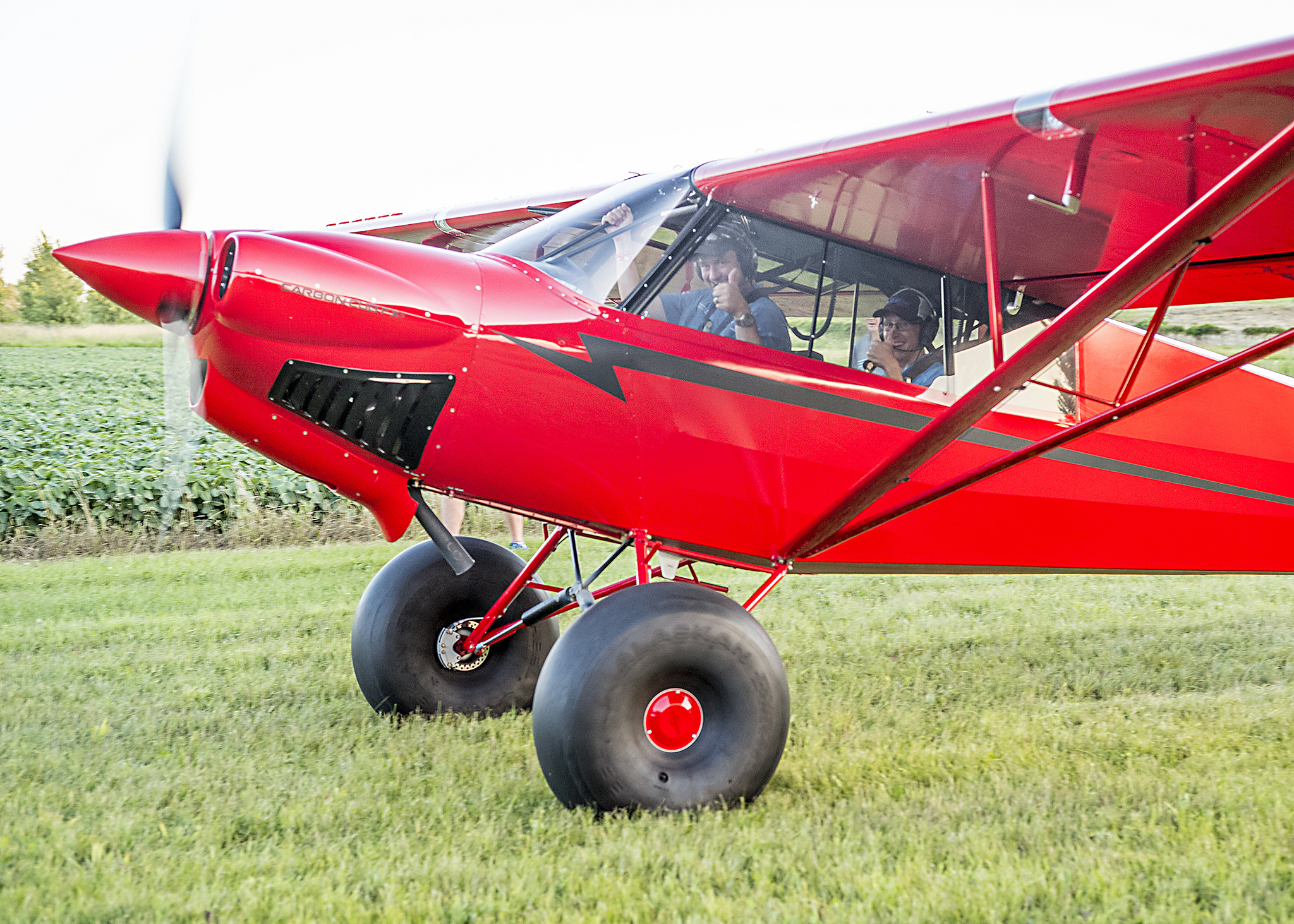
Photo Courtesy of William Day, copyright 2018, All Rights Reserved

Day 3 brought some cooler temps and some clouds.  We walked out to the vintage airplanes, spending the morning gawking at Cessna 195s and Wacos.  Then I took the plunge to explore all the vendor hangars.  My idea was to walk around and see if I can find some interesting and innovative technology.  Well, after 2 of the 4 hangars, my head was spinning, so I decided to watch the rest of the airshow to let my brain drain out a bit.
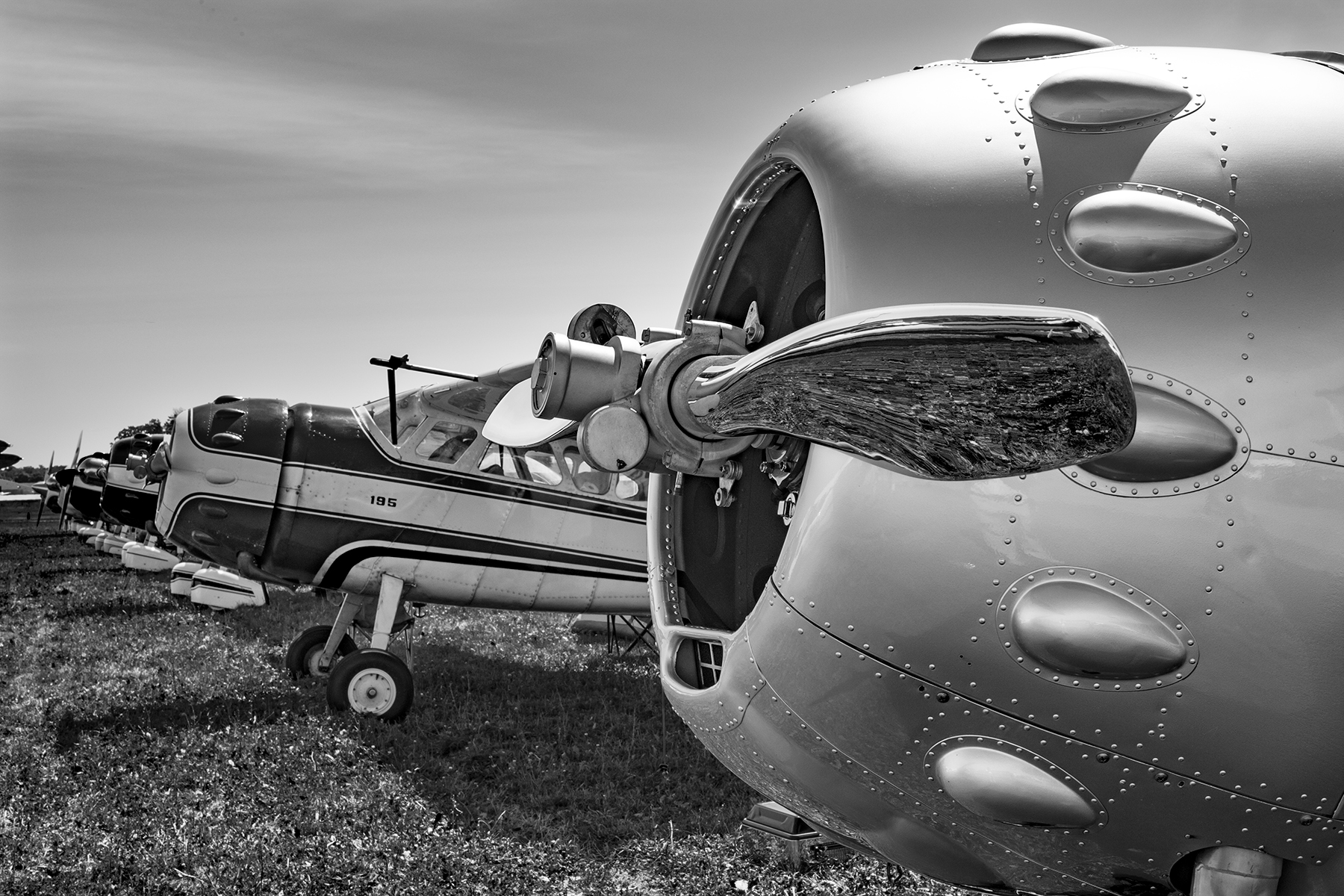
Photo Courtesy of William Day, copyright 2018, All Rights Reserved

3 Days was a good amount of time to spend.  I don’t think I could have stayed all week, but only a day or two wouldn’t have been worth it.  I flew up with a former student in his TBM 700, which was a very nice way to travel.  We landed and stayed in Green Bay (KGRB), which was super easy and low stress.  Had a great tailwind on the return and made it to Houston non-stop.

A few closing observations:

The Stratos 716X Personal Jet

If Stratos Aircraft is ever able to bring this to market, it sounds awesome.  400 knots, single engine, single pilot, with 6 seats.  Being a single engine jet, similar to the Cirrus Vision Jet, it’s 100 knots faster, plus with the airflow and engine technology, it doesn’t have that big V Tail in the back, thereby reducing drag.  I have a feeling it would find a good market, but the certification process is a bear to get through.  Just ask Epic.

The Lancair Mako

This is a legit airplane.  Lots of thought was put in to the design of the Mako by the new Lancair organization in Uvalde, TX (KUVA).  The airplane was extremely comfortable, capable, and pretty cool.  The stick is in the center, with throttles on the side (where the stick would be in a Cirrus or Columbia).  AC, full Garmin integration, and the cool factor of the nose gear retracting, but not having a gear handle. Higher useful load than a Cirrus or Columbia, it would be a great alternative (and cheaper) to one of it’s certified competitors.

Avionics

There is a lot of new avionics technology hitting the market.  Dynon, beloved by experimental enthusiasts, is finding a foothold in the certified world with some neat panels.  It will be an uphill battle to take on Garmin, but there is some potential in the retrofit market to offer a cheaper alternative to the Garmin TXi.

Speaking of the TXi, I played around with the 10.7″ panel at the Garmin booth.  It is extremely intuitive. Garmin did a great job of making it a simple touch screen interface, easy to use, and easy to learn.

Avidyne is pushing their iPad integration with the IFD 100 iPad app.  It ties via Wifi or Bluetooth to an IFD 550 or 440 navigator, giving an additional screen in the cockpit to work with.  You have the ability to modify flight plans and such on the iPad and it will show up on the GPS units.
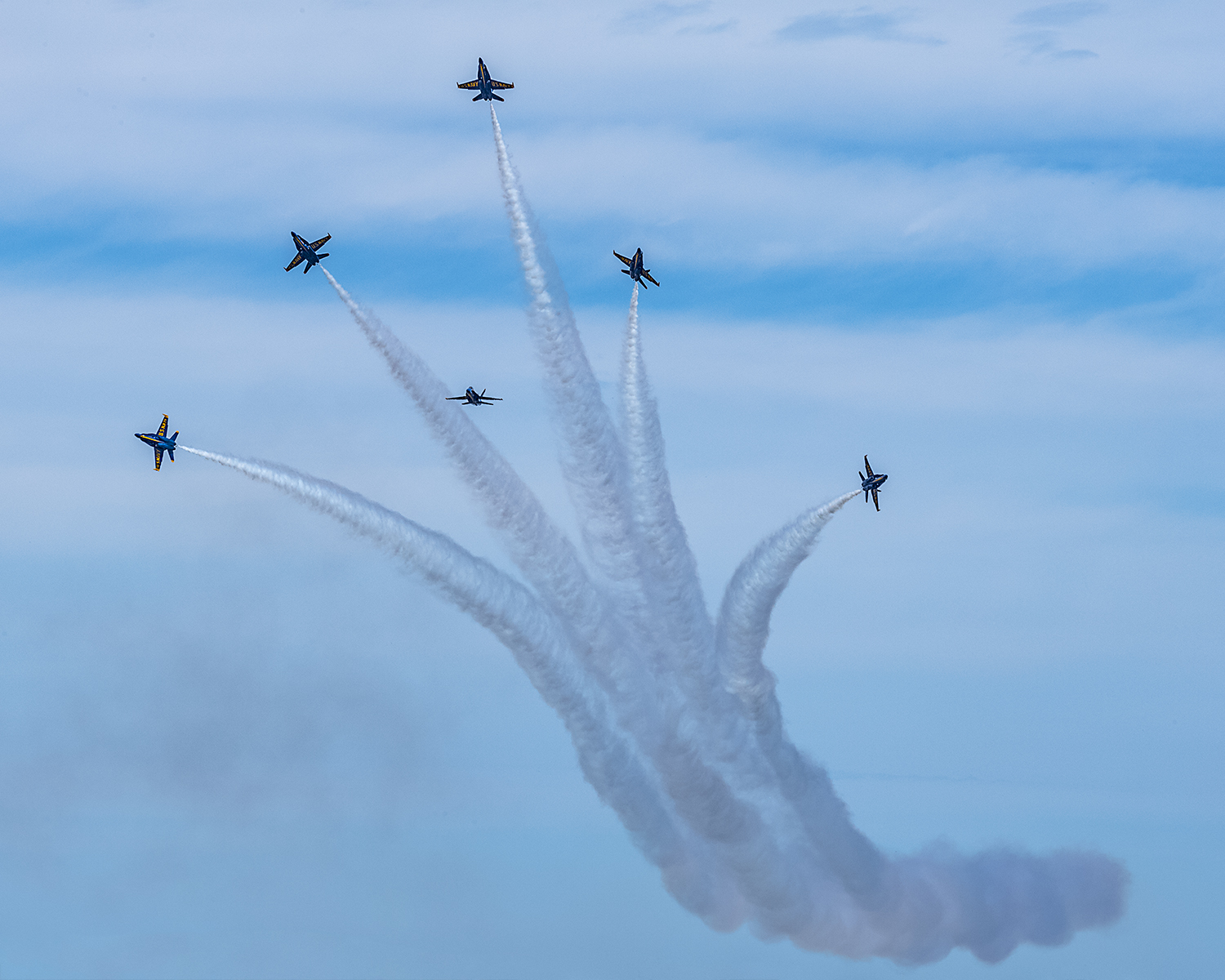
Photo Courtesy of William Day, copyright 2018, All Rights Reserved

All in all, Osh Kosh was an experience I’m glad to have finally experienced.  I don’t think I would go every year like some folks, but every few years, especially when my sons are older, seems like just enough for me, but not too much.

All Photos Courtesy of William Day, copyright 2018, All Rights Reserved


Similar Posts

  • Hank Gibson Earns ABS Instructor Designation

    ABS Instructor

    Texas Top Aviation is proud to announce that Hank Gibson has completed the training to become an American Bonanza Society Instructor, or ABS Instructor.  He is now qualified to give instruction in Beech Aircraft.

    As an ABS Instructor, Hank brings over 2800 hours of flying experience in a variety of aircraft to the cockpit of Beechcraft. Along with his ABS Instructor Designation, Hank is also a Cirrus Standardized Instructor Pilot (CSIP) and a Cessna FITS Accepted Instructor in both Cessna high and low wing piston aircraft (CFAI+). Hank is proud to add the ABS Instructor designation to his list of qualifications.

    The process of becoming an ABS Instructor is quite comprehensive. The coursework consists of 20 powerpoint lessons covering anything and everything related to flying Debonairs, Bonanzas, Travel Airs, and Barons.  The ABS Instructor course is quite in depth and detailed, giving the graduate a full understanding of the Beechcraft piston line of aircraft.  To find out more about ABS Instructors, see the ABS website.

    Hank is now giving initial and recurrent training in Beech Debonairs and Bonanzas.  Please visit the Texas Top Aviation Bonanza Training page for more information on Bonanza and Debonair initial and recurrent training.  Interested in Bonanza or Debonair training with a qualified ABS Instructor?  Contact Texas Top Aviation today!


  • Unusual Attitude Recoveries

    For a VFR or an IFR pilot, an unusual attitude can be one of the most dangerous situations to get into.  That is one reason so many new autopilots are being developed with a level button.  The concept behind the level button is if the pilot gets into a disorienting situation, press the level button and the autopilot comes on, holding the airplane in a straight and level pitch attitude.

    What about all those planes without autopilots that have a level button?  That’s who this article is for.

    First off, what is an unusual attitude?  The Airplane Flying Handbook on page 4-17 gives the following definition:  “An unusual attitude is commonly referenced as an unintended or unexpected attitude in instrument flight.”  The AFH also goes on to say that an unusual attitude in training has no defined bank and pitch parameters, but “for training purposes an instructor could place the airplane in a 30 degree bank with a nose up pitch attitude of 15 degrees and ask the student to recover and that would be considered an unusual attitude….”

    We now have a basis from the FAA.  VFR Pilots are now saying, “Oh, instrument flight, that doesn’t apply to us.”  Not so fast.  The Private Pilot ACS (and before it, the PTS) has a requirement for Basic Attitude Instrument Flying, including unusual attitude recoveries.  Why?  Because VFR pilots still inadvertently fly into IMC conditions and can get into an unusual attitude.  Plus, a private, non-instrument rated pilot has a higher chance of not recovering from an unusual attitude since he isn’t used to relying on his instruments.

    At each training event I do, whether it be private pilot training, a flight review, IFR training, transition training, or pretty much any kind of recurrent training, I like to do unusual attitude recoveries with my customers.  It’s one of those things that the recovery procedure wanes over time since it isn’t routinely practiced solo (for good reason!).

    I see people have the most trouble with the nose high unusual attitude recoveries.  Let’s start with the recovery procedure, then I’ll discuss the common errors (notice that the nose high unusual attitude recovery procedure mirrors a stall recovery).  Remember, this is in IFR conditions:

    • Breathe
    • Pitch Down to a level pitch attitude on the Attitude Indicator (or lower if the stall warning horn continues to go off)
    • Simultaneously add full power
    • Roll wings level
    • Flaps up and recover to a level pitch attitude if not there already

    The order is important, especially the breathing part.  What happens if a pilot goes straight into a recovery and doesn’t pause for a second or two to absorb what’s going on is the recovery isn’t executed properly.

    Our brains see the wings banked and set off all kinds of alarms to roll the wings level first before doing anything else.  Adding any kind of aileron input with the nose close to the critical angle of attack is a bad idea.  You are adding adverse yaw (since you probably won’t be coordinated) and load factor which increases the stall speed.  Then we all know that Stall + Yaw = Spin.  That’s something that is best avoided in IMC.

    We have to teach our brains to ignore the bank angle until the pitch and power come in.  Once the airplane is far away from the critical angle of attack, then the bank can be rolled to neutral.

    Let’s look at the nose low unusual attitude recovery.  The order is still important on this one too:

    • Breathe
    • Power Reduce (to idle if necessary)
    • Roll Wings Level
    • Pitch up to a level pitch attitude
    • Add Power back to cruise

    The theory with the nose low unusual attitude is your speed is accelerating.  By reducing the power first, that helps reduce the load factor experienced when the pitch is increased.  Same with rolling the wings level.  Neutral bank is a lower load factor than some kind of a bank angle.  We are trying to prevent overspeeding the airplane.  The lower the load factor, the less of a chance we have to rip the wings off.

    The most important step in either recovery procedure is to breathe first, allowing the brain to process exactly what is happening.  That way, the proper recovery can be executed.

  • 2022 MMOPA Convention

    MMOPA announced the location for the 2022 MMOPA Convention. The 2022 Convention will be in Tucson, Arizona and will take place September 29th-October 2nd, 2022. The JW Marriott Starr Pass will be the host resort.

    Thursday, September 29th will kick off the convention with a safety event for pilots and companions, lunch with exhibitors, and the return of the charity golf tournament.

    Friday, September 30th and Saturday, October 1st will be when all the classes and seminars that make the MMOPA convention great are held. The Friday dinner will be at an aviation themed spot in Tucson while the annual auction and black tie affair will be Saturday night.

    Stay tuned to the event details page on the MMOPA website to see when registration is opened.

  • MAF Provides Disaster Relief in Haiti

    Hurricane Matthew rolled through the Caribbean last week and dumped vast amounts of rain across several of the island nations.  Haiti was one of them.  Haiti has been hard hit by disasters over the last 10 years.  Hurricane Ike in 2008, he devastating earthquake in 2010, Tropical Storm Isaac in 2012 and now Hurricane Matthew.

    maf-haiti

    MAF (Missionary Aviation Fellowship) has provided relief through all those disasters in Haiti.  Their disaster response team is preparing to provide relief yet again to the island nation in the form of relief supplies and personnel as well as damage assessment flights.

    MAF-US is based in Nampa, Idaho.  The organization uses aviation and technology to gain access to isolated people groups in order to allow those people to experience the love of Jesus Christ.  MAF-US serves in 6 countries around the world spread out amongst 15 bases.  MAF International works in 33 countries around the world.

    In addition, MAF works with multiple non-profits and human aid organizations to provide transportation to doctors and aid workers to those remote parts of the world where automobile transportation is impossible.

    In Haiti, MAF has 3 airplanes based in the country that serve 13 remote airstrips.  To read more about MAF, visit their website.

  • Flying the Piper Malibu

    Looking for an airplane with more seats, more useful load, and good speed?  Look no further than the PA-46-310P Piper Malibu.  It feels like a corporate airplane, but this turbo charged piston single is good owner/pilot airplane for taking the family on vacation or using on business trips.

    Piper Malibu Texas Top Aviation

    The original Piper Malibu, which was manufactured between 1984-1988, is a great next step airplane for Cirrus owners, Saratoga or Lance owners, and Mooney owners looking to move up to a pressurized, 6 seat piston.  The pressurization has got to be one of the best parts of the Piper Malibu.  The ability to climb up to the low flight levels (the service ceiling is FL250, but the airplane performs great between 16,000 and FL190) to catch better winds and get a better true airspeed (the airplane gains about 2.5 KTAS for every thousand feet) without having to wear oxygen makes the ride much more enjoyable.

    Equipped with six seats and a 4,100 pound gross weight, the Piper Malibu allows for a lot more carrying ability than a Cirrus or even a Saratoga.  Now, like most piston airplanes, you can’t take 6 average adults, bags, and full fuel, but here’s the great part:  the Continental TSIO 320 only burns 16.5 GPH in cruise at 75% power.  The plane will still fly 200 KTAS at 16.5 GPH.  With 120 gallon capacity, even taking half tanks still allows for a 2.5 hour range with an hour reserve.  At 200 KTAS, that’s 450 miles.  And, you gain an extra 360 pounds useful load at half tanks.  That’s not too shabby.

    Piper Malibu PA-46 Texas Top Aviation

    The Piper Malibu was designed to be comfortable, fast, and be able to carry some baggage.  There are two baggage compartments, one in the nose behind the firewall and one in the rear behind the rear seats.  The nose baggage is wide enough to fit golf clubs in, while the back baggage is large enough to fit rolling suitcases in (the front baggage has no problem with roller bags either).  Lots of weight in bags?  Again, no big deal.  Just plan on taking less fuel and still flying for 2.5 hours.

    From a pilot’s standpoint, the Piper Malibu is a pretty straightforward airplane to fly, though it does require some specialty training.  A lot of PA-46s on the market right now have upgraded glass panels and digital engine monitors, making piloting the airplane that much more streamlined.  Most Piper Malibus are equipped with the KFC 150 autopilot.  Some have a yaw damper installed, others don’t.  Some have the vertical speed and altitude capture installed, others don’t.  It just depends on that specific airplane.  They aren’t like a Cirrus where they are all made the same.

    Looking to upgrade to something with more seats, a higher service ceiling, but not a significant increase in fuel costs?  Look into the Piper Malibu.  You can get one in good shape from about $300,000.


  • Garmin GTN 750 Tips & Tricks

    The Garmin GTN 750 is an awesome piece of equipment.  Garmin tried to make the user interface with the touch screen as simple as possible (though there still is a bit of a learning curve when moving up from a Garmin 530W).  Garmin also integrated several key features that the 530W did not have that makes flying with a Garmin GTN 750 in IFR all that much better.

    The two features of the Garmin GTN 750 I want to focus on today are the “Load Airway” feature and the “Hold at Waypoint” feature.  If a pilot isn’t looking for these specifically, they can actually be a bit hard to find.  The “Load Airway” feature is especially handy when flying IFR long distances with several airways as part of the clearance.  Here’s how to utilize both.

    Load Airway

    1. On your flight plan page, insert the waypoint that you will be joining the airway, or, if your clearance was radar vectors to join an airway, then insert the waypoint on the airway that begins the leg you will be joining on.
    2. Tap the waypoint you just inserted.
    3. A menu will pop up.  Tap Load Airway.
    4. Select the Airway you want from the next menu that pops up.
    5. Then, a list of waypoints will display to exit the airway.  Select the waypoint where you will be exiting the airway.
      1. Note:  Garmin defaults to listing these waypoints alphabetically.  If you unselect the “Sort Alpha” option, it will sort the waypoints by direction and distance from the entry waypoint.  This is a little more practical, easier to work with, and how I recommend doing it.  This way you can either scroll up or down depending on the direction of travel on the airway and find your exit waypoint.
    6. Tap Load.
    7. The Airway and all the waypoints in between your entry and exit waypoints appear in your flight plan.
    8. If you are getting vectors to join the airway, you’ll need to use the Activate Leg function to activate the leg you will be joining the airway on.
      1. On the Flight Plan page, tap the waypoint that ends the leg you want to activate.
      2. On the menu that pops up, tap Activate Leg.

    Hold At Waypoint

    The Garmin GTN 750 allows pilots to place a holding pattern at any waypoint that is in the Nav Database (or any user created waypoint).  Here’s how to do it.

    1. On the Flight Plan page, tap the Waypoint that you want to hold at.
    2. On the menu that pops up, tap Hold At Waypoint
    3. On the next menu that pops up, input either the inbound or outbound course, right or left turns, leg time or distance, and the EFC time, then tap Load.
    4. You will see the hold now as a Waypoint in your flight plan.


    Once the hold is entered, the GPS will go into Suspend mode, suspending the Flight Plan Waypoint Sequencing.  Once you are ready to depart the hold, you will have to tap Unsuspend before crossing the holding point on the inbound leg, then the GPS will resume normal waypoint sequencing.

    These are 2 of the really cool, gee-wiz features of the Garmin GTN 750.  Following the above steps will make IFR flying much easier for the pilot, as well as much more enjoyable!

Leave a Reply

Your email address will not be published. Required fields are marked *