There was a bill introduced in Congress recently to take control of Air Traffic Control away from the FAA and give it to a private, for profit, corporation. The initial reaction of pilots is “Ahhh! User fees!” which we are all adamantly opposed to. There are a myriad of reasons why this is a bad idea (the “Flying” article makes a comparison to giving NASA to Richard Branson and Jeff Bezos) and we as pilots should be against it.
Takeoff briefings are one of those things that most pilots are taught when they first learn how to fly, but once they get into flying themselves around, quickly fall by the wayside. There is a reason student pilots are instructed to perform a takeoff briefing before departure. It gets them thinking about what the plan is after they get off the ground and what to do if something goes wrong.
Takeoff briefings are a good habit to get into. Airline crews do a takeoff briefing before every departure, even though they have performed a takeoff in that particular airplane thousands of times. It enhances safety and provides repetition, keeping that knowledge at the forefront of the crew’s minds.
In general aviation, a takeoff briefing should cover what the takeoff procedure is, what the abort plan is, and what the plan after takeoff is.
Takeoff Procedure
Most pilots fly the same airplane all the time, so the familiarity with what goes into a takeoff is there. But, habits should be formed to brief the takeoff procedure as part of the takeoff briefing. It doesn’t need to be extensive, just covering the basics of how the airplane is getting off the ground. Something like this:
Throttle setting (if turbo charged, will full throttle cause an overboost?)
Rotate speed
Expected takeoff roll
That’s it. Nothing fancy for the takeoff procedure.
Abort Plan
What is the plan if something goes wrong? It doesn’t have to be an engine failure, maybe the engine coughs when full power is added or maybe the engine doesn’t produce peak RPM. Maybe the takeoff roll is longer than anticipated and something doesn’t seem right. Maybe on climb out a door pops open. Maybe the engine fails at 1,000 feet. It’s good to keep the plan in the foreground for what to do if an abnormal or emergency situation takes place.
Brief the aborted takeoff procedure
Pick an abort point on the runway based on the expected ground roll
What is the procedure if the airplane isn’t off the ground by then?
What is the procedure if the engine quits on the runway?
Brief the engine failure procedure at low altitude
If the engine fails over the runway, will you try to land on the runway?
What altitude would you elect to turn back as opposed to landing straight ahead?
If the plane is too low to turn back, would you land straight ahead or aim left or right?
What airspeed will you aim to hold if the engine fails?
In a Cirrus, what is your minimum parachute deployment altitude?
After Takeoff Plan
After the airplane is off the ground, what’s the plan then? Are you staying in the pattern or departing the area? Do you need to adjust your power at a certain altitude? What altitude are you climbing to? What heading are you going to fly? Is your flight plan in your GPS? This is an excellent time to set up altitude and heading bugs if your airplane is so equipped.
Get in the habit of doing a takeoff briefing before you call the tower or announce your departure. It get’s your mind focused on the task at hand and then what is going to be happening next.
Takeoff briefings are one of those things that most pilots are taught when they first learn how to fly, but once they get into flying themselves around, quickly fall by the wayside. There is a reason student pilots are instructed to perform a takeoff briefing before departure. It gets them thinking about what the plan…
The South Central Cirrus Owner’s and Pilot’s Association (COPA) Region is hosting a Fly In dinner at the Austin Executive Airport (KEDC) on Friday, October 8th. The event is from 5-9pm. There will be a cash bar, a catered dinner ($25/person), a special guest speaker, and great mingling amongst the Cirrus owners and pilots in our region!
Fly in or drive to EDC. The dinner will be in the Henrickson Jet Center’s main hangar. You will need to RSVP so event organizers can get a proper head count. The link to RSVP is here.
Cirrus Aircraft will be bringing two new 2016 SR22s that will be available for viewing.
The South Central Cirrus Owner’s and Pilot’s Association (COPA) Region is hosting a Fly In dinner at the Austin Executive Airport (KEDC) on Friday, October 8th. The event is from 5-9pm. There will be a cash bar, a catered dinner ($25/person), a special guest speaker, and great mingling amongst the Cirrus owners and pilots in…
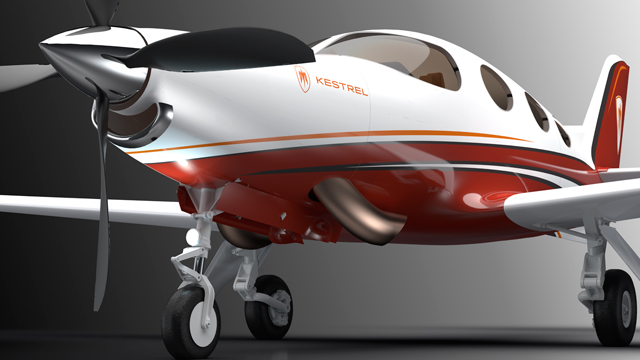
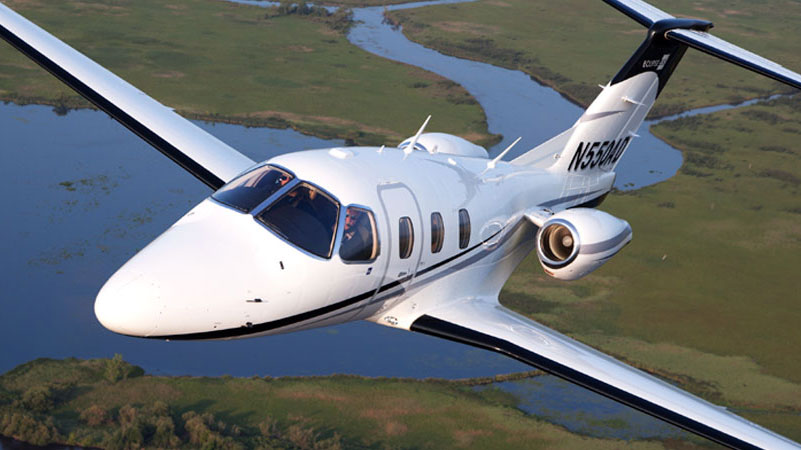
Earlier this month, Eclipse Aerospace and Kestrel Aircraft merged to form ONE Aviation. Most pilots are familiar with Eclipse, who makes the Eclipse 550 jet, but not many have heard of Kestrel Aircraft.
Kestrel Aircraft is run by Alan Klapmeier, co-founder of Cirrus Aircraft and brother to Dale Klapmeier, who still runs Cirrus. Klapmeier joined Kestrel in 2010 and brought innovation to the K350 Turboprop design that Kestrel was developing. Kestrel has been lacking in investors to further their project, but the merger will help a lot in getting more funding. Klapmeier assumed the CEO role for ONE Aviation.
The merger will also help bring more innovations to the Eclipse 550. The original Eclipse Jet was a miserable failure and the company went into bankruptcy in 2009. The Eclipse Jet came back to market in 2013 as the Eclipse 550 with many much needed improvements, including making GPS a standard amenity.
Klapmeier and his genius will lead ONE Aviation in good directions. The K350 will come to market a lot sooner as more investors will be drawn to the company, while the Eclipse 550 will continue to see new and innovative developments.
Earlier this month, Eclipse Aerospace and Kestrel Aircraft merged to form ONE Aviation. Most pilots are familiar with Eclipse, who makes the Eclipse 550 jet, but not many have heard of Kestrel Aircraft. Kestrel Aircraft is run by Alan Klapmeier, co-founder of Cirrus Aircraft and brother to Dale Klapmeier, who still runs Cirrus. Klapmeier joined…
As far as I knew when I woke up, October 26, 2016 would be an ordinary day for me. It was a Wednesday, and I was scheduled to fly our Company’s BE58 Baron on a charter from Wings Field (KLOM), a non-towered airport just north of Philadelphia, to Pittsburgh International Airport (KPIT) and spend the day there waiting for my 3 passengers to finish up their meetings. The plan was to fly them back to Wings that evening and then make the short hop back to home base at Lancaster, PA. (KLNS).
It was a flight that I had done countless times, and I was comfortable with the airports, the passengers, and the airplane. Everything went smoothly that morning and my short flight from Lancaster to Wings was uneventful. I even made it there in time to spill coffee all down the front of my pants before my passengers arrived. The weather was clear, calm and beautiful as we loaded into the Baron and the sun was just starting to come up as I taxied toward runway 24 for departure. I was departing VFR and had an IFR plan on file which I intended to pick up with Harrisburg Approach once we were airborne. According to my calculations, I was on schedule to be drinking my coffee at the Pittsburgh FBO right around 8:30.
At 7:05, I advanced the throttles for departure. A few moments later, I received a very unpleasant surprise. I was quickly approaching rotation speed when 2 deer ran onto the runway directly in front of the aircraft. It was still dark enough that I was relying on my landing/ taxi lights to illuminate the runway for take-off. As a result, I was unable to see the animals before it was too late. I don’t remember making a conscious decision to pull back on the yoke, but it was that or plow directly into them at about 85 knots. I pulled up as quickly as I could and the airplane rotated immediately. A fraction of a second later I heard and felt a sickening THUD.
There was no doubt that I had hit one of them, but, somewhat unbelievably, the airplane was climbing as though nothing had happened. I put the nose down to get the airspeed back up and began to try and piece together what damage the airplane had sustained. Based on the noise and the feeling of the impact, my suspicion was that I had hit the deer with the left main landing gear. A review of the instrumentation showed no abnormalities and the airplane was behaving normally, so I didn’t suspect any damage to the airframe/ flight controls. I couldn’t see anything out the windows that looked unusual, and somewhat unbelievably I still had 3 green lights.
After gaining a safe amount of speed and altitude, I turned around and told the passengers that we had hit a deer. It was obvious that we had hit something and I was sure that they wanted to know what was going on. Then, I checked all my indications again and satisfied with what I was seeing, tried to bring up the landing gear. No dice. When I pulled the gear lever to the up position, the master “GEAR UP” warning light came on and I got a horn. There was never any change in the 3-green indication and the gear motor never came to life at all.
At this point it was obvious that, minimally I was going to have to divert to Lancaster and have the maintenance guys look at the airplane to see if anything was broken. I figured that they would either give me the green light to continue or I would just jump into one of our PC12s and complete the trip while they worked on the Baron.
The landing gear’s refusal to come up was my first indication that there was substantial damage. I set course for Lancaster and called our Chief Pilot. After explaining the situation to him, we agreed that KLNS was the best option and that he would let the maintenance guys know that I was coming.
The logic was that proceeding to Lancaster would allow a visual check of the landing gear by maintenance people as well as the tower and result in the safest outcome if an emergency landing were required. Lancaster would likely have better services available in terms of emergency responders and, not to mention, I was fairly certain that there was a dead deer on the only runway at Wings that I didn’t feel like hitting for a second time. In addition, the relatively long runway at Lancaster combined with light traffic at that time of day made it the ideal option to divert to.
I again turned around to brief the passengers. I told them that we were going to have to make precautionary landing before continuing to our intended destination and that I would be performing a few low passes for the tower.
Due to the drag from the landing gear, the flight to Lancaster seemed to take forever. The long cruise home, however, gave me time to try and reach someone on the ground at Wings in hope of having the runway inspected and cleaned off before other traffic tried to use it. After several attempts to raise anyone on the Unicom/ CTAF frequency, I called Philadelphia Approach for help instead. Philly answered right away and I explained to them what had happened. I requested that they call over to Wings on the phone or send someone out to check the runway. They told me that they would get it done and asked if there was any other way that they could assist me. I told them I was headed to Lancaster and that I appreciated their offer, but didn’t require any further assistance. I then switched over to Lancaster Tower and let them know that I was about 15-20 minutes out, but I would need to perform a couple of passes to have them check my gear. The tower cleared me for a low approach over runway 26.
I arrived at LNS at about 7:30. I performed my first low pass by the tower, not really expecting anything to appear out of place. I figured I had bent something or damaged the squat switch, but not much more. I climbed to pattern altitude and awaited the good word. Shortly after the fly-by, Tower reported that the left main gear didn’t appear to be down and locked. They suggested that I make another pass. The airport maintenance personnel chimed in, reporting the same. We had just started discussing whether cranking the gear a little by hand might help when Philly approach called the Lancaster tower on the phone.
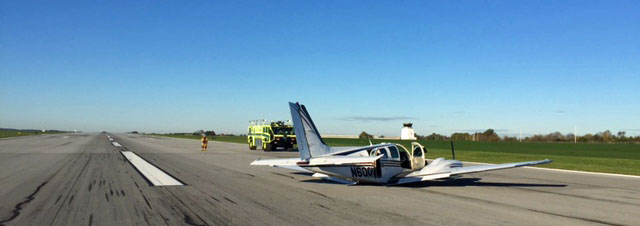
Philly informed Lancaster that someone had inspected the runway at Wings and found the left main strut and wheel in the grass. I quickly concluded that cranking the gear down probably wouldn’t help!
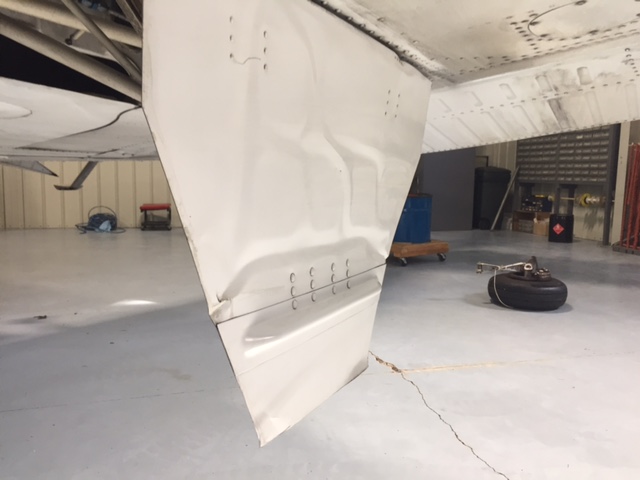
This was found in the grass by the runway at Wings Field
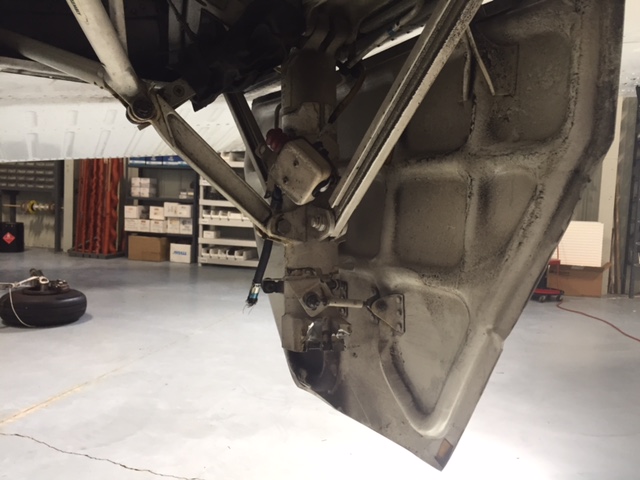
The gear door and strut after the accident.
If you think about the fact that I hit the deer with the wheel, but it didn’t hit the gear door, it becomes apparent just how close the airplane was to clearing the animal completely.
Andrew Robinson is an airline pilot for Piedmont Airlines. He is a former 135 Charter Pilot and flight instructor who lives with his wife and 2 daughters in Pennsylvania. He instructs in Beechcraft Bonanzas.
As far as I knew when I woke up, October 26, 2016 would be an ordinary day for me. It was a Wednesday, and I was scheduled to fly our Company’s BE58 Baron on a charter from Wings Field (KLOM), a non-towered airport just north of Philadelphia, to Pittsburgh International Airport (KPIT) and spend the…
Mooney announced last week the redesign of their current Ovation and Acclaim models. The biggest change that Mooney pilots will love is the addition of a pilot’s door, allowing the pilot to enter on the left side instead of having to crawl over the passenger seat.
Other upgrades include a keypad for easier data entry on the G1000 and an all in one, digital standby instrument that includes attitude, airspeed, and altitude.
This raises the question, will Piper and Beechcraft follow suit?
Mooney announced last week the redesign of their current Ovation and Acclaim models. The biggest change that Mooney pilots will love is the addition of a pilot’s door, allowing the pilot to enter on the left side instead of having to crawl over the passenger seat. Other upgrades include a keypad for easier data entry…
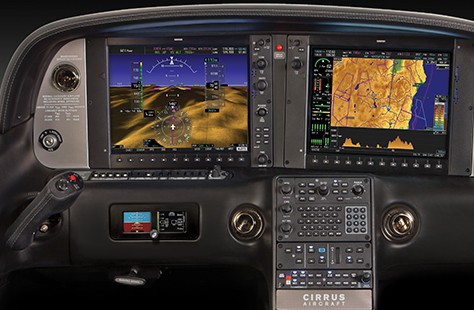
Are you a Cirrus pilot with a Garmin Perspective? Still can’t figure out the use of the go around button? Read on!
When it comes to flying an instrument approach, we as pilots are assuming we are going to land. Most of the time, we won’t even take off if the ceilings or visibilities are below the minimums for an approach. 95% of the time, we do land.
There is the other 5% of the time when something unexpected happens, whether we get a full scale deflection, or we don’t see the runway at the published minimums, and we have to perform a missed approach.
When instructing, missed approach procedures are actually what I see the most deficiency in when instructing an instrument rated pilot. It’s not necessarily configuring the airplane for a missed approach procedure, it’s the button pushing involved in setting up the GPS properly. When a pilot isn’t proficient in the button pushing, that button pushing distracts the pilot from actually flying the airplane, which can lead to a dangerous situation.
I am going to spend a few articles on flying a missed approach with different GPS and different autopilot configurations. Today, I will be addressing the Garmin Perspective with a GFC 700 Autopilot, which is what all Cirrus Aircraft after 2009 are equipped with.
The Garmin Perspective Missed Approach Procedure
Once the decision to execute a missed approach has been made, here is the step by step procedure:
Full Mixture and Full Throttle
Simultaneously push the Go Around button on the underside of the throttle. This does the following:
Sets the Garmin Perspective Flight Director to Go Around Mode (7.5 degrees pitch up and wings level)
Takes the Garmin Perspective GPS out of Suspend Mode
Switches the CDI back to GPS mode if it is in a different mode
Garmin Perspective with GFC 700 Autopilot stays on
Flaps up
Confirm airplane is climbing
Set altitude bug for missed approach altitude (assuming it isn’t there already)
Set NAV mode and IAS mode on the Garmin Perspective GFC 700 Autopilot
That’s it. When Garmin and Cirrus got together to create the Garmin Perspective with the GFC 700 Autopilot, they tried to make as simple but robust system as possible. Once you have the procedure down for the right buttons to press, then the procedure is relatively straight forward.
Are you a Cirrus pilot with a Garmin Perspective? Still can’t figure out the use of the go around button? Read on! When it comes to flying an instrument approach, we as pilots are assuming we are going to land. Most of the time, we won’t even take off if the ceilings or visibilities are…