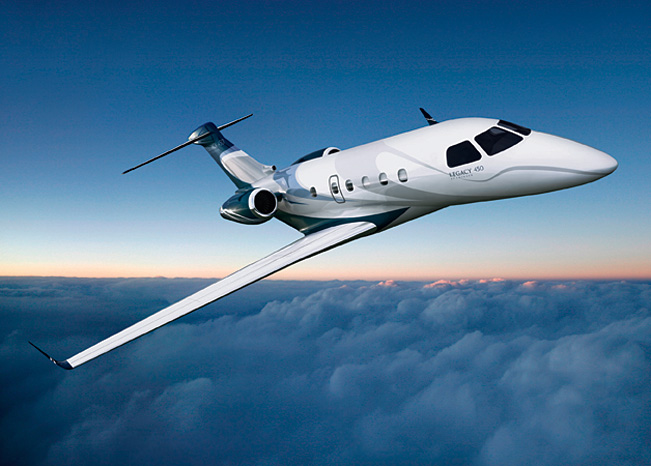
Embraer Legacy 450

Brazilian manufacturer Embraer recently received FAA certification for it’s “mid-light” Legacy 450.  Capable of Mach .83 and a 2,500 mile range, this is one sweet airplane.  Embraer designers gave passengers headroom as the cabin stretches up to 6 feet in height down the center.  Complete with fly by wire controls and a full glass cockpit configuration, Embraer did a wonderful job with this airplane.  The club seats even fold down to a bed!

The airplane’s list price is $16.5 million.  To learn more about the Legacy 450, visit Embraer’s website.

Embraer Legacy 450

Similar Posts

  • Diamond DA50 RG

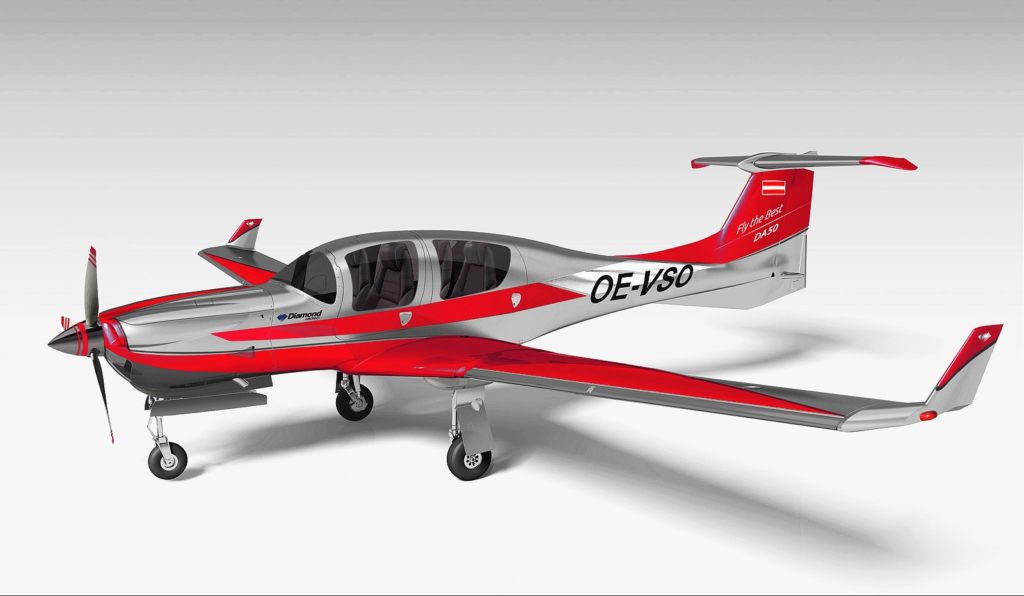
    Diamond Aircraft announced in June that the company is going to bring it’s Diamond DA50 RG to market. The company expects European certification in early 2021 and FAA certification toward the end of 2021.

    This is not the first iteration of the Diamond DA50, but it is the first with retractable gear. Diamond is known for it’s use of Jet A burning piston engines and you can’t beat the efficiency. The technology in the Continental CD-300 Jet A piston engine is new, but it has been in development for a long time. Diamond advertises 180 knots on only 9 GPH, which is just about as efficient as you can get with a single engine piston.

    The addition of the retractable gear from previous iterations of the Diamond DA50 RG is a nice touch. Diamond already had the RG technology from the DA42 Twin Star as well as the more powerful cross country machine, the DA62. Equipping the single engine Diamond DA50 RG with retractable gear just makes sense. It definitely puts the airplane in a class of it’s own.

    Diamond’s website shows a nice roomy cabin in the DA50 RG with plenty of space to spread out, plus plenty of baggage. The fuel tanks only hold 50 gallons of Jet A (which still gives a 4 hour + range with an hour reserve at 9 GPH), so the payload, even with full fuel, is an eye popping 897 lbs, though Diamond’s site does not mention if that includes TKS, air conditioning, and oxygen. If it does, then compare that to a fully fueled Cirrus SR22T (which would give an equal speed) at 537 lbs and the Diamond DA50 RG has an argument.

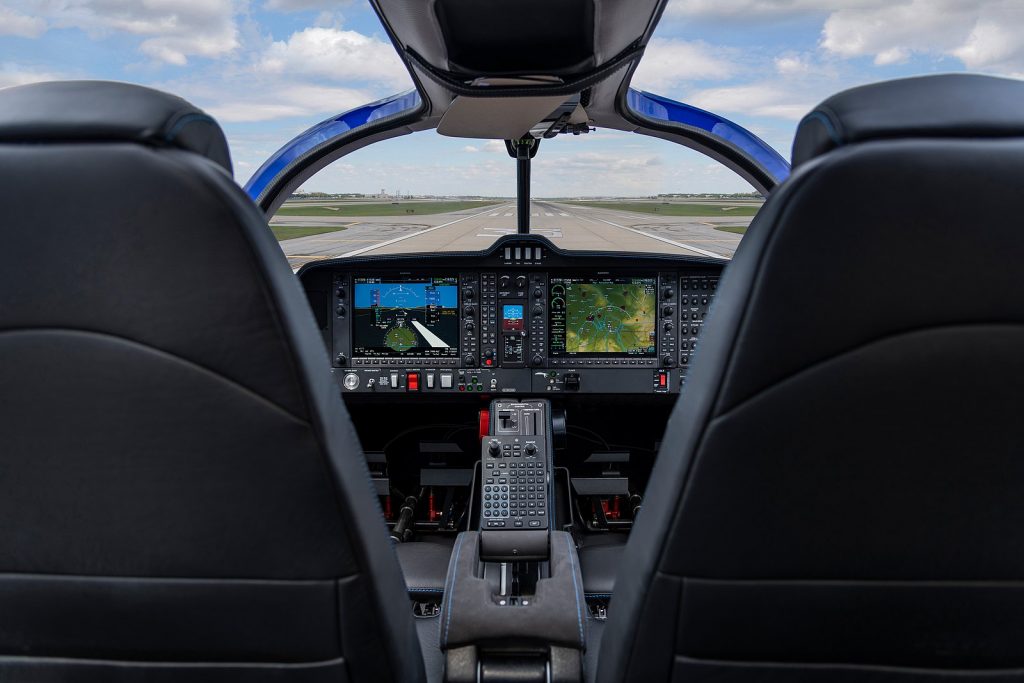
    As with all new airplanes these days, the Diamond DA50 RG has the Garmin G1000 NXi complete with keypad and the GFC 700 autopilot with yaw damper. The interior has a 3 person bench seat for the back seat, which, at least to the naked eye, appears that it might actually fit 3 adults, albeit small ones. Diamond’s signature stick in the middle of the seat is still present for the front seats, but the right seat stick in the Diamond DA50 RG is removable for passenger comfort, a nice touch.

    The single engine piston market is a hard one to break in to since Cirrus has such a leg up on the competition. However, with a Jet A burning engine, a higher payload, and a roomier cabin, the Diamond DA50 RG might actually be able to make an impact. Look for this bird at Sun N Fun and Osh Kosh in 2021.

  • Angelina County Airfest

    The Angelina County Airport in Lufkin, TX (KLFK) will be hosting the Angelina County Airfest on Saturday, October 10th.  The airport will open up at 9am.

    Prepare for a day of food, fun, and some great performances.  There will be warbirds and many other classic airplanes on display, not too mention a number of aerobatic performances as the day goes on.

    To learn more about the Airfest, visit the Angelina County Airfest website.  Tickets start at $10 for adults.

    Angelina County Airfest

  • Thunderstorm Avoidance

    Thunderstorms are not to be taken lightly. I know you have probably heard that many times in your flying career. Weather related accidents account for approximately 25% of airline and GA accidents.

    The Airman’s Information Manual suggests giving a 20 mile berth around thunderstorms. If you are an experienced aviator or a newbie please take this piece of advice seriously. At one flight school where I taught, we had the policy of maintaining a 25 mile buffer around isolated thunderstorms. A bit excessive you think? Maybe, but safety is a good thing!

    On this particular day, I was operating a Bell Jet Ranger helicopter during a power line patrol. Power line patrol by itself offers numerous challenges. The job consists of flying along electric power transmission lines at approximately 40 feet above the ground at 40 knots. The crew consisted of me (the pilot) and an observer. The observer is an employee of the power company and it is his job to determine which line(s) will be patrolled during the given day. As I fly along the lines, the observer is checking for anything out of the ordinary such as broken, cracked, or even shot out insulators, excessively large bird nests at the top of structures, or woodpecker holes in wooden poles. The observer knows the lines and he is also a great help in letting me know there is a crossing, and potentially higher, line in our flight path. That makes him a true safety asset!
    Power line thunderstormIt was late afternoon during the summer and we were about to finish up for the day. We only had about another 10 miles of line to follow before calling it a day. Up ahead, I noticed an isolated thunderstorm near our power line. I could see the heavy rain falling below the anvil shaped leading clouds. It appeared to be well beyond the end of our day’s work so we pressed on.

    As we drew closer to the thunderstorm, we were suddenly tossed up on our left side like a dog toy in mid-flight! It seemed like we were 90 degrees to our normal cruise attitude and, to make it worse, we had the doors off on that hot summer day. I was able to recover and we did an immediate about face and high tailed it home. Forget the rest of that line, tomorrow is another day.

    The destructive force of thunderstorms cannot be overstated. In addition to extremely heavy rain, they can contain strong wind shear, large hail, and severe turbulence, each of which can damage or destroy an aircraft. Take care when one of these bad boys is near your flight path. Give it plenty of respect and a lots of room, for safety’s sake.

    Alan VanDoren is a 7000 hour ATP pilot.  He has flown both fixed wing and helicopters as a police pilot, missionary pilot, flight instructor, and most recently as an EMS pilot.  He has flown in five countries around the world and also teaches university level aviation courses in his spare time.

  • The Importance of Slowing Down

    Technology has made our job as pilots simpler, streamlined, and safer.  With all the new GPS & autopilot technology that seems to come out every month, flying an airplane is getting easier every day (and when I say flying, I mean programming!).  I can’t tell you the last time I actually used a VOR for navigation, other than a practice approach.  The AIM even has guidance in it now allowing pilots to use the GPS overlay on a VOR or LOC approach instead of switching to the actual NavAid on the course needle (you have to WAAS in order to legally do this).

    I hear the argument already.  I am young (31) and used to all the different touchscreens because I have grown up with them.  Tech is nothing new to me.  It’s not that easy for everyone, I do understand.  There is also the argument that all the tech causes pilots to not know how to fly the airplane, which is also valid. This is why I put an emphasis on hand flying in any kind of training I do.

    For the sake of argument in this article, yes, I am young and I adapt to technology pretty easily.  I’m not afraid to press buttons to figure out what they do, but I usually do it while sitting on the ground with a GPU hooked up (or I go look in the manual).  And yes, all the autopilot ability has caused a decrease in base pilot skills.  I actually encourage every customer I have to go get a tailwheel rating so that they can actually learn how to fly better.  You don’t use a rudder much in a Cirrus compared to a Super Cub or a Citabria.

    What I want to focus on for a few minutes is how to alleviate the frustration that comes with getting so wrapped up in the technology when it doesn’t do something that you want it to, or the wrong button gets pressed, then you end up somewhere you had no intention of being.

    The biggest thing a pilot can do when it comes to technology is NEVER to get in a hurry.  Good training is first and foremost, but, after that when flying without an instructor or even in recurrent training, SLOW DOWN and think through what you are doing and what you want the system to do.  This will alleviate a ton of frustration.

    It can be very easy in hot, turbulent weather to get tuned in to the GPS programming, trying to do five or six different things in the span of five or six seconds, before looking up and realizing that plane is 500 feet off altitude (without an autopilot) or you blew through the course you were supposed to be intercepting (with an autopilot).

    What I teach is to slow down, whether or not you have an autopilot, and do one thing at a time.  Once that item is done, look up at the instruments or the horizon, check on things, make sure the airplane is still flying properly, then do the next thing.  Don’t try and do a bunch of things all at once or in a hurry.  It will usually get you off course and off altitude, plus it distracts the pilot from his main job:  Flying the airplane.

    So, next time you want to do something on your GPS, pause, take a breath, think through what you want to do, then do one item at a time.  The outcome will be less frustrating and you’ll keep flying where you want to go.

  • MMOPA Safety Stand Down Rescheduled for Online

    April 18th, 2020 was supposed to mark the MMOPA Spring Safety Stand Down, an event held around the country for PA46 owners which counted toward the Master Aviator program. Sadly, due to the COVID-19 repercussions, the in person event had to be canceled.

    Thankfully, due to modern technology, the event has been rescheduled to a nationwide webcast. The date for the Online MMOPA Safety Standdown in Saturday, August 8th. Joe Casey and Travis Holland will be hosting the MMOPA Safety Standdown.

    The cost is free. To register, please click here.

  • AOPA’s Emergency In Person Seminar

    Courtesy AOPA.org

    We spend time training for them, but real-world emergencies are rare enough that it’s easy to get complacent. They don’t always happen to “other pilots,” though, and preparation can make a big difference when things don’t go as planned:
    • What if you lose 500 rpm during takeoff, but the engine is running smoothly?
    • What if the ammeter drops to zero during a flight in IMC?
    • What if your left aileron develops a strong vibration in flight?
    Our new seminar is full of expert tips on handling those “up here, but wishing you were down there” scenarios. We focus on how to keep abnormal situations from becoming full-blown emergencies, offer advice on keeping critical problems under control, and give our best advice on off-airport landings.

    Find an AOPA Emergency Seminar near you!

    • Monday January 11, 2016-The Woodlands Waterway, 7pm-9pm
      • 1601 Lake Robbins Drive, The Woodlands, TX 77380
    • Tuesday January 12, 2016-Wyndham Houston West, 7pm-9pm
      • 14703 Park Row Blvd., Houston, TX 77079
    • Wednesday January 13, 2016, Holiday Inn San Antonio Airport, 7pm-9pm
      • 77 NE Loop 410, San Antonio, TX 78216
    • Thursday January 14, 2016, Omni Austin Hotel at Southwark, 7pm-9pm
      • 4140 Governor’s Row, Austin, TX 78744

Leave a Reply

Your email address will not be published. Required fields are marked *