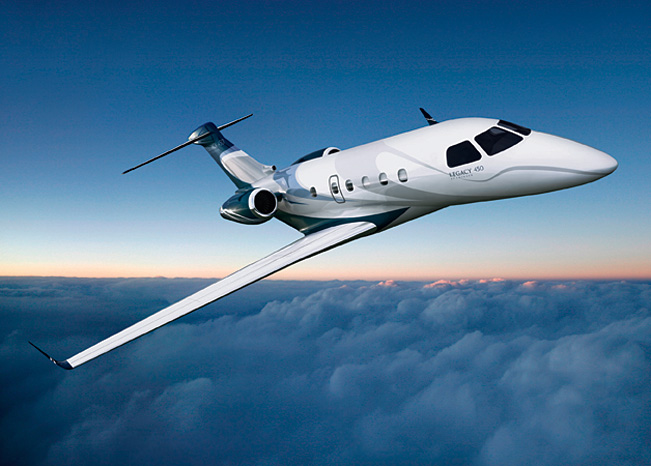
Embraer Legacy 450

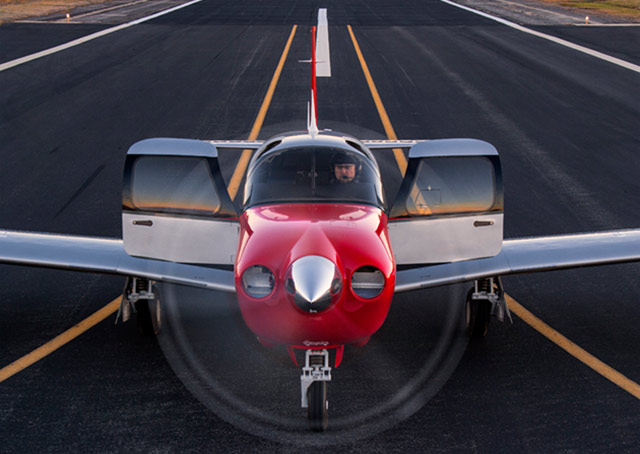
Brazilian manufacturer Embraer recently received FAA certification for it’s “mid-light” Legacy 450.  Capable of Mach .83 and a 2,500 mile range, this is one sweet airplane.  Embraer designers gave passengers headroom as the cabin stretches up to 6 feet in height down the center.  Complete with fly by wire controls and a full glass cockpit configuration, Embraer did a wonderful job with this airplane.  The club seats even fold down to a bed!

The airplane’s list price is $16.5 million.  To learn more about the Legacy 450, visit Embraer’s website.

Embraer Legacy 450

Similar Posts

  • Cirrus Electrical System Health

    As all Cirrus pilots know, SR20s and SR22s have 2 batteries in the Cirrus electrical system (technically, they have 3, as Battery 2 is made up of 2 12 volt batteries in series with each other).  Battery 1 provides power to the starter and is a backup for the entire Cirrus electrical system, while Battery 2 provides backup for the Essential Bus items.

    Cirrus Engine Page

    If you look on the engine page of either an Avidyne or a Garmin Cirrus, there is a section showing the Cirrus electrical system health.  With the engine running, you have voltmeters showing the voltage from Alternator 1 and Alternator 2, ammeters showing the amperage output from Alt 1 and Alt 2, and an ammeter showing the charging rate of Battery 1.  There is no indication for Battery 2.

    This brings up a question.  How does the pilot know that Battery 2 has any kind of a charge?  What happens if the whole Cirrus electrical system goes caput and all that’s left is Battery 2?  Will Battery 2 have juice then?

    The answer is actually rather simple.  As part of the pre-flight inspection, the first step in the cabin inspection is to turn the Battery 2 switch on, then check the Essential bus volt meter.  The checklist says the voltmeter should be reading between 23-25 volts.  This tells you how much voltage Battery 2 currently has. The next step (after ensuring the flap lights are out) is the turn Battery 1 on.  Battery 1 then powers the Main Bus and Essential Bus.  The voltage showing on the Main Bus shows how much voltage Battery 1 currently has.

    Easy enough right?  Now you can impress friends and family alike with your Cirrus electrical knowledge!

  • Hurricane Harvey

    Texas Top Aviation wants to express our heartfelt concerns and prayers for those affected by Hurricane Harvey along the Texas Gulf Coast and in Houston.  We have several customers in Houston and hope and pray that they are all safe.

    The Houston Hobby Airport after Hurricane Harvey’s Torrential downpour

    If you would like to donate to the relief effort, there are several organizations that are accepting support.  A few are below.

    Samaritan’s Purse

    American Red Cross

  • Lightspeed Headsets and Modern Audio Panels

    I love Lightspeed headsets.  They are very comfortable, durable, and reasonably priced.  Plus, when you call Customer Service, you are actually talking to someone who works for the company and knows what they are talking about.

    One thing to watch out for with Lightspeed headsets is the Mono vs. Stereo option.  On the Zulu 3, there is a very small control panel underneath the battery compartment to change from Mono to Stereo.  If you have any kind of modern audio panel, you will definitely want to do this.  Here’s why.

    I was flying in a Cirrus SR22 G5 last fall with a Garmin 350 Audio Panel.  Everything worked fine talking to the ground and tower controllers.  Once I took off and was switched to approach, everything went quiet.  I could hear the approach controller, but couldn’t transmit.  I thought my headset had bit the dust. There was another set in the plane that I switched to, but I thought the transmit function of mine was out.

    I sent the headset back to Lightspeed for repair.  The headset was still under their 5 year warranty, which is really nice!  I got it back a few days later, plugged it in to another Cirrus, and still had nothing.  I was getting frustrated, but then a light went on.  One of my colleagues had mentioned something about mono and stereo in the Lightspeed.  I popped the batteries out, flipped the switch over to stereo, and wa-la!  Everything was fully operational.

    If you get Lightspeed headsets, you’ll want to make sure it is set on Stereo, as they all come from the factory on Mono.  If you get a PFX, there is an easy access button on the side of the battery unit to switch from Mono to Stereo.

  • Maintaining TKS Panels

    Columbia TKS Panels

    When cleaning airplanes, the majority of people don’t know how to properly maintain their TKS panels.  TKS panels provide wing leading edge, horizontal stabilizer leading edge, and, in the case of FIKI airplanes, vertical stabilizer leading edge de-icing protection.  For those not familiar with them, they are metal strips that have thousands of holes drilled into them where the TKS fluid seeps out. They have become quite prevalent on Cirrus aircraft, the Cessna TTx, and Mooney aircraft manufactured in the last decade or so.  The system is also known as a weeping wing system.

    Being on the leading edges, these panels pick up bugs very easily.  For the uninitiated, it would make sense to just use normal airplane cleaner to spray the panels and scrub the bugs.  Don’t!

    Using anything that contains Methyl Ethyl Ketone (MEK) as that can harm the TKS bladders behind the panels.  Any aircraft cleaner containing wax could cause the pores to clog, preventing the TKS fluid from properly seeping onto the wing.

    What’s the best thing to do?  Soap and water with a soft cloth is a good start (again, make sure it doesn’t have wax in it.  Dish soap would be suitable).  No hose available?  Just simply turn the TKS system on, let it run till you start to see fluid drip off the wings onto the ground, and use the fluid to clean the panels.

    A soft cloth would work fine, but, if the panels are really buggy, take a green scouring pad to do some scrubbing.  Just make sure the scrubbing motion is up and down with the grain, not side to side.  You can find the green scouring sponges on the dishwashing aisle in the grocery store.  Just leave one in the hangar for when you need it.

  • Night Flying

    Ah, fall is finally here.  In Texas, it arrived about a month late, but showed up with a vengeance.  A strong cold front caused a 40 degree temperature drop in 12 hours earlier this week, bringing rain, lower freezing levels, and lots of wind.

    Fall means cooler temps, but fall also means less light.  The sun begins to set sooner, plus the fall back time change in November cause darkness to spring upon an unaware pilot.

    Before getting in to too many night landings tips, just a friendly reminder, passengers can only be carried at night if the PIC has completed 3 takeoffs and landings to a full stop in the last 90 days during the time period of 1 hour after sunset to 1 hour before sunrise.

    Lots of us have been landing long before sunset for most of the past couple of months, so those night flying skills might be a little rusty.  The best way to remedy night flying rustiness?  Call an instructor and go get some practice.

    In the meantime, here are some tips as to what to expect for your next night flying experience.

    1. Your Eyes Are Very Important.  This may seem like an obvious statement, but night vision can be affected by many things.  Before you takeoff, you want to make sure you can see in the dark.  The FAA recommends no bright lights 30 minutes prior to takeoff.  They also recommend using oxygen at night as this greatly improves night vision, even at low altitudes.  Use off center viewing to help spot traffic or other objects in the air.  Finally, when preflighting, use a red flashlight as much as possible, but if you do have to use a white light, close one eye to keep one eye from being blinded.
    2. Utilize Approach Lights on Landing.  Night landings are very different then day landings.  It is very difficult to get the proper depth perception, not too mention see obstacles below you on your final approach to a runway.  PAPI’s, VASI’s, and instrument approach glide slope’s become very important.  If you are VFR only pilot, if your airport has a PAPI or a VASI, keep 2 white and 2 red (or 1 white and 1 red) lights.  If you see 3 red (or 2 red), climb.  If you see 4 red, definitely climb.  If you are an IFR pilot, I highly recommend always flying an approach at night.  What if your airport doesn’t have a PAPI, VASI, or approach with a glide slope?  You might not want to utilize it at night.  One side note on VFR flight: Clouds are nearly invisible at night.  If you do fly into a cloud (a clue is your strobe lights start reflecting back at you), don’t panic.  If you have an autopilot, turn it on and execute a 180 degree level turn.  If you don’t have an autopilot, start scanning your instruments, keep your attitude indicator blue side up, and make a shallow 180 degree while maintaining altitude.  Then call ATC, advise them what happened, and ask for help.  One more note:  I highly recommend that if a pilot finds that he/she will fly at night at lot, get an instrument rating and fly IFR at night.  It’s much safer.
    3. Practice Landings Before Carrying Passengers.  The tendency when landing at night is to level off too high before flaring, causing the airplane to bleed off speed and energy too high above the runway.  This can lead to a stall, a hard landing, and/or too high of a pitch attitude at touch down causing a tail strike. A good tip is start your level off when you can see the tire marks on the runway.  Make sure you practice night landings, preferably with an experienced instructor who is night current and proficient, before carrying any passengers on board, even if you are night current, but haven’t landed at night in a while.
    4. Night Emergencies.  For engine failures at night, you are very limited on options.  Unless you have a Cirrus equipped with a CAPS parachute system, you really have two options if an airport isn’t within gliding distance.  Find a wide, lighted road that appears to be lightly trafficked.  A word of caution, though:  be careful of light poles, fences, concrete medians, cars, and buildings.  The LA freeway would not be a good option (though there are exceptions to this rule as is evidenced by the picture below).  The second option is find a dark spot and pray it’s a field (or the Hudson River).  As you get closer, you can turn your landing light on to see what the ground looks like.  If it looks good, keep the light on and continue.  If you don’t like what you see, turn your landing light off and continue….

    Flying at night can be the best time of day to fly.  It’s usually smoother, cooler, and you get to see all the city lights.  It is a very different environment, however, so make sure to get some training before darkness settles in on your next trip.

  • I Learn To Speak Seaplane

    From the time I started flying, I have always had the dream to learn how to fly a seaplane.  As I learned in November, it’s actually learning to land a seaplane, and the veterans call them floatplanes.

    ProMark Aviation at the Burnet Airport (KBMQ) offers a weekend float plane course that is high on fun and low on stress.  The school has a Piper PA12 Super Cruiser on amphibious floats (amphibs as I was corrected at one point.  I mean, if you’re going to fly a seaplane, er, floatplane, you have to know the lingo) that will land and takeoff on water, but does little else with ease and grace.  At 150 HP with those big floats and all the associated rigging hanging underneath the airplane, you are lucky to get to 500 feet before you get to your destination.

    We weren’t working on setting any speed records.  I was learning the lay of the water.  I learned about the step, the keel, pumping the floats, how to read the water, currents, ducks (yes, ducks and birds are important to know about when you are flying low on the water), buoys, docking, and ditching.  Step taxiing was fun as you are basically at 3/4 throttle screaming across the top of the water just below flying speed.  It’s the best way to taxi a seaplane (truly, it is.  You get more air in your engine, you can see better, and you are moving.  Just don’t try and turn sharp).

    Floatplanes also don’t have any shock absorbers, so the higher the wave, the more you get knocked around, so wind velocity and, in turn, wave height is very important.

    A very important nuance of an amphibious floatplane compared to a straight floatplane (one that doesn’t have wheels that come out of the floats), is at one point, you want to make sure your gear is down for landing (runway landing) and at another, you want to make absolutely sure your gear is up for landing (water landing).  If you land wheels down in the water, you will capsize, 100% of the time.  Thankfully from my good instruction, I did not capsize.

    Ken Wittekiend, my instructor, and I spent the majority of the weekend landing and taking off on Lake Buchanan (I was informed by locals it is pronounced “Buk-cannon”, not “Bue-cannon”), which is more open and therefore has more waves.  We did one landing on Inks Lake so my kids could see me land, which they thought was the best thing since cheese sticks.

    There is a check ride at the end of the training, but, as Ken reassured me, it’s the most fun check ride you’ll ever have.  I still hate check rides, but that one I think I hated least of all.

    I hope someday I can put my floatplane skills to practice, but for now, I can vouch that I now speak seaplane!

Leave a Reply

Your email address will not be published. Required fields are marked *