2018 Great American Lancair Rally

A brand-new event for Lancair owners, the 2018 Great American Lancair Rally will be a multi-stage “grand tour” of the Western US.  Starting and ending in Central Texas, the Rally will take place September 24th through October 5th 2018.

The Rally will begin in Uvalde, TX (KUVA) on September 24th at the Lancair headquarters.  There will be 6 legs, with stops at:

  • Sedona, Arizona (KSEZ)
  • Paso Robles, California (KPRB)
  • Redmond, Oregon (KRDM)
  • Spanish Fork, Utah (KSPK)
  • Taos, New Mexico (KSKX)
  • San Marcos, TX (KHYI)

At each stop, there will be food, drinks, and fun for everyone.

Lancair plans on making instructors available to pilots who would like any kind of training along the way.  Hank Gibson from Texas Top Aviation will be one of the instructors available.

Lancair plan to make the Great American Lancair Rally an annual event, with the 2019 Rally spanning the eastern half of the country.

The Great American Lancair Rally is open to all Lancair owners, potential owners and interested aviators. Fly a different airplane?  All makes and models are welcome!

For more information & to register, check out the 2018 Great American Lancair Rally’s website.

Similar Posts

  • Stratos 716X

    Cirrus Vision Jet, meet your competition.

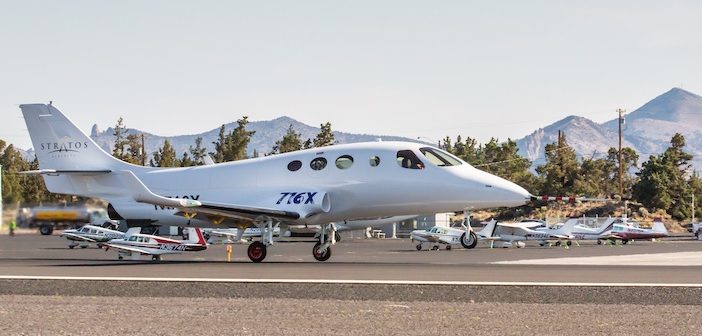
    In July, Stratos Aircraft completed the first test flight of the single engine Stratos 716X personal jet. Stratos, based in Redmond, OR, is taking a page out of Epic Aircraft’s book in how the company is planning on bringing the Stratos 716X to market.

    Epic Aircraft first released the Epic LT composite single engine turboprop in the early 2000s as an experimental. The first kit was completed and flying in 2005. Epic’s goal was to bring the airplane to market as a certified aircraft, a feat that took them almost 20 years to do, achieving full certification earlier this year.

    Stratos Aircraft is hoping to learn a lot from their Bend, OR neighbors. The 716X is going to start off as a limited release experimental kit, while the company is working on achieving certification for the airplane. Once the plane is certified, it will be dubbed the Stratos 716. The 716X experimental kits will be assembled through a factory builder assist program (no garage built single engine jets here!). The kit will cost $2.5 million assembled, while the expected cost of the certified Stratos 716 will be $3.5 million.

    Now, let’s talk about the airplane. 400 KTAS. One engine.

    That’s right, you did hear correctly. The Stratos 716X is expected to cruise at 400 KTAS on only one engine. Compared to the Cirrus Vision Jet, that’s 100 knots faster. Think, “I’ll be relaxing at the hotel pool with a drink in hand when you are landing” type speeds. The fuel burn of the Pratt & Whitney JT15D-5 engine (3,000 lbs of thrust) is about 25 GPH more than the Vision Jet (the Stratos 716X will burn about 98 GPH of Jet A while the Vision Jet averages about 75 GPH of Jet A).

    Comparing the two engines, the above numbers start to make sense. The Williams FJ33 engine on the Vision Jet only puts out 1,850 lbs of thrust, significantly less than the 3,000 lbs of thrust that the Stratos 716X Pratt & Whitney JT15D-5 puts out.

    What does that mean to the pilot? In the Stratos 716X, it means less takeoff roll, better climb rate, faster cruise (as evidence by the 400 KTAS expected cruise speed), and a better payload. More power = more weight carrying capacity. And, the 716X is expected to have a service ceiling of 41,000 feet. I probably wouldn’t want to go that high single pilot with one engine, but I’d be very happy with that speed in the mid-30s.

    The cabin, based on the pictures I’ve seen, looks very comfortable. The Stratos 716X seats 6 and can be configured in several different ways. Baggage is no problem as Stratos Aircraft stretched the fuselage from their original 714 Proof of Concept aircraft, adding a very roomy baggage compartment above the engine compartment. The passenger compartment is as big as a Phenom 100, providing more leg and head room than the Vision Jet. The front seats have plenty of legroom too, as Stratos has opted for a side stick instead of a yoke.

    The avionics for the Stratos 716X are expected to be the Garmin G3X Touch for the panel which will be driven by a Garmin GTN 750 GPS. Autopilot will be integrated within the G3X. I would imagine that once the plane is certified, the panel will be switched to a Garmin G1000 NXi and a GFC 700 will be installed.

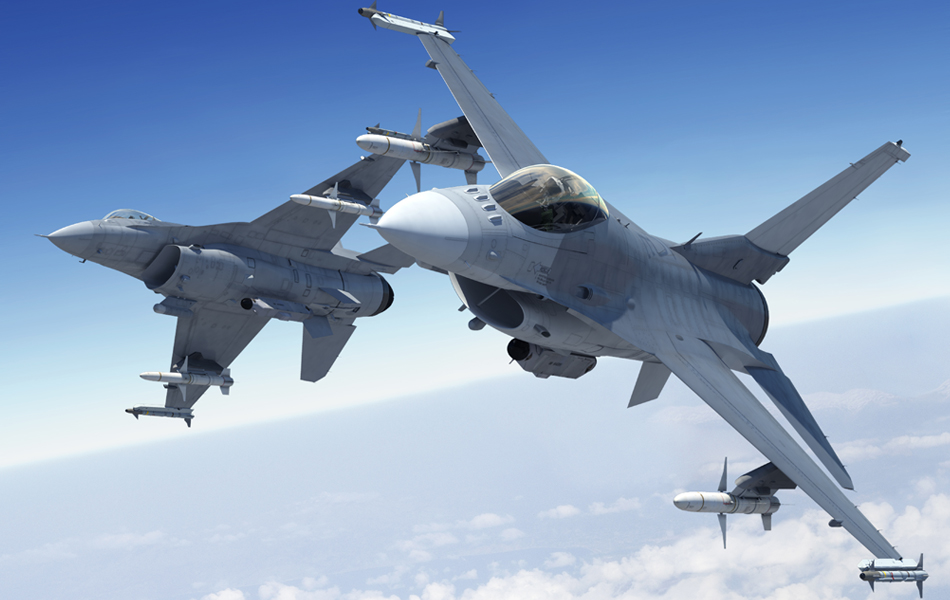
    The genius of the design of the Stratos 716X is the aerodynamics of the engine placement. Instead of hanging the engine out in the slip stream and going with a drag inducing V-Tail like Cirrus did, Stratos took some notes from the myriad of single engine military fighter jets out there, placing the engine inside the fuselage. The fuselage is then built around the engine with two air scoops for intake directly in front of the wings. With two intakes instead of one, that leads to more air flow, which again, means more power. The Vision Jet has only one.

    I’m going to keep tabs on the Stratos 716X (as I kept tabs on the Epic E1000). I’m hoping Stratos gets several flying soon (the company expects to do 3 kits a year till the airplane gets certified) and certification comes quickly after.

    I got to stick my head in the mockup of the Stratos 716X when I went to Osh Kosh in 2018. I was very impressed and was excited to see the airplane was finally airborne this summer.

    For more information about the Stratos 716X, check out the Stratos website.

  • Reading Weather Prog Charts

    There are a multitude of weather products out there today to assist pilots in preparing for a flight.  Aviationweather.gov is the best source for getting all the information a pilot needs for planning a flight.  Aviationweather.gov is the National Weather Service’s source for all aviation related weather products.  When I teach about weather and weather briefings, I recommend to my students to utilize Aviationweather.gov in the planning stages, but still call the Flight Service Station to get a full fledged weather briefing before takeoff.

    When preflight weather planning, one of the best ways to get a picture of what is happening over a broad area is utilizing the Low Level Significant Weather Prog charts.  The Prog chart gives a forecasted 12 and 24 hour picture of what type of weather to expect over the US.  The Prog chart gives the expected flight rules, areas of turbulence, and where the freezing level is located.  If you’re looking at the 4 panel view, the Surface Prog chart shows fronts, pressure areas, and areas of expected precipitation.  That covers just about everything, doesn’t it?

    I believe the Prog charts are underutilized in planning.  Foreflight and Garmin Pilot have given easy access to radar pictures, satellite pictures, METARs, TAFs, and several other sources of weather information.  But, a lot of the easy access data you can get from those apps is current data (with the exception of the TAF) while a lot of the forecast data takes some hunting around.  So, products like Prog charts aren’t often utilized.

    The other problem arises when pilots know about Prog charts, but don’t know how to read them, then don’t know how to find the legend to decipher the chart, the chart is often set aside and quickly forgotten about just because of a lack of knowledge.  Have no fear, though, as now we will use an example 4 panel Prog chart to decipher the lines and colorations.

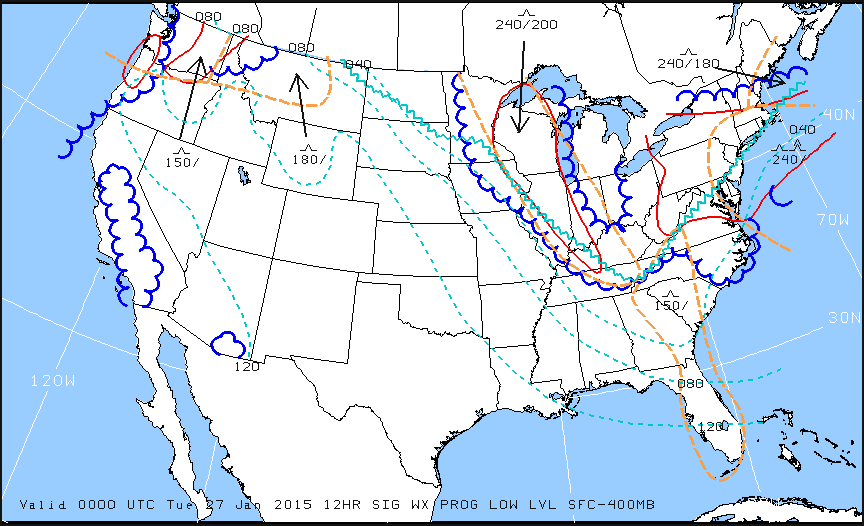
    Low Level Sig WX Prog

    Just looking at the Low Level Significant Weather Prog Chart above, it can be a little confusing.  That’s why they make a legend!

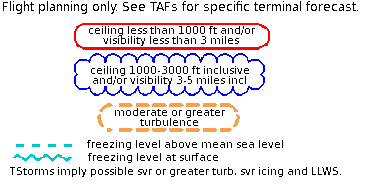
    Low Level Legend

    Coupling the legend with the chart above, we can determine some things.  First, California, parts of the Pacific Northwest, a small part of southern Arizona, and a good portion of the Midwest and East coast are going to have marginal VFR conditions in the next 12 hours.  Wisconsin, Illinois, a good portion of the Northeast, and a small portion of the Pacific Northwest will suffer IFR from IFR conditions.  There are going to be a good amount of low level turbulence in the northern and eastern parts of the country.  Finally, the freezing level starts at the surface running in a jagged line across the midwest states and curling up into the Northeast.

    That’s a good bit of information, isn’t it?  If a pilot is planning a VFR flight into the Northeast tonight, it would probably be best to wait for another day, according to this chart.

    Now, to see what is causing the conditions above, we need to look at the Surface Prog Chart.

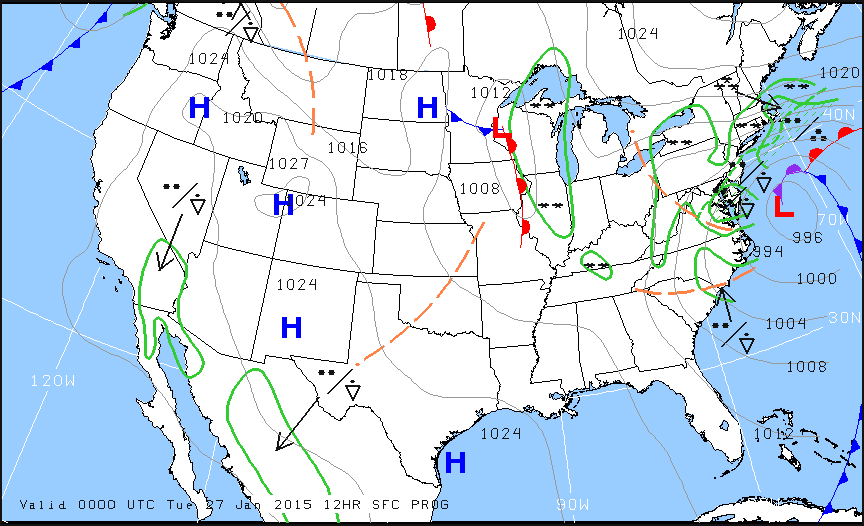
    Surface Prog

    The green circular areas above show that some form of precipitation is in that area.  The circular dots with the triangle located in Mexico and Baja California are depicting moderate rain showers.  If the triangle was gone, it would just be moderate rain.  In the northeast, all those symbols are showing moderate to heavy snow showers.  Across the plains, we see a lot of high pressure, meaning visibility and nice flying weather.

    These charts are invaluable when it comes to flight planning, especially over long distances when the weather could be changing a lot over the period of your flight.  Put them to use the next time you are planning a trip and you’ll learn you have a much better picture of what the weather is doing.

  • AOPA’s Emergency In Person Seminar

    Courtesy AOPA.org

    We spend time training for them, but real-world emergencies are rare enough that it’s easy to get complacent. They don’t always happen to “other pilots,” though, and preparation can make a big difference when things don’t go as planned:
    • What if you lose 500 rpm during takeoff, but the engine is running smoothly?
    • What if the ammeter drops to zero during a flight in IMC?
    • What if your left aileron develops a strong vibration in flight?
    Our new seminar is full of expert tips on handling those “up here, but wishing you were down there” scenarios. We focus on how to keep abnormal situations from becoming full-blown emergencies, offer advice on keeping critical problems under control, and give our best advice on off-airport landings.

    Find an AOPA Emergency Seminar near you!

    • Monday January 11, 2016-The Woodlands Waterway, 7pm-9pm
      • 1601 Lake Robbins Drive, The Woodlands, TX 77380
    • Tuesday January 12, 2016-Wyndham Houston West, 7pm-9pm
      • 14703 Park Row Blvd., Houston, TX 77079
    • Wednesday January 13, 2016, Holiday Inn San Antonio Airport, 7pm-9pm
      • 77 NE Loop 410, San Antonio, TX 78216
    • Thursday January 14, 2016, Omni Austin Hotel at Southwark, 7pm-9pm
      • 4140 Governor’s Row, Austin, TX 78744
  • Removing a Hold on Foreflight Approach

    I’m a big fan of having my Foreflight map always match up exactly with the way I am flying. Having a Flight Stream in the airplane helps a lot with that as it always prompts me to load the new flight plan from the GPS into my Foreflight map. When I load an approach in the GPS flight plan, Foreflight will put it into my Foreflight flight plan via the Flight Stream.

    The problem I run into on Foreflight is when there is a published hold at the Initial Approach Fix (IAF), but ATC has told me to fly the straight in approach and skip the hold. Up until recently, I didn’t think there was a way to set up a straight in approach on Foreflight, so I just settled for the hold staying on there.

    Not anymore! There is a simple trick that I discovered that allows you to remove the hold from the Foreflight flight plan. Here’s how to do it.

    Load the Approach

    The first step is still to load the approach into your Foreflight flight plan on the Map page. In this scenario, we are flying from KAQO, the Llano Airport, to KHYI, the San Marcos Airport. Austin Approach has told us to expect the straight in RNAV 17 KHYI via PUKIY. So, on Foreflight, we have KAQO and KHYI in our flight plan. Then, I tap the Procedures button on the upper right hand corner of the screen. I then tap Approach, then RNAV 17 KHYI. Then I select my transition.

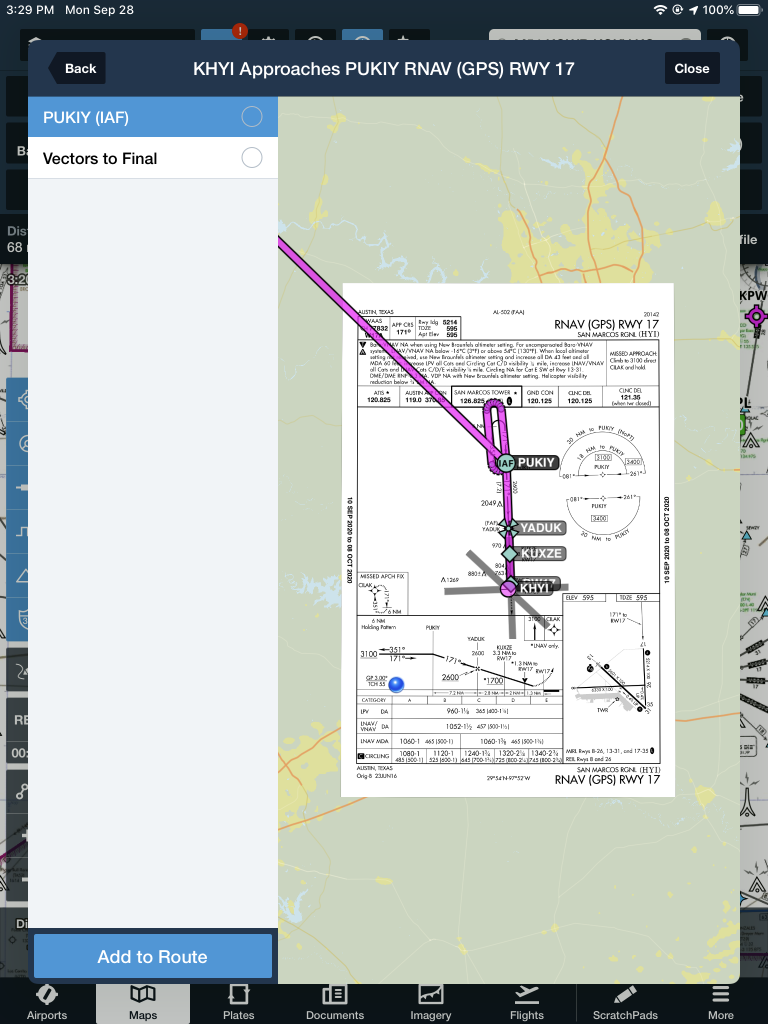
    The options given are either PUKIY with the hold, seen below;

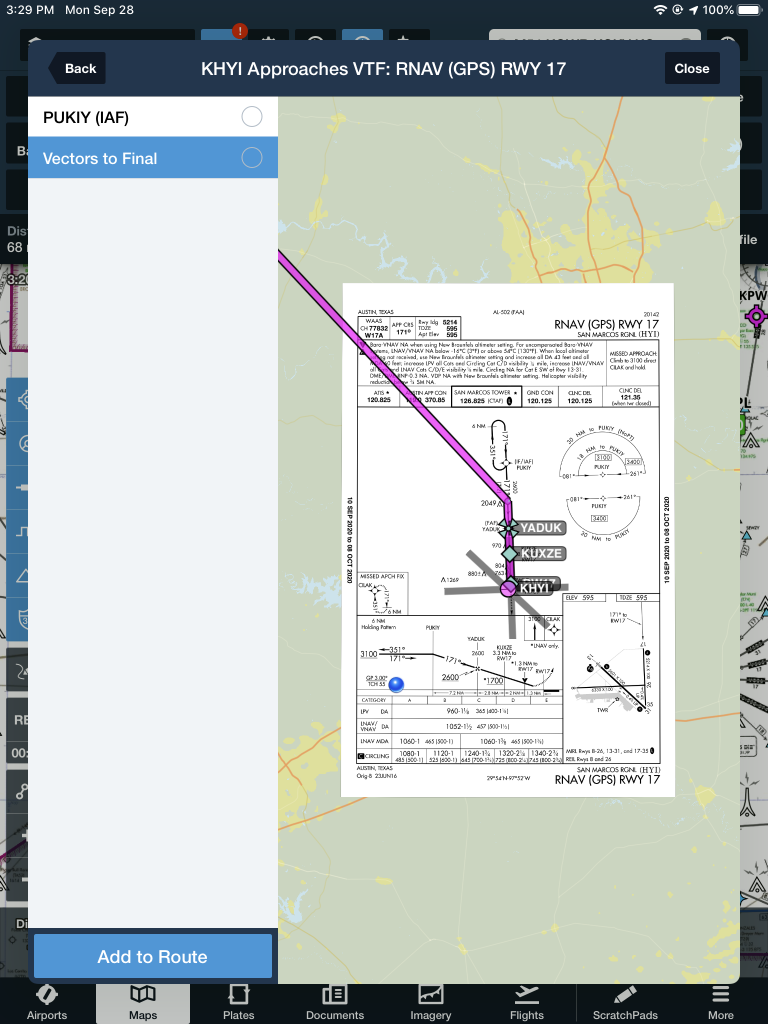
    Or Vectors to Final, which lines me up inside of PUKIY. Neither of these are what I want.

    But, to get this to work, I select PUKIY, then tap add to route. Now we have our approach loaded into our flight plan.

    Removing the Hold

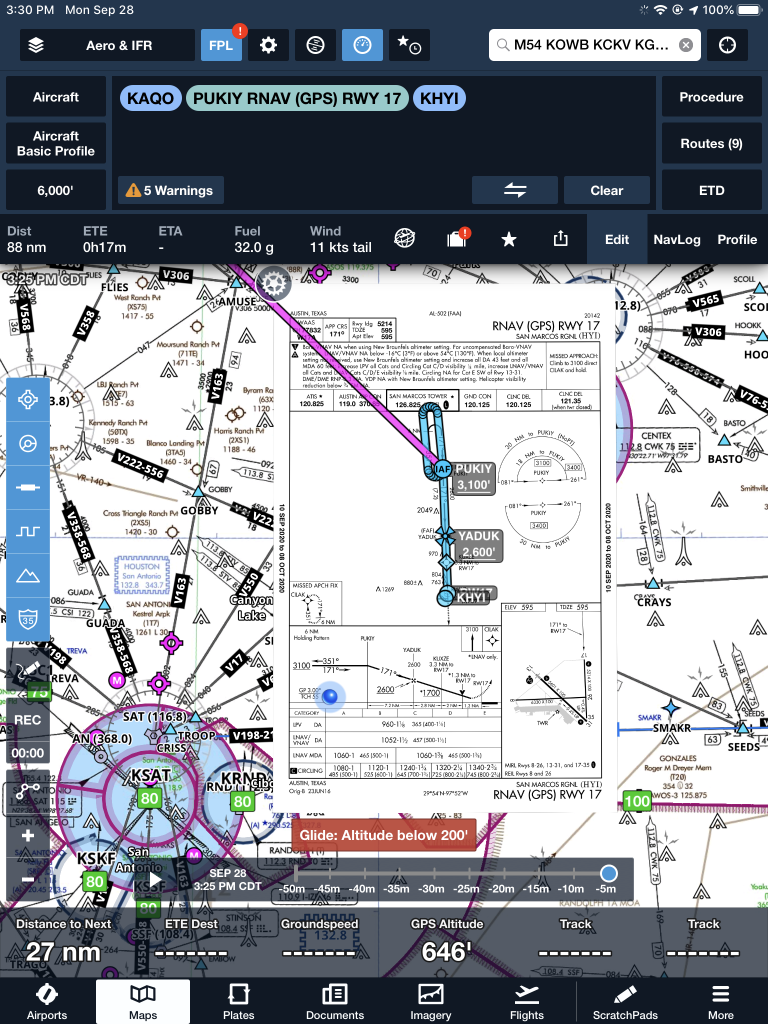
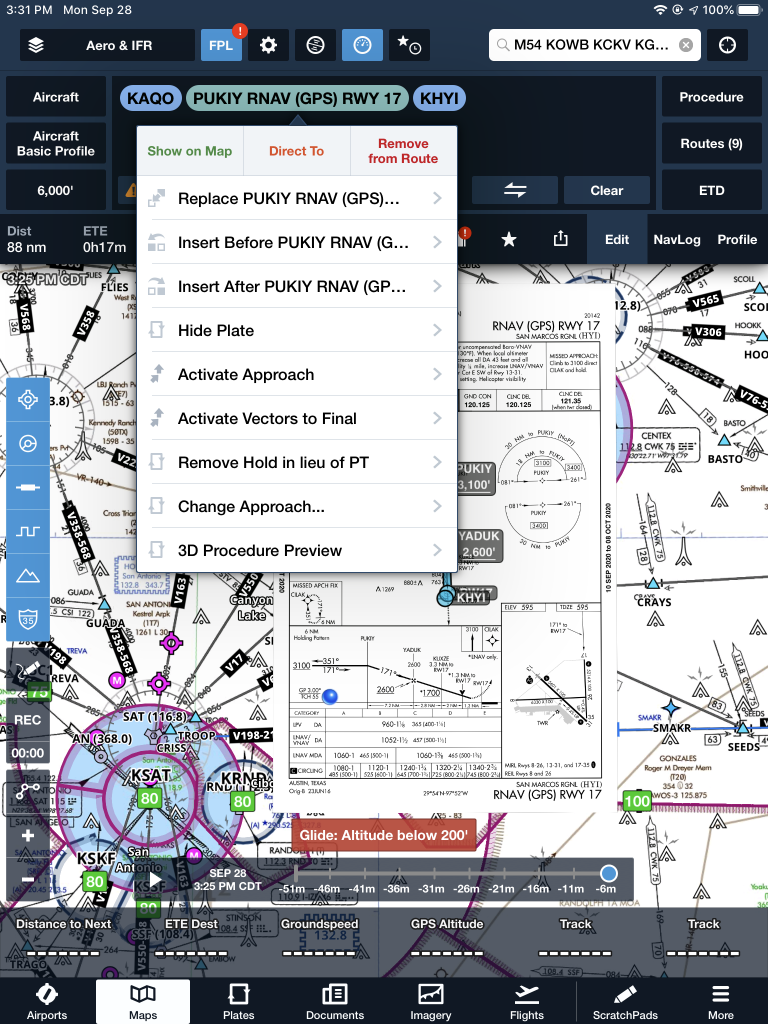
    The RNAV 17 is now in the Foreflight flight plan, but the hold is displayed at PUKIY. To remove the hold, the first step is to tap the approach in green and a menu pops up.

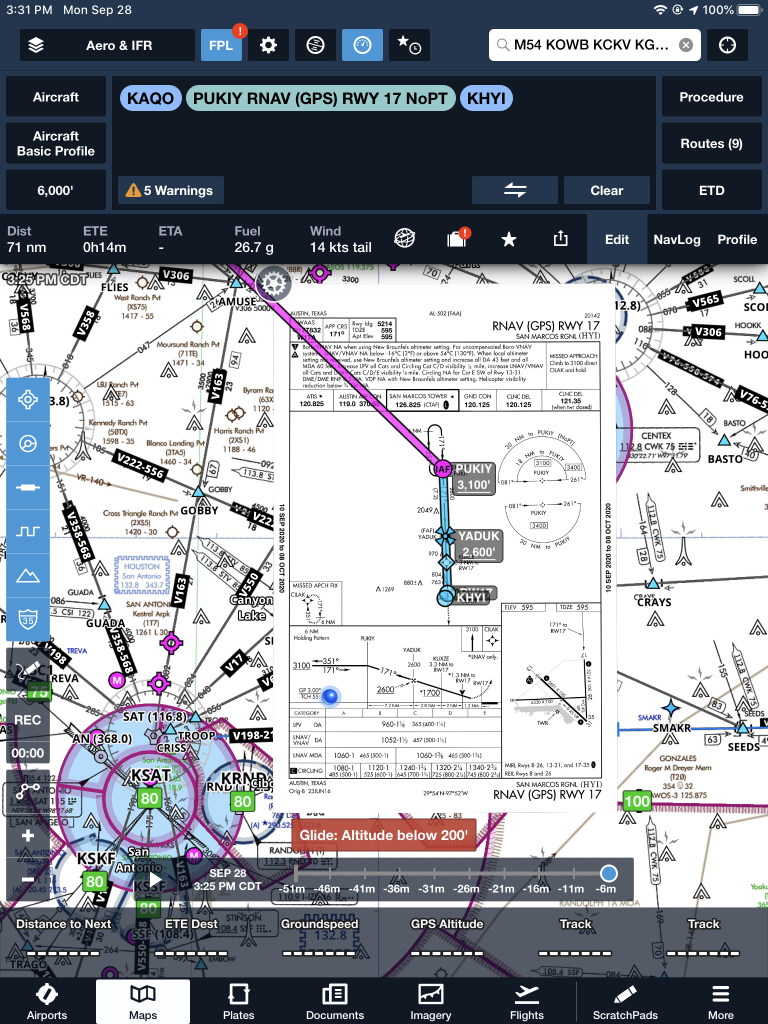
    The 7th option down is “Remove Hold in lieu of PT.” Eureka! Tap that, then the approach is displayed without the hold. Houston, we have success! It even says “NoPT” in the flight plan.

  • Merry Christmas 2018

    So the Word became human and made his home among us. He was full of unfailing love and faithfulness. And we have seen his glory, the glory of the Father’s one and only Son (John 1:14).

    From the Texas Top Aviation family (Hank, Kelsey, Everett, Cooper, and Cord) to your family, we wish you a Merry Christmas!  We are thankful for how the Lord has blessed us this year.  We pray for blessings on your family this coming year.

    Keep the wheel side down and the sunny side up!

    Merry Christmas!

  • What’s Going On With the Airplane Market?

    An Airplane Market Update, Q2 2026

    I get asked some version of the same question almost every day right now: “Hank, what’s going on with the airplane market?” Owners are nervous. The market has definitely slowed down, and the second quarter has been especially quiet. So let me give you a straight read on what’s actually happening, why, and what it means for your airplane.

    Here’s the short version: don’t panic. A slow market is not a market crash. It’s a market that rewards sellers who price realistically and buyers who are ready to pull the trigger. Patience is the name of the game right now.

    PDF
    ★ Free Download
    Get the Full Q2 2026 Aircraft Market Report
    The complete write-up — values, trends, and forecasts broken down by airframe. Sent straight to your inbox, free.

    Where values have actually been heading

    Used airplane values shot up through the COVID years, peaked somewhere around 2022, and have been softening ever since — really since about 2023. That’s carried into 2026. But in most piston airplanes, it looks a whole lot more like a slow, steady give-back than a crash.

    Now, here’s where I’d rather look than at asking prices. An asking price is just what a seller is hoping — or dreaming — to get; it isn’t what the airplane is worth. What an airplane is actually worth is what VREF tracks. And when I pull the VREF values on the single-engine pistons I’ve been appraising lately, a clear pattern shows up:

    • Older and less expensive airplanes are holding up the best. A clean normally-aspirated G1, G2, or G3 Cirrus SR20 or SR22 is down about 3% over the last twelve months. Older, more classic airplanes — Bonanzas, a Cherokee Six, a clean P210 — are flat to down just a few points. One outlier is the Cessna/Columbia 400 market — those are down about 13%.
    • The newer and more expensive, cabin-class singles have dropped more. A pressurized Malibu Mirage is down around 12% on VREF value, with other PA-46 pistons and turbines valued a little better, but still down between 8–12% over the last year.

    Call it roughly 5% on average across the segment. That’s more than the under-1% you’d guess from asking prices alone — but it’s still less than 15% down over the last year, not a crash. The rule of thumb: the older and less expensive the aircraft, the better the values are holding; the newer and more expensive the aircraft, the more the value has dropped over the last year.

    What a Crash Actually Looks Like

    Worth being precise about what I mean. A real crash — like 2008–09 — is sudden and disorderly: values plunge almost overnight, financing dries up, buyers walk away from their deposits, and airplanes sit because there’s no one to buy them at any price. New business-jet deliveries fell nearly 34% in a single year, and it took years to climb back. What we have now is the opposite on every count — value drops of 15% or less, financing that’s tighter but still available, and airplanes that are still changing hands. That’s a soft, orderly market, not a crash.

    Why Q2 got so quiet

    A handful of things piled up at the same time. None of them is a disaster on its own, but together they explain why the phone has been ringing less.

    Rates didn’t come down the way everybody expected. Oil shot past $110 a barrel after the conflict with Iran, inflation came roaring back, and the Fed stopped dropping rates — so financing an airplane still costs more, and that takes the urgency out of buyers. Financing also got tighter; the days of 100% loans with no money down are basically over, and lenders want bigger down payments.

    The tax rush already happened, too: when the One Big Beautiful Bill brought back 100% bonus depreciation, it set off a mad dash to close before year-end, and a lot of the folks who’d have been shopping this spring already bought last winter. Plus, there are simply more airplanes to choose from now, which hands buyers options and pulls pricing power away from sellers.

    So what should you do?

    It depends on which side of the deal you’re on.

    If you’re selling, price to today’s market — not the 2022 peak, and, unfortunately, not what you paid for the airplane. Realistically priced airplanes are still selling; the ones that sit are the ones chasing a number the market left behind. Keep your logs complete, stay current on inspections (don’t forget those 24-month IFR inspections!) and ADs, and present the airplane well. Have a thorough annual done before putting it on the market. Keep it clean and do whatever cosmetic or avionics fixes or upgrades you’ve been neglecting — you want it to show as well as possible, because there’s a lot of competition out there.

    Re-dyeing the leather seats is a cost-effective way to spruce up the interior without replacing the seats. A good wash will certainly help the exterior. Glass in the panel always shows better than steam gauges, so even something simple like an Aspen upgrade, two Garmin GI 275s or G5s, or a 7-inch Garmin G3X will bring value to your airplane and make it show better — any of those are less than $10,000. If you do still have a Garmin 530W or 430W, consider changing them out for a newer Garmin or Avidyne IFD unit; Garmin won’t support the 530W/430W anymore. And Avidyne is quietly ending support for the Entegra system this fall — but the good news is the Avidyne Vantage panels are finally certified.

    And if you can wait, give it some thought — the back half of the year is shaping up stronger. The fourth quarter is traditionally the best stretch for used sales, and now that bonus depreciation is permanent, that year-end push resets every fall.

    If you’re buying, this is your window. Higher rates have thinned out the competition, there are more airplanes to pick from than there have been in years, and sellers are more willing to deal. If you’ve got cash ready or financing lined up, you’ve got leverage you didn’t have eighteen months ago. Be picky — buy the clean one with good records.

    If you’re just holding, relax. There’s no reason to panic-sell. Most piston values are easing off slowly, not collapsing. Patience wins here.

    The right move always comes down to your specific airplane, your timeline, and what you’re trying to accomplish. If you’d like a current valuation — or just an honest read on where your airplane sits in today’s market — give me a call. That’s what we’re here for.


Leave a Reply

Your email address will not be published. Required fields are marked *