The Piper Saratoga Turbo

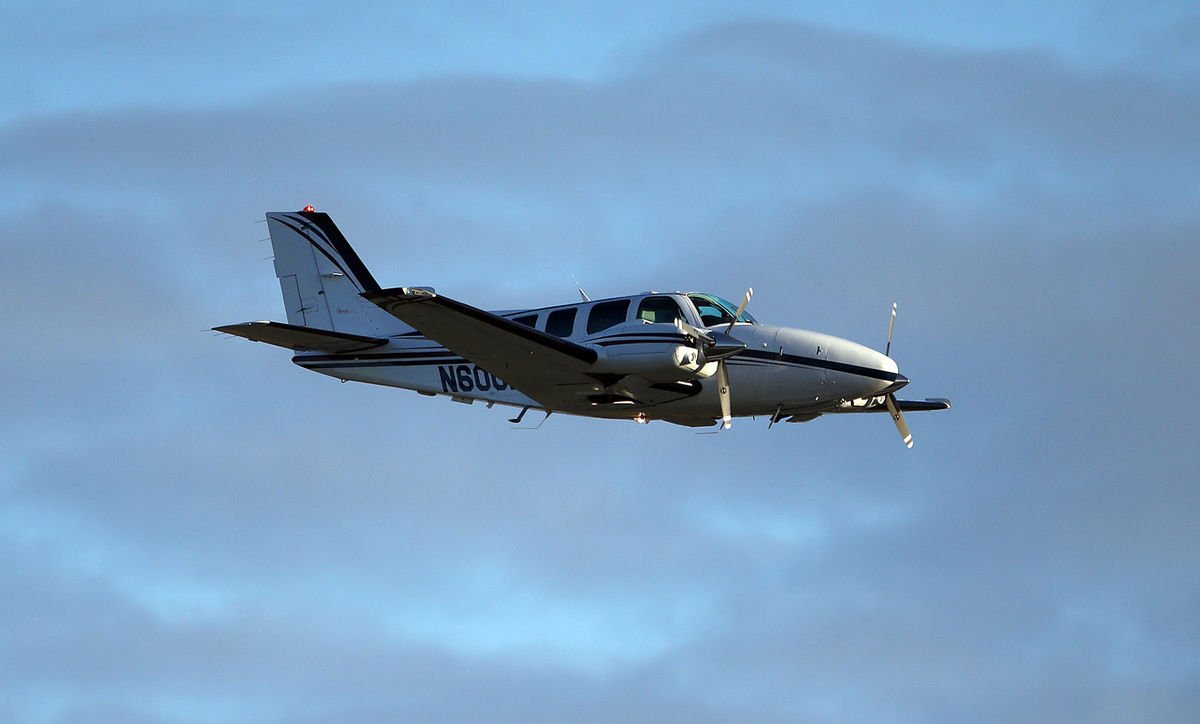
Piper SaratogaRecently, I assisted with the delivery of a 2007 Piper Saratoga Turbo from San Antonio to New York City.  It was a very nicely equipped airplane, complete with a Garmin G1000 panel, an STEC 55x autopilot, and air conditioning.  The owner joined me on the flight back to get trained in the airplane, getting him comfortable in it over our 2 day excursion back to NYC.  Total flight time was 12 hours, though that did include several stops along the way and landing practice at the airports we stopped at.

The 6 seat Turbo Saratoga is a very comfortable, very capable flying machine.  It is made for hauling, with a gross weight of 3,600 pounds, but that’s not to say it isn’t lacking in comfort, either.  The rear cabin has 4 seats, 2 facing forward and 2 facing rear.  It would be a little tight for 4 full size adults in the back seat.  To avoid knee knocking, the plane is an excellent 4 person and bags aircraft (or 4 adults and 2 kids).

The really nice part about the Piper Saratoga is the baggage door.  Unlike the Bonanza, the Piper Saratoga has a baggage door that opens to the baggage compartment, creating a much easier way to load and unload baggage.  The nose baggage compartment, which holds an additional 100 pounds, is a very nice feature, allowing the bag load to be spread out.
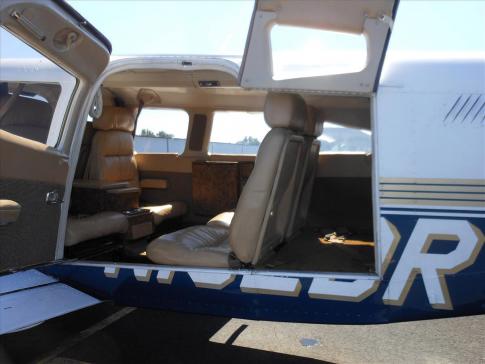
Piper Saratoga Inside

We typically saw cruise speeds of 155-165 KTAS depending on altitude.  The highest we went was only about 9,000 feet, so we didn’t get up real high to see what the single turbo could do.  Even though the Lycoming TIO-540 engine burns about 20 gallons an hour, with 102 gallons of gas on board, the fuel consistently outlasted our desire to continue flying.

Being equipped with the G1000 was a very nice feature of this particular Piper Saratoga.  The screens are nice and big, larger than the displays on a high wing Cessna or a Corvalis.  That allows for easier viewing of approach plates, NEXRAD, and the engine gauges.

There are always downsides to an airplane, and the Saratoga is no exception.  The STEC Autopilot leaves some to be desired as I felt it hampered the capability of the G1000 when shooting approaches because the 12 knot crosswind limitation on the autopilot. You can still use the autopilot on an approach with higher than 12 knot crosswinds, but the autopilot tends to search around for the final approach course.

The air conditioning works very nicely, though it did have a tendency to freeze up at altitude.  We discovered that quickly and just decided to turn it off and leave the blower on, since it was cool enough up high anyway.

Overall, the Turbo Saratoga is a very nice airplane.  The speed leaves a little to be desired (you can get 10 KTAS more out of a Bonanza with a Continental engine, about 20 knots more if it is a Turbo Bonanza), but it is very high on comfort.  The Piper Saratoga makes for a good family airplane or as a hauler.  I liked the airplane a lot and thoroughly enjoyed my time in it.

Similar Posts

  • Pancake Fly-In At KCVB

    For those of you in the Hill Country looking to kick off the Christmas month right, head over to the Castroville Airport (KCVB) on Saturday, December 6th and get yourself a short stack of flapjacks.  For just $5, you can get yourself a good hearty breakfast that includes coffee or juice and bacon or sausage.  The eating starts at 0800 and goes until 1200, local time.  Come with an empty belly and an empty gas tank as CVB currently has some of the lowest priced gas in South Texas, currently listed at $4.70/gallon.

    There will be plenty of hangar flying, lots of airplanes to look at, and most importantly, lots of pancakes!

    CVB Pancake Breakfast

  • Redbird Migration at HYI

    migration-conference

    Redbird Skyport at the San Marcos Regional Airport will be hosting it’s 6th Annual Redbird Migration Flight Training Conference.  The event is focused on flight training and flight training providers.  Past speakers have included the president of Hartnell Propellers, the CEO of Big Red, and various Redbird Executives.

    The list of speakers for this year’s Migration has yet to be released, but it promises to be a good lineup.  Attendees every year always compliment Redbird on the event and the speakers they bring in.

    If you are a CFI or flight school owner interested in attending, check out Redbird’s event page to request an invitation.


  • Stephanie Mertz Joins Texas Top Aviation

    Texas Top Aviation has added a new member to our instructing team. Stephanie Mertz was hired in March 2019 and will be specializing in G1000 & Instrument instruction.

    Stephanie graduated from LeTourneau University in Longview, Texas with a degree in Aeronautical Science, earning her commercial single and multi ratings while there. She began her aviation career in Ontario, California flying a Pilatus PC-12 for charter and medical trips. While operating the PC-12, she gained valuable experience flying all over the US and Mexico.

    In 2013, Stephanie moved back to East Texas with her husband where she worked as a contract pilot flying a variety of Citations as well as a Falcon 10. A few years later, she became involved in her local Ninety-Nines chapter and joined their mentorship program.

    After earning her CFI, CFII, and MEI, Stephanie returned to her alma mater to pass on her flying passions to college students through flight instructing. After a year of teaching at LeTourneau, she and her husband, with their first baby in tow, moved to the Austin area. Now she is instructing with Texas Top Aviation while acting as a mentor for other women working on achieving their flying dreams.

  • MMOPA Vision Video

    The Malibu & M-Class Owner’s and Pilot’s Association recently released their MMOPA Vision Video. It is a great video detailing the history of the Piper PA46 & the history of MMOPA. The PA46 would have ceased to exist without the founding of the original Malibu Coalition.

    Checkout the video above (and Texas Top Aviation’s Hank Gibson even gets a cameo!).

  • Flight Service Station

    When is the last time you talked to the Flight Service Station?

    Believe it or not, FSS is still in existence.  Over the past 10 years, they went from FAA run, the being bought by Lockheed Martin, to now being privately run by a company called Leidos. 1-800-WX Brief will get you connected with a weather briefer, but you’ll hear “Leidos Flight Service Station” now when the briefer picks up.

    Since the advent of Foreflight, most pilots these days get their weather briefings digitally on the iPad. Foreflight has come a long way since it’s inception.  The briefing part of their Flights page is quite comprehensive, with lots of information, and counts as a legal weather briefing (which pilots are still required to get before a flight).

    Why does a pilot even need to call Flight Service?  Well, when’s the last time you tried to interpret everything the Briefing on Foreflight told you?  As I said before, it’s a lot of information and a lot of it can be confusing.  Pilots are not fully trained on interpreting Prog Charts and getting an overall weather picture for a flight.  A weather briefer is.

    I have over 5,000 hours and I still call a weather briefer before almost every flight.  On the way to the airport is a great opportunity to get a weather briefing.  I get a great picture of what’s going on in my area or over my route, frontal movement, bad weather areas, and whether or not it’s a good idea to even take off. Calling in the car alleviates the main complaint I hear about calling the Flight Service Station, which is it’s inconvenient and causes a delay since you have to call them on the phone.

    I don’t do much private pilot training anymore, but when I do, I always teach my students how to get a weather briefing from the Flight Service Station.  I’ll show them how to get the briefing on Foreflight too, but usually their eyes bug out of their heads when they start trying to read everything.  A breathe of relief is released when I tell them there is a trained professional just a phone call away who can clear everything up.

    The other thing that the Flight Service Station provides that is important to a lot of folks are PIREPs.  It’s vital in sketchy weather areas for the FSS to get a report of what’s actually going on in the air.  This helps other pilots out greatly as they are getting information about icing, cloud bases and tops, turbulence and a myriad of other things from airplanes who are actually in the conditions.

    Finally, the most used portion of the Flight Service Station is the Clearance Delivery line (888-766-8267). At airports without a tower or a clearance delivery frequency, with IFR conditions present, the only way to get your IFR clearance is to call Clearance Delivery.  Yes, it can take a little time sometimes, but you will get a clearance every time, unlike taking off and trying to dodge the clouds without hitting anything, while trying to call Center on the radio (which isn’t safe or legal).

    Been a while since you’ve talked to the Flight Service Station?  Give them a call, either on the phone or on the radio.  Odds are, they are bored and just wanting someone to talk to, just like you are on that long cross country flight!

    Checkout 1800WXBrief.com to see all the cool stuff the Flight Service Station does.

  • 7 Reasons An Airplane Buyer Should Use An Airplane Broker

    In the realm of buying airplanes, navigating through the complexities of the market can be as challenging as piloting through turbulent skies. Whether you’re a seasoned aircraft owner or a new pilot looking to acquire your first aircraft, enlisting the expertise of an airplane broker can significantly streamline the buying process. Here are some compelling reasons why engaging an airplane broker is a smart move for buyers:

    1. Expertise and Experience:
      Aircraft brokers are seasoned professionals with in-depth knowledge of the aviation industry. They understand what aircraft models fit different missions (you don’t want to have an expensive jet for 200 mile trips for 2 people), market trends, airplane values, and technical knowledge to help avoid “lemon” airplanes before even the inspection begins. Leveraging broker expertise can help buyers make informed decisions, avoid pitfalls, and secure the best deal possible.
    2. Access to a Vast Network:
      Airplane brokers have extensive networks comprising sellers, manufacturers, and maintenance facilities. This network gives buyers access to the experts on the aircraft they are wanting to buy. Whether you’re in the market for a brand-new aircraft or a pre-owned gem, brokers can tap into their connections to make sure the airplane selected is a well maintained aircraft.
    3. Time and Resource Efficiency:
      Searching for the right aircraft can be a time-consuming and labor-intensive process. From researching available options to arranging pre-buy inspections and negotiations, the tasks can quickly pile up. By entrusting these responsibilities to a broker, buyers can save valuable time and resources. Brokers handle the legwork, allowing buyers to focus on family, life and work while still staying informed and involved in the decision-making process.
    4. Objective Guidance and Advocacy:
      When emotions run high during the aircraft buying process, having an impartial advocate can be invaluable. Airplane brokers act as trusted advisors, offering objective guidance and a high level of knowledge about different airplanes. That knowledge comes in handy when evaluating aircraft specifications, assessing market value and negotiating terms. Brokers provide valuable insights and ensure that buyers make well-informed decisions aligned with their goals.
    5. Streamlined Transaction Process:
      Purchasing an aircraft involves navigating a complex web of legal, financial, and logistical considerations. Brokers are well-versed in handling these intricacies and can streamline the transaction process from start to finish. They coordinate with legal experts, financial institutions, escrow companies, maintenance shops and regulatory authorities to ensure a seamless and hassle-free experience for buyers, minimizing potential delays and complications along the way.
    6. Cost-Effective Solutions:
      While some buyers may be hesitant to engage a broker due to concerns about additional costs, the reality is that brokers often help buyers save money in the long run. By leveraging their industry knowledge and negotiation skills, brokers can steer buyers away from airplanes that are potential money pits and toward airplanes that have excellent maintenance pedigrees. Brokers are often able to secure favorable pricing and connect buyers to other experts in maintenance, insurance, and other essential services.
    7. Peace of Mind:
      Perhaps most importantly, working with an airplane broker provides buyers with peace of mind throughout the buying process. From the initial search to the final closing, buyers can rest assured knowing that they have a dedicated professional by their side, guiding them every step of the way and ensuring a successful outcome.

    While purchasing an aircraft can be a daunting endeavor, enlisting the services of an airplane broker can turn the journey into a smooth and rewarding experience. With their expertise, industry connections, and commitment to client satisfaction, brokers empower buyers to make informed decisions, secure the best possible deal, and embark on their aviation adventures with confidence. So, whether you’re in the market for a single-engine propeller plane or a luxurious corporate jet, consider partnering with an airplane broker to navigate the skies of aircraft acquisition with ease.


    Texas Top Aviation, LLC has 10 years of experience helping our customers purchase amazing airplanes. We specialize in TBM, Piper PA46, Cirrus and Columbia aircraft, but have extensive knowledge about a wide variety of piston and turbine aircraft. Contact us today to discuss our services for your next airplane.

Leave a Reply

Your email address will not be published. Required fields are marked *