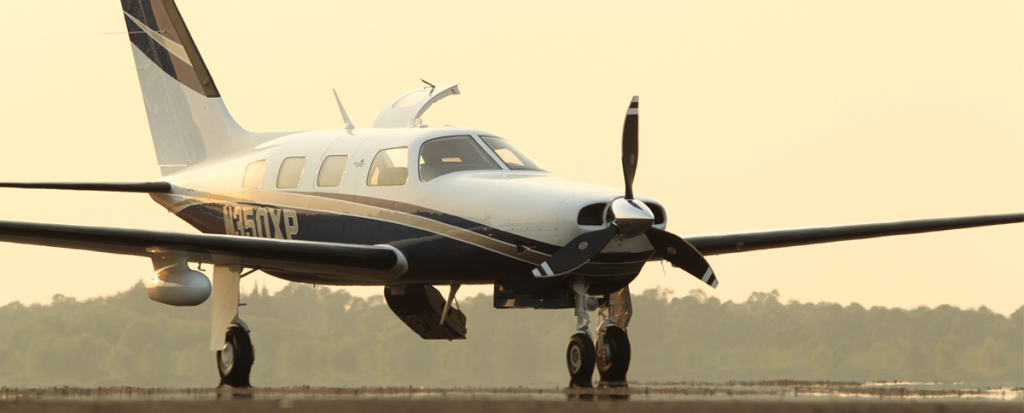
Texas Top Aviation is proud to announce that we now offer Piper PA46 Training in the Malibu and Mirage. Our Piper PA46 training is provided with the same excellent & professional approach that has become our hallmark.
The four-day format of this course allows time to answer all of your questions about your new airplane. The Texas Top Aviation Piper PA46 training course leaves you with a confidence and understanding that will help you enjoy your Malibu or Mirage even more.
New avionics have you scratching your head in confusion? No problem. Texas Top Aviation is well versed in the latest Garmin and glass panel instrumentation.
If you are in need of recurrent training in your PA-46, Texas Top Aviation would be proud to help with that as well. Consider us your one stop shop for Piper PA-46 training.
For more information, check out our Piper Malibu/Mirage Training page.
Whenever I get in an airplane with a pilot for recurrent training, I can assure myself that I will mention rudder usage more than once during the flight. If it is in a tailwheel (or if the pilot is doing tailwheel training), I’m going to mention the rudder a lot. How do I know this? Because basic rudder skills are actually one of the most difficult things to master in flying.
Let’s start simple. What does the rudder do? The dictionary definition is it controls the movement about the vertical axis of the airplane. If you stick a pole down through the CG of the airplane and rotate the airplane around that pole, this is the vertical axis. Looking at it another way, the rudder moves the airplane’s nose left and right. Keep this in mind as we move on.
Every pilot thinks about the rudder during the takeoff roll. Because of the torque effect, the pilot must add right rudder during the takeoff roll to stay on the runway centerline. Depending on the airplane’s horsepower, more rudder pressure is needed in higher powered airplanes. The problem usually shows up once the airplane gets in the air.
In the worst situation, after takeoff, the pilot will set both feet on the floor and completely disregard the rudder. Torque effect and now P-factor are continuing to cause the airplane to yaw left, causing the need for right rudder. With his feet on the floor, though, the pilot is allowing the airplane to yaw. It’s not terribly noticeable for him in the front seat, but the back seat passengers (especially in a six seat or larger airplane) are certainly feeling it.
One particular problem spot on the climb is the climbing left turn. In a climbing left turn, training says to add left rudder since it is a left turn (see below for the reasoning). But, since the airplane is climbing and therefore experiencing left yawing tendencies due to the aforementioned effects, the pilot needs to continue pressing the right rudder, though the pressure won’t be as much as in a straight climb. Watch the ball the next time you make a climbing left hand turn and it’ll make a believer out of you.
I find only a handful of pilots are this egregious. Most pilots have rudder problems in turns and in turbulence. We’ll tackle turns first. As we all learned when we first started flying, due to adverse yaw, a pilot must add rudder in the turn’s direction. Again, this isn’t usually where the problem shows up. During the rollout is the problem area.
Let’s take a turn to the left. The pilot rolls in, adding left rudder, arrives at his heading, then begins to roll out with the ailerons. Left adverse yaw is now being experienced and right rudder is needed to smoothly transition back to level flight. Need some visual assistance? Watch the nose the next time you make a turn. If you are working the rudder properly, the nose will pivot on one point in the horizon. If you aren’t using the rudder properly, the nose will draw a U shape on the horizon. Try making some turns without rudder, see what it looks like, then use the rudder properly. You’ll notice a big difference.
Finally, let’s talk turbulence. As we all know, turbulence in the hot summer afternoon is quite pronounced. When the airplane experiences a bump, it usually doesn’t bounce straight up in the air. There is usually some kind of rolling motion involved. As the pilot corrects this rolling motion by moving the ailerons, adverse yaw is experienced (just like rolling into and out of a turn that we talked about above), so rudder is needed. There isn’t a need to stomp on the rudder or you’ll cause the airplane to severely yaw in the other direction, but rudder pressure is needed.
Final approach is where this gets most pilots. By controlling the nose and not allowing it to move around on final by using the rudder, this will make your approaches a little more stabilized leading to a more successful landing.
Feeling lost when it comes to the rudder? Ask your instructor the next time you go fly to do some rudder exercises. Most instructors don’t emphasize these basic stick and rudder skills which leaves pilots lacking as they move on in their aviation lives. So make it a point to do some basic rudder work the next time you fly with your instructor.
I am on a mission in flying for my head to be as comfortable as possible. I’m currently going through the process of experimenting with different ANR headsets to see which ones squeeze my head the least (which I’ll be writing a future article about). In the meantime, I decided to focus on sunglasses.
I wear glasses (can’t do contacts anymore since they irritate my eyes), so anytime I have a headset on, I have frames running underneath my ear cups. I had a pair of prescription sunglasses for years that were okay, but still caused soreness above my ears after more than 3 hours of flying. I routinely fly 4-5 hours a day in training folks, so I had to find a better solution.
I saw an ad in Flying Magazine one month for Flying Eyes sunglasses. It was a relatively new company with a cool concept. A pilot started the company with the goal to create as thin a pair of sunglasses frames as possible to increase the comfort and decrease the ANR loss when wearing sunglasses. What the company came up with is pretty cool.
The ultra-thin frames on the all the different Flying Eyes models are made out of Resilamide. The material is so strong that the frames can be bent back and forth while not breaking. The company even brags that the frames are virtually unbreakable. I had to try these out.
I ordered a pair of the Golden Eagle Sport sunglasses. The process of getting prescription lenses in them was no big deal and took about a week. The eyeglasses shop initially thought the shape of the lens could be an issue, but it proved no problem at all. The lens manufacturer even managed to chip the frames, but Flying Eyes sent a new set of frames for free, even though it was not at all their fault.
In about a month and a half of flying with them, they are very comfortable. Some squeeze on the side of my head after extended periods of wear underneath a headset, but I’m exploring headset options currently (see above). Much improved over my last set of sunglasses.
Flying Eyes offers several different frame models, some of which are prescription compatible and some which aren’t. The Golden Eagle Sport frames run about $180. Orders can be placed on the Flying Eyes website.
Ordering new sunglasses from Flying Eyes? Use this link to receive 10% off your order.
Texas Top Aviation has added a new member to our instructing team. Stephanie Mertz was hired in March 2019 and will be specializing in G1000 & Instrument instruction.
Stephanie graduated from LeTourneau University in Longview, Texas with a degree in Aeronautical Science, earning her commercial single and multi ratings while there. She began her aviation career in Ontario, California flying a Pilatus PC-12 for charter and medical trips. While operating the PC-12, she gained valuable experience flying all over the US and Mexico.
In 2013, Stephanie moved back to East Texas with her husband where she worked as a contract pilot flying a variety of Citations as well as a Falcon 10. A few years later, she became involved in her local Ninety-Nines chapter and joined their mentorship program.
After earning her CFI, CFII, and MEI, Stephanie returned to her alma mater to pass on her flying passions to college students through flight instructing. After a year of teaching at LeTourneau, she and her husband, with their first baby in tow, moved to the Austin area. Now she is instructing with Texas Top Aviation while acting as a mentor for other women working on achieving their flying dreams.
Only now did I begin to realize the severity of the situation. The deer had completely broken the left main gear off of the airplane. Obviously, landing in this condition would not be ideal. Landing without a nose wheel is one thing, but landing without one of the mains would be a very dangerous and undesirable proposition.
The company’s maintenance guys arrived on the scene while I executed a few more low passes so that they could take a look. We all came to the same conclusion that the best situation for landing would be to retract the other two wheels so I could land on the belly. Unfortunately, the landing gear wouldn’t retract. Cranking the emergency gear handle didn’t work either as it is not designed to bring the wheels up, only to put them down.
I flew circles around the airport for a while as different options were all discussed. I owe a lot to the guys on the ground who were digging through the manuals coming up with solutions. Eventually, it was decided that I would try cranking the gear up by hand, even though the checklist in the airplane said that it could only be used to lower the gear. Even if we damaged the hand cranking mechanism, it would be worthwhile…plus, I’d already torn off the left main entirely, surely a little damage to the retraction mechanism wouldn’t be the end of the world!
Following the checklist, I pulled the CB for the gear motor and started cranking. To my great relief, the “in transit” light illuminated and the three green indication went away. It was difficult work to crank the gear up manually. The handle is in a very poor location in Barons and Bonanzas, plus I was working against gravity. It is also possible that there was some debris from the missing wheel causing friction or binding. While I was cranking, the rescue crews were being coordinated while extra vehicles and people had been called in from the city for support.
After some time had passed, enough to get a slightly sore arm from cranking, the lights indicated that the gear was up and locked. I lined up for one more pass hoping to verify that the landing gear was up and the landing gear doors were closed. After the final go ahead from everyone on the ground, all that was left was the landing.
I had been doing my best to keep the passengers informed of what was happening throughout the whole flight, but I felt bad for them as the news changed from the beginning of the flight: “precautionary landing” was quite different than the briefing I ended up giving them before we landed. I informed them that I was going to be “… killing the engines and landing with the gear up….” They did an impressive job of staying calm and being responsive. Before we landed, I made sure that they were all briefed on what to expect, how to unbuckle, and how to evacuate from the airplane. It is difficult to convince someone that everything is going to be fine when there are hordes of emergency vehicles (including ambulances) waiting next to the runway in anticipation of your landing.
Shortly before landing, I went through my flows and callouts, then verified by use of the checklist to ensure I hadn’t missed anything. I distinctly remember sitting in the airplane preparing for the landing, all the while being in complete disbelief that this was a real situation. I never imagined that I could be flying an airplane that was missing a wheel strut. Previously, my assumption had been that if there was an event serious enough to shear off one of my mains, the airplane wouldn’t continue flying. It all seemed like a bad dream.
I elected to use runway 26 since it was the longest. I wanted to be able to carry extra speed in order to give myself extra time between pulling the mixtures and landing so that I could feather the props and turn the fuel shut off valves to the off position (never thought I’d have to do that!) without being rushed. As I made my final approach with the engines shut off, I went through my final memory items and couldn’t help but laugh about just how backwards everything was from normal arrival procedure. GUMPS: Gas- Off (normally on the fullest tank), Under carriage- Up (Definitely not normal), Mixtures- Idle cut off (I normally save this for when I’m parked on the ramp), Props- Feathered (Again, never thought I’d have to do that in real life), Seatbelts- On (the only one that stayed the same!).
On final approach for runway 26 with the gear up and the props feathered. Photo Credit: www.lancasteronline.com
I’ve had several remarks about how quiet the airplane must have been during the final un-powered glide to the runway, and while that is absolutely true, I must confess that I never noticed. I was so focused on the task at hand that the silence in the airplane simply wasn’t something that stuck out to me. What did make an impression on me, however, was the acceleration the airplane experienced when the props were feathered. I’ve heard it preached many times the importance of feathering the propeller on a dead engine, but never truly appreciated the importance of it until I did it myself. I remember the airplane accelerating noticeably as though I had hit a boost button which was hidden somewhere in the cockpit for just such an occasion.
Although I didn’t notice the lack of noise upon killing the engines, the sickening, deafening noise which was produced during the touchdown and deceleration is something which I will never forget. Another thing that surprised me was the smoke which filled the cockpit and cabin as we slowed down. This was produced by the friction between the belly and the runway, although nothing was burning.
I don’t know how long the airplane actually slid for after touching down, but it felt like an eternity. However, when the noise subsided and the motion stopped everything returned to real time. I unfastened my seat belt, opened the door and climbed out onto the wing. I helped the passengers evacuate and we retreated to a safe distance on the side of the runway while the firefighters rushed in to do their job.
Tow Truck Unloading the Baron in the Maintenance Hangar
The step took the brunt of the runway damage and actually saved the right hand flap from contacting the runway at all
It was 8:35 am. So, from the time we took off to the time we landed was almost exactly an hour and a half. Not surprisingly, the passengers elected not to continue on to Pittsburgh and instead accepted a ride home in a car. The rest of my day was a blur of paperwork, reports, and phone calls.
Andrew Robinson is an airline pilot for Piedmont Airlines. He is a former 135 Charter Pilot and flight instructor who lives with his wife and 2 daughters in Pennsylvania. He instructs in Beechcraft Bonanzas.
Late last year, the Diamond Aircraft Corporation announced a brand new twin engine, the Diamond DA62. At first glance, this is a pretty cool airplane. It seats 7 passengers, spread out amongst 3 rows, with 2 massive doors, leading to an “SUV” type feel, according to Flying Magazine. That is only one of the “neato” features of the Diamond DA62.
The thing that will make pilots believers is the fuel burn. According to Flying Magazine, which did a test flight of the airplane, at 14,000 feet and 60% power, the airplane was only burning 12 GPH, but still doing 170 KTAS. Remember, this is a twin. That’s about the same as a normally aspirated Cirrus SR22 at the same altitude.
How does Diamond do it? Jet A. The company put two Austro AE330, 170 Horsepower, Jet A burning piston engines on the Diamond DA62. You may say, well, yeah, at 60% power, that’s great, but I want to go places. How much fuel does it burn then? Even at max continuous power of 95%, it’s still only burning 18.5 GPH total and cruising at 195 knots. Paying Jet A prices, that’s pretty sweet.
The range on the airplane is quite nice too. Again, according to Flying Magazine, the range with full fuel (86.4 gallons with aux tanks) is about 1,300 miles. You can carry the whole family too, as the full fuel payload is 1,000 pounds. Golf clubs? No problem. Just stick them in the nose.
The Diamond DA62 is probably one of the easiest twins to manage, engine-wise, too. The Fully Automated Digital Engine Control (FADEC) system that Diamond installed leaves the pilot with only 2 power levers, instead of 6 on the typical piston twin. All that needs to be done at cruise is set a percent power and the FADEC computer does the rest.
Need air conditioning, built in oxygen, and TKS? Diamond can set you up. The G1000 system complete with digital backup instruments is standard in the airplane. What more can you really ask for?
If you haven’t figured it out, I really like this airplane and would be aching to fly it. I enjoy the DA40 and have a good amount of DA42 experience, but I’d really like to hop in a Diamond DA62.
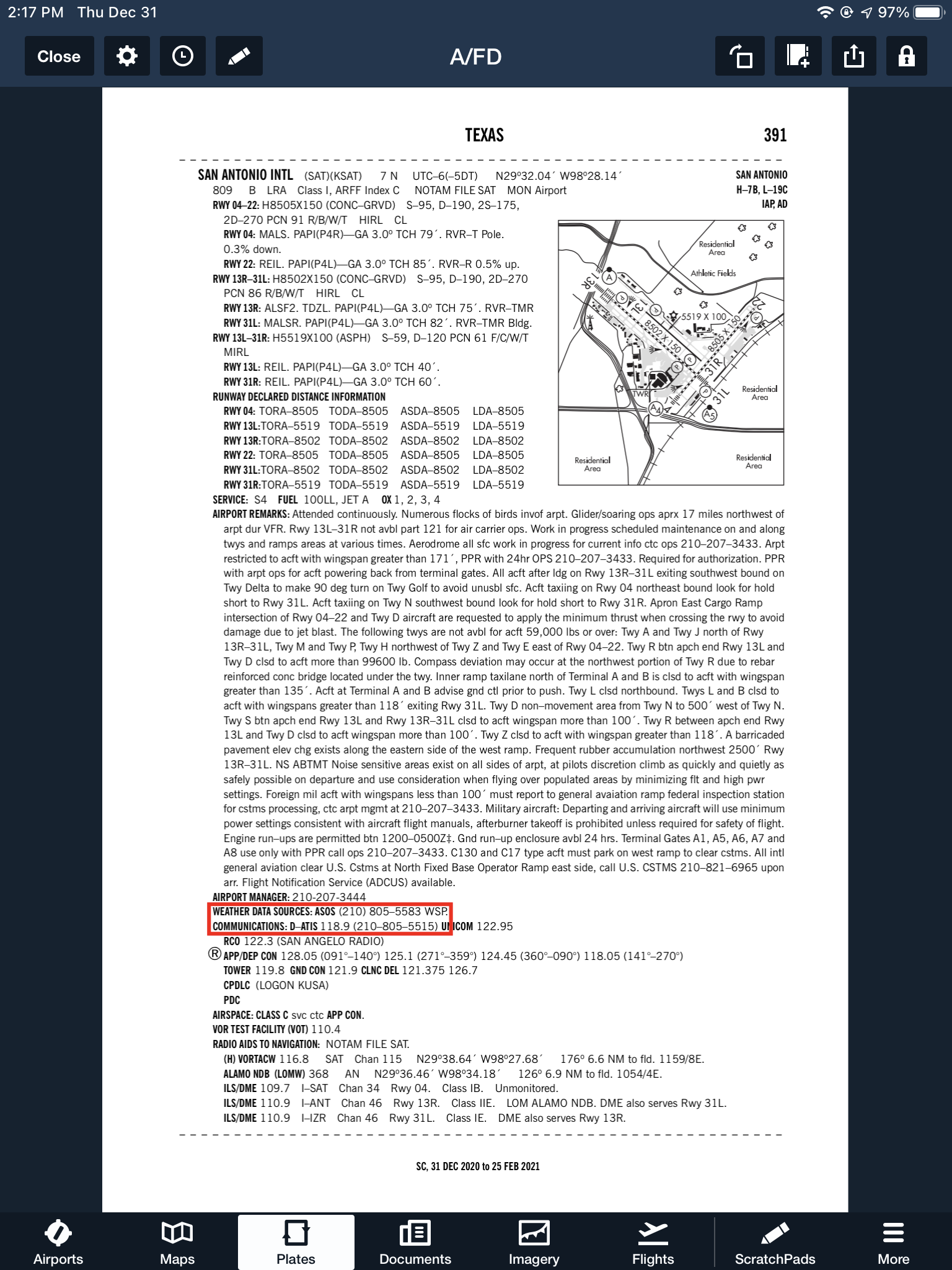
When is the last time you talked to the Flight Service Station?
Believe it or not, FSS is still in existence. Over the past 10 years, they went from FAA run, the being bought by Lockheed Martin, to now being privately run by a company called Leidos. 1-800-WX Brief will get you connected with a weather briefer, but you’ll hear “Leidos Flight Service Station” now when the briefer picks up.
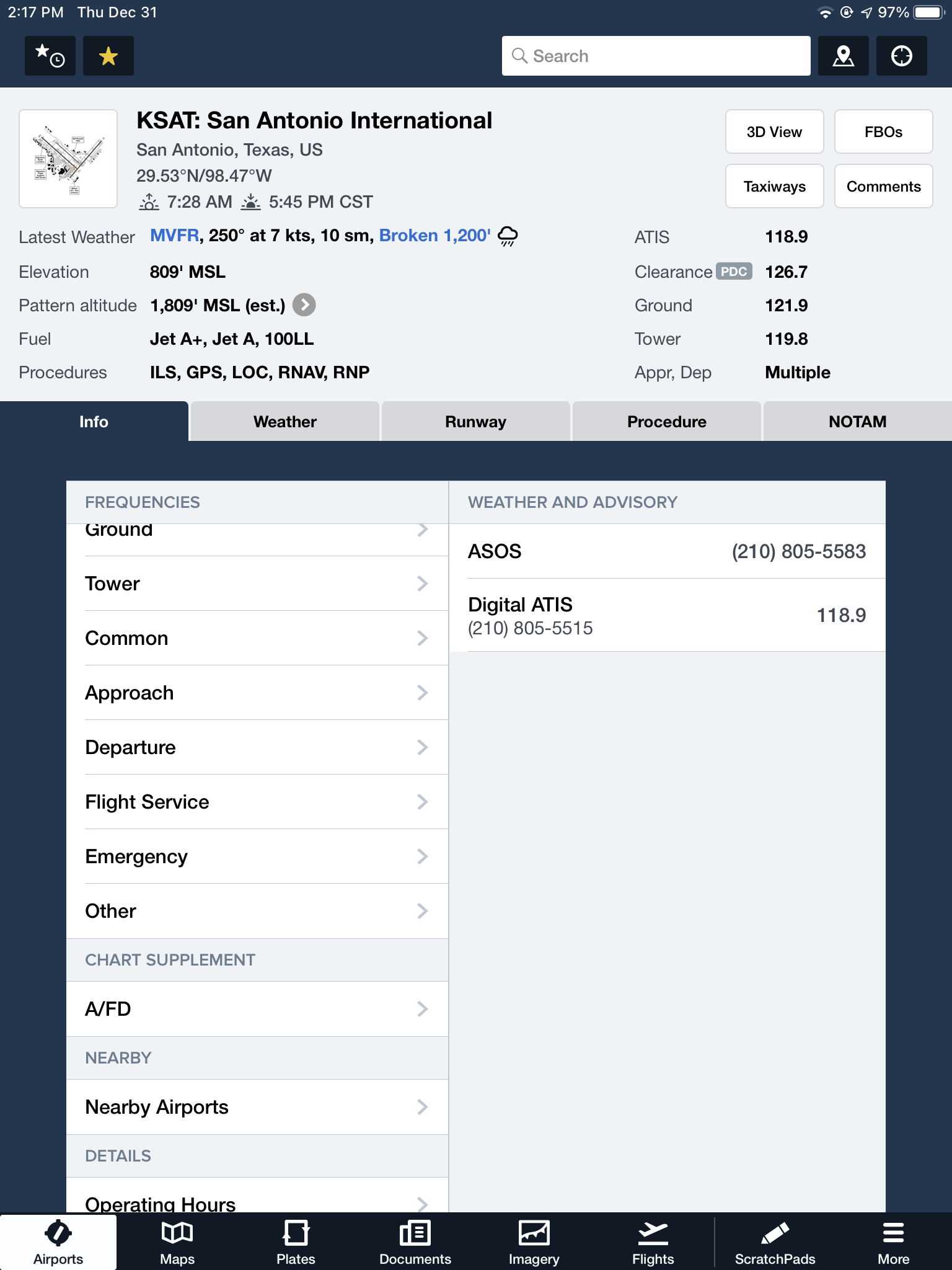
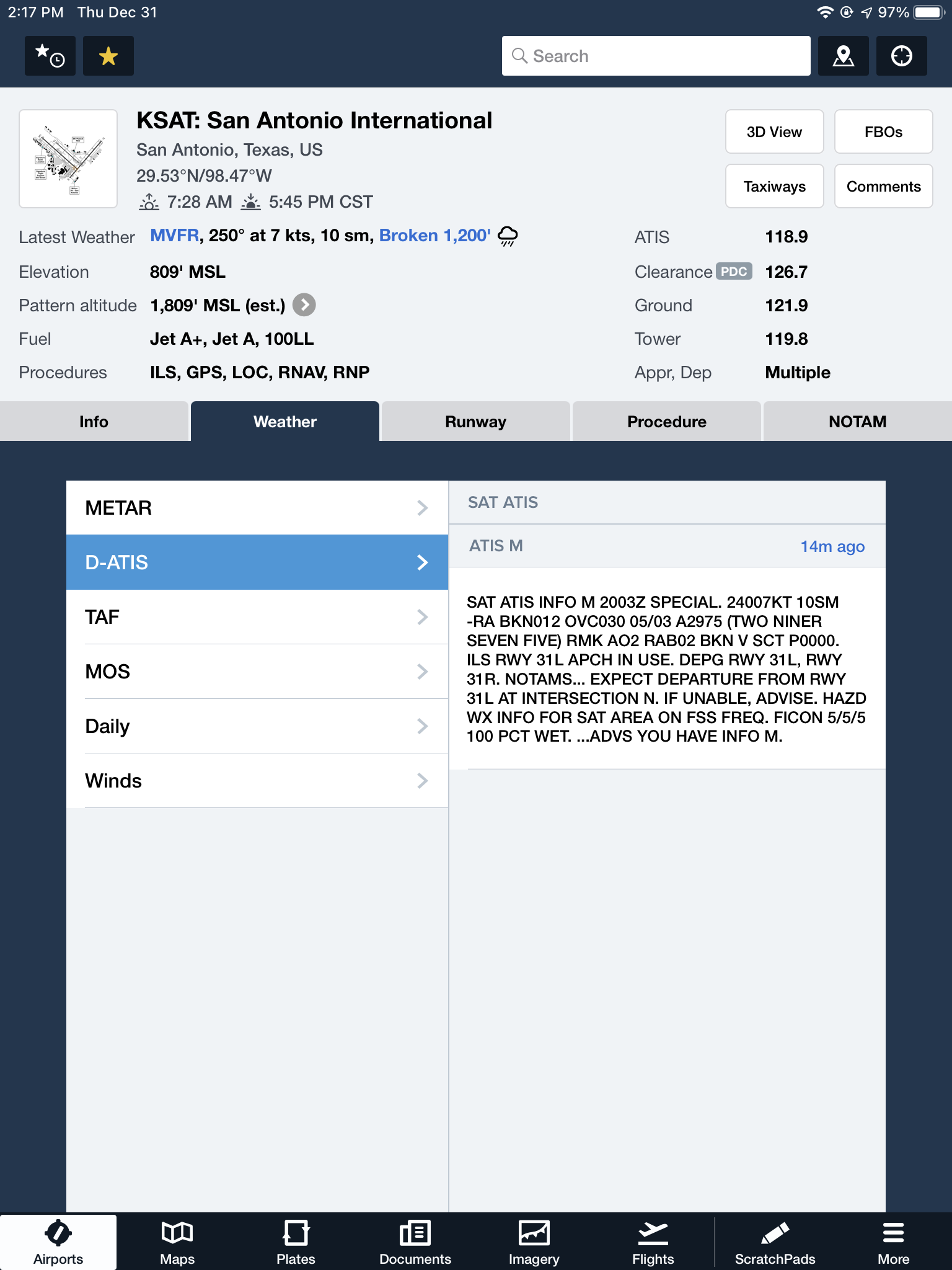
Since the advent of Foreflight, most pilots these days get their weather briefings digitally on the iPad. Foreflight has come a long way since it’s inception. The briefing part of their Flights page is quite comprehensive, with lots of information, and counts as a legal weather briefing (which pilots are still required to get before a flight).
Why does a pilot even need to call Flight Service? Well, when’s the last time you tried to interpret everything the Briefing on Foreflight told you? As I said before, it’s a lot of information and a lot of it can be confusing. Pilots are not fully trained on interpreting Prog Charts and getting an overall weather picture for a flight. A weather briefer is.
I have over 5,000 hours and I still call a weather briefer before almost every flight. On the way to the airport is a great opportunity to get a weather briefing. I get a great picture of what’s going on in my area or over my route, frontal movement, bad weather areas, and whether or not it’s a good idea to even take off. Calling in the car alleviates the main complaint I hear about calling the Flight Service Station, which is it’s inconvenient and causes a delay since you have to call them on the phone.
I don’t do much private pilot training anymore, but when I do, I always teach my students how to get a weather briefing from the Flight Service Station. I’ll show them how to get the briefing on Foreflight too, but usually their eyes bug out of their heads when they start trying to read everything. A breathe of relief is released when I tell them there is a trained professional just a phone call away who can clear everything up.
The other thing that the Flight Service Station provides that is important to a lot of folks are PIREPs. It’s vital in sketchy weather areas for the FSS to get a report of what’s actually going on in the air. This helps other pilots out greatly as they are getting information about icing, cloud bases and tops, turbulence and a myriad of other things from airplanes who are actually in the conditions.
Finally, the most used portion of the Flight Service Station is the Clearance Delivery line (888-766-8267). At airports without a tower or a clearance delivery frequency, with IFR conditions present, the only way to get your IFR clearance is to call Clearance Delivery. Yes, it can take a little time sometimes, but you will get a clearance every time, unlike taking off and trying to dodge the clouds without hitting anything, while trying to call Center on the radio (which isn’t safe or legal).
Been a while since you’ve talked to the Flight Service Station? Give them a call, either on the phone or on the radio. Odds are, they are bored and just wanting someone to talk to, just like you are on that long cross country flight!
Checkout 1800WXBrief.com to see all the cool stuff the Flight Service Station does.