He’s very sneaky, creeping unexpectedly and attacking after the propeller begins to turn.
He’s very cunning, veiling his intentions until, BOOM, he attacks.
Beware of the Lunch Monster!
Whenever I am doing a full day of training (which is usually how transition training courses are planned out, in full day sessions), I always plan a lunch stop. My metabolism has the speed of a rocket ship, so I get hungry and need some sustenance in the middle of the day. I have a running list of airports to stop at that have good lunch spots at them or nearby, so my customers and I usually end up at one of those airports.
Almost without fail, if a customer is having an excellent flying morning, nailing all the procedures, picking up all the techniques, and overall, flying pretty well, then eats lunch, the afternoon doesn’t go quite as well. Doing some of the same things we did that morning, but the customer’s performance isn’t quite as good. Most of the time, it’s just a brain lockup or landings aren’t quite as squeaky as they were in the morning.
Part of it is fatigue after flying for 2-3 hours in the morning. The other part is what I call the Lunch Monster. Eating a big lunch can sap away brain power and cause a person to lose energy around 2-3pm, leading to an afternoon lull (or the Lunch Monster attacking!).
Diet contributes to energy levels too. “Eating a lunch that is too big is the most common reason for feeling sleepy in the afternoon,” says Rebecca Solomon a nutritionist at Mount Sinai Hospital in Manhattan. “All your energy goes into digesting the enormous meal.”
The goal is to keep the body’s Cortical and Cortisone levels even since they’re the hormones released by the body in reaction to stress–they produce the fight or flight response. Their levels are elevated when you have sugar, caffeine and processed food, so you feel awake and energetic. But a few hours later, when those levels drop, you’re sluggish.
Solomon recommends eating a meal that’s balanced with healthy fats (from olive oil or avocados, for instance) with protein and healthy carbohydrates (whole wheat bread or pasta). The portion will vary for people of different sizes, but a general rule is you should be hungry about four hours after the meal.
Another healthy eating habit: Consume small portions of foods throughout the day, including almonds, carrots and hummus and fruit. Enjoy lunch around 1:30 or 2 p.m., just before the time you normally feel fatigued.
Now, most of the stops on my list of restaurants don’t fit the bill of healthy fats and healthy carbohydrates (plenty of protein, though, especially the BBQ joints). For those days, bringing along a snack like almonds or dried fruit is a great idea to munch on mid-afternoon. Trimming down the amount eaten at lunch helps a lot too.
So, the next time you have a long day of flying or training, beware the lunch monster and prep some good snacks when your flight instructor says you’re stopping for BBQ!
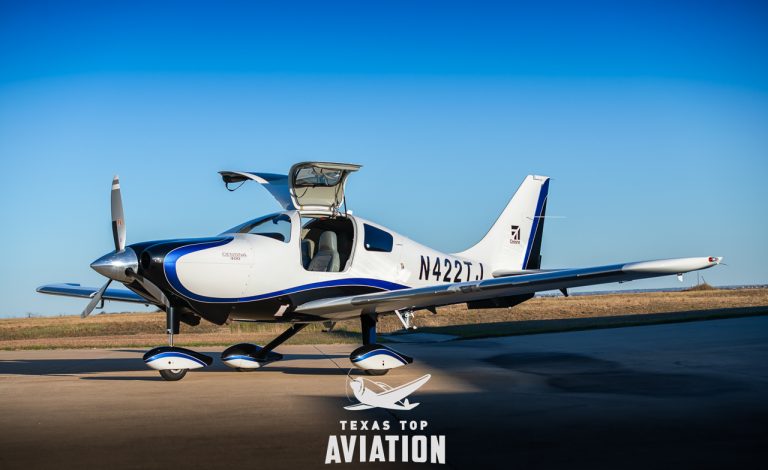
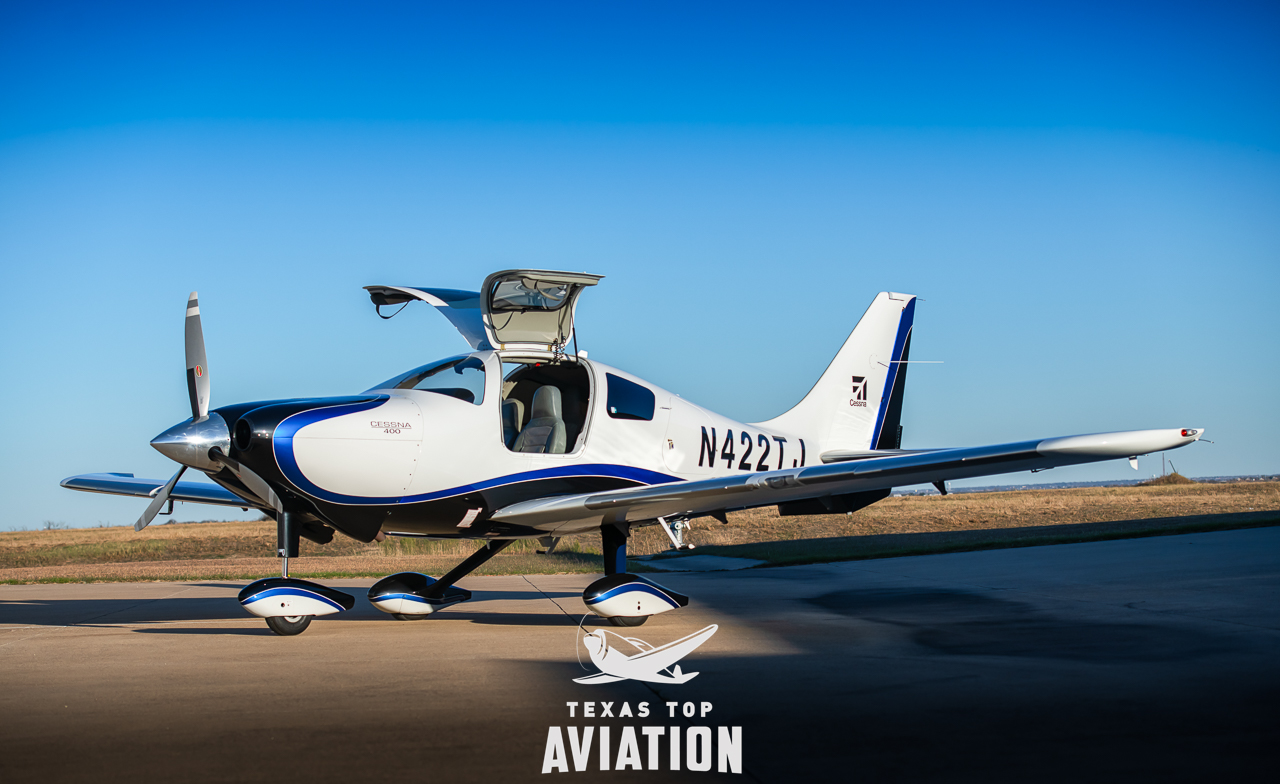
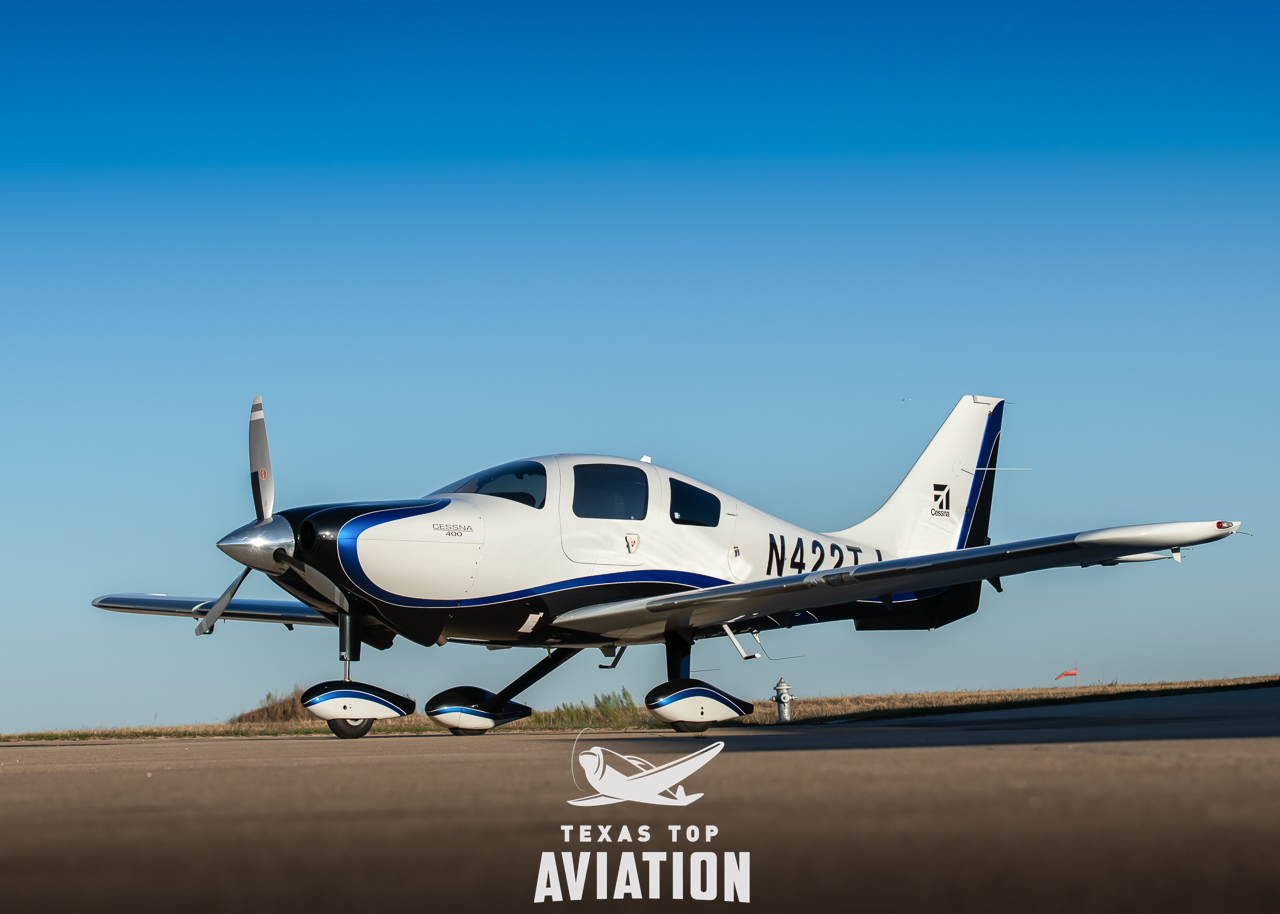
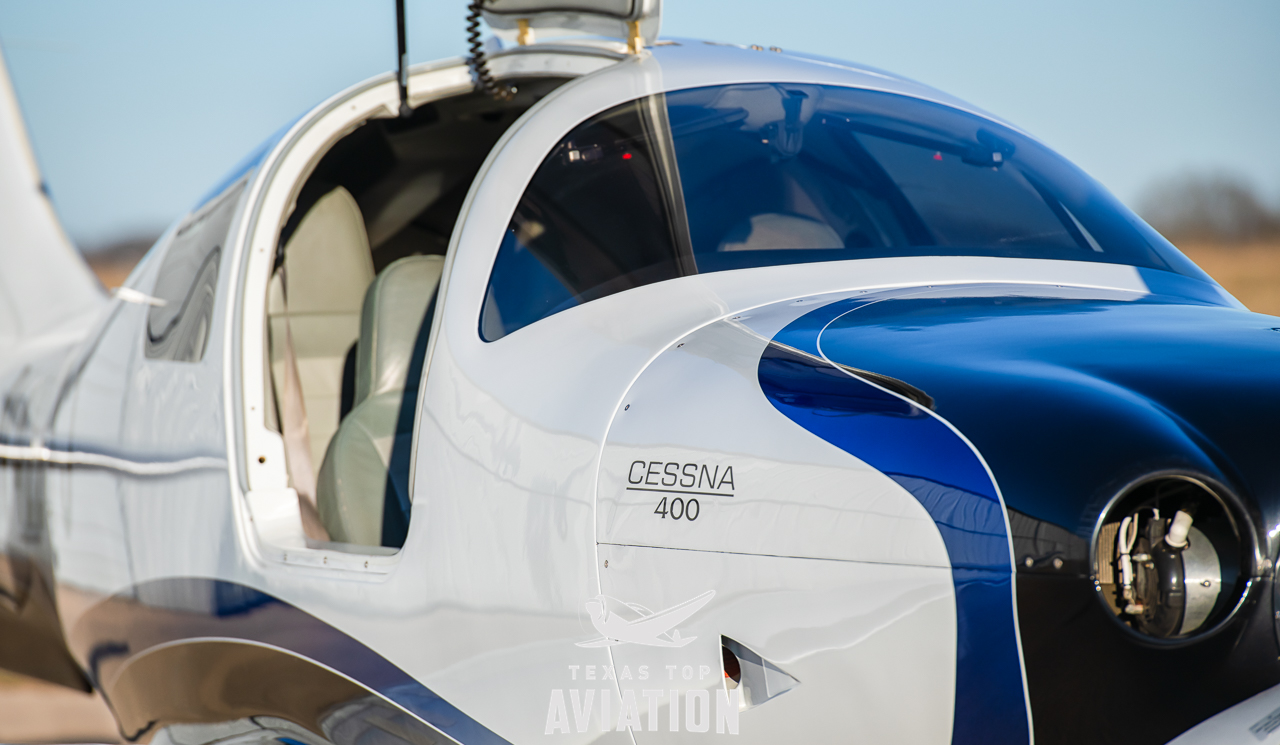
2008 Cessna 400 Corvalis TT (N422TJ) — 235 KTAS and Garmin G1000 glass, priced under a comparable Cirrus.
If you’re weighing a Cessna 400 vs Cirrus, start here. The 2008 Cessna 400 Corvalis TT cruises at 235 knots true — the fastest fixed-gear piston single ever certified. It’s faster than a turbocharged Cirrus on the same fuel and the same class of engine, and it costs less than a comparable SR22T. If you’re shopping a high-performance single for speed and value, N422TJ deserves a hard look.
The Airplane Cirrus Shoppers Overlook
The Cessna 400 is a Lancair design — a clean-sheet, all-composite airframe built to go fast. Cessna certified and refined it, and built N422TJ in 2008. It seats four, carries a real load, and handles weather. Most buyers shopping a high-performance single default to Cirrus, so airplanes like this one get overlooked. That’s where the value is.
Faster on the Same Fuel
The 400’s 235 KTAS is a true max cruise at 25,000 feet on oxygen. A 2011–2012 Cirrus SR22T (Gen 3) trues about 211 KTAS. Both burn 100LL and run turbocharged Continental engines in the same ~310-horsepower class.
That’s about 24 knots up high — roughly 45 minutes off a 1,000-nautical-mile leg — with no bigger engine and no more fuel. And it isn’t only a flight-levels number: at 10,000 feet the 400 still trues about 180 KTAS, roughly 10 knots faster than an SR22T at the same altitude.
Lancair-designed, all-composite, fixed-gear — the airframe that makes 235 knots possible.
The Value Gap
N422TJ is priced at $350,000. A comparable Gen 3 SR22T typically trades between $450,000 and $550,000 used. (A new SR22T is a $1M-plus airplane — not the comparison.) Against the newer turbo Cirrus, that’s roughly $100,000 to $175,000 less for a faster airplane.
N422TJ — no damage history, complete logs since new, Van Bortel-maintained.
Cross-Shopping a Turbonormalized Cirrus SR22
A lot of buyers looking at N422TJ also weigh a Cirrus SR22 with the Tornado Alley turbonormalized engine. It’s a fair comparison — the same ~310-horsepower-class Continental, the same all-composite fixed-gear layout, the same 100LL — so here’s the honest math.
Speed and engine: the turbonormalized SR22 trues around 211 KTAS; the 400 does 235. The 400 also runs a true twin-turbocharged TSIO-550-C, not a turbonormalized system — a true turbo makes boosted power up high, which is a big part of that speed edge.
Avionics and price — 2006–2008: those Cirrus came with the Avidyne Entegra panel. N422TJ’s Garmin G1000 with WAAS and Synthetic Vision is a clear step up — better glass for comparable or less money.
Avionics and price — 2009 and later: Cirrus moved to Garmin Perspective (G1000-class) glass, but the price moved with it. A 2009 SR22 turbonormalized with Perspective typically runs around $400,000 or more — one representative listing is $429,900. N422TJ is $350,000: less money, comparable glass, and 24 knots faster.
The SR22 still brings the CAPS parachute and the Cirrus owner community. But on speed, engine, and price, the Cessna 400 stays ahead.
Metric
Cessna 400 Corvalis TT (N422TJ)
Cirrus SR22T — Gen 3 (2011–2012)
Cirrus SR22 Turbonormalized (2006–2009)
Max cruise (25,000 ft)
235 KTAS
~211 KTAS
~211 KTAS
Cruise at 10,000 ft
~180 KTAS
~170 KTAS
~170 KTAS
Engine
Twin-turbocharged Continental TSIO-550-C (true turbo, ~310 hp class)
Turbocharged Continental (~310 hp class)
Turbonormalized Continental IO-550-N (~310 hp class)
Cessna 400 Corvalis TT vs. Cirrus SR22T (Gen 3) and the turbonormalized SR22. Speeds and prices are typical estimates; verify against the aircraft records and current market.
The fastest fixed-gear piston single ever certified — and it out-runs a turbo Cirrus on the same fuel.
The Avionics You Can’t Buy Anymore
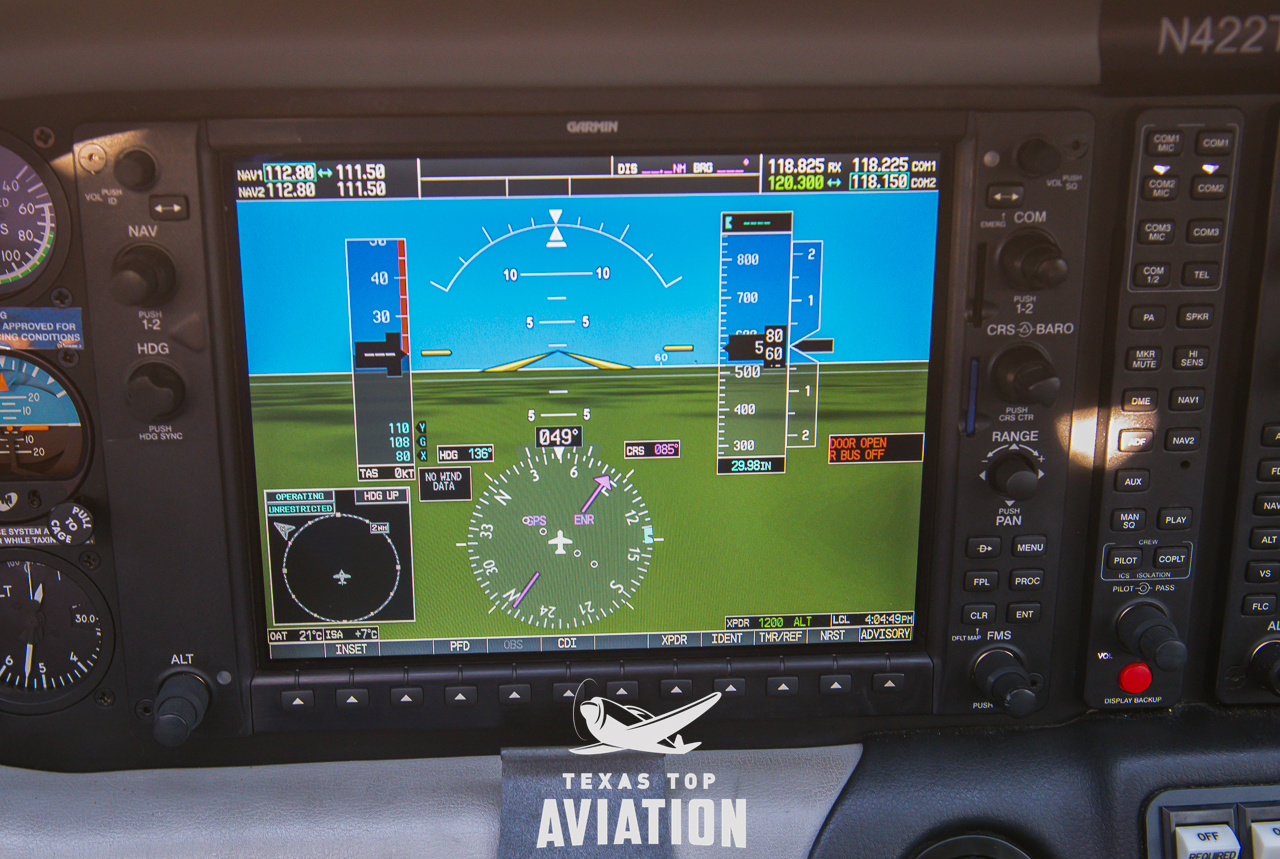
Garmin G1000 with WAAS and Synthetic Vision (SVT) and the GFC-700 autopilot.
N422TJ has a Garmin G1000 with WAAS and Synthetic Vision (SVT) and the GFC-700 autopilot. WAAS gives you LPV approaches — near-ILS precision at runways nationwide.
This matters because the WAAS upgrade path for the G1000 in these airframes is closed. A Cessna 400 that left the factory without WAAS can’t be upgraded — it will never fly an LPV approach. So a WAAS-plus-SVT 400 like this one is a scarce find. You either buy one that has it, or you don’t get it.
Both G1000 displays with synthetic vision — a modern, integrated flight deck.
Built to Actually Go
This airplane is equipped to be flown hard and often:
Thermawing electric de-ice with a backup alternator — a de-ice system (not certified known-ice)
Factory air conditioning
Speed brakes
Hot prop, built-in oxygen, and ADS-B Out
A comfortable four-seat cabin built for real trips.
The engine is a twin-turbocharged Continental TSIO-550-C with about 1,503 hours total time — the original engine, 1,503 since new. No damage history, complete logs since new, maintained by Van Bortel.
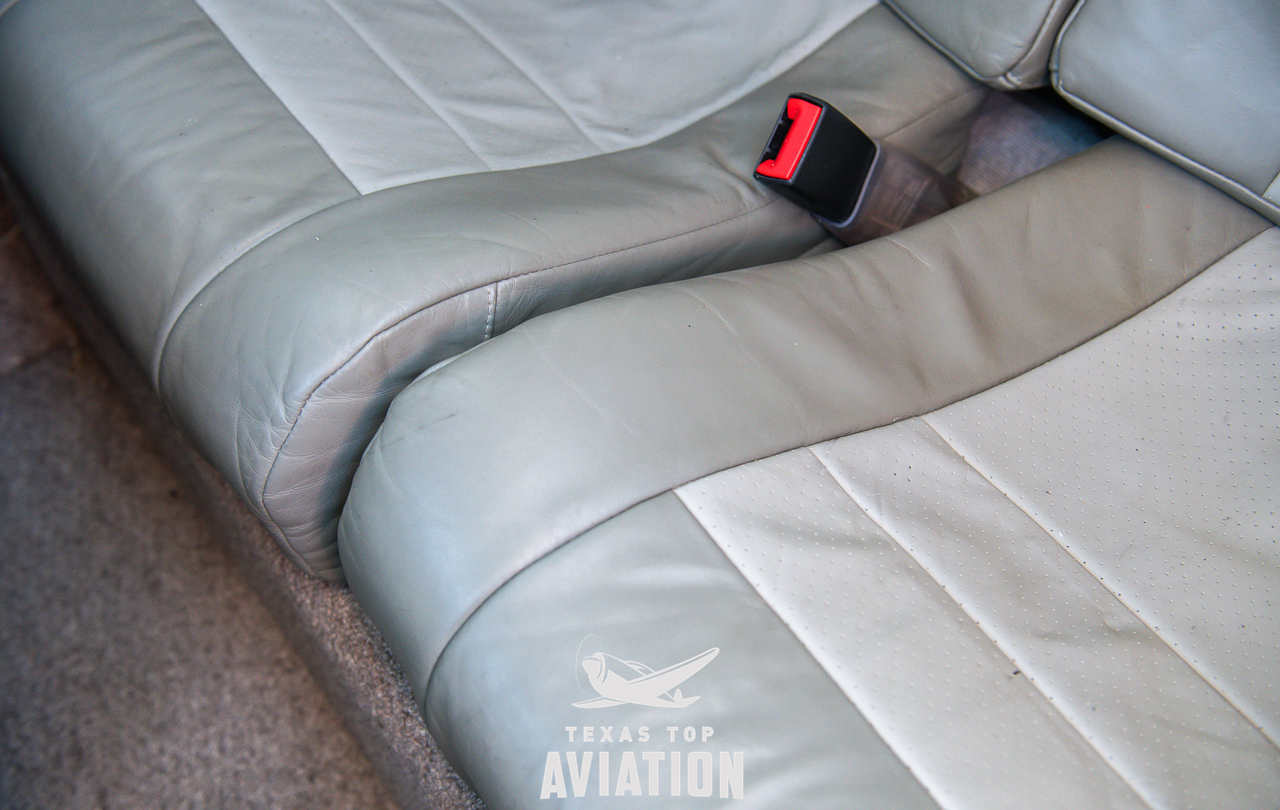
Leather interior, comfortable for four.
An Honest Word: What the Cirrus Does Better
One thing every Cirrus has that the 400 doesn’t: the CAPS whole-airframe parachute. Pull the handle and the airplane comes down under canopy. For a lot of buyers that’s the deciding factor, and it’s a fair reason to choose a Cirrus. Cirrus also has a large owner community and a strong support network.
Useful load is comparable across all three airplanes — the 400 is often equal or a little better. If the parachute and the community are your priorities, a Cirrus may be the right airplane, and we can help you find one. If your priorities are speed, avionics, and value, the 400 is hard to beat at this price.
Cessna 400 vs Cirrus: Quick Answers for Shoppers
Is the Cessna 400 faster than a Cirrus SR22T?
Yes. The Cessna 400 Corvalis TT trues up to 235 KTAS at 25,000 feet versus about 211 KTAS for a Gen 3 Cirrus SR22T — about 24 knots faster on the same 100LL and the same ~310-horsepower class of turbocharged Continental engine, or roughly 45 minutes saved on a 1,000-nautical-mile leg. At 10,000 feet the 400 still trues about 180 KTAS, roughly 10 knots faster than an SR22T at that altitude.
How does the Cessna 400 compare to a turbonormalized Cirrus SR22?
The Cessna 400 trues 235 KTAS versus about 211 KTAS for a turbonormalized SR22, and it uses a true twin-turbocharged Continental TSIO-550-C rather than a turbonormalized system. A 2006-2008 SR22 turbo has the older Avidyne Entegra panel, while the 400 has a Garmin G1000 with WAAS and Synthetic Vision. A 2009-and-later SR22 turbo with Garmin Perspective glass typically costs around $400,000 or more, versus $350,000 for N422TJ. The SR22 still offers its CAPS whole-airframe parachute.
Does the 2006-2008 Cirrus SR22 have a Garmin G1000?
No. Cirrus SR22s from 2006-2008 typically came with the Avidyne Entegra glass panel; Garmin-based Perspective glass arrived in 2009. The 2008 Cessna 400 came with the Garmin G1000, and N422TJ has the WAAS and Synthetic Vision version.
How much less is a Cessna 400 than a comparable Cirrus SR22T?
N422TJ is priced at $350,000, while a comparable 2011-2012 Cirrus SR22T (Gen 3) typically sells for about $450,000 to $550,000 used — roughly $100,000 to $175,000 less for a faster airplane.
What is the fastest fixed-gear single-engine airplane?
The Cessna 400 Corvalis TT, at 235 KTAS maximum cruise, is the fastest fixed-gear piston single-engine airplane ever certified.
Does the Cessna 400 have a parachute like the Cirrus?
No. A whole-airframe CAPS parachute is the one meaningful capability the Cirrus offers that the Cessna 400 does not. On speed, avionics, and useful load, the 400 matches or beats a comparable SR22 or SR22T.
Can the Cessna 400’s Garmin G1000 be upgraded to WAAS?
No. The WAAS upgrade path for the G1000 in these airframes is closed, so a non-WAAS Cessna 400 can never gain LPV approach capability. N422TJ already has WAAS plus Synthetic Vision, which makes it a scarce find.
Does the Cessna 400 carry less than a Cirrus SR22?
No. Useful load is comparable — the Cessna 400 is often equal to or a little better than a comparable SR22 or SR22T.
Call to see N422TJ or to talk through the Cessna 400 vs Cirrus decision: (512) 270-1298 · txtopaviation.com. Austin & San Antonio, TX.
The 2008 Cessna 400 Corvalis TT (N422TJ) trues 235 KTAS at FL250 — faster than a Cirrus SR22T — for roughly $100–175K less. An honest speed-and-value comparison.
Your about to make your dream aircraft purchase. The plane has low time on the engine, is reasonably priced, and, according to the seller, has no damage history. You are overjoyed! Your dream of making an aircraft purchase is finally coming true. You prepare your offer for the seller, set up the escrow account, and start all the paperwork.
Two weeks later, the airplane is yours! You start flying it, though, and the engine starts to have some strange vibrations. After several flights, it starts to get worse. You take it to your mechanic to get it looked at and you find out the airplane needs three new cylinders along with some other engine work that is going to total a lot of money. Plus, your airplane is now going to be in the shop for several weeks.
All that excitement you just had? It just went out the window.
Could this have been prevented? Probably so, with a logbook inspection and a pre-purchase inspection.
Aircraft Purchase: Logbook Inspection
Inspecting a logbook can be very daunting when making an aircraft purchase, especially for older airplanes. This is, however, one of the most vital steps in making a new aircraft purchase. You can find out many things from looking at the maintenance logs of an airplane. First, you can check the compression levels of the engine. Typically, you want compression levels in the 70’s, with it still being okay in the high 60’s. Anything below 65 and there could be potential problems.
Second, you can find out if there has been any odd maintenance done pointing to possible unreported damage history. This is rare, as most aircraft owners are honest and up front when talking about damage history. But, if there is an entry detailing a prop overhaul after only 50 hours on that prop, you may start to ask some questions.
Third, you can find out how well the airplane has been maintained. If a lot of maintenance was completed at each annual, even if it was a lot of small things, then the airplane has been maintained by a good mechanic who is very thorough. This also involves a check of the ADs, Mandatory SBs, SBs, and SLs that have been issued for the airplane. If all that has been kept up with, it’s a well maintained airplane.
Finally, it gives you a good idea of how much the airplane has been flown. Sure, the ad online will have the total time and time since overhaul, but you can look at the year by year breakdown of how much the airplane has been flown. It may have been flown a lot earlier in it’s life, but not quite as much recently. That’s not necessarily a bad thing, but airplanes like to be flown.
Aircraft Purchase: Pre-Purchase Inspection
Before making an aircraft purchase, it is extremely vital that whenever you are buying an airplane that you get a pre-purchase inspection done on the airplane. Even better is getting one done by a mechanic who specializes in that type of airplane (eg. Piper Service Center for Pipers, Cirrus Service Centers for Cirrus, Kevin Mead for PA-46s). A pre-purchase inspection can save you a lot of money in the end.
There is always going to be some kind of maintenance issue with an airplane being purchased, whether it is big or small. Once a pre-purchase inspection is completed, you can take the findings to the seller and negotiate for a lower price based on those findings, or just have the seller fix the items before the sale is completed.
I would recommend having the seller fix the problems before the sale is completed. Even though it may take a little longer for the sale to be completed this way, you’ll get to enjoy your airplane right away instead of it being in the shop the next several weeks after you complete the purchase.
There is the circumstance where the pre-purchase inspection reveals some serious airworthiness issues which would cause the deal to be voided. Always put this clause in a purchase agreement, giving you, the buyer, an out if there are serious airworthiness issues.
When it comes to making an aircraft purchase, it is not a process to be rushed. Slow and steady usually gets the best airplane for the money, giving you years of enjoyment in the future.
Looking to make an aircraft purchase? Daunted by all the work that’s involved to find a good, quality airplane? Let Texas Top Aviation do your aircraft search for you! To learn more, visit Texas Top Aviation’s Aircraft Purchase Consultations page.
Your about to make your dream aircraft purchase. The plane has low time on the engine, is reasonably priced, and, according to the seller, has no damage history. You are overjoyed! Your dream of making an aircraft purchase is finally coming true. You prepare your offer for the seller, set up the escrow account, and…
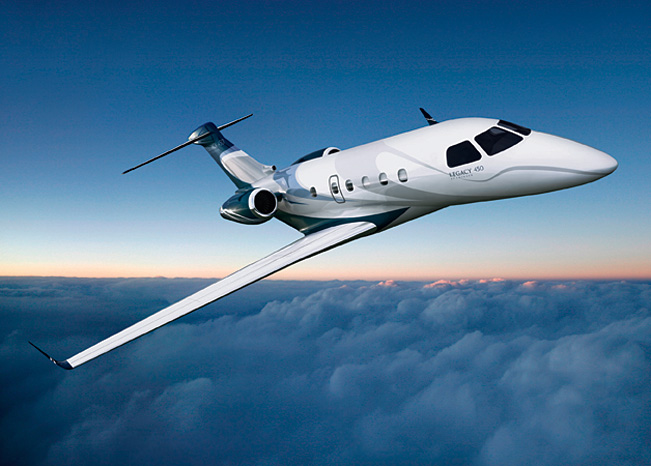
Brazilian manufacturer Embraer recently received FAA certification for it’s “mid-light” Legacy 450. Capable of Mach .83 and a 2,500 mile range, this is one sweet airplane. Embraer designers gave passengers headroom as the cabin stretches up to 6 feet in height down the center. Complete with fly by wire controls and a full glass cockpit configuration, Embraer did a wonderful job with this airplane. The club seats even fold down to a bed!
The airplane’s list price is $16.5 million. To learn more about the Legacy 450, visit Embraer’s website.
Brazilian manufacturer Embraer recently received FAA certification for it’s “mid-light” Legacy 450. Capable of Mach .83 and a 2,500 mile range, this is one sweet airplane. Embraer designers gave passengers headroom as the cabin stretches up to 6 feet in height down the center. Complete with fly by wire controls and a full glass cockpit…
If you have been searching “Cirrus SR22T for sale” or reading up on the Cirrus Vision Jet, you are looking at genuinely excellent airplanes. Both have earned their reputations. This is not an article about why you should not buy one. It is about a third airplane that almost never shows up in a Cirrus search — and what the numbers look like when you set it next to the two you are already considering.
190 ktDA62 Cruise
762 lbFull-Fuel Payload
648 nmRange, 4 Adults + Bags
1 WeekTraining, No Travel
What the Cirrus SR22T Gets Right
Let us start where we should. The SR22T is one of the most successful piston singles ever built, and for good reason. Turbo-normalized power that holds performance up high. A Perspective+ flight deck that is about as good as glass gets in a single. Side-yoke handling most pilots fall for inside ten minutes. And CAPS — the whole-airframe parachute that changed how our whole industry talks about safety.
Add strong resale, a deep service network, and one of the best owner communities in aviation, and you have an airplane that is very hard to argue with. If you fly two people and light bags on 300 to 500 nautical mile legs, we would tell you to go buy one — and we would help you find the right one. We also teach Cirrus SR20, SR22 and SR22T training here in Texas, so this is not an outsider’s opinion of the airplane.
The conversation changes when the mission grows.
Cirrus SR22T vs. Diamond DA62: The Numbers Side by Side
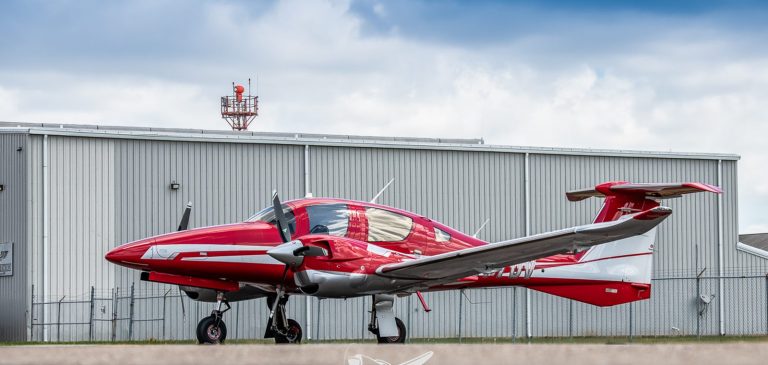
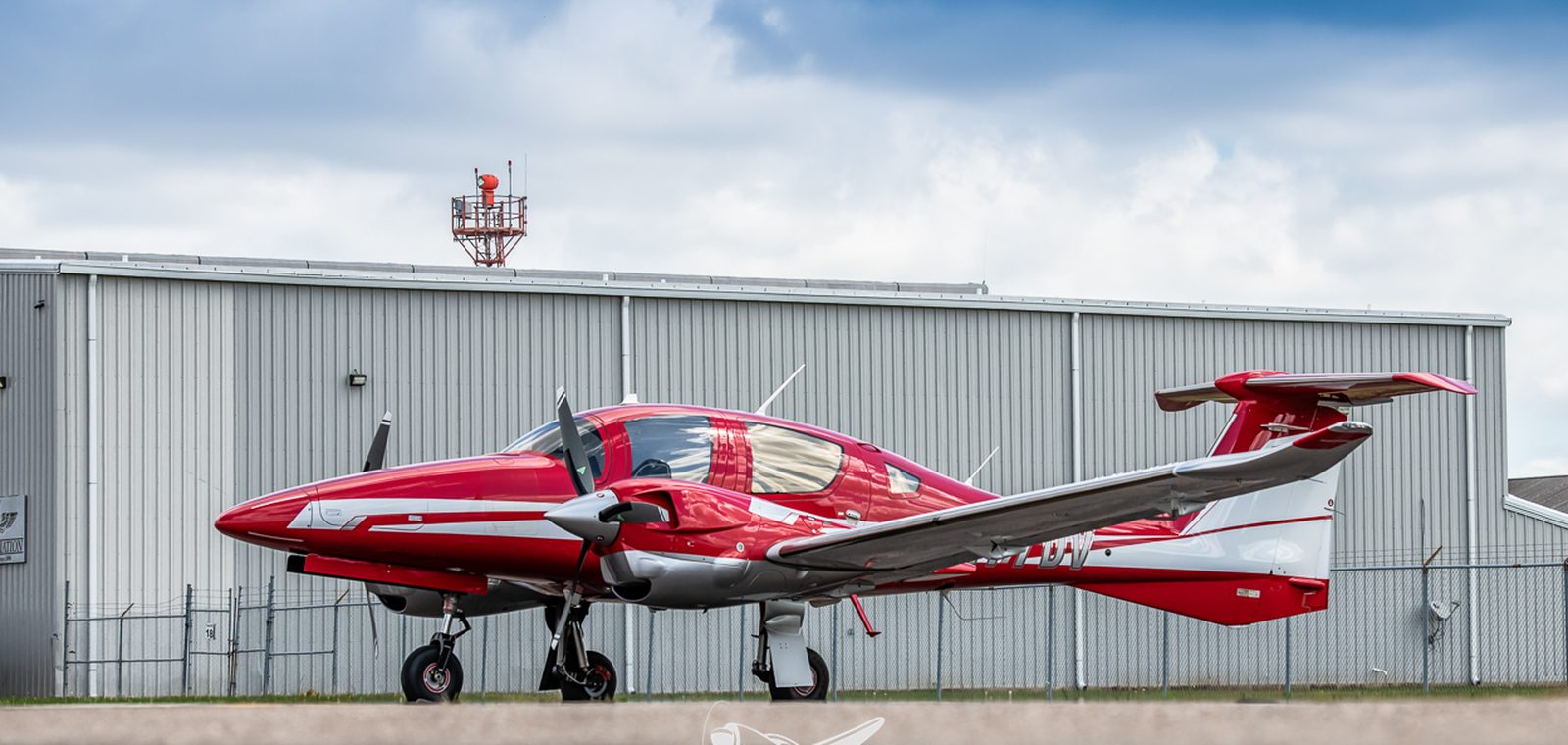
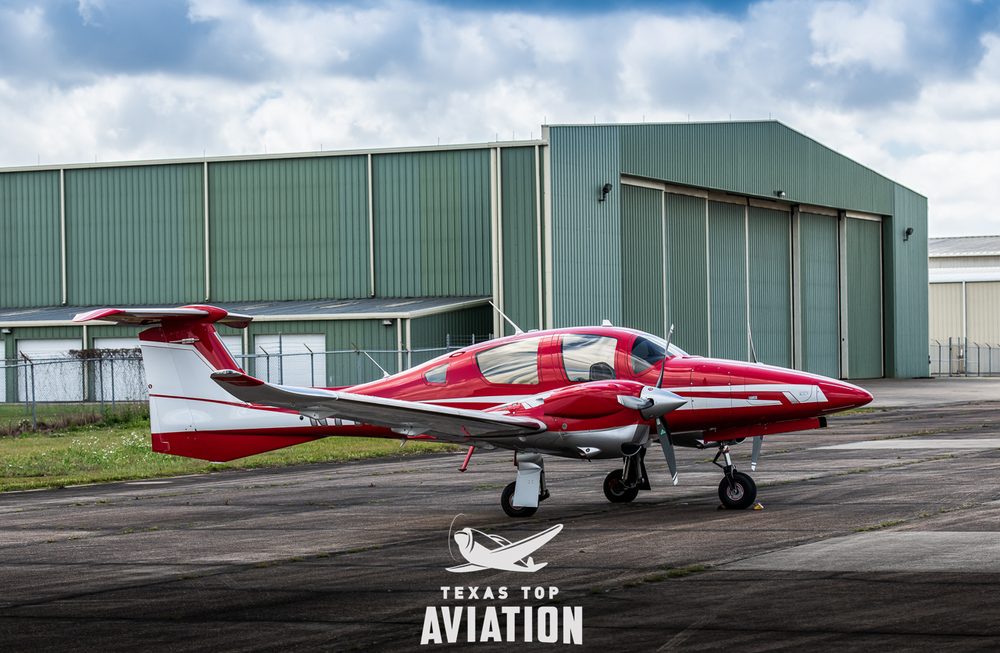
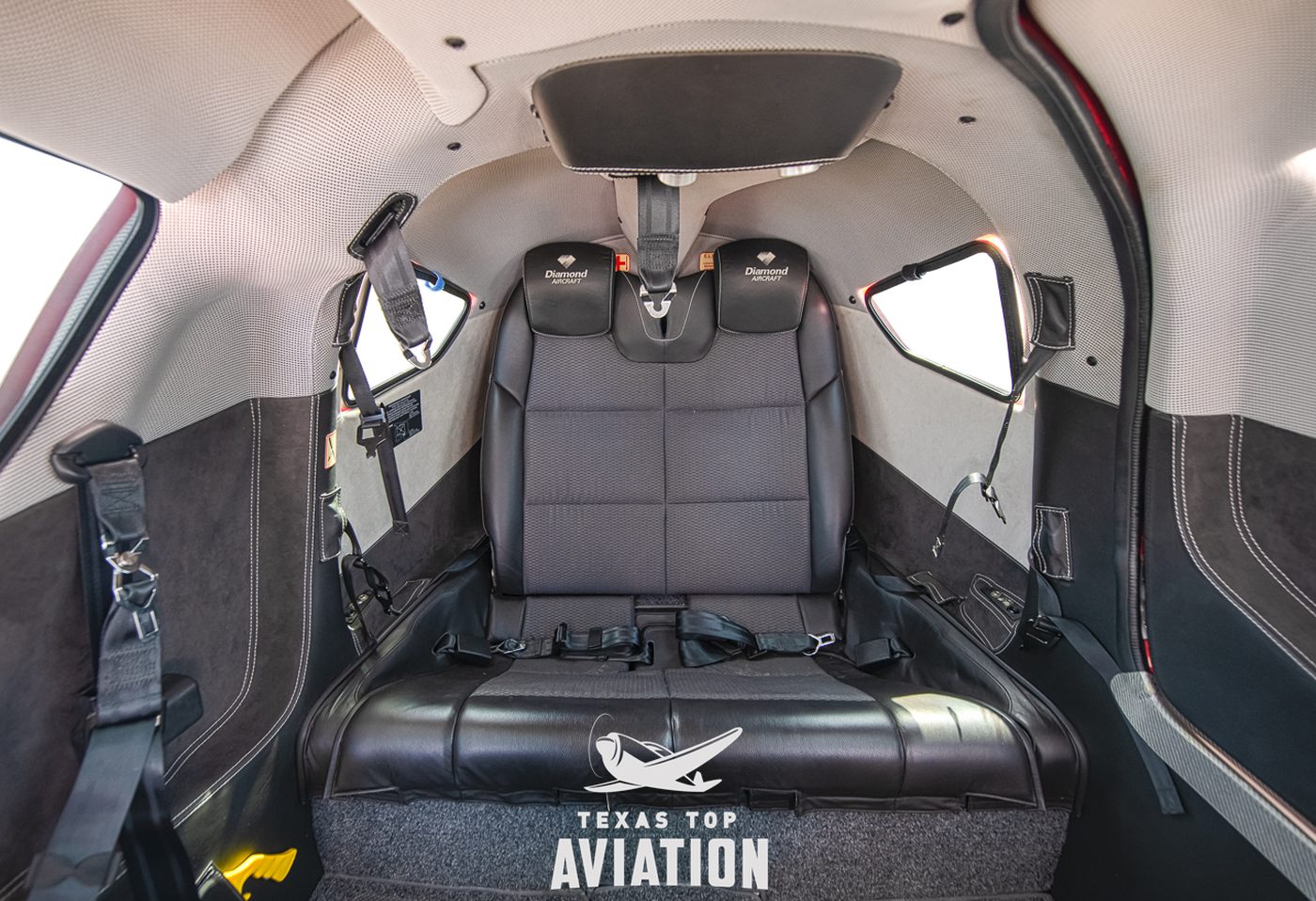
The Diamond DA62 is a seven-seat, twin-engine, Jet-A-burning composite airplane that most Cirrus shoppers have never sat in — usually because it simply never came up in the search. Here is how the two line up on the numbers that matter.
Specification
Cirrus SR22T
Diamond DA62
Cruise speed
184 KTAS @ 85% power / 10,000 ft
190 KTAS @ 90% power / 10,000 ft
Fuel burn
18.3 GPH @ 85% (16.4 GPH @ 75%)
19 GPH total (9.5 GPH per engine)
Fuel type
100LL AvGas
Jet-A (~$1.75/gal cheaper)
Seats / rows
5 seats, 2 rows
7 seats, 3 rows
Useful load
~1,125 lb (3,600 lb MTOW)
1,341 lb (5,071 lb MTOW)
Full-fuel payload
~575 lb
762 lb
Range, 4 adults + 75 lb bags (835 lb)
~320–350 nm
~648 nm (45-min reserve)
Takeoff over 50-ft obstacle
2,080 ft
1,575 ft
Landing over 50-ft obstacle
2,535 ft
1,447 ft
Single-engine service ceiling
—
11,000 ft
Engine-out redundancy
CAPS parachute
Second engine
Recurring safety-system cost
~$20,000 CAPS repack / 10 yr
None
Rating required
High-performance endorsement
Multi-engine (~1 week, at home)
Cirrus SR22T figures are taken from the Cirrus SR22T G6 Pilot’s Operating Handbook (P/N 13772-007, Reissue A): cruise at ISA and 3,400 lb, takeoff and landing over a 50-ft obstacle at sea level, ISA and 3,600 lb max gross.
Read that speed line carefully, because it is closer than the marketing on either side suggests. At 10,000 feet the DA62 has about six knots on the SR22T — real, but hardly decisive. Climb higher and the advantage flips outright: the SR22T is turbo-normalized, so at 18,000 feet the POH shows 198 KTAS on the same 18.3 gallons an hour, comfortably faster than the DA62. If raw speed is what you are buying, the Cirrus has a genuine answer.
Where the DA62 separates itself is everything around the speed. It burns Jet-A, which runs roughly $1.75 a gallon under 100LL at most FBOs and is available at airports where AvGas gets harder to find every year. And the full-fuel payload gap is 187 pounds. Payload is where light-airplane trip plans quietly fall apart.
Four Adults, Bags, and the Range That Actually Matters
Spec sheets get written for two people. Real trips are not flown that way.
Load four adults and 75 pounds of luggage — call it 835 pounds — and the SR22T has to leave fuel on the ramp. On a typical G6 empty weight that leaves room for roughly 48 of its 92 usable gallons, and realistic range lands around 320 to 350 nautical miles with IFR reserves. Put that same 835 pounds into a DA62 and you are looking at roughly 648 nautical miles with a 45-minute reserve.
To be fair to the airplane: with full fuel and two people aboard, the SR22T is genuinely long-legged. The POH shows 763 nm at 10,000 feet and 791 nm at 18,000 feet on a 45-minute reserve. The range only collapses when you fill the seats — which is precisely the mission this comparison is about.
That is not a rounding error. That is one fuel stop versus none on a Texas-to-Colorado weekend. And the DA62 does it across three rows, with two seats still open behind you.
About the Cirrus Vision Jet G1
If your search has moved from the SR22T up to the Vision Jet, that airplane deserves real credit too. Cirrus did something nobody else managed: a single-pilot personal jet, with CAPS, delivered in volume, flown successfully by owner-operators. That is a genuine achievement in this industry, and we teach Cirrus Vision Jet training ourselves.
The G1 specifically, though, asks for a level of commitment that surprises a lot of first-time jet buyers.
Cirrus Vision Jet G1: What Ownership Actually Asks Of You
Acquisition: approximately $1.8 million.
Fuel burn: 60–70 GPH of Jet-A.
Full-fuel payload: only 300–400 lb — roughly two adults and a soft bag.
Range: about 800 nm on paper, but heavily payload-limited in practice.
Type rating: a full FAA type rating is required — roughly two weeks of initial training in Knoxville, Tennessee.
Insurance dual: 25+ hours of additional dual instruction beyond the type rating.
Recurrent: annual simulator recurrent training back in Knoxville, at $15,000–$25,000 per year, every year.
Runway: 3,192 ft takeoff / 3,011 ft landing over a 50-ft obstacle.
Climb: drops to 1,100–1,200 fpm at heavier weights, and loses thrust at high density altitude airports — exactly where you want margin.
Worth saying plainly: the G2 and G2+ are meaningfully more capable airplanes — better payload, better hot-and-high performance, updated flight deck. That is a different and more interesting conversation, and one we are glad to have. Everything above is specific to the G1, because the G1 is the airplane most often cross-shopped at DA62 money.
Compare that training path to the DA62. A multi-engine rating is all that is required — roughly one week, typically at your home airport, with no hotel and no travel. There is no annual sim requirement in another state, and no recurring five-figure training line item on the budget.
Runway Numbers Open Up the Map
Performance over a 50-foot obstacle is where your airport list gets long or short. The DA62 clears it in about 1,575 feet on takeoff and 1,447 feet on landing. The SR22T needs 2,080 and 2,535 feet. The Vision Jet G1 needs 3,192 and 3,011 feet.
That is roughly 500 feet less than the SR22T on departure and nearly 1,100 feet less on arrival — and against the G1 the gap is wider still. Practically, that difference is what gets you into the shorter ranch, lake and mountain-adjacent strips that a lot of the best flying runs on. That is not a spec. That is a different set of weekends.
The Parachute and the Second Engine
CAPS is a real safety system and we will not say otherwise. It has saved lives, and it deserves the respect it gets. It also carries a cost most buyers do not budget for: the rocket and canopy repack runs about $20,000 every ten years, and it is not optional.
The DA62 answers the same question a different way. Lose an engine and you still have one making power, turning counter-rotating props, managed by a FADEC that keeps it to a single lever per side. One number to know either way: the DA62 single-engine service ceiling is 11,000 feet, so on one engine it will hold altitude over most terrain but not over the high country. Neither answer is wrong — they are two philosophies about the same risk. The DA62 version just does not come with a recurring five-figure bill.
Frequently Asked Questions
Is the Diamond DA62 faster than a Cirrus SR22T?
Only down low, and only slightly. At 10,000 feet the Diamond DA62 cruises at 190 KTAS at 90% power on 19 GPH of Jet-A total, while the Cirrus SR22T G6 POH shows 184 KTAS at 85% power on 18.3 GPH of 100LL. Higher up the SR22T is the faster airplane — its turbo-normalized engine holds 198 KTAS at 18,000 feet on the same fuel flow. The DA62 advantage is fuel cost, payload and runway, not raw speed.
How much can a Diamond DA62 carry compared to a Cirrus SR22T?
The DA62 carries a 762 lb full-fuel payload across seven seats in three rows. The Cirrus SR22T has a useful load of about 1,125 lb and a full-fuel payload of roughly 575 lb. Loaded with four adults and 75 lb of bags — 835 lb total — the DA62 flies about 648 nm with a 45-minute reserve, while the SR22T is closer to 350 nm.
What training does a Cirrus Vision Jet G1 require compared to a Diamond DA62?
The Vision Jet G1 requires a full FAA type rating: about two weeks of initial training in Knoxville, Tennessee, plus 25+ hours of additional dual for insurance, plus annual simulator recurrent back in Knoxville that runs $15,000–$25,000 per year on an ongoing basis. The Diamond DA62 requires only a multi-engine rating — about one week, usually at your home airport, with no travel.
Can a Diamond DA62 use shorter runways than a Cirrus SR22T or Vision Jet?
Yes. Over a 50-foot obstacle the DA62 takes off in about 1,575 ft and lands in about 1,447 ft. The Cirrus SR22T needs about 2,080 ft and 2,535 ft, and the Cirrus Vision Jet G1 needs about 3,192 ft and 3,011 ft. The Vision Jet G1 also sees climb rate fall to 1,100–1,200 fpm at heavier weights and loses thrust at higher density altitude airports.
Does the Diamond DA62 have a whole-airframe parachute like Cirrus CAPS?
No. The DA62 redundancy is a second engine rather than a parachute. One practical difference in ownership cost: the Cirrus CAPS repack runs about $20,000 every ten years and is mandatory, while the DA62 has no equivalent recurring safety-system expense.
Shopping a Cirrus SR22T or Cirrus Vision Jet? A numbers-first look at how both compare to the Diamond DA62 on speed, payload, range, runway performance and the real cost of training.
As was the case with the Class B Airspace around Houston several months ago, the Class B Dallas airspace has been overhauled as well. These changes were implemented at the last database update on September 18th. If you’ll be flying into any of the Dallas airspace airports IFR, make sure you have current charts and your GPS databases are updated.
According to AOPA, 14 SIDs and STARs were deleted, a number of new procedures were added, and changes were made to most of the other remaining procedures. The new procedures in the Dallas airspace consist mainly of RNAV procedures for turboprops and jets, so most GA aircraft won’t be affected by those. The legacy procedures that remained in place over went changes, including new frequencies, so piston aircraft going into the Dallas airspace are still affected.
From AOPA, departures from Dallas Love (KDAL) that file their flight plan with special equipment /G in their flight plan will automatically be given an RNAV departure procedure. This does not appear to affect piston aircraft as all the new RNAV SIDs in the Dallas airspace are for turboprops or turbojets.
The reason for the changes to the Dallas airspace? Similar to the changes in Houston, these airspace changes are meant to streamline departures and arrivals in the Dallas airspace area, reduce controller workload, and give continuous descent angles for arriving high altitude traffic.
Don’t be surprised the next time you are in the Dallas airspace area if you receive a clearance that states: “Descend via the arrival.” In that case, just check the chart and aim for the appropriate altitudes at the appropriate fixes. As we move closer to the ADS-B requirement, I believe we will see more and more of these terminal procedure overhauls, so be prepared and keep those charts and databases up to date.
As was the case with the Class B Airspace around Houston several months ago, the Class B Dallas airspace has been overhauled as well. These changes were implemented at the last database update on September 18th. If you’ll be flying into any of the Dallas airspace airports IFR, make sure you have current charts and your…
The Garmin GTN 750 is an awesome piece of equipment. Garmin tried to make the user interface with the touch screen as simple as possible (though there still is a bit of a learning curve when moving up from a Garmin 530W). Garmin also integrated several key features that the 530W did not have that makes flying with a Garmin GTN 750 in IFR all that much better.
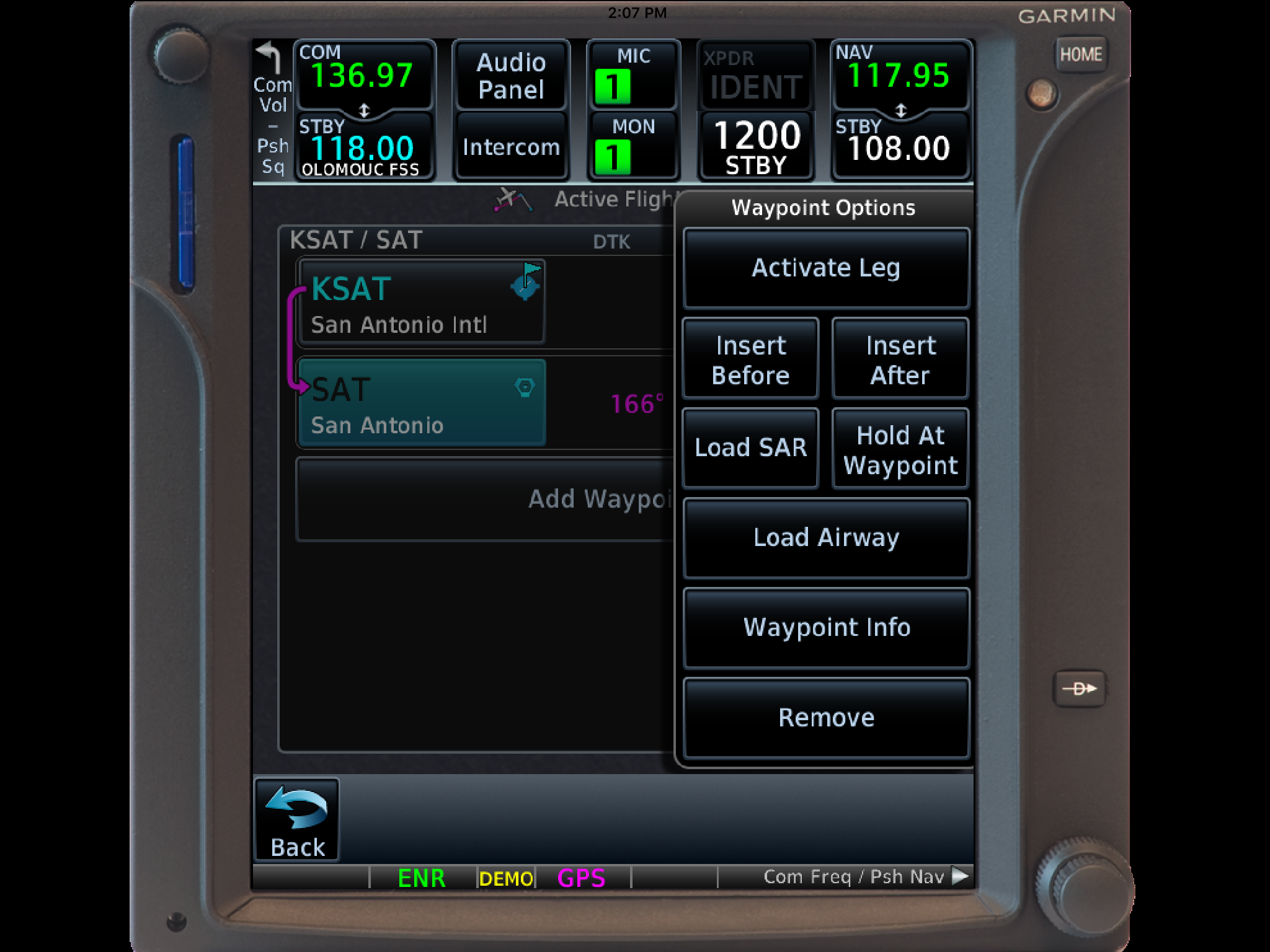
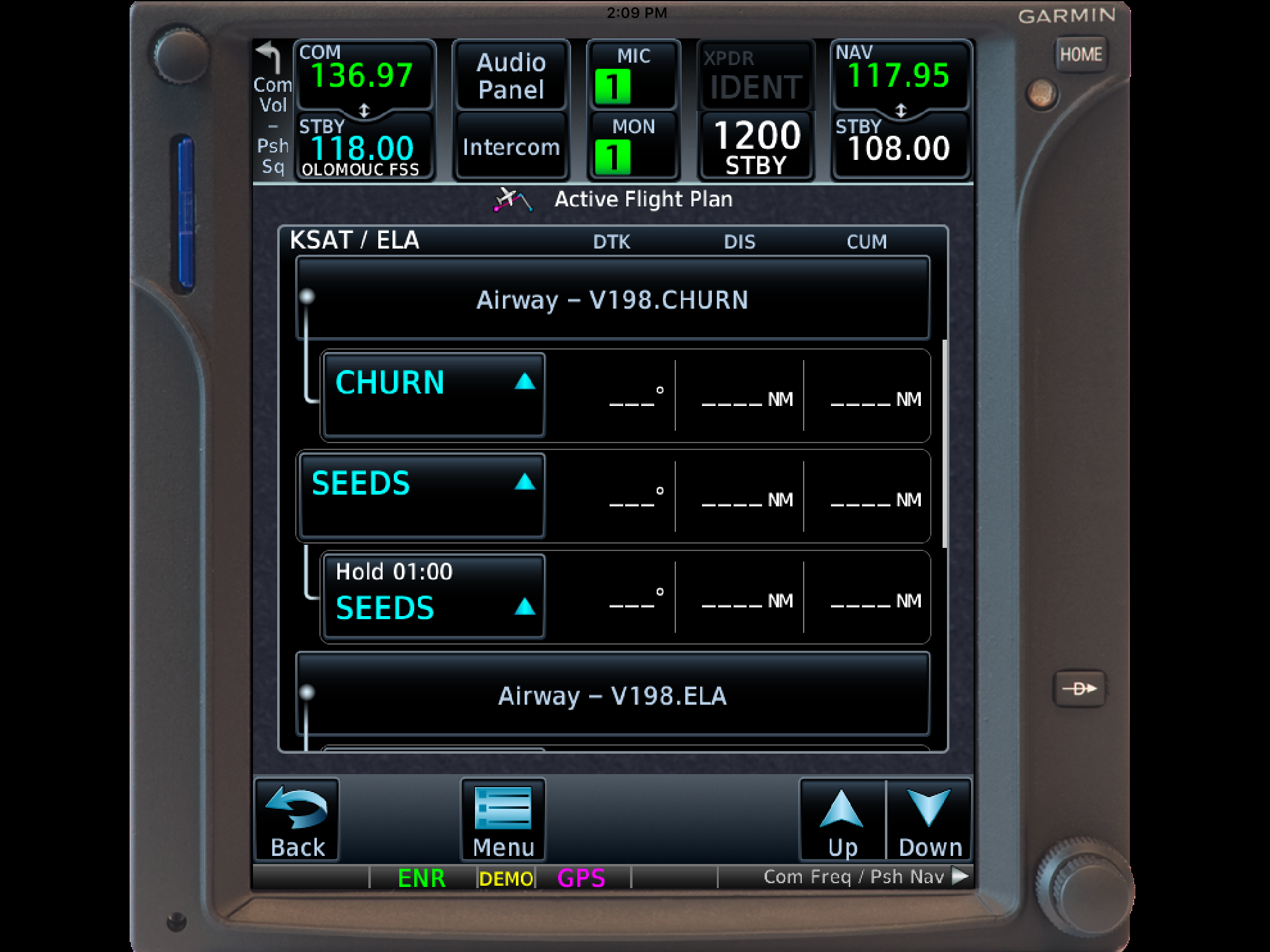
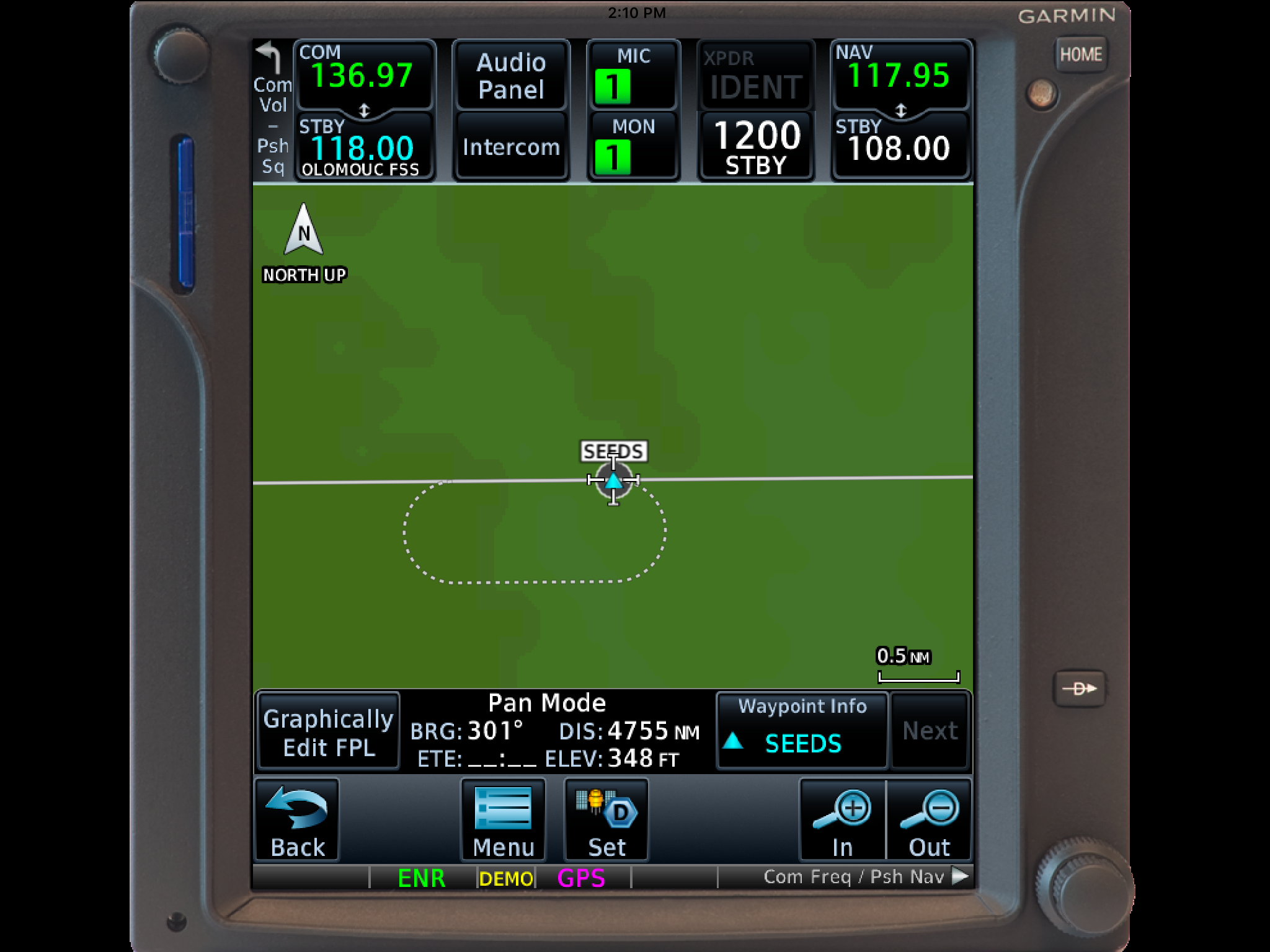
The two features of the Garmin GTN 750 I want to focus on today are the “Load Airway” feature and the “Hold at Waypoint” feature. If a pilot isn’t looking for these specifically, they can actually be a bit hard to find. The “Load Airway” feature is especially handy when flying IFR long distances with several airways as part of the clearance. Here’s how to utilize both.
Load Airway
On your flight plan page, insert the waypoint that you will be joining the airway, or, if your clearance was radar vectors to join an airway, then insert the waypoint on the airway that begins the leg you will be joining on.
Tap the waypoint you just inserted.
A menu will pop up. Tap Load Airway.
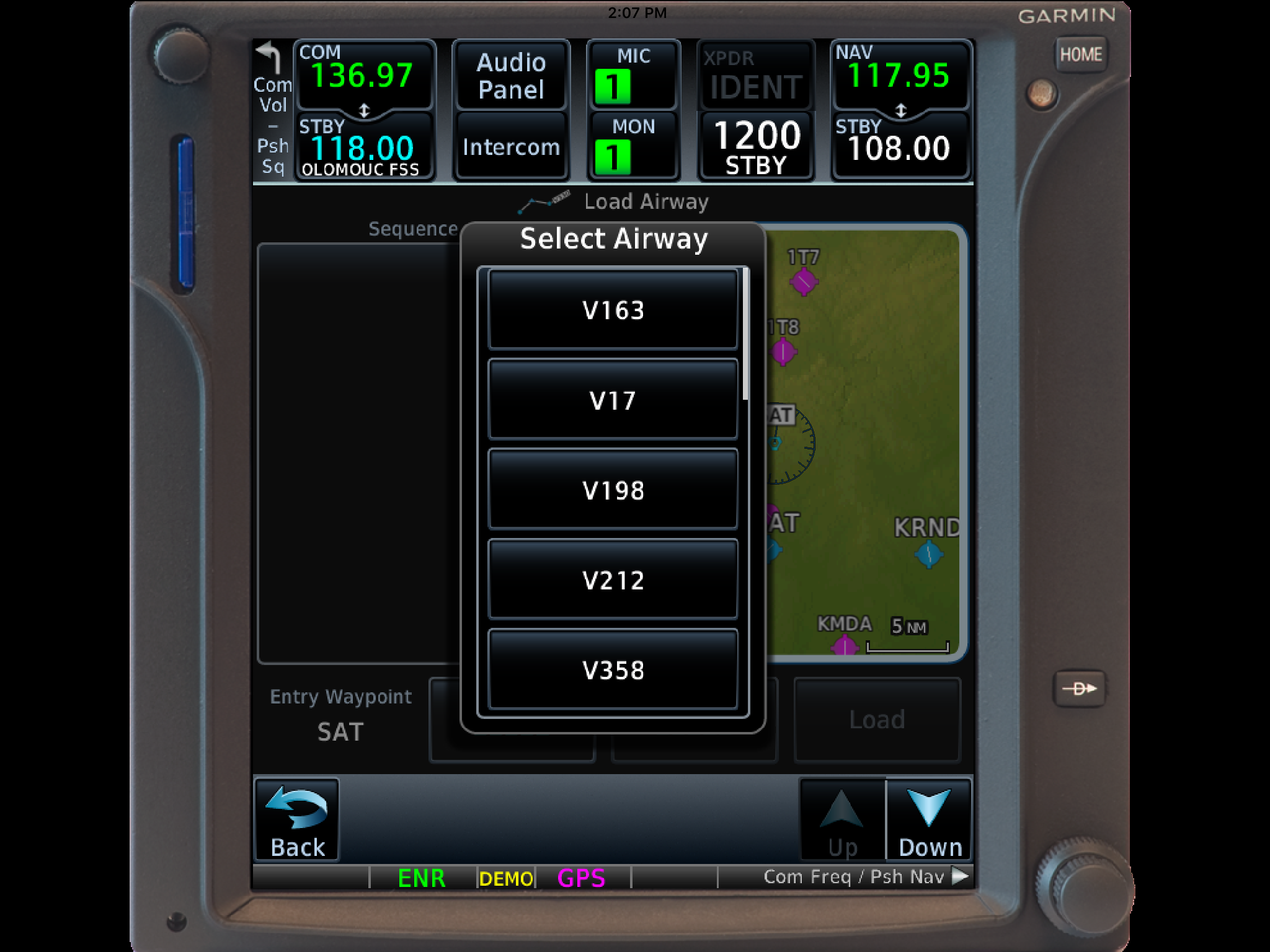
Select the Airway you want from the next menu that pops up.
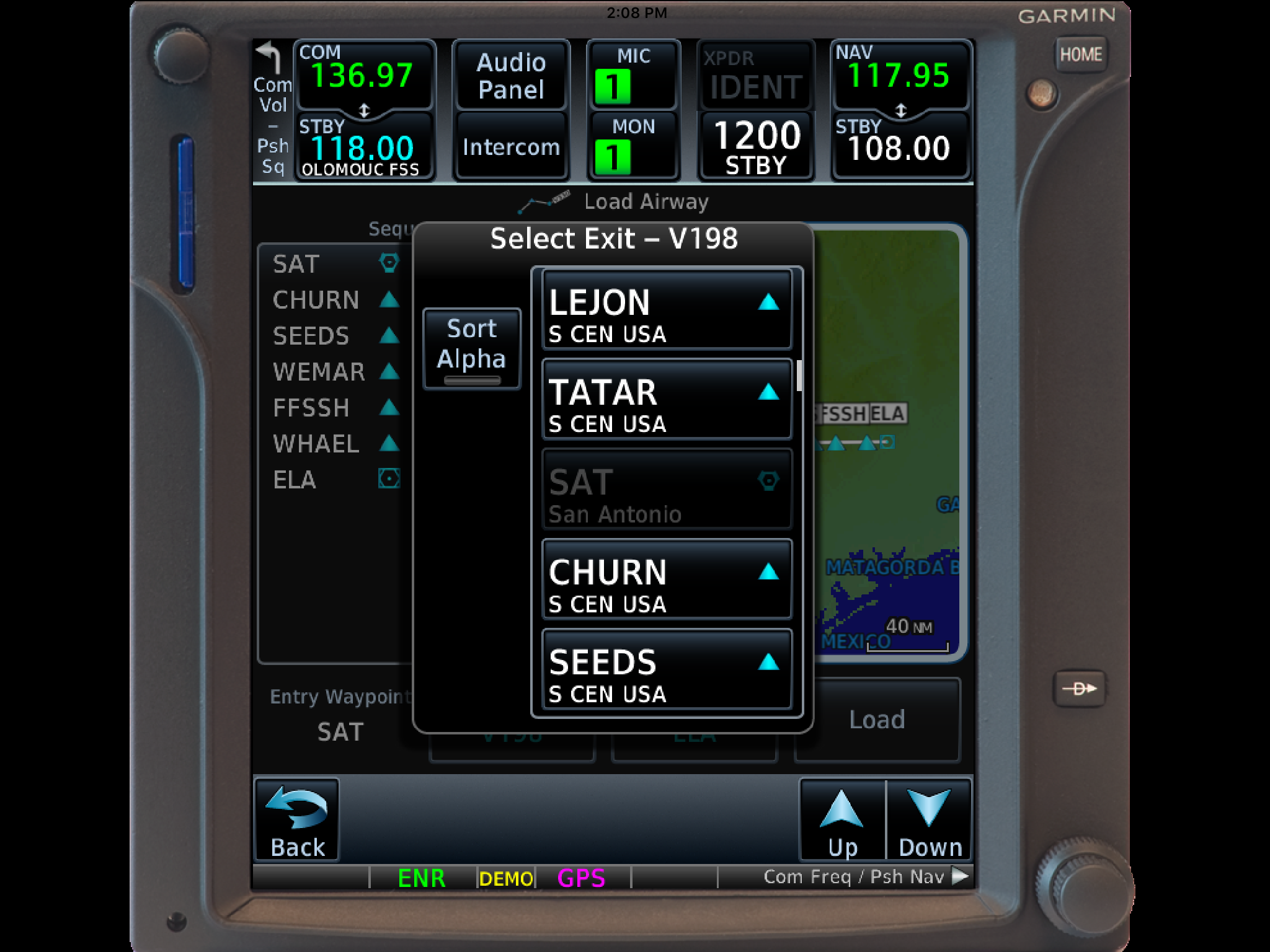
Then, a list of waypoints will display to exit the airway. Select the waypoint where you will be exiting the airway.
Note: Garmin defaults to listing these waypoints alphabetically. If you unselect the “Sort Alpha” option, it will sort the waypoints by direction and distance from the entry waypoint. This is a little more practical, easier to work with, and how I recommend doing it. This way you can either scroll up or down depending on the direction of travel on the airway and find your exit waypoint.
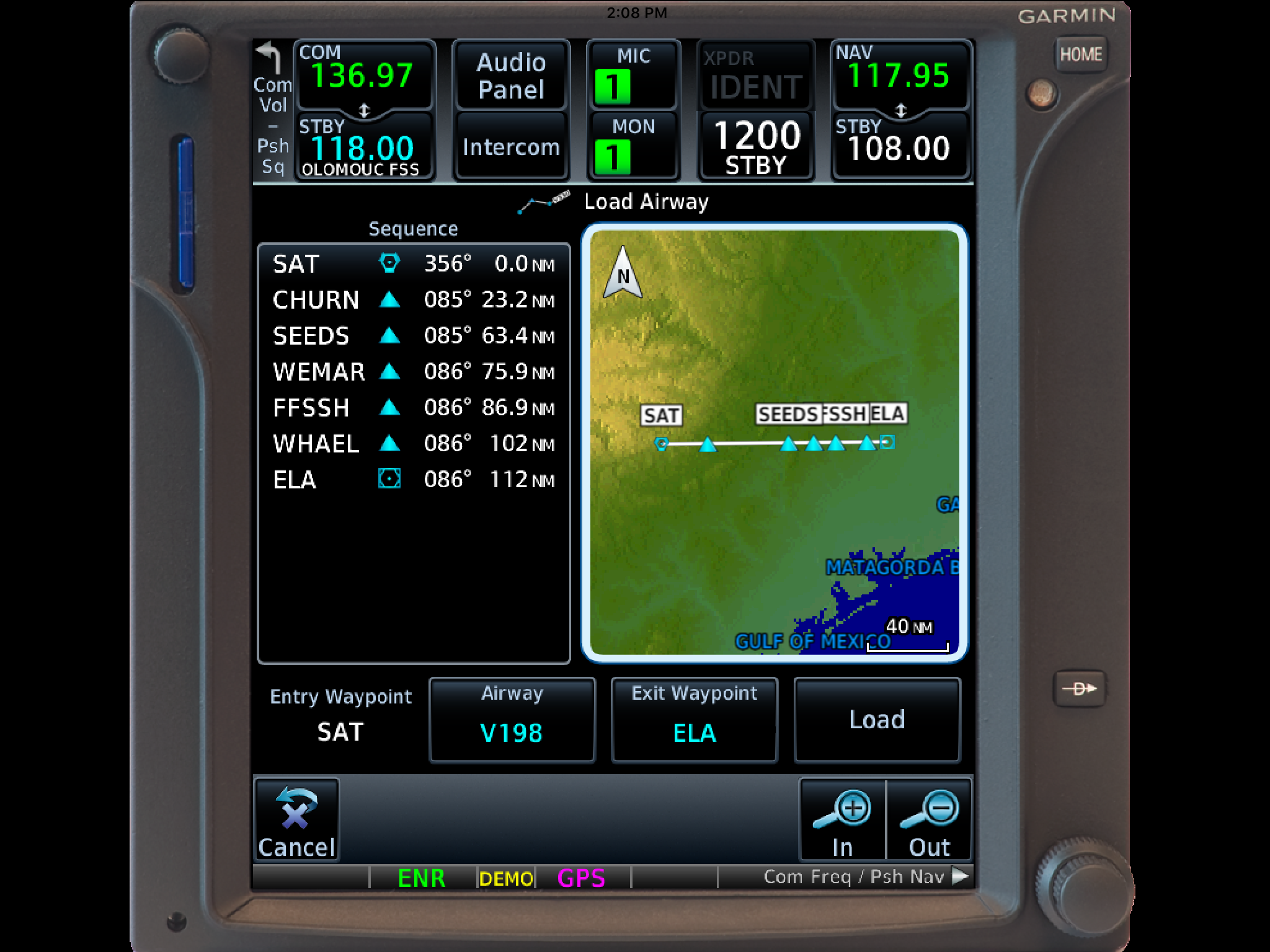
Tap Load.
The Airway and all the waypoints in between your entry and exit waypoints appear in your flight plan.
If you are getting vectors to join the airway, you’ll need to use the Activate Leg function to activate the leg you will be joining the airway on.
On the Flight Plan page, tap the waypoint that ends the leg you want to activate.
On the menu that pops up, tap Activate Leg.
Hold At Waypoint
The Garmin GTN 750 allows pilots to place a holding pattern at any waypoint that is in the Nav Database (or any user created waypoint). Here’s how to do it.
On the Flight Plan page, tap the Waypoint that you want to hold at.
On the menu that pops up, tap Hold At Waypoint
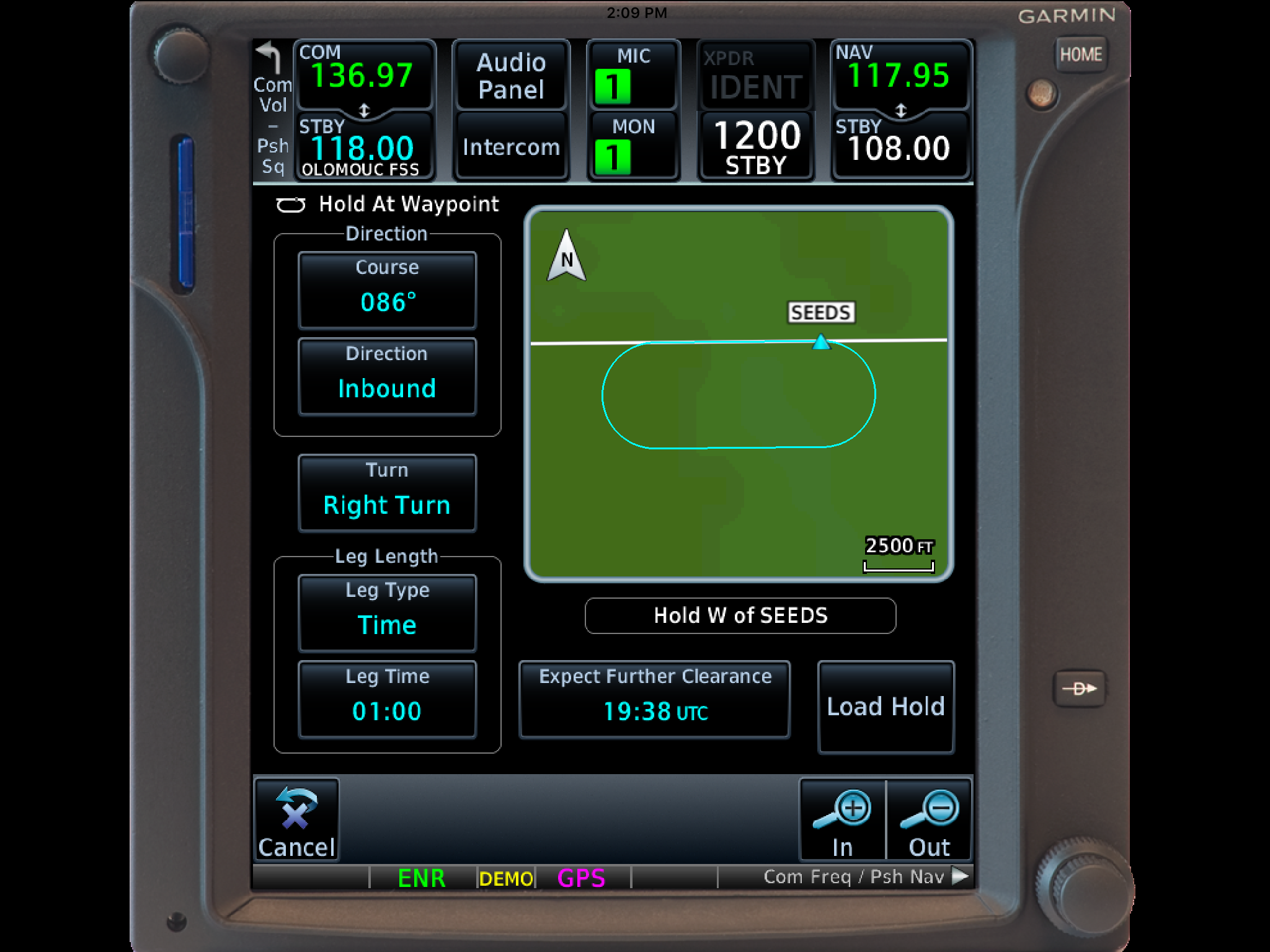
On the next menu that pops up, input either the inbound or outbound course, right or left turns, leg time or distance, and the EFC time, then tap Load.
You will see the hold now as a Waypoint in your flight plan.
Once the hold is entered, the GPS will go into Suspend mode, suspending the Flight Plan Waypoint Sequencing. Once you are ready to depart the hold, you will have to tap Unsuspend before crossing the holding point on the inbound leg, then the GPS will resume normal waypoint sequencing.
These are 2 of the really cool, gee-wiz features of the Garmin GTN 750. Following the above steps will make IFR flying much easier for the pilot, as well as much more enjoyable!
The Garmin GTN 750 is an awesome piece of equipment. Garmin tried to make the user interface with the touch screen as simple as possible (though there still is a bit of a learning curve when moving up from a Garmin 530W). Garmin also integrated several key features that the 530W did not have that…