Textron Aviation’s New Single Engine Turboprop

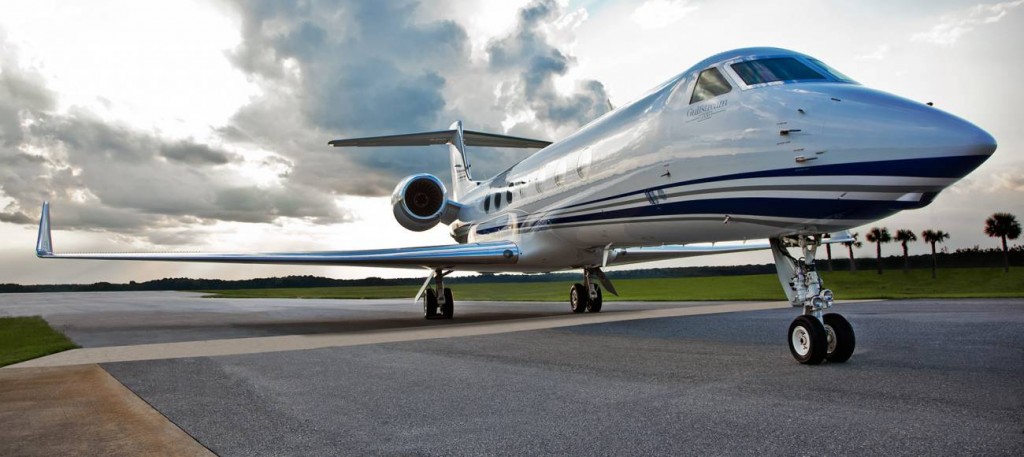
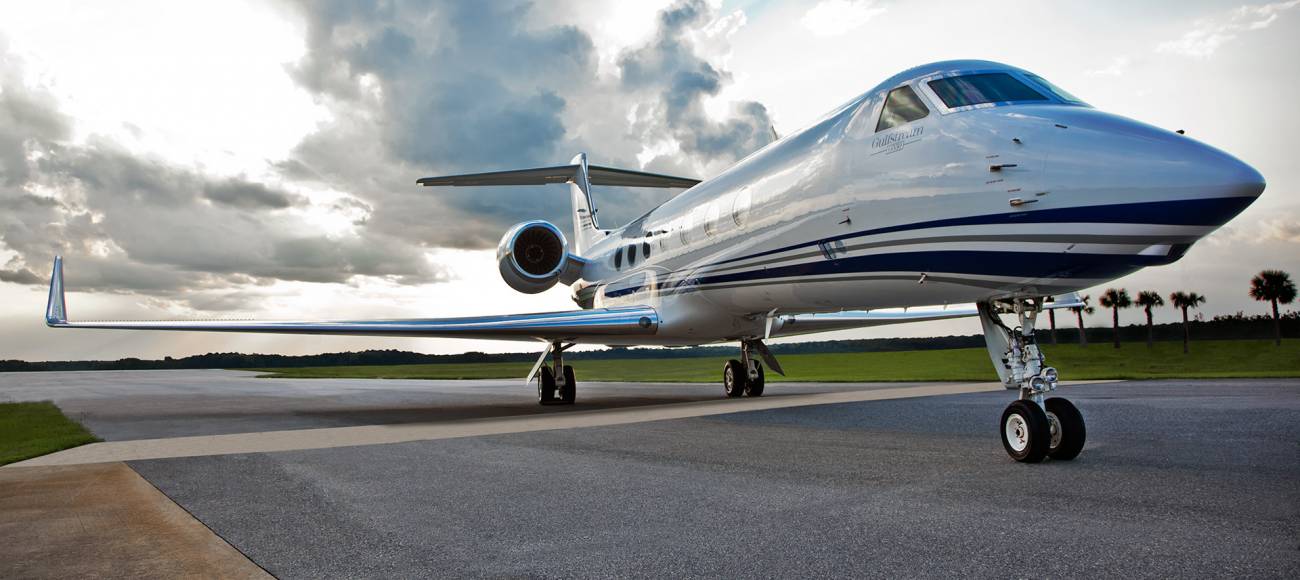
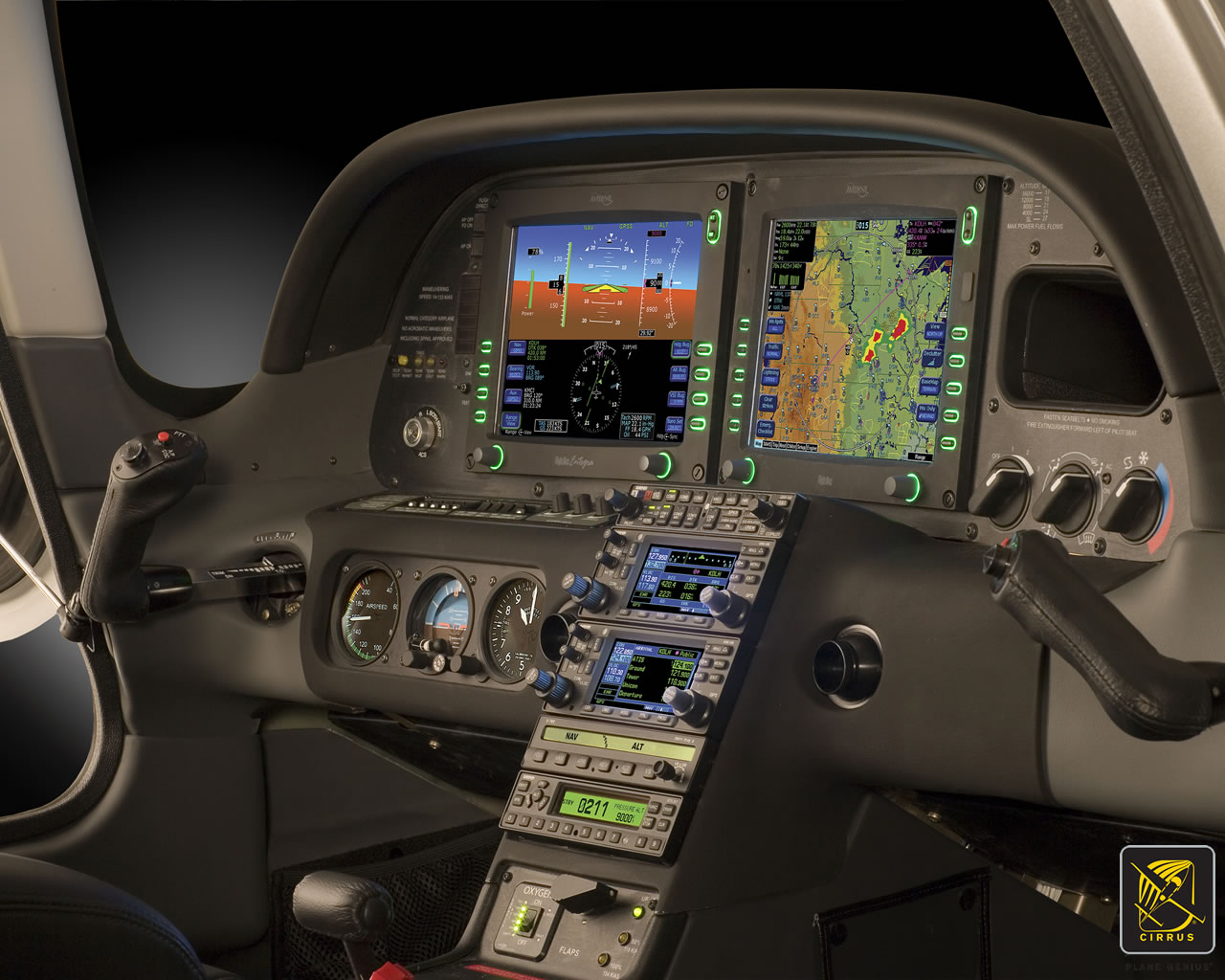
An 8 seat, cabin class, single engine turboprop is set to come to market in 2018 from the new aviation conglomerate Textron Aviation (Textron owns Cessna, Hawker, and Beechcraft).  Details were announced last week at the European Business Aviation Conference and Exhibition.  The as yet unnamed aircraft will be equipped with Garmin’s G3000 avionics and will be outfitted with a GE 1,240 Shaft Horsepower engine.

Cessna TurbopropThe GE engine will be equipped with a FADEC (Fully Automated Digital Engine Control) computer that will allow the pilot to make all necessary power adjustments using just one lever.
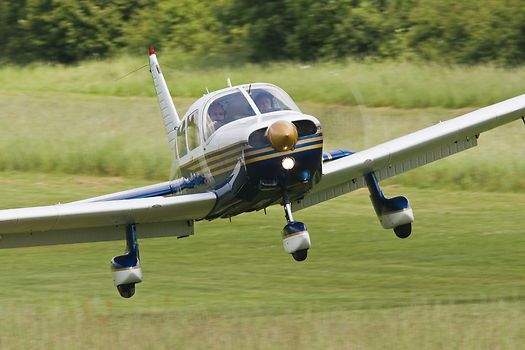
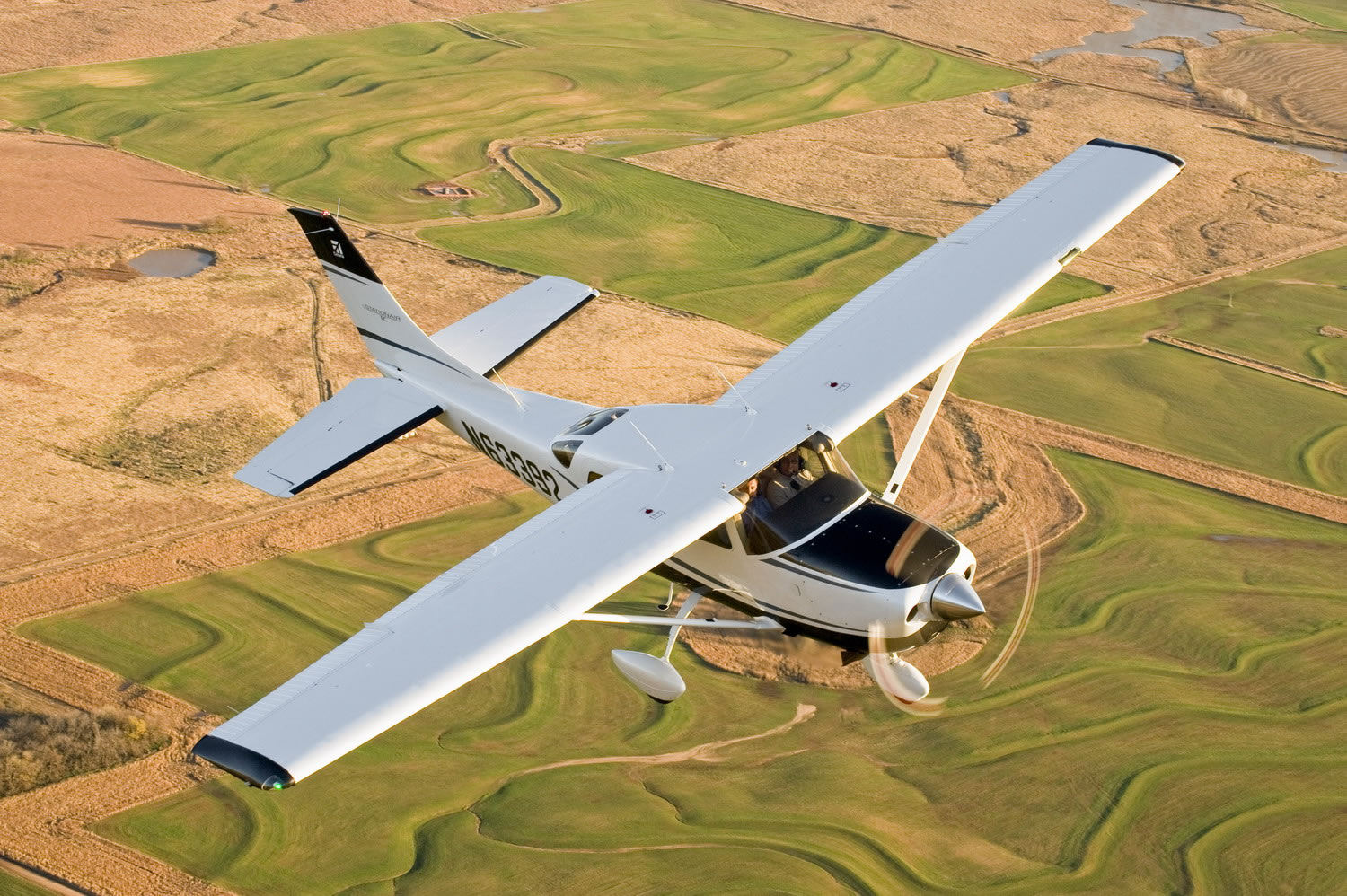
Range will be about 1,600 miles at 285 knots, giving the airplane the same legs as a PC12 at slightly faster speeds, but a smaller cabin.  The cabin will be equipped with a belted lav if desired.

To read more, check out the AOPA Article here.

Similar Posts

  • Cirrus SR22T, Cirrus Vision Jet, or Diamond DA62?

    Diamond DA62 twin-engine aircraft parked on the ramp, a Cirrus SR22T alternative offered by Texas Top Aviation

    If you have been searching “Cirrus SR22T for sale” or reading up on the Cirrus Vision Jet, you are looking at genuinely excellent airplanes. Both have earned their reputations. This is not an article about why you should not buy one. It is about a third airplane that almost never shows up in a Cirrus search — and what the numbers look like when you set it next to the two you are already considering.

    190 ktDA62 Cruise
    762 lbFull-Fuel Payload
    648 nmRange, 4 Adults + Bags
    1 WeekTraining, No Travel

    What the Cirrus SR22T Gets Right

    Let us start where we should. The SR22T is one of the most successful piston singles ever built, and for good reason. Turbo-normalized power that holds performance up high. A Perspective+ flight deck that is about as good as glass gets in a single. Side-yoke handling most pilots fall for inside ten minutes. And CAPS — the whole-airframe parachute that changed how our whole industry talks about safety.

    Add strong resale, a deep service network, and one of the best owner communities in aviation, and you have an airplane that is very hard to argue with. If you fly two people and light bags on 300 to 500 nautical mile legs, we would tell you to go buy one — and we would help you find the right one. We also teach Cirrus SR20, SR22 and SR22T training here in Texas, so this is not an outsider’s opinion of the airplane.

    The conversation changes when the mission grows.

    Cirrus SR22T vs. Diamond DA62: The Numbers Side by Side

    Diamond DA62 on the hangar ramp, the twin-engine alternative pilots shopping a Cirrus SR22T rarely consider

    The Diamond DA62 is a seven-seat, twin-engine, Jet-A-burning composite airplane that most Cirrus shoppers have never sat in — usually because it simply never came up in the search. Here is how the two line up on the numbers that matter.

    SpecificationCirrus SR22TDiamond DA62
    Cruise speed184 KTAS @ 85% power / 10,000 ft190 KTAS @ 90% power / 10,000 ft
    Fuel burn18.3 GPH @ 85% (16.4 GPH @ 75%)19 GPH total (9.5 GPH per engine)
    Fuel type100LL AvGasJet-A (~$1.75/gal cheaper)
    Seats / rows5 seats, 2 rows7 seats, 3 rows
    Useful load~1,125 lb (3,600 lb MTOW)1,341 lb (5,071 lb MTOW)
    Full-fuel payload~575 lb762 lb
    Range, 4 adults + 75 lb bags (835 lb)~320–350 nm~648 nm (45-min reserve)
    Takeoff over 50-ft obstacle2,080 ft1,575 ft
    Landing over 50-ft obstacle2,535 ft1,447 ft
    Single-engine service ceiling11,000 ft
    Engine-out redundancyCAPS parachuteSecond engine
    Recurring safety-system cost~$20,000 CAPS repack / 10 yrNone
    Rating requiredHigh-performance endorsementMulti-engine (~1 week, at home)

    Cirrus SR22T figures are taken from the Cirrus SR22T G6 Pilot’s Operating Handbook (P/N 13772-007, Reissue A): cruise at ISA and 3,400 lb, takeoff and landing over a 50-ft obstacle at sea level, ISA and 3,600 lb max gross.

    Read that speed line carefully, because it is closer than the marketing on either side suggests. At 10,000 feet the DA62 has about six knots on the SR22T — real, but hardly decisive. Climb higher and the advantage flips outright: the SR22T is turbo-normalized, so at 18,000 feet the POH shows 198 KTAS on the same 18.3 gallons an hour, comfortably faster than the DA62. If raw speed is what you are buying, the Cirrus has a genuine answer.

    Where the DA62 separates itself is everything around the speed. It burns Jet-A, which runs roughly $1.75 a gallon under 100LL at most FBOs and is available at airports where AvGas gets harder to find every year. And the full-fuel payload gap is 187 pounds. Payload is where light-airplane trip plans quietly fall apart.

    Four Adults, Bags, and the Range That Actually Matters

    Spec sheets get written for two people. Real trips are not flown that way.

    Load four adults and 75 pounds of luggage — call it 835 pounds — and the SR22T has to leave fuel on the ramp. On a typical G6 empty weight that leaves room for roughly 48 of its 92 usable gallons, and realistic range lands around 320 to 350 nautical miles with IFR reserves. Put that same 835 pounds into a DA62 and you are looking at roughly 648 nautical miles with a 45-minute reserve.

    To be fair to the airplane: with full fuel and two people aboard, the SR22T is genuinely long-legged. The POH shows 763 nm at 10,000 feet and 791 nm at 18,000 feet on a 45-minute reserve. The range only collapses when you fill the seats — which is precisely the mission this comparison is about.

    That is not a rounding error. That is one fuel stop versus none on a Texas-to-Colorado weekend. And the DA62 does it across three rows, with two seats still open behind you.

    Diamond DA62 cabin interior showing the second and third row seating that gives it a 762 lb full-fuel payload

    About the Cirrus Vision Jet G1

    If your search has moved from the SR22T up to the Vision Jet, that airplane deserves real credit too. Cirrus did something nobody else managed: a single-pilot personal jet, with CAPS, delivered in volume, flown successfully by owner-operators. That is a genuine achievement in this industry, and we teach Cirrus Vision Jet training ourselves.

    The G1 specifically, though, asks for a level of commitment that surprises a lot of first-time jet buyers.

    Cirrus Vision Jet G1: What Ownership Actually Asks Of You

    • Acquisition: approximately $1.8 million.
    • Fuel burn: 60–70 GPH of Jet-A.
    • Full-fuel payload: only 300–400 lb — roughly two adults and a soft bag.
    • Range: about 800 nm on paper, but heavily payload-limited in practice.
    • Type rating: a full FAA type rating is required — roughly two weeks of initial training in Knoxville, Tennessee.
    • Insurance dual: 25+ hours of additional dual instruction beyond the type rating.
    • Recurrent: annual simulator recurrent training back in Knoxville, at $15,000–$25,000 per year, every year.
    • Runway: 3,192 ft takeoff / 3,011 ft landing over a 50-ft obstacle.
    • Climb: drops to 1,100–1,200 fpm at heavier weights, and loses thrust at high density altitude airports — exactly where you want margin.
    Worth saying plainly: the G2 and G2+ are meaningfully more capable airplanes — better payload, better hot-and-high performance, updated flight deck. That is a different and more interesting conversation, and one we are glad to have. Everything above is specific to the G1, because the G1 is the airplane most often cross-shopped at DA62 money.

    Compare that training path to the DA62. A multi-engine rating is all that is required — roughly one week, typically at your home airport, with no hotel and no travel. There is no annual sim requirement in another state, and no recurring five-figure training line item on the budget.

    Runway Numbers Open Up the Map

    Diamond DA62 on a short field runway, clearing a 50-foot obstacle in about 1,575 feet on takeoff

    Performance over a 50-foot obstacle is where your airport list gets long or short. The DA62 clears it in about 1,575 feet on takeoff and 1,447 feet on landing. The SR22T needs 2,080 and 2,535 feet. The Vision Jet G1 needs 3,192 and 3,011 feet.

    That is roughly 500 feet less than the SR22T on departure and nearly 1,100 feet less on arrival — and against the G1 the gap is wider still. Practically, that difference is what gets you into the shorter ranch, lake and mountain-adjacent strips that a lot of the best flying runs on. That is not a spec. That is a different set of weekends.

    The Parachute and the Second Engine

    CAPS is a real safety system and we will not say otherwise. It has saved lives, and it deserves the respect it gets. It also carries a cost most buyers do not budget for: the rocket and canopy repack runs about $20,000 every ten years, and it is not optional.

    The DA62 answers the same question a different way. Lose an engine and you still have one making power, turning counter-rotating props, managed by a FADEC that keeps it to a single lever per side. One number to know either way: the DA62 single-engine service ceiling is 11,000 feet, so on one engine it will hold altitude over most terrain but not over the high country. Neither answer is wrong — they are two philosophies about the same risk. The DA62 version just does not come with a recurring five-figure bill.

    Frequently Asked Questions

    Is the Diamond DA62 faster than a Cirrus SR22T?

    Only down low, and only slightly. At 10,000 feet the Diamond DA62 cruises at 190 KTAS at 90% power on 19 GPH of Jet-A total, while the Cirrus SR22T G6 POH shows 184 KTAS at 85% power on 18.3 GPH of 100LL. Higher up the SR22T is the faster airplane — its turbo-normalized engine holds 198 KTAS at 18,000 feet on the same fuel flow. The DA62 advantage is fuel cost, payload and runway, not raw speed.

    How much can a Diamond DA62 carry compared to a Cirrus SR22T?

    The DA62 carries a 762 lb full-fuel payload across seven seats in three rows. The Cirrus SR22T has a useful load of about 1,125 lb and a full-fuel payload of roughly 575 lb. Loaded with four adults and 75 lb of bags — 835 lb total — the DA62 flies about 648 nm with a 45-minute reserve, while the SR22T is closer to 350 nm.

    What training does a Cirrus Vision Jet G1 require compared to a Diamond DA62?

    The Vision Jet G1 requires a full FAA type rating: about two weeks of initial training in Knoxville, Tennessee, plus 25+ hours of additional dual for insurance, plus annual simulator recurrent back in Knoxville that runs $15,000–$25,000 per year on an ongoing basis. The Diamond DA62 requires only a multi-engine rating — about one week, usually at your home airport, with no travel.

    Can a Diamond DA62 use shorter runways than a Cirrus SR22T or Vision Jet?

    Yes. Over a 50-foot obstacle the DA62 takes off in about 1,575 ft and lands in about 1,447 ft. The Cirrus SR22T needs about 2,080 ft and 2,535 ft, and the Cirrus Vision Jet G1 needs about 3,192 ft and 3,011 ft. The Vision Jet G1 also sees climb rate fall to 1,100–1,200 fpm at heavier weights and loses thrust at higher density altitude airports.

    Does the Diamond DA62 have a whole-airframe parachute like Cirrus CAPS?

    No. The DA62 redundancy is a second engine rather than a parachute. One practical difference in ownership cost: the Cirrus CAPS repack runs about $20,000 every ten years and is mandatory, while the DA62 has no equivalent recurring safety-system expense.

    Current Diamond DA62 market listings are aggregated on Controller: browse the Diamond DA62 inventory.

  • PIREP: IFR Clearances at Uncontrolled Airports

    There is great news coming for all IFR pilots who utilize the multitude of uncontrolled airports across the US.

    From the beginning of aviation time, the process of getting an IFR clearance at an uncontrolled airport has been arduous. For airports under Center controlled airspace, you had to dial the Clearance Delivery line, which ported you to Flight Service. Then you sat on hold till someone picked up, gave them your information, then sat on hold again while they called the Center. Finally, after what seemed like an eternity, the briefer came back with your clearance and departure instructions.

    On a busy day, this could take ten to fifteen minutes, which can be really annoying when a pilot is trying to take off and get somewhere.

    In my opinion, this also led to a lot of unsafe (and probably illegal) VFR departures when conditions were either clearly IFR or unsafe if buzzing around at low altitudes and high speeds in Class G airspace.

    RCO’s (Remote Communications Outlet, 2nd column, halfway down) and Clearance Delivery Frequencies are in place at some airports, but by and large, the above process was how you got your clearance.

    Departing from a TRACON controlled airport usually was easier and quicker. The TRACON has a direct line that is available for pilots to call to speak directly with a controller, but not all these phone numbers are published.

    As of June 20th, the FAA is implementing this at all uncontrolled airports. On the chart supplement for all IFR charts across the US (not including Alaska), the FAA will publish the Center phone numbers and remaining TRACON phone numbers for pilots to call directly to receive their IFR clearances and departure instructions, and to cancel their IFR flight plans (A lot of TRACONs already have their phone number published).

    Flight Service will no longer be taking IFR flight plan cancellations. Pilots will still be able to cancel with Center or TRACON in the air, but will now need to call the number on the chart supplement on the ground for cancellation.

    Now that the FAA is modernizing this process, hopefully more pilots will decide to call on the ground for their clearance on a MVFR or IFR day instead of taking off and trying to pick it up in the air.

    Finding the Chart Supplement on Foreflight

    Where is the Chart Supplement? I’m so glad you asked.

    Before iPads, everyone carried around the green book, officially known as the Airport/Facilities Directory, or A/FD. With the advent of Foreflight & Garmin Pilot & others, all the information in the A/FD is now easily accessible in each of the Apps.

    Foreflight may integrate the clearance delivery phone number for each airport into their airport information page, but in the meantime, here is how to find the Chart Supplement.

    On Foreflight, go to Documents along the bottom of the App. In the Catalog on the left, tap FAA. Chart Supplement will be about 1/3 of the way down the page. Tap that, then tap the region you need and it will download into your Documents Library.

    Once it is downloaded, check the Table of Contents for FAA Telephone Numbers and NWS. Go to that page and scroll through to find the Center or TRACON you are needing, then dial the number.

    Happy Flying!

  • Thanks For Flying With Us!

    From our family to yours, thank you for flying with Texas Top Aviation in 2014.  We wish everyone a Happy New Year and a great 2015!

    Texas Top Aviation Family

  • FICON Reports

    Field Condition, or FICON, reports show up in NOTAMs both during the summer time and the winter time. In the southern states, FICON reports are seen more in the summertime during and after hard rains and thunderstorms (with the exception of winter 2021 & 2022, where Texans quickly got familiar with FICON reports after some very unusual winter weather). In cold winter climates, FICON reports are a staple during the winter season, showing up during and after snow & ice storms.

    The question is, what do those codes mean in the FICON report? You could see 5/5/5, 3/3/3, 3/4/4 and any combination thereof. And why are there three numbers?

    Let’s start with the second question first. The three different numbers in the FICON report indicate the 3 different sections of the runway: the touchdown third, midpoint third, and rollout third of the runway.

    Now, what are those numbers describing? The three numbers are the indication of how slippery that portion of the runway is. This is referred to as a Runway Condition Code (or RCC). The lower the number, the more slippery the runway is. The higher the number, the dryer the runway. The scale is 0-6, with 6 being completely dry and zero being no traction at all.

    Here is the FAA table for the RCCs.

    Now, in order for those RCC codes to generate, at least 25% of the surface must be wet. If there are just spots of standing water, slush or snow, a FICON report will be issued to report the contaminants, but no codes will be generated.

    The Runway Condition Codes are only part of a FICON report. In addition to the codes, a descriptor in the NOTAM will be published describing what percentage of the portion of the runway is affected and by what.

    For example: RWY 28 FICON 3/3/3 100 PRCNT 2IN DRY SN OVER COMPACTED SN.

    Deciphered, that is saying that all sections of Runway 28 have braking deceleration that is noticeably reduced or direction control is noticeably reduced and 100% of each section has 2 inches of dry snow over compacted snow. Sounds like a runway to avoid!

    Braking action reports are separate from FICON reports, but also issued via NOTAM. Braking action reports are issued by the airport manager whereas the FICON reports are computer generated.

  • Thunderstorm Avoidance

    Thunderstorms are not to be taken lightly. I know you have probably heard that many times in your flying career. Weather related accidents account for approximately 25% of airline and GA accidents.

    The Airman’s Information Manual suggests giving a 20 mile berth around thunderstorms. If you are an experienced aviator or a newbie please take this piece of advice seriously. At one flight school where I taught, we had the policy of maintaining a 25 mile buffer around isolated thunderstorms. A bit excessive you think? Maybe, but safety is a good thing!

    On this particular day, I was operating a Bell Jet Ranger helicopter during a power line patrol. Power line patrol by itself offers numerous challenges. The job consists of flying along electric power transmission lines at approximately 40 feet above the ground at 40 knots. The crew consisted of me (the pilot) and an observer. The observer is an employee of the power company and it is his job to determine which line(s) will be patrolled during the given day. As I fly along the lines, the observer is checking for anything out of the ordinary such as broken, cracked, or even shot out insulators, excessively large bird nests at the top of structures, or woodpecker holes in wooden poles. The observer knows the lines and he is also a great help in letting me know there is a crossing, and potentially higher, line in our flight path. That makes him a true safety asset!
    Power line thunderstormIt was late afternoon during the summer and we were about to finish up for the day. We only had about another 10 miles of line to follow before calling it a day. Up ahead, I noticed an isolated thunderstorm near our power line. I could see the heavy rain falling below the anvil shaped leading clouds. It appeared to be well beyond the end of our day’s work so we pressed on.

    As we drew closer to the thunderstorm, we were suddenly tossed up on our left side like a dog toy in mid-flight! It seemed like we were 90 degrees to our normal cruise attitude and, to make it worse, we had the doors off on that hot summer day. I was able to recover and we did an immediate about face and high tailed it home. Forget the rest of that line, tomorrow is another day.

    The destructive force of thunderstorms cannot be overstated. In addition to extremely heavy rain, they can contain strong wind shear, large hail, and severe turbulence, each of which can damage or destroy an aircraft. Take care when one of these bad boys is near your flight path. Give it plenty of respect and a lots of room, for safety’s sake.

    Alan VanDoren is a 7000 hour ATP pilot.  He has flown both fixed wing and helicopters as a police pilot, missionary pilot, flight instructor, and most recently as an EMS pilot.  He has flown in five countries around the world and also teaches university level aviation courses in his spare time.

  • Lightspeed Headsets and Modern Audio Panels

    I love Lightspeed headsets.  They are very comfortable, durable, and reasonably priced.  Plus, when you call Customer Service, you are actually talking to someone who works for the company and knows what they are talking about.

    One thing to watch out for with Lightspeed headsets is the Mono vs. Stereo option.  On the Zulu 3, there is a very small control panel underneath the battery compartment to change from Mono to Stereo.  If you have any kind of modern audio panel, you will definitely want to do this.  Here’s why.

    I was flying in a Cirrus SR22 G5 last fall with a Garmin 350 Audio Panel.  Everything worked fine talking to the ground and tower controllers.  Once I took off and was switched to approach, everything went quiet.  I could hear the approach controller, but couldn’t transmit.  I thought my headset had bit the dust. There was another set in the plane that I switched to, but I thought the transmit function of mine was out.

    I sent the headset back to Lightspeed for repair.  The headset was still under their 5 year warranty, which is really nice!  I got it back a few days later, plugged it in to another Cirrus, and still had nothing.  I was getting frustrated, but then a light went on.  One of my colleagues had mentioned something about mono and stereo in the Lightspeed.  I popped the batteries out, flipped the switch over to stereo, and wa-la!  Everything was fully operational.

    If you get Lightspeed headsets, you’ll want to make sure it is set on Stereo, as they all come from the factory on Mono.  If you get a PFX, there is an easy access button on the side of the battery unit to switch from Mono to Stereo.

Leave a Reply

Your email address will not be published. Required fields are marked *