You have plans to fly to an airport 218 miles north for a business meeting. Your window is tight; you have an early morning meeting at your office you can’t miss prior to leaving for the airport. The colleagues you are flying to meet must catch another flight within two hours of your target arrival time.
You’re comfortable flying in the current weather conditions, but a small southward-moving storm north of your destination might threaten your approach. Additionally, given the time of day, you can expect ATC delays due to vectors and know you’ll have to adjust on the fly.
Are you confident you can make the meeting in time?
If the answer isn’t immediately clear, you’re not alone. Good aeronautical decision making is of utmost importance in the air. External pressures, unexpected challenges, and your level of instrument proficiency are among the many factors to consider when considering an IFR flight.
While we can’t remove the external pressures or control the weather, we CAN help with instrument proficiency!
Introducing … The Aviator’s Academy – advanced online pilot training.
During my time training hundreds of capable and competent pilots at Texas Top Aviation, my most common observation with seasoned and rookie pilots alike is that the pilot is often aware of knowledge gaps with the airplane’s avionics after initial flight training or after upgrading to a more advanced airplane, but aren’t sure where to get answers. Simply put – expert glass panel flight training is hard to find.
They know enough to have earned their license, but still feel uneasy anticipating unexpected challenges. This leaves them feeling at best, uncomfortable, or worse, on edge and unsafe. When you’re not as proficient as you could be, an easy flight can become stressful quickly in unexpected scenarios, and things spiral from there. It doesn’t have to be this way.
That’s why The Aviator’s Academy offers online courses with real-life scenarios using glass panel avionics. You’ll gain more confidence in the air and be equipped with better aeronautical decision-making skills after learning from the best in the business.
We understand the pressures you face in the air. We get it because we have been providing expert, personalized, owner/pilot instruction since 2014 at Texas Top Aviation. With over 8000 hours of instruction given in Technically Advanced Aircraft and over 13,000 hours in total flight time, The Aviator’s Academy instructors are qualified to fly and instruct most single-engine aircraft to a level that far exceeds what a flight school can provide. Nowhere else can you get expert glass panel online instruction for Technically Advanced Aircraft.
If you’re in need of an instrument proficiency check and fly a technically advanced aircraft with glass panel instruments, this is the place to get your ground school training. Conveniently online. Expertly taught.
Mastering your glass panel avionics isn’t impossible. You just need a guide. Enroll in the course you need to take your skill to the next level. You’ll receive expert, specialized online training. Then you’ll fly with confidence.
LAUNCHING AT OSHKOSH! Visit www.aviatorsacademy.com and leave us your email to be notified when our first course drops. Come visit us at booth 3004 at Osh Kosh, July 25th-July 31st, 2022.
Are you thinking of buying an iPad and going to a paperless cockpit? Have you just recently purchased an iPad and are unsure of how to use Foreflight to it’s fullest extent? Check out this free webinar on Monday, January 19th. Gary Reeves, a Master CFI from California, will be hosting the 90 minute seminar, which begins at 1800 Z. He will be able to point you in the right direction for what type of iPad to purchase, how to set up your Foreflight account, and the basics of using the App.
You can finally get rid of those paper charts, saving clutter in the cockpit. Just make sure you bring along a charger for those extended flight in case your battery dips low!
To sign up for this webinar, click here. There is no cost associated with the webinar.
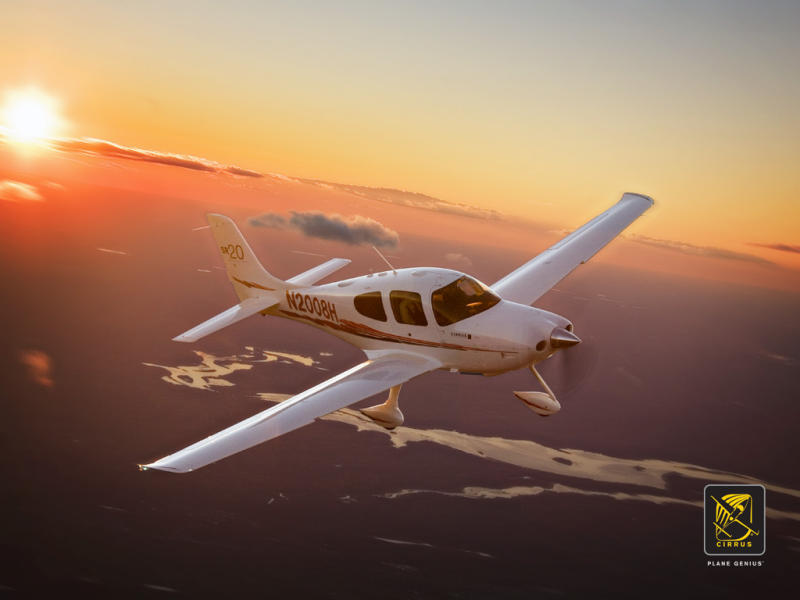
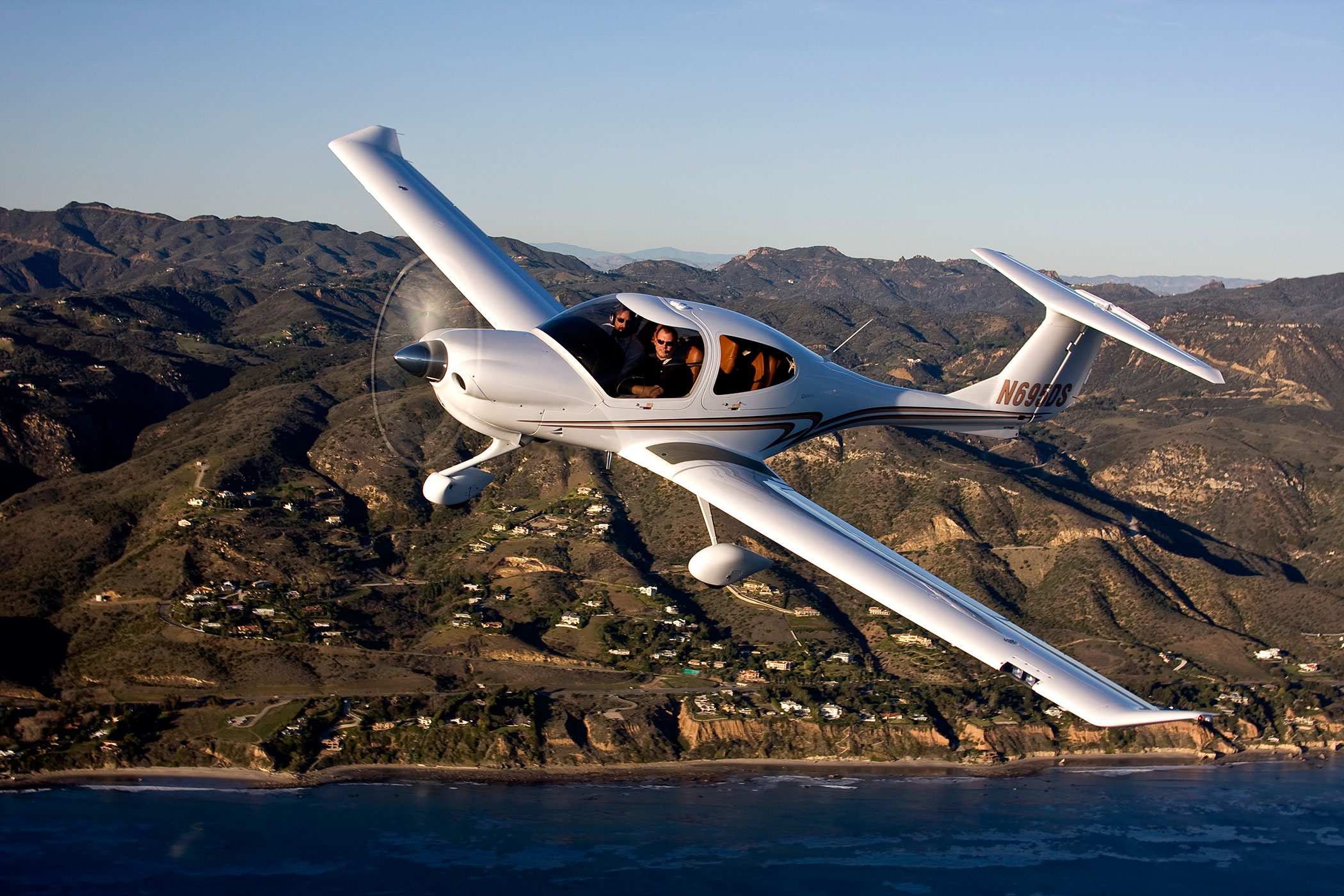
Note: For this article I am comparing a 2008 Cirrus SR20 G3 and a 2008 Diamond DA40 XLS.
Aircraft shopping can be a tedious process. First, a buyer needs to know what the mission is. How far will flights typically be, how many people will be on board, and how fast does the airplane need to be. Then, the buyer has to figure out what the budget is. Finally, a prospective owner needs to figure out how much airplane he or she can handle.
Two very good airplanes for newer pilots transitioning from a flight school 172 who need a faster airplane to build experience in, but also want to experience a glass panel, are the Cirrus SR20 G3 and the Diamond DA40 XLS.
Cirrus SR20 G3
The 2008 Cirrus SR20 G3 is a good airplane. The G3 is equipped with the 6 cylinder, Continental IO-360-ES, 200 HP engine. Performance-wise, an owner can expect 135-140 knots true at 9 GPH (Lean of Peak) or 145-150 knots true at 11.5-12 GPH (Rich of Peak). The 3 blade propeller equipped models have better takeoff and climb performance than the 2 blade propeller equipped planes, especially in high density altitude conditions.
The airplane is equipped with the Avidyne Entegra EX 5000 glass panel system. Most models out there will have Avidyne’s CMAX (Chart View) and all will have the Avidyne EMAX (Engine Monitoring). All came from the factory with the STEC 55x autopilot (though a handful will have the STEC 55 SR, which doesn’t have glideslope functionality). They also came from the factory with dual Garmin 430s. Most units have been upgraded to WAAS.
Some owners have upgraded the autopilot to the Avidyne DFC 90, which is a nice upgrade. The STEC 55x is a rate based autopilot which takes it’s commands from a hidden turn coordinator that is behind the instrument panel in front of the co-pilot’s seat. The STEC has some crosswind limitations on approaches where the pilot can actually fly better than the autopilot.
The DFC 90, however, is an attitude based autopilot that takes it’s commands from the attitude indicator on the Primary Flight Display (PFD). It also adds a Straight and Level button as well as an Indicated Airspeed hold button, adding safety and functionality. It does much better in crosswinds on an instrument approach then the STEC.
A select few SR20s have been upgraded to a single (or dual) Garmin GTN 650 touch screen GPS unit. The GTN 650 is a very nice upgrade. The Garmin 430 is a great unit, but the learning curve with the GTN 650 is much less. The touch screen setup makes a little more sense to the new user.
Values on the 2008 SR20 G3 with 1,000 hours or less run somewhere between $220,000-$260,000, depending on total time and equipment.
Diamond DA40 XLS
A handful of 2007 XLS DA40s were made, but not many. Most XLS models you will see are 2008 and later. These are equipped with the Lycoming IO-360, 4 cylinder, 180 HP engine with the Powerflow Exhaust STC. Due to the Powerflow Exhaust, the performance is equal to the SR20. At 6,000-8,000 feet, you will routinely see 140 knots true at 10-10.5 GPH. Higher altitudes will give slightly better performance and lower fuel burn. Like the SR20, the Diamond DA40 XLS comes with either a 2 blade or 3 blade prop. Go with the 3 blade as the takeoff and climb performance is much better.
Where the DA40 XLS has a leg up on the 2008 SR20 G3 Avidyne is in the avionics. Diamond got on the Garmin G1000 train a little sooner than Cirrus did and the XLS is equipped with the G1000 and GFC 700 autopilot. The Garmin GFC 700 autopilot is the best GA autopilot I have flown with. It is an amazing piece of equipment.
Most, if not all, DA40 XLS models will have both WAAS and Synthetic Vision. Cirrus didn’t get Synthetic Vision till they put the Cirrus Perspective by Garmin in their aircraft in the middle of 2008.
The DA40 has great visibility due to the massive amount of glass surrounding the pilot. The big glider wings give it excellent pop off the runway, but quite a different climb pitch attitude than most other piston single engine airplanes. The airplane does like to float on landing if the pilot doesn’t get the speed right.
Values on the 2008 Diamond DA40 XLS equipped with the Garmin G1000 are around the low-mid $200,000 range.
Comparison
Performance wise, the airplanes are about equal. Rich of peak, the Cirrus out performs the Diamond, but uses more fuel. Both have about 5 hour ranges (though the Cirrus has bigger fuel tanks, 56 gallons usable compared to the Diamond long range tanks of 50 gallons usable). Useful load is slightly better in the Diamond due to the fact that the Lycoming engine has 2 fewer cylinders than the Cirrus. The Cirrus does have a roomier back seat, a larger baggage area, and a side stick instead of a center stick, but the DA40 has a back door. The Cirrus also has the CAPS system, though an owner has to do a $15,000 repack every ten years. Airplane values are about the same.
I give a slight edge to the Diamond, though, and here’s why. For about the same price, a purchaser can get the Garmin G1000 system complete with the GFC 700 autopilot in the DA40 XLS. The Avidyne and STEC system is great, but the Garmin system is definitely above and beyond. To get the Garmin G1000 in an SR20, you’d have to look at the Cirrus Perspective by Garmin, which came out in late 2008, and you’d be paying $300,000 or more for a single engine piston with 200 HP (though you do get Air Conditioning!).
So for my money, I would go for the Diamond DA40 XLS. I believe you get a little bit more bang for your buck and you don’t lose anything with the DA40 XLS. Don’t get me wrong, I love the Cirrus, but comparing the two, I think the Diamond DA40 XLS rates a little higher.
The Cirrus Pilot Proficiency Program (CPPP) will be coming to the Galaxy FBO at the Lone Star Executive Airport in Conroe, TX again this year. The dates of the event will be October 14th-16th.
Wondering what the CPPP program is?
“CPPP offers a weekend event for Cirrus owners and their partners that focuses on Cirrus-specific knowledge and flying proficiency. We bring some of the most experienced flight instructors who regularly teach in all kinds of Cirrus airplanes flown for all kinds of missions. We have prepared an extensive syllabus of ground courses that complement the transition training and delve into areas of greatest need for Cirrus pilots.” (from CirrusPilots.org)
The weekend starts off with a group dinner on Friday night. The Saturday morning ground session focuses on General Aviation Safety with special focus on the Cirrus accident statistics. Normal and emergency procedures are also reviewed.
In the afternoon on Saturday, the attendees are split into two groups. The first group has a myriad of options for ground sessions covering all topics related to Cirrus aircraft and operations. The second group flies, then they switch for the second 3 hour session. Sunday brings the same split, with more courses offered and more flying.
While the Cirrus pilots are flying and learning more about their airplanes, CPPP offers a Partner in Command course for flying partners on Saturday. This allows flying partners to be more comfortable in the airplane and teaches them what to do if something were to happen to the pilot.
All in all, attending a CPPP will improve both Cirrus knowledge and Cirrus flying skills. It’s highly recommended for all Cirrus pilots.
To register for the CPPP event in Conroe, check out the CPPP website.
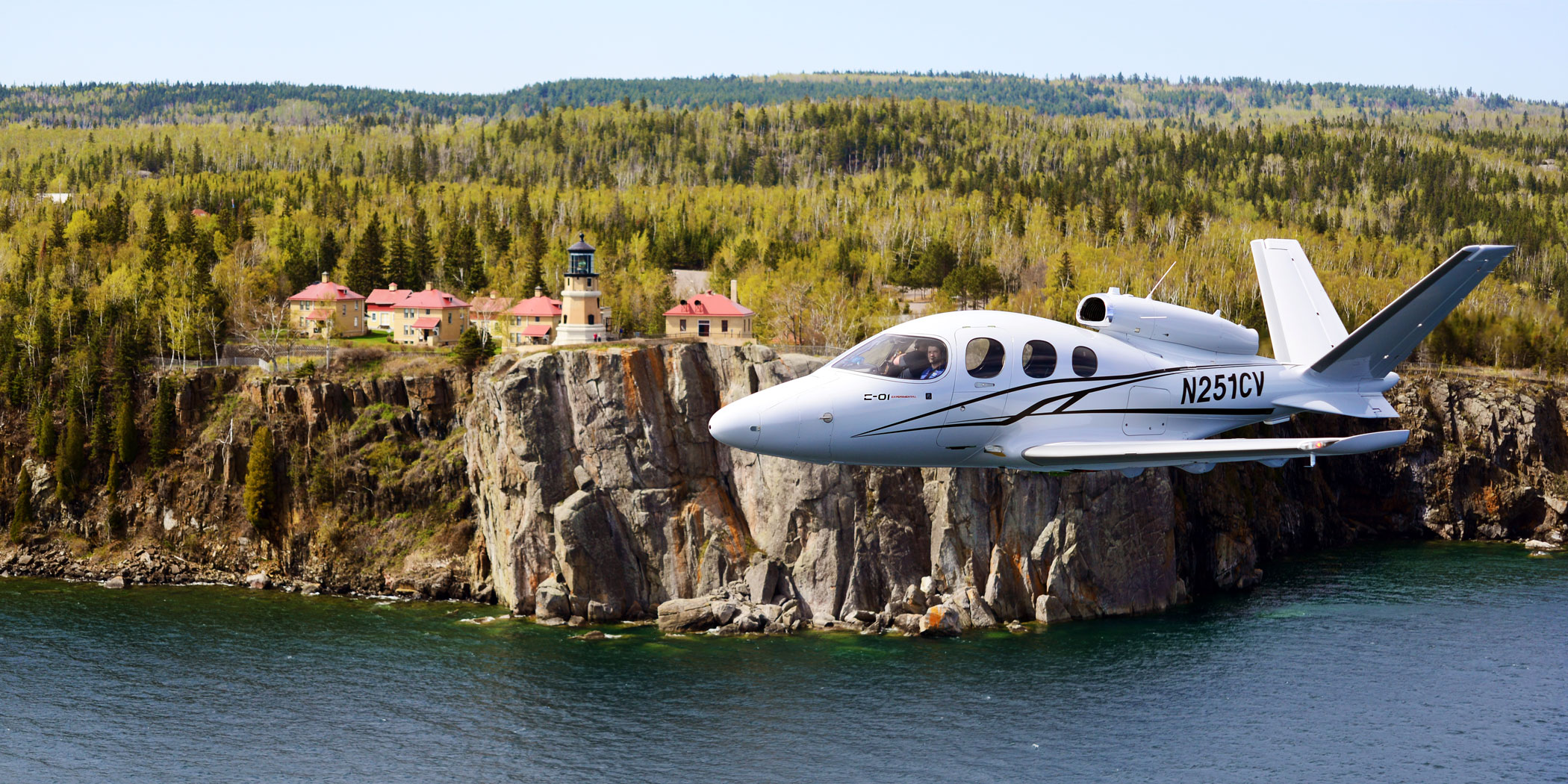
The long anticipated certification of the Cirrus Vision Jet finally happened. On October 30th, the FAA awarded certification to Cirrus’ single engine jet. Marketed as the world’s first single engine personal jet, the Cirrus Vision Jet will seat five adults, two children, and cruise around 300 knots.
The Williams FJ33-5A Turbo Fan engine is operated by a FADEC, single handle throttle, similar to the throttle in the piston powered Cirrus family. In fact, the SR series was taken into consideration when designing the Cirrus Vision Jet in order to simplify the upgrade for pilots. Many of the buttons and knobs are in the same places in the Cirrus Vision Jet.
The Cirrus Vision Jet is equipped with the Cirrus Perspective Touch by Garmin that is very similar to the Cirrus Perspective by Garmin in the piston powered line. Equipped also with the Flight Into Known Icing system and the Cirrus Airframe Parachute System (CAPS), both of which are standard.
Unlike the piston powered Cirrus lines, the CAPS system on the Cirrus Vision Jet is actually mounted in the nose. Also, unlike the piston lines, the jet CAPS is integrated with the aircraft avionics to slow the airplane to between 67 and 160 knots when the system is activated. In the jet, the CAPS system was designed to withstand higher weights, higher speeds and higher altitudes.
Cirrus hopes to start deliveries of the Vision Jet by the end of the year, with many more rolling off the line in 2017. All Cirrus Vision Jet pilots will need to be type rated in order to fly the aircraft. Cirrus is doing all the type rating training in house at their new Vision Center in Knoxville, Tennessee.
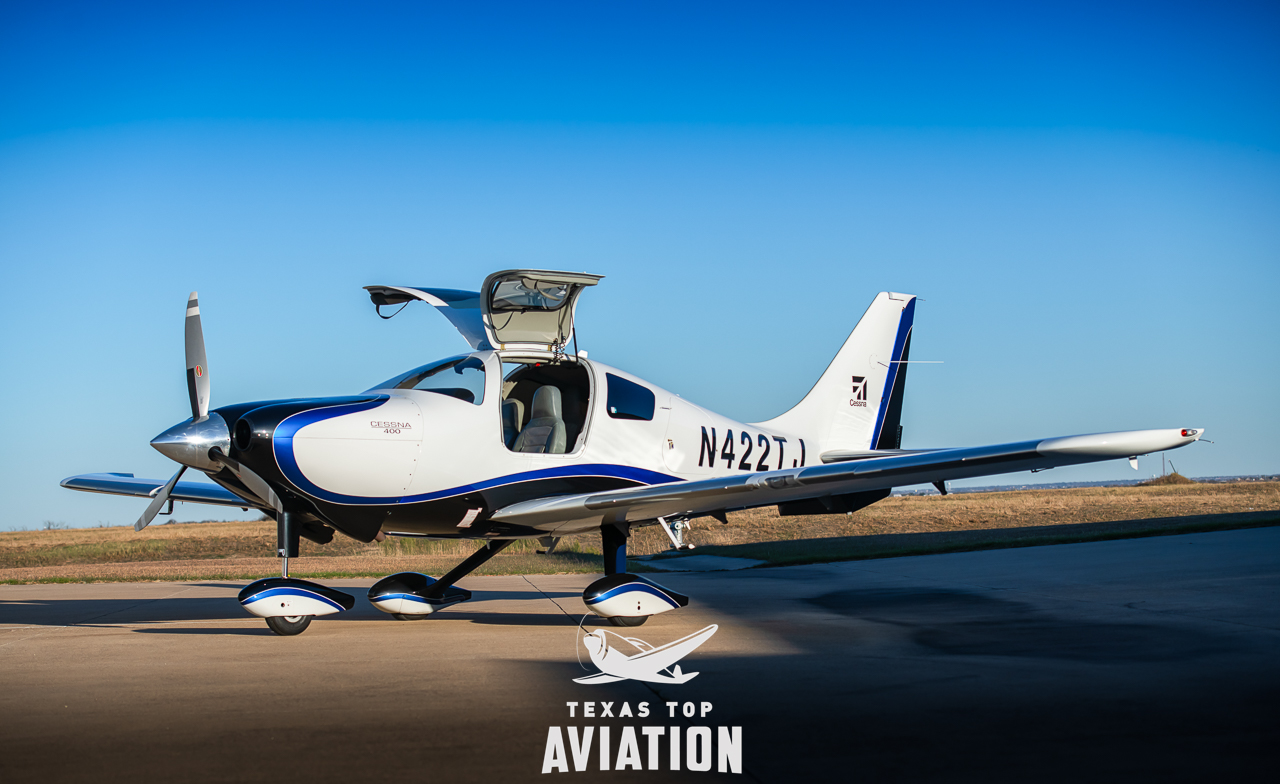
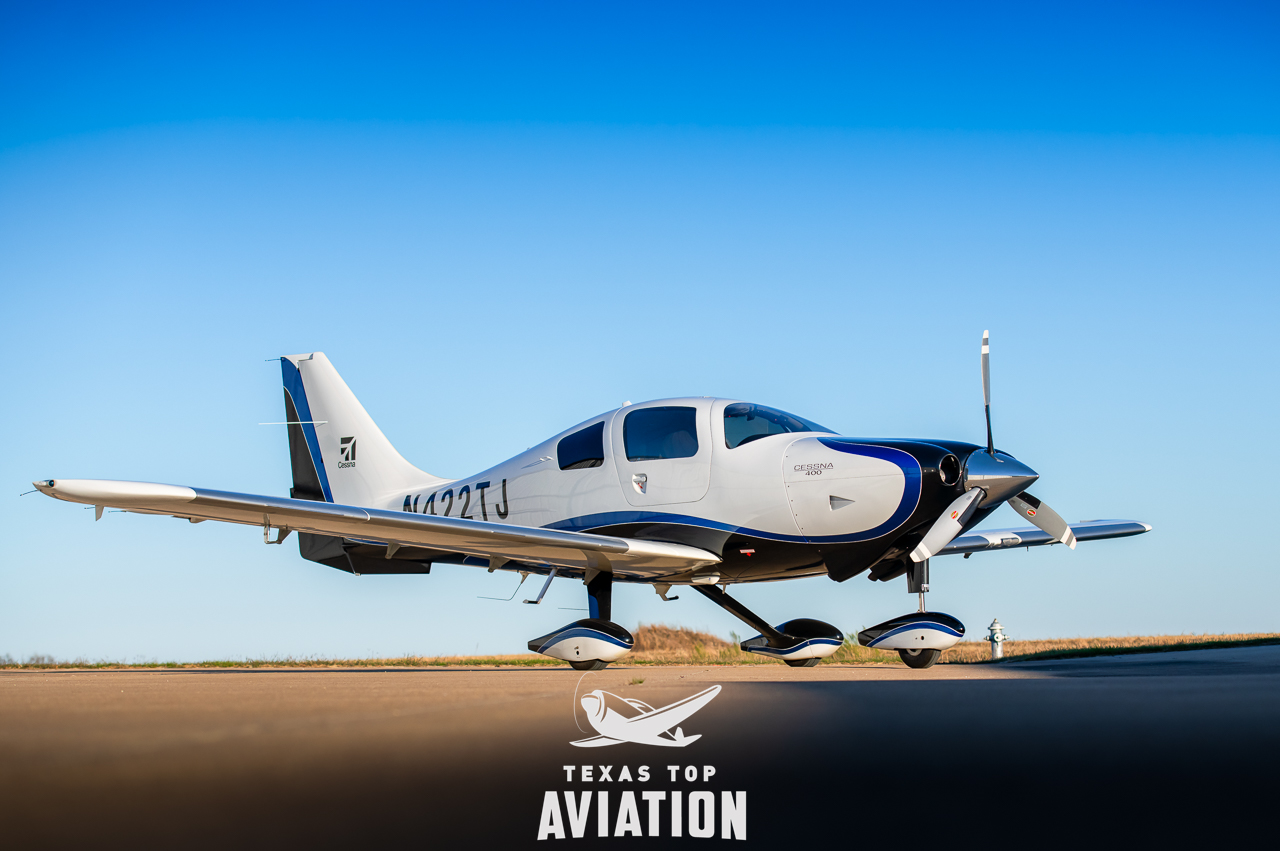
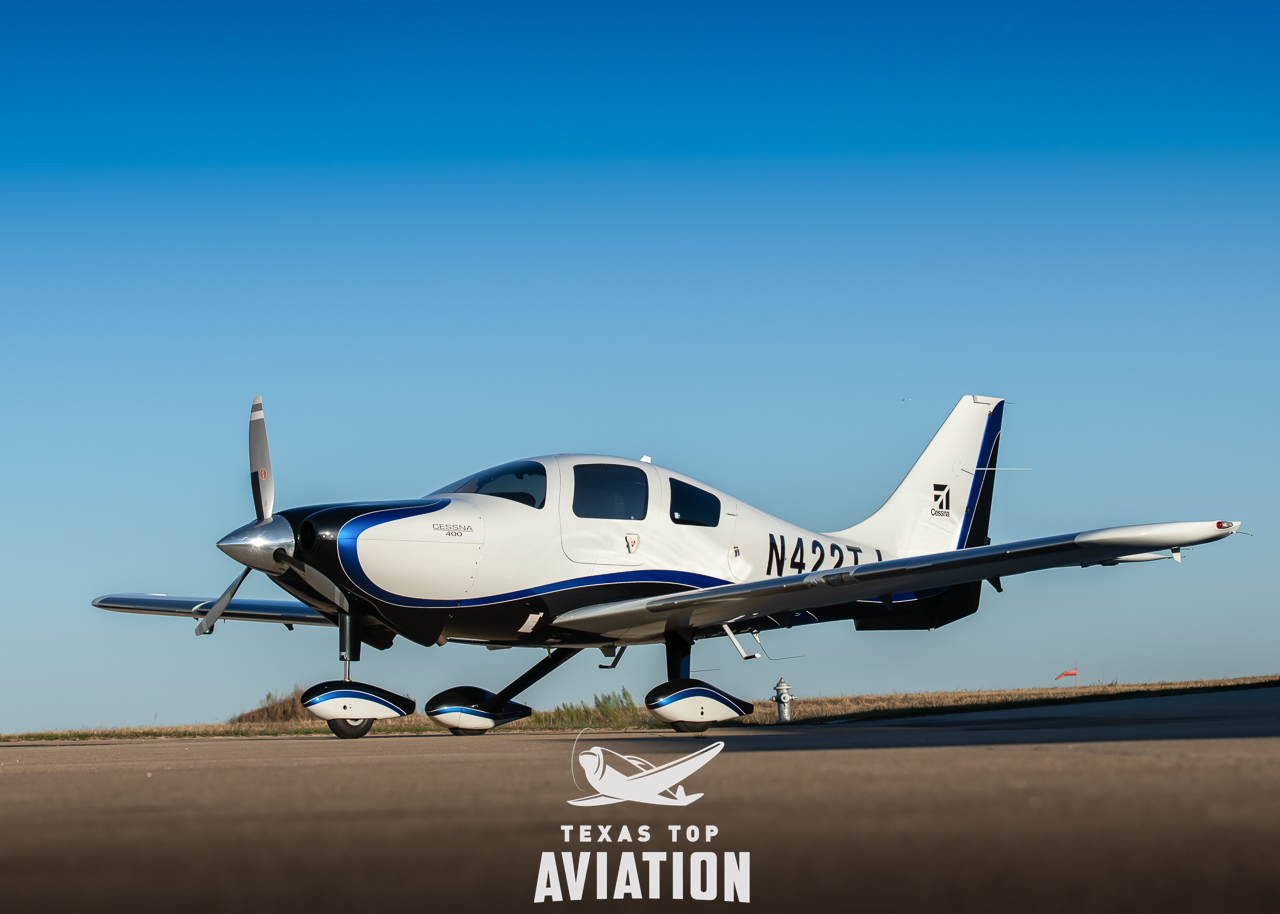
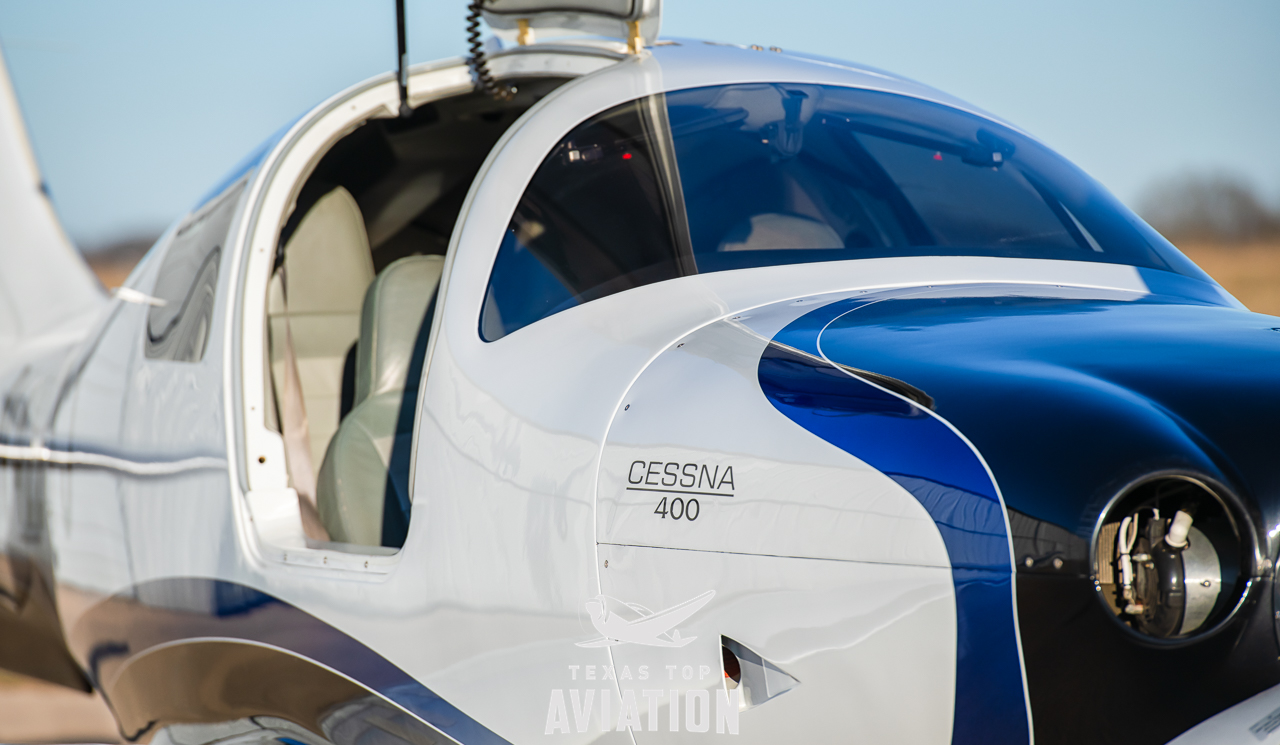
2008 Cessna 400 Corvalis TT (N422TJ) — 235 KTAS and Garmin G1000 glass, priced under a comparable Cirrus.
If you’re weighing a Cessna 400 vs Cirrus, start here. The 2008 Cessna 400 Corvalis TT cruises at 235 knots true — the fastest fixed-gear piston single ever certified. It’s faster than a turbocharged Cirrus on the same fuel and the same class of engine, and it costs less than a comparable SR22T. If you’re shopping a high-performance single for speed and value, N422TJ deserves a hard look.
The Airplane Cirrus Shoppers Overlook
The Cessna 400 is a Lancair design — a clean-sheet, all-composite airframe built to go fast. Cessna certified and refined it, and built N422TJ in 2008. It seats four, carries a real load, and handles weather. Most buyers shopping a high-performance single default to Cirrus, so airplanes like this one get overlooked. That’s where the value is.
Faster on the Same Fuel
The 400’s 235 KTAS is a true max cruise at 25,000 feet on oxygen. A 2011–2012 Cirrus SR22T (Gen 3) trues about 211 KTAS. Both burn 100LL and run turbocharged Continental engines in the same ~310-horsepower class.
That’s about 24 knots up high — roughly 45 minutes off a 1,000-nautical-mile leg — with no bigger engine and no more fuel. And it isn’t only a flight-levels number: at 10,000 feet the 400 still trues about 180 KTAS, roughly 10 knots faster than an SR22T at the same altitude.
Lancair-designed, all-composite, fixed-gear — the airframe that makes 235 knots possible.
The Value Gap
N422TJ is priced at $350,000. A comparable Gen 3 SR22T typically trades between $450,000 and $550,000 used. (A new SR22T is a $1M-plus airplane — not the comparison.) Against the newer turbo Cirrus, that’s roughly $100,000 to $175,000 less for a faster airplane.
N422TJ — no damage history, complete logs since new, Van Bortel-maintained.
Cross-Shopping a Turbonormalized Cirrus SR22
A lot of buyers looking at N422TJ also weigh a Cirrus SR22 with the Tornado Alley turbonormalized engine. It’s a fair comparison — the same ~310-horsepower-class Continental, the same all-composite fixed-gear layout, the same 100LL — so here’s the honest math.
Speed and engine: the turbonormalized SR22 trues around 211 KTAS; the 400 does 235. The 400 also runs a true twin-turbocharged TSIO-550-C, not a turbonormalized system — a true turbo makes boosted power up high, which is a big part of that speed edge.
Avionics and price — 2006–2008: those Cirrus came with the Avidyne Entegra panel. N422TJ’s Garmin G1000 with WAAS and Synthetic Vision is a clear step up — better glass for comparable or less money.
Avionics and price — 2009 and later: Cirrus moved to Garmin Perspective (G1000-class) glass, but the price moved with it. A 2009 SR22 turbonormalized with Perspective typically runs around $400,000 or more — one representative listing is $429,900. N422TJ is $350,000: less money, comparable glass, and 24 knots faster.
The SR22 still brings the CAPS parachute and the Cirrus owner community. But on speed, engine, and price, the Cessna 400 stays ahead.
Metric
Cessna 400 Corvalis TT (N422TJ)
Cirrus SR22T — Gen 3 (2011–2012)
Cirrus SR22 Turbonormalized (2006–2009)
Max cruise (25,000 ft)
235 KTAS
~211 KTAS
~211 KTAS
Cruise at 10,000 ft
~180 KTAS
~170 KTAS
~170 KTAS
Engine
Twin-turbocharged Continental TSIO-550-C (true turbo, ~310 hp class)
Turbocharged Continental (~310 hp class)
Turbonormalized Continental IO-550-N (~310 hp class)
Cessna 400 Corvalis TT vs. Cirrus SR22T (Gen 3) and the turbonormalized SR22. Speeds and prices are typical estimates; verify against the aircraft records and current market.
The fastest fixed-gear piston single ever certified — and it out-runs a turbo Cirrus on the same fuel.
The Avionics You Can’t Buy Anymore
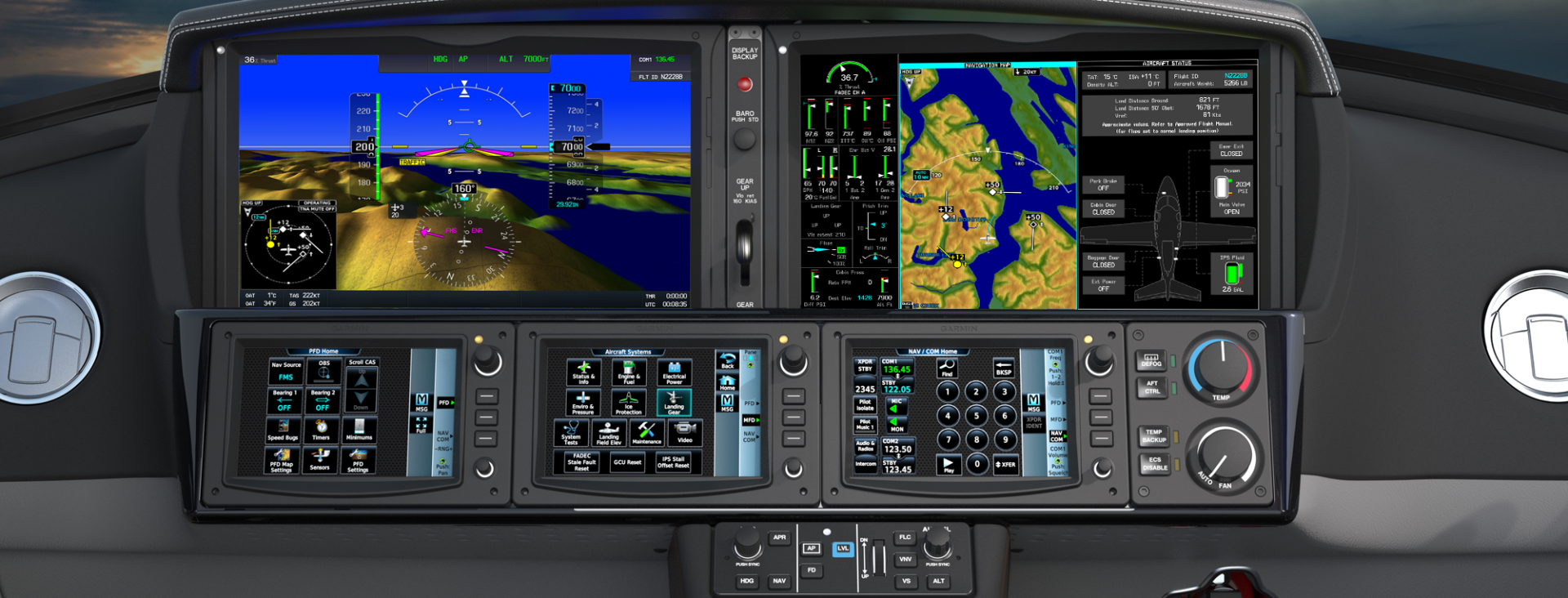
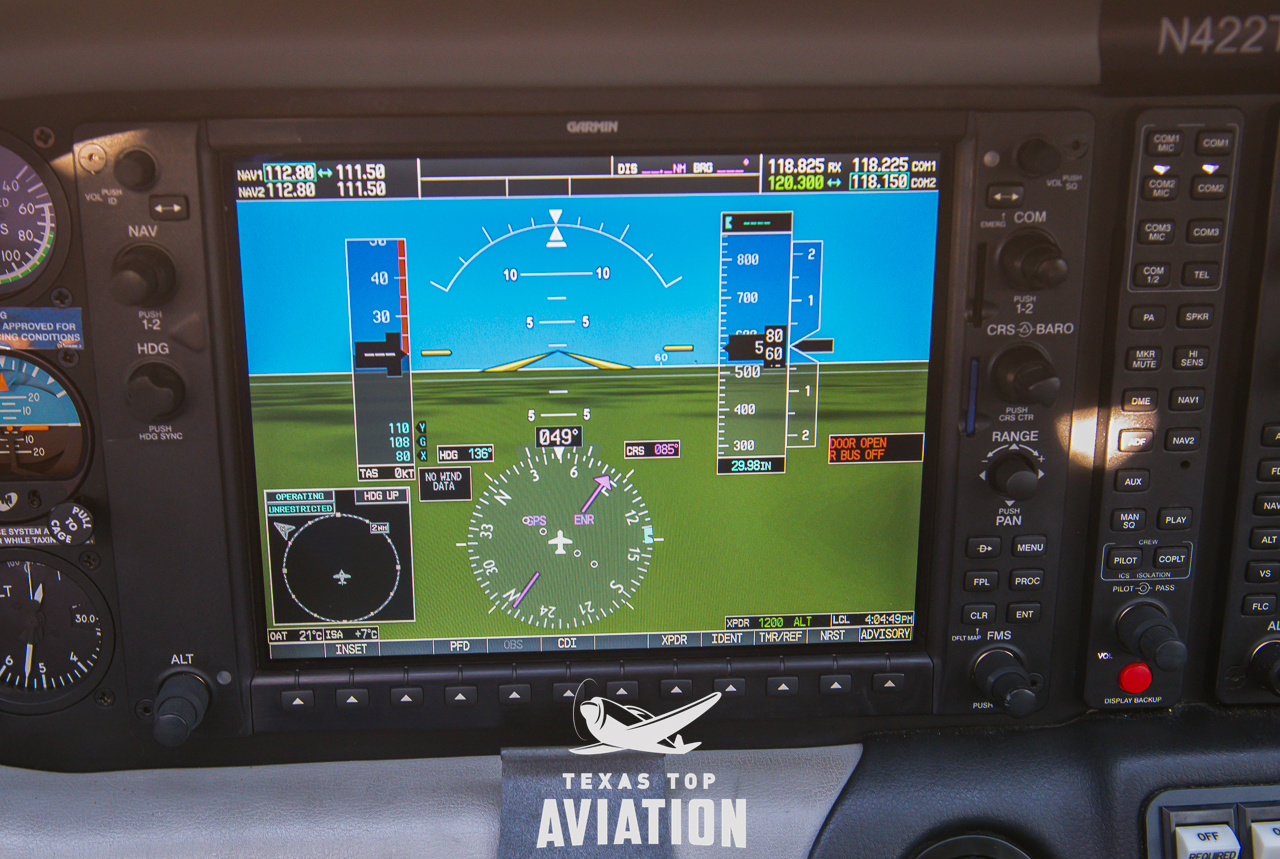
Garmin G1000 with WAAS and Synthetic Vision (SVT) and the GFC-700 autopilot.
N422TJ has a Garmin G1000 with WAAS and Synthetic Vision (SVT) and the GFC-700 autopilot. WAAS gives you LPV approaches — near-ILS precision at runways nationwide.
This matters because the WAAS upgrade path for the G1000 in these airframes is closed. A Cessna 400 that left the factory without WAAS can’t be upgraded — it will never fly an LPV approach. So a WAAS-plus-SVT 400 like this one is a scarce find. You either buy one that has it, or you don’t get it.
Both G1000 displays with synthetic vision — a modern, integrated flight deck.
Built to Actually Go
This airplane is equipped to be flown hard and often:
Thermawing electric de-ice with a backup alternator — a de-ice system (not certified known-ice)
Factory air conditioning
Speed brakes
Hot prop, built-in oxygen, and ADS-B Out
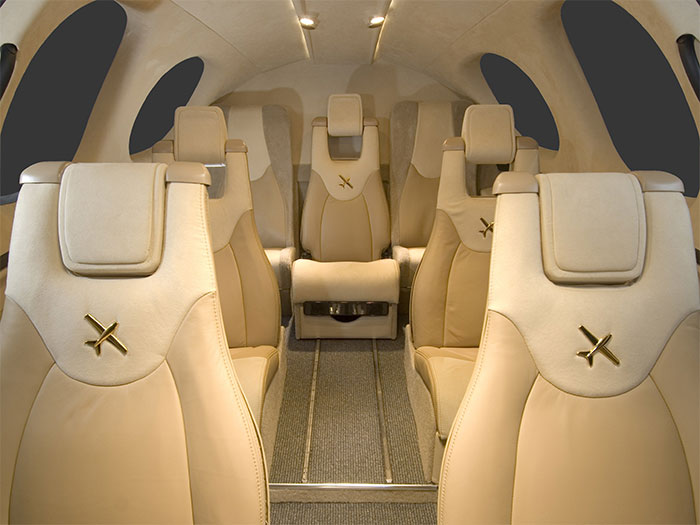
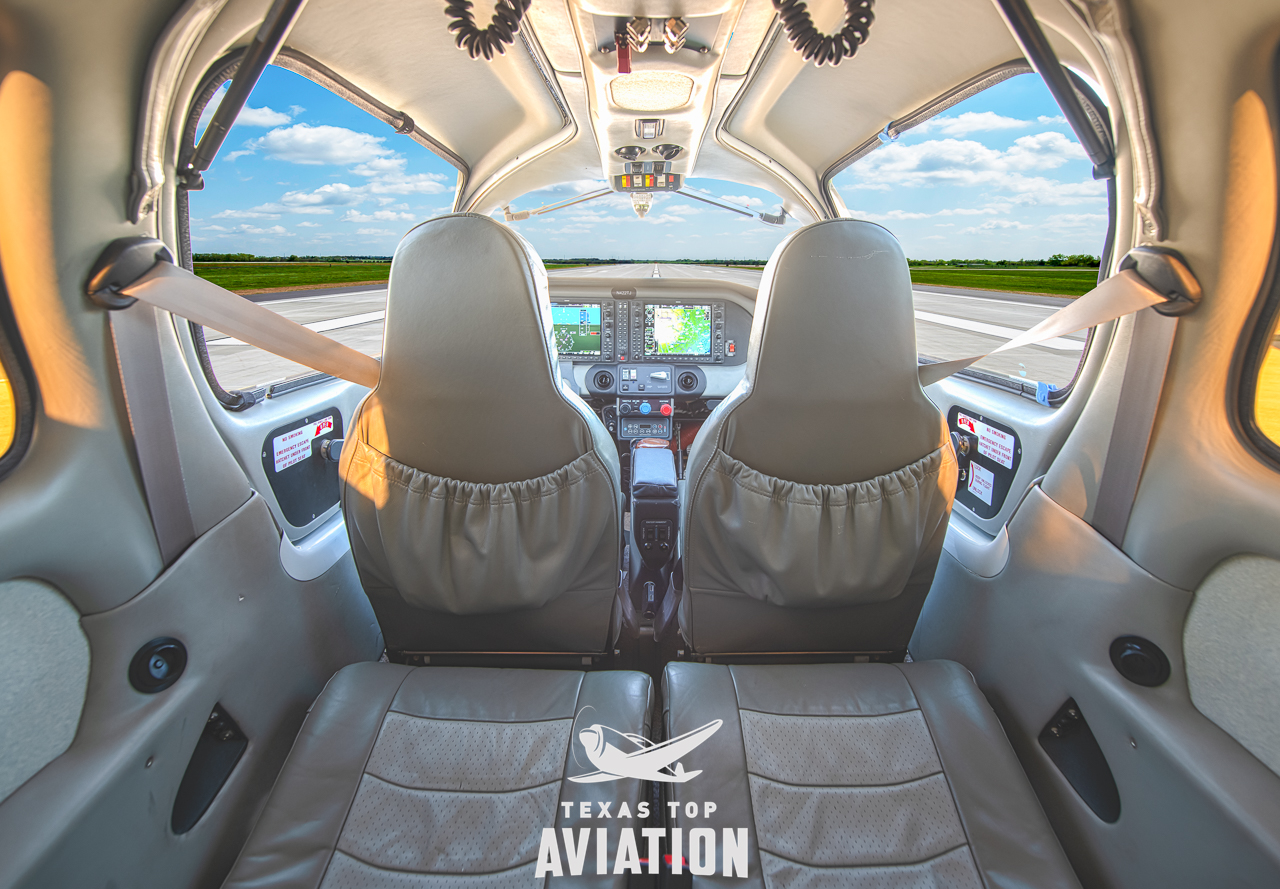
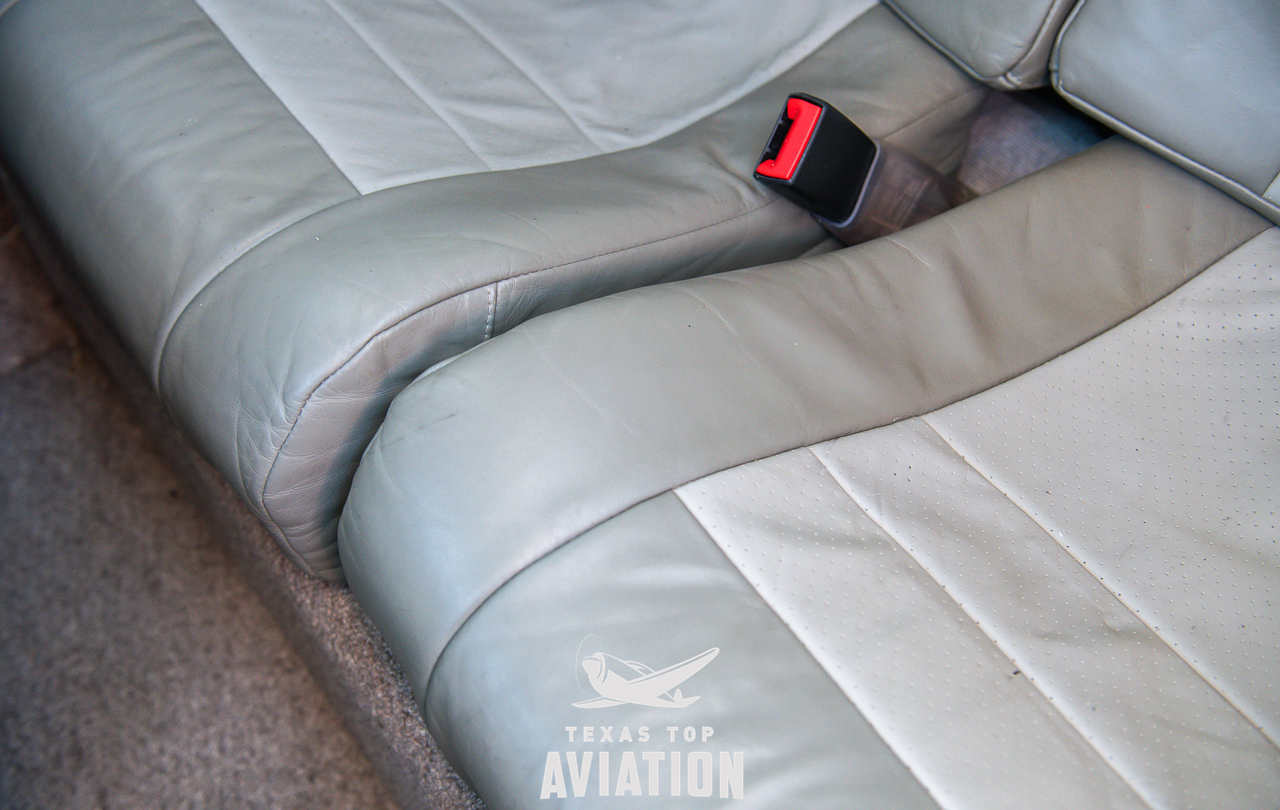
A comfortable four-seat cabin built for real trips.
The engine is a twin-turbocharged Continental TSIO-550-C with about 1,503 hours total time — the original engine, 1,503 since new. No damage history, complete logs since new, maintained by Van Bortel.
Leather interior, comfortable for four.
An Honest Word: What the Cirrus Does Better
One thing every Cirrus has that the 400 doesn’t: the CAPS whole-airframe parachute. Pull the handle and the airplane comes down under canopy. For a lot of buyers that’s the deciding factor, and it’s a fair reason to choose a Cirrus. Cirrus also has a large owner community and a strong support network.
Useful load is comparable across all three airplanes — the 400 is often equal or a little better. If the parachute and the community are your priorities, a Cirrus may be the right airplane, and we can help you find one. If your priorities are speed, avionics, and value, the 400 is hard to beat at this price.
Cessna 400 vs Cirrus: Quick Answers for Shoppers
Is the Cessna 400 faster than a Cirrus SR22T?
Yes. The Cessna 400 Corvalis TT trues up to 235 KTAS at 25,000 feet versus about 211 KTAS for a Gen 3 Cirrus SR22T — about 24 knots faster on the same 100LL and the same ~310-horsepower class of turbocharged Continental engine, or roughly 45 minutes saved on a 1,000-nautical-mile leg. At 10,000 feet the 400 still trues about 180 KTAS, roughly 10 knots faster than an SR22T at that altitude.
How does the Cessna 400 compare to a turbonormalized Cirrus SR22?
The Cessna 400 trues 235 KTAS versus about 211 KTAS for a turbonormalized SR22, and it uses a true twin-turbocharged Continental TSIO-550-C rather than a turbonormalized system. A 2006-2008 SR22 turbo has the older Avidyne Entegra panel, while the 400 has a Garmin G1000 with WAAS and Synthetic Vision. A 2009-and-later SR22 turbo with Garmin Perspective glass typically costs around $400,000 or more, versus $350,000 for N422TJ. The SR22 still offers its CAPS whole-airframe parachute.
Does the 2006-2008 Cirrus SR22 have a Garmin G1000?
No. Cirrus SR22s from 2006-2008 typically came with the Avidyne Entegra glass panel; Garmin-based Perspective glass arrived in 2009. The 2008 Cessna 400 came with the Garmin G1000, and N422TJ has the WAAS and Synthetic Vision version.
How much less is a Cessna 400 than a comparable Cirrus SR22T?
N422TJ is priced at $350,000, while a comparable 2011-2012 Cirrus SR22T (Gen 3) typically sells for about $450,000 to $550,000 used — roughly $100,000 to $175,000 less for a faster airplane.
What is the fastest fixed-gear single-engine airplane?
The Cessna 400 Corvalis TT, at 235 KTAS maximum cruise, is the fastest fixed-gear piston single-engine airplane ever certified.
Does the Cessna 400 have a parachute like the Cirrus?
No. A whole-airframe CAPS parachute is the one meaningful capability the Cirrus offers that the Cessna 400 does not. On speed, avionics, and useful load, the 400 matches or beats a comparable SR22 or SR22T.
Can the Cessna 400’s Garmin G1000 be upgraded to WAAS?
No. The WAAS upgrade path for the G1000 in these airframes is closed, so a non-WAAS Cessna 400 can never gain LPV approach capability. N422TJ already has WAAS plus Synthetic Vision, which makes it a scarce find.
Does the Cessna 400 carry less than a Cirrus SR22?
No. Useful load is comparable — the Cessna 400 is often equal to or a little better than a comparable SR22 or SR22T.
In the realm of buying airplanes, navigating through the complexities of the market can be as challenging as piloting through turbulent skies. Whether you’re a seasoned aircraft owner or a new pilot looking to acquire your first aircraft, enlisting the expertise of an airplane broker can significantly streamline the buying process. Here are some compelling reasons why engaging an airplane broker is a smart move for buyers:
Expertise and Experience: Aircraft brokers are seasoned professionals with in-depth knowledge of the aviation industry. They understand what aircraft models fit different missions (you don’t want to have an expensive jet for 200 mile trips for 2 people), market trends, airplane values, and technical knowledge to help avoid “lemon” airplanes before even the inspection begins. Leveraging broker expertise can help buyers make informed decisions, avoid pitfalls, and secure the best deal possible.
Access to a Vast Network: Airplane brokers have extensive networks comprising sellers, manufacturers, and maintenance facilities. This network gives buyers access to the experts on the aircraft they are wanting to buy. Whether you’re in the market for a brand-new aircraft or a pre-owned gem, brokers can tap into their connections to make sure the airplane selected is a well maintained aircraft.
Time and Resource Efficiency: Searching for the right aircraft can be a time-consuming and labor-intensive process. From researching available options to arranging pre-buy inspections and negotiations, the tasks can quickly pile up. By entrusting these responsibilities to a broker, buyers can save valuable time and resources. Brokers handle the legwork, allowing buyers to focus on family, life and work while still staying informed and involved in the decision-making process.
Objective Guidance and Advocacy: When emotions run high during the aircraft buying process, having an impartial advocate can be invaluable. Airplane brokers act as trusted advisors, offering objective guidance and a high level of knowledge about different airplanes. That knowledge comes in handy when evaluating aircraft specifications, assessing market value and negotiating terms. Brokers provide valuable insights and ensure that buyers make well-informed decisions aligned with their goals.
Streamlined Transaction Process: Purchasing an aircraft involves navigating a complex web of legal, financial, and logistical considerations. Brokers are well-versed in handling these intricacies and can streamline the transaction process from start to finish. They coordinate with legal experts, financial institutions, escrow companies, maintenance shops and regulatory authorities to ensure a seamless and hassle-free experience for buyers, minimizing potential delays and complications along the way.
Cost-Effective Solutions: While some buyers may be hesitant to engage a broker due to concerns about additional costs, the reality is that brokers often help buyers save money in the long run. By leveraging their industry knowledge and negotiation skills, brokers can steer buyers away from airplanes that are potential money pits and toward airplanes that have excellent maintenance pedigrees. Brokers are often able to secure favorable pricing and connect buyers to other experts in maintenance, insurance, and other essential services.
Peace of Mind: Perhaps most importantly, working with an airplane broker provides buyers with peace of mind throughout the buying process. From the initial search to the final closing, buyers can rest assured knowing that they have a dedicated professional by their side, guiding them every step of the way and ensuring a successful outcome.
While purchasing an aircraft can be a daunting endeavor, enlisting the services of an airplane broker can turn the journey into a smooth and rewarding experience. With their expertise, industry connections, and commitment to client satisfaction, brokers empower buyers to make informed decisions, secure the best possible deal, and embark on their aviation adventures with confidence. So, whether you’re in the market for a single-engine propeller plane or a luxurious corporate jet, consider partnering with an airplane broker to navigate the skies of aircraft acquisition with ease.
Texas Top Aviation, LLC has 10 years of experience helping our customers purchase amazing airplanes. We specialize in TBM, Piper PA46, Cirrus and Columbia aircraft, but have extensive knowledge about a wide variety of piston and turbine aircraft. Contact us today to discuss our services for your next airplane.