|

Guardian Seven Trauma

First Aid Kit on Steroids

We have all seen the little first aid kits that a pilot can get to carry in an airplane. It usually has some bandaids, maybe some gauze, and some antibiotic ointment. Very helpful in the even that your paper VFR chart cuts your finger when you are unrolling it.

What happens if you crash in a harsh environment and you have some actual injuries to take care of?

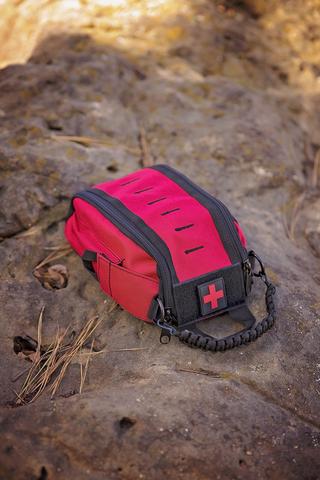
Enter the Guardian Seven Trauma G7-Alpha Trauma and Egress Kit. It literally is a First Aid Kit on steroids.

Guardian Seven Trauma has put together a kit that contains just about anything you need to take care of an injury from an airplane crash. Plus, the kit only weighs less than 2 pounds. It easily mounts in an aircraft and can be opened with only one hand.

The kit contains:

  • CAT Tourniquet
  • Quick Clot Z Hold Hemostatic Gauze
  • 4″ Emergency Trauma Dressing
  • Nasal Airway
  • ARS Needle
  • HyFin Chest Seal Twin Pack
  • (4) 3″ Gauze Rolls
  • Triangle Bandage
  • Mylar Blanket
  • Leatherman Z Rex Tool (for emergency egress)
  • Trauma Shears
  • Roll of Medical Tape
  • Bear Claw Glove Kit
  • Permanent Marker
  • Multi Purpose Paracord Handle
  • Nylon Straps with Buckles (2)
  • Medical Patch

Want to upgrade your first aid kit? Visit Guardian Seven’s website to order the G7-Alpha kit.

Similar Posts

  • Make The Upgrade to Pressurization

    Are oxygen cannulas rubbing your nostrils raw?

    Is turbulence giving you back problems?

    Would you like to be above the bumps, breathing without tubes stuck up your nose or a mask on?  Would you like a quiet ride?

    Sounds like you need pressurization.  Need more convincing?

    What’s that you say?  You don’t have a multi-engine rating?  You don’t want to spend the money on a turbo prop?

    Have no fear, there are options galore for you to choose from in the single engine piston marketplace, both certified aircraft and experimental.

    A word of caution, though; once you go pressurized, you don’t go back….

    Here is my review of the certified, pressurized single engine piston options.

    Piper PA46 Malibu/Mirage/M350

    In 1983, Piper shocked the world with an amazing airplane.  The pressurized, Continental TSIO-520 (310 HP) powered PA46 Malibu hit the market in the fall of that year taking the piston world by storm.  A six seat, cabin class, pressurized single engine piston that easily cruised at 190-200 knots while only burning 16-17 GPH. It was awesome.  It even had an air stair door that felt like getting on a private jet.

    I love the original Continental powered Malibu, specifically the ’86-’88 models.  Piper initially had hydraulic flaps, which were clunky and had several issues (most notably, the hydraulic system would randomly kick offline while the flaps were in motion at very in-opportune moments).  Piper switched to the electric flaps in ’86, making the ’86-’88 year models very desirable.

    Unfortunately for Piper, the Continental TSIO-520 was not the engine manufacturer’s best product.  There were several Malibu crankshaft problems and engine failures, so much so that Piper decided to go with the Lycoming TIO-540 engine in 1989, creating the Malibu Mirage (all the current Malibu’s operating the -520 engine have been overhauled many times over, so there are no safety concerns with the -520 engine).  The Lycoming powered Mirage (350 HP), cruises a little bit faster than the Continental powered Malibu, but burns about 5 more GPH.  Piper still makes the Mirage, now dubbed the M350, complete with the Garmin G1000 NXi panel.

    The 4 seat, cabin class back seat is very roomy (unlike a Bonanza or Saratoga).  There is plenty of rooms for bags, both behind the back seat and in the handy nose compartment, which is wide enough to fit golf clubs, minus the driver.  The 1600 pound useful load (880 pound payload with full fuel), allows for a lot of people and gear to be loaded on board.  The airplane is a little stingy on CG, though.  You do not want to have a CG that is out of the rear limits.

    The airplane is fun to fly.  It has a heavy elevator, similar to a Bonanza, which requires a lot of trim on landing.  It’s very long wings cause it to float a bit on landing if the pilot comes in too fast.  It’s very docile in stalls and extremely comfortable for cross country flying.  The air conditioning system works very well, though it is still hot on the front seats when sitting on the ramp on a Texas July afternoon.

    Many of the airplanes have upgraded to glass panels.  Most are still equipped with the King KFC 150 autopilot, some with a Yaw Damper, some not.  The KFC 150 is a good autopilot, but when Garmin certifies their GFC 600 for the PA46, that will be a popular retrofit.

    If I had my pick, I would buy an ’86-’88 Malibu with an upgraded Continental TSIO-550 engine.  Climbs a bit better and does a bit better in cruise than the original -520 engine.  See why here.

    I would rate the PA46 line as the best pressurized single engine piston option out there.

    Cessna P210 Centurion

    The P210 was introduced by Cessna in 1978.  It also came with the Continental TSIO-520 engine that the Malibu was certified with.  Climbing at about 700-800 fpm (equal to the Malibu), the P210 cruises at around 190 KTAS as well, burning around 17-18 GPH.  Like the Malibu, the P210 had a Continental TSIO-520 power plant, but, unlike the Malibu, the P210 makes the pilot work to keep the CHTs cool.  With smaller cowl openings and a tighter cowl, cooling isn’t as good as the Malibu.

    Even though the P210 has six seats, the forward facing, Cessna style 3 rows aren’t quite as comfortable as the Malibu.  The single door on the pilot’s side makes loading and unloading a bit of a chore (especially compared to the air stair door in the Malibu).  The third row of seats isn’t extremely useful, as the ceiling is lower and the proximity of the second row of seats decreases the amount of leg room, making it uncomfortable for a full size adult.  Most operators remove the pilot’s side second row seat to add an aisle to get to the back row for people and bags.  It also has a smaller cabin then the Malibu.

    There is less baggage in the P210, with the singular baggage compartment accessed through a baggage door behind the cabin.  The Air conditioning system is also not as good as the Malibu.

    It’s hard to get the P210 out of CG and overloaded.  A useful load of 1500 pounds (with 90 gallons of fuel, it drops to only 960 pounds) allows the airplane to be loaded to the gills without being overweight.

    There are some engine upgrades out there for the P210 (the Silver Eagle conversion puts a Rolls Royce turboprop on it).  The best piston conversion is the Vitatoe Conversion that swaps the engine out for a Continental Turbo-Normalized IO-550, which is a much better engine than the -520.  You still have to monitor the CHTs, but cooling is less of an issue.  These are much higher priced on the market, though.

    Because of the size of the cabin and the true reputation the P210 has of being a maintenance hog, I would rate it below the PA46 line.

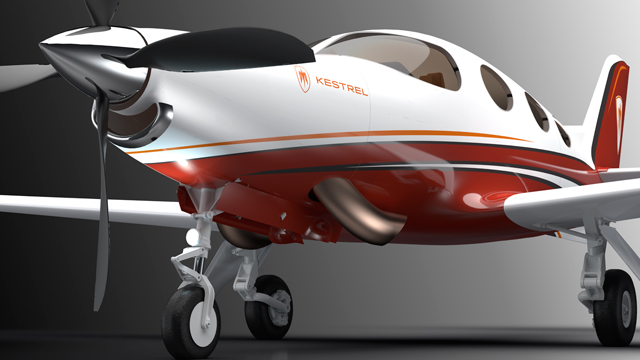
    Extra EA-400

    There are 3 pressurized, single engine piston airplanes out there today: the Piper PA46, the Cessna P210, and the Extra EA-400.  Extra is the famous German aerobatic aircraft manufacturer that created the Extra 300 and 330.  In the early 2000s, Extra tried it’s hand at the pressurized single market with the EA-400 (Extra also tried to get into the single engine turbo-prop market with the EA-500, but the project fizzled before much progress was made).  Sadly, only 27 EA-400s were built before the company ran into financial trouble.

    The concept sounds cool.  A fully composite, pressurized, liquid cooled, cabin class piston.  The engine was the Continental TSIOL-550, liquid cooled power plant.  Liquid cooling means no concern about hot CHTs while you are climbing.  The problem with the engine is that there are so few liquid cooled Continental engines out there, finding a mechanic familiar with one could be an issue.

    I have never flown an Extra 400, but there are several floating around out there.  Most have steam gauges and the STEC-55x autopilot.  The price on the only one on Controller right now is comparable to the P210N but above the Continental powered Malibu.

    If you are in the market, an Extra 400 might be fun to test fly and who knows, you might fall in love with it!

    Experimental Options

    There are a handful of experimental pressurized singles out there.  I have not flown any of them, so I can’t be a good resource on recommending them.  Here is the list, however.

    Lancair Evolution Piston

    Lancair IV-P

    Lancair ES-P

    Lancair LX7

    As far as availability on the market goes, there are 8 Malibus on Controller (1 1986 model) ranging from $315,000 and down, 24 Mirages ranging from $705,000 (equipped with the Garmin G1000) and down, 25 P210s ranging from $405,000 and down, and 2 Extra EA 400s, priced at $369,000 and down.  Check out the available Experimental Lancair options here.

    Have you decided to upgrade, but don’t know what to buy or how to buy it?  Check out Texas Top Aviation’s Acquisition Services.  We’ll get you the best airplane for you, your mission, and your budget.  Contact Us today to find out more information.

  • Hank Gibson Featured on Joe Casey’s The Malibu Guru Podcast

    Recently, I did my TBM and Meridian recurrent training with Joe Casey of Casey Aviation. I always like being challenged my more seasoned instructors than me because I always get to learn something. When I learn something, it makes me a better instructor and allows me to give better instruction to my customers. Plus, there is still a bunch that I don’t know!

    Joe has a podcast titled The Malibu Guru (because he really is the Malibu guru!). During our training, we did a podcast together and he interviewed me. I get to tell about Texas Top Aviation and some exciting things coming up this summer (hint: the biggest exciting thing is called The Aviator’s Academy). Before I give too much away, take a listen to the podcast.

    The Malibu Guru Podcast: Interview with Hank Gibson

  • Pancake Fly-In At KCVB

    For those of you in the Hill Country looking to kick off the Christmas month right, head over to the Castroville Airport (KCVB) on Saturday, December 6th and get yourself a short stack of flapjacks.  For just $5, you can get yourself a good hearty breakfast that includes coffee or juice and bacon or sausage.  The eating starts at 0800 and goes until 1200, local time.  Come with an empty belly and an empty gas tank as CVB currently has some of the lowest priced gas in South Texas, currently listed at $4.70/gallon.

    There will be plenty of hangar flying, lots of airplanes to look at, and most importantly, lots of pancakes!

    CVB Pancake Breakfast

  • Wind the Clock

    There is truth in the old adage that 99% of flying is routine while the remaining 1% holds the potential for events that cause those who fly to hold themselves above mere ground-bound mortals. My 37 years of military flying might have distorted that ratio a fair bit given the complexity of high-energy fighter aircraft and the uncertainties of combat, but rest assured we all earn our right to be proud of our wings every time we fly.

    The requirement that a single-seat fighter pilot be able to handle rapidly evolving emergency situations and complex systems diagnosis sets a high bar for any who join that group. However, the lessons we learned and techniques we developed for making fighter aviation significantly safer than in yesteryear have direct applicability to general aviation.

    Prioritization and compartmentalization are two important skills that every pilot should have. These skills amount to the ability to look at a complex problem, quickly determine the most critical elements, and mentally set aside those things that can wait so as to deal with highest priorities first. While this does not sound like rocket science, the art is in the doing!

    The technique for dealing with the immediate onslaught of information, such as when that caution tone or caution light presents and different gauges or displays go haywire, provided the title for this piece.

    All flight training will, at some point, involve what is called situational emergency procedures training, know to military aviators as SEPT. We do this type of training in a simulated cockpit that has all the dials and switches for our particular aircraft. None of the switches and dials do anything, some are just decals on a wooden dashboard, but the presentation allows the SEPT victim to reach for the appropriate switch or lever, while telling the instructor what and why they are doing so.

    One of the most common mistakes new trainees make is that of trying to act too fast, before they have fully and correctly analyzed the situation at hand. Herein lies the titled technique. After blurting out a quick and incorrect answer, the instructor would admonish with: “rather than try to react instantly, maintain aircraft control, analyze the situation, then take appropriate action. The best thing you can do is to reach up and wind the clock. This will give your nervous energy some place to channel itself, while your brain takes in the full situation.”

    Waltham clock

    Winding the clock might seem like an archaic notion, but, amazingly enough, even our most modern aircraft have the same clock we flew with as far back as the 1960s. The Waltham A-13A aircraft clock and timer is a wind-up device that only uses power to light up at night. Unless your emergency involved some type of catastrophic impact to the instrument panel, you could count on at least your clock to be functioning normally. Thus, reaching out and winding it was unlikely to cause any worsening of your evolving emergency and would distract your brain from the need to take some poorly-thought-out action, too quickly.

    Now, in most aircraft there are a few emergencies that will require immediate, reactive actions. In fighters, we call these Boldface Emergencies. For each type of fighter, we memorize, to the letter, the few key actions that have to be instinctive, to prevent disaster. For all other emergencies, there is time to reach out and wind the clock while assessing all instruments and lights to fully understand your situation.

    For your aircraft, know those Boldface or Critical Action Procedures, but for all other emergencies, take the time to maintain aircraft control, “wind the clock” while you analyze the situation, then take appropriate action.

    Mike Hostage is a retired USAF pilot with 37 years of experience, flying a wide variety of aircraft.  An instructor pilot for more than half of his 4800 flight hours, Mike is currently qualified in a Cirrus SR-22T and regularly flys his two homebuilt sailplanes.

  • 2022 MMOPA Convention

    MMOPA announced the location for the 2022 MMOPA Convention. The 2022 Convention will be in Tucson, Arizona and will take place September 29th-October 2nd, 2022. The JW Marriott Starr Pass will be the host resort.

    Thursday, September 29th will kick off the convention with a safety event for pilots and companions, lunch with exhibitors, and the return of the charity golf tournament.

    Friday, September 30th and Saturday, October 1st will be when all the classes and seminars that make the MMOPA convention great are held. The Friday dinner will be at an aviation themed spot in Tucson while the annual auction and black tie affair will be Saturday night.

    Stay tuned to the event details page on the MMOPA website to see when registration is opened.

  • BendixKing Throws It’s Hat in the Glass Panel Ring

    Two pilots walk into an FBO.  “Nice airplane,” Pilot 1 says to Pilot 2.  “What kind of panel do you have in it?”

    “I just went all glass,” Pilot 2 says.  “Put in the Garmin G500 TXi, a GTN 750, and upgraded to the GFC 600 Autopilot.  Even put in the Mid-Continent standby instruments.  It’s a pretty sweet set up.  What about you?”

    “Wow, sounds like it!” Pilot 1 responds.  “I went a different route.  I liked all my old BendixKing instruments, so I stuck with the company.  I put in a BendixKing AeroVue Touch panel, a BendixKing KSN 770 touch screen GPS, kept my KFC 225 autopilot, got the ADS-B out compliant BendixKing KT 74 transponder, and finished it off with a King AeroFlight KI 300 Digital Backup instrument.”

    Wait, what?  BendixKing?

    Yes, my friends, BendixKing is still around.

    We are all used to the latest and greatest Garmin products these days.  Don’t get me wrong, Garmin and Aspen make great retro-fit products for your instrument panel, while Garmin and Avidyne are at the top of the touch-screen GPS market, but don’t forget about BendixKing.  They are staying in the game too.

    BendixKing announced in April the xVue Touch for experimental aircraft, with the STC for the AeroVue Touch for certified aircraft coming later this summer.  The xVue and AeroVue touch are pretty nifty units, comparable in features to what Garmin is doing with the G500 TXi and G600 TXi.  It will be difficult to claw back into a competitive market share with Garmin, but BendixKing might find a niche market of followers.

    Let’s take a look at the unit.

    BendixKing AeroVue Touch

    Now, I have not used the BendixKing AeroVue Touch or the xVue Touch, only read about them.  But, what I’ve read sounds pretty cool.  The display has really good resolution (BendixKing brags it is the highest screen resolution available), synthetic vision that comes standard (Garmin & Aspen charge extra for synthetic vision), plus VFR Sectional Charts & IFR High and Low Enroute charts, making paper charts even more obsolete.

    The display is 10.1 inches and can be easily swapped between a full screen instrument mode or a split screen setup as seen above.  Apparently, BendixKing has 3-D moving maps available on the AeroVue Touch too, which is standard.

    The one thing Garmin has on the BendixKing AeroVue Touch right now is engine information.  The G500TXi has a full complement of engine gauges available; the AeroVue Touch doesn’t, yet.  BendixKing says it’s in the works, as well as radio information and autopilot control.  I’m assuming the future autopilot control software would mean you could remotely mount an autopilot controller and input all functions from the AeroVue Touch display.  The nice thing about these future upgrades is all the software updates are free through BendixKing.

    The sticker price for the forthcoming unit is going to be about $12,600.  Garmin’s 10.5 inch G500 TXi is $16,000, while Aspen doesn’t offer anything quite that big.

    BendixKing KSN 770

    I’ve been keeping my eye on the BendixKing KSN 770 Touchscreen WAAS GPS for a few years now.  It never really has caught on quite like the Garmin GTN 750 or the Avidyne IFD 540.  BendixKing took the same route that Avidyne did in creating a hybrid touch GPS (or mini-MFD if you want to look at it that way) where a pilot can perform functions either using the touch screen or utilizing soft keys on the edges.  I like the hybrid touch approach as I have been bounced around in turbulence while trying to tap something into a Garmin GTN 750 and it can prove difficult.

    Similar to the AeroVue Touch, BendixKing utilized split screen technology in the KSN 770.  It’s a full WAAS unit that is already certified.  It’s sticker price is $14,200, compared to the Garmin GTN 750 at $17,200 and the Avidyne IFD 540 at $15,000.

    Other BendixKing Gadgets

    Here are some other BendixKing Gadgets both available now and in the works:

Leave a Reply

Your email address will not be published. Required fields are marked *